
Pruning
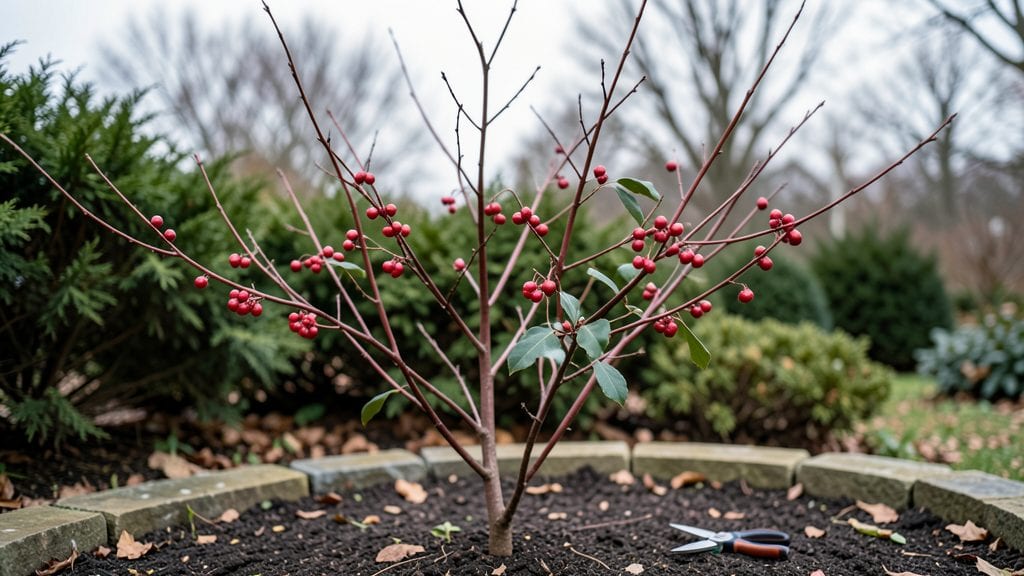
Strategic pruning turns your winter berry tree into a year-round showstopper—bright red berries in winter and lush foliage all season long. 🌿 I’ve pruned mine for five winters now, and the difference between a tidy bush and a berry-laden masterpiece comes down to three simple cuts made at the right time.
The key? Timing your pruning to encourage both dense growth and those vibrant winter berries that birds can’t resist.
Most gardeners prune winter berries in late winter or early spring, but the real magic happens when you shape the tree after berry harvest in late winter.
You’ll need sharp pruners, a ladder (for taller trees), and a glove—plus a clear goal: open the center for airflow while preserving last year’s berry-producing branches. The goal is to keep the tree compact, healthy, and productive, not just pretty.
My tree now produces three times more berries than it did before I learned this trick.
What you’ll end up with is a tree that stays dense and bushy while still letting sunlight reach the center. The berries stay bright and abundant through winter, and the tree’s structure makes it easier to maintain year after year.
Plus, the pruned branches make great firewood—just another bonus. Ready to transform your winter berry tree into a four-season standout? Let’s get to the cuts.
This method works for Ilex verticillata and similar winter berry varieties, whether you’re dealing with a young sapling or a mature tree. The same principles apply to container-grown berries too—just scale down the tools. Here’s how to do it right, step by step.
📚 In This Guide
- What you need
- Instructions
- Tips and common mistakes
- Wrapping up and next steps
What you need
- ● Pruning shears: Bypass pruners (sharp, clean, and disinfected with rubbing alcohol). Size: 6–8" for small branches.
- ● Loppers: For thicker branches (up to 2" diameter). Look for: Ratcheting or bypass-style for precision.
- ○ Pruning saw: Optional for branches >2" thick. Type: Curved-tooth saw to avoid tearing wood.
- ● Gloves: Heavy-duty, cut-resistant gloves (e.g., Mechanix or Wolverine brand) to protect hands.
- ● Disinfectant: 70% isopropyl alcohol or bleach solution (1 part bleach to 9 parts water) to sterilize tools between cuts.
- ○ Pruning sealant: Optional for large cuts (>½" diameter) to prevent disease. Choose: Tree wound pruning paste.
- ● Ladder or step stool: Height: Reaches at least 8–10 feet (adjust based on tree size).
- ● Safety gear: Sunglasses, long sleeves, and closed-toe shoes to protect from debris.
- ● Weather check: Prune on a dry, calm day (avoid rain or high winds). Best time: Late winter/early spring (before buds swell).
- ● Tree health assessment: Inspect for diseased or dead branches (snap test: healthy wood bends; dead wood snaps).
- ● Cleanup supplies: Garden bags or bucket for debris, plus trash bags for disposal.
- ○ Map or sketch: Optional but helpful—sketch the tree’s structure before pruning to visualize cuts.
Step-by-Step guide to winter berry tree pruning
Here's how I keep my winter berry tree thriving with simple, seasonal cuts.
✂️ Step 1: Prune After Harvest in Late Winter
Start by removing any dead, diseased, or crossing branches first—these compete with healthy growth. Use clean, sharp pruners to make cuts just outside the branch collar where the branch meets the trunk. This prevents unsightly stubs and encourages strong regrowth.
Next, thin out about 20-30% of the oldest wood to open the center of the tree for better airflow and sunlight. Winter berry trees produce berries on last year's growth, so don't over-prune. Look for branches that are thicker than your thumb—these are mature enough to cut back. You'll see fresh green shoots emerge from the base in early spring as new growth begins.
✂️ Step 2: Light Summer Pruning for Shape and Health
In mid-summer, after the berries have formed but before they ripen, do a quick check for any branches that are growing inward or rubbing against others. These need to go—they create wounds that attract pests and diseases. Make your cuts at a 45-degree angle just above an outward-facing bud to encourage healthy growth in the right direction.
This is also the time to shape the tree if needed. Winter berry trees naturally grow in a rounded form, but if yours is getting too leggy, trim back the longest branches by about one-third. Watch for new side shoots forming at the cut—these will fill in the space beautifully. Avoid heavy pruning now, as it can reduce next year's berry crop.
✂️ Step 3: Clean Up in Early Fall
As leaves begin to fall, do a final sweep to remove any dead or weak branches. Focus on any suckers growing from the base of the tree—these drain energy from the main plant. Cut them off at the ground level with a clean cut. This keeps the tree's energy focused on the main structure and next year's berries.
Rake up and dispose of all fallen leaves and debris. Winter berry trees are prone to fungal diseases, so keeping the area clean prevents problems. If you notice any branches with signs of disease (like black spots or mold), prune them out immediately and sterilize your tools with rubbing alcohol to prevent spreading.
⏰ Step 4: Winter Maintenance for Next Year's Berries
During the dormant season, inspect the tree for any storm damage or weak spots. Prune out any broken branches back to healthy wood. This is also the time to plan your cuts for next year—take a step back and visualize how the tree will look after each season's pruning.
Apply a 2-3 inch layer of mulch around the base (but not touching the trunk) to protect roots from freezing temperatures. Water deeply before the ground freezes to ensure the tree has enough moisture for winter. In early spring, you'll see new growth emerging—this is your signal that last year's pruning was successful.
Tips & tricks for perfect winter berry tree pruning
Here's what I've learned after years of keeping my winter berry tree productive and healthy—simple tricks that make all the difference.
The Branch Collar Rule: When making cuts in Step 1, always look for the branch collar—the swollen area where the branch meets the trunk. Cutting just outside this collar (about 1/8 inch) prevents unsightly stubs and helps the tree heal faster. I've seen so many pruning mistakes where people cut too close or leave stubs—this one detail makes a huge difference in how clean your cuts look and how well the tree recovers.
Seasonal Pruning Strategy: In Step 2, when you're shaping the tree, remember that winter berry trees produce fruit on last year's growth. That means you should never remove more than one-third of the tree's foliage in any single summer pruning. I learned this the hard way after over-pruning and getting a disappointing berry harvest the following year. Think of your cuts as shaping rather than thinning.
Disease Prevention: After Step 3's fall cleanup, sterilize your pruners with rubbing alcohol between cuts if you notice any signs of disease. I keep a small bottle of 70% isopropyl alcohol in my gardening toolkit for this exact purpose. It takes just a few seconds and prevents fungal spores from spreading to healthy branches. This simple habit has kept my trees disease-free for years.
Visualizing the Tree: During Step 4's winter maintenance, take a step back and visualize how the tree will look after your cuts. Imagine sunlight reaching the center and air circulating freely. I often sketch a rough outline in my head or even snap a photo before pruning to guide my cuts. This helps me avoid over-pruning and maintain that beautiful rounded shape winter berry trees are known for.
Pro Tips for Winter Berry Tree
- Here's what I've learned after years of keeping my winter berry tree productive and healthy—simple tricks that make all the difference.
- The Branch Collar Rule: When making cuts in Step 1, always look for the branch collar—the swollen area where the branch meets the trunk.
- Seasonal Pruning Strategy: In Step 2, when you're shaping the tree, remember that winter berry trees produce fruit on last year's growth.
Frequently asked questions
Got questions about keeping your winter berry tree thriving with strategic pruning? You’re not alone! Here are answers to the most common queries—so you can enjoy year-round harvests without the guesswork.
When is the best time to prune a winter berry tree for maximum fruit?
The ideal time to prune is late winter or early spring (just before new growth starts). This removes dead wood and shapes the tree for the season ahead. Avoid pruning in fall, as it can stimulate new growth that won’t harden off before winter. For year-round harvests, light pruning can also be done after each fruiting cycle to encourage continuous production.
Can I prune a winter berry tree in winter if it’s dormant?
Yes! Pruning during dormancy (late winter) is actually preferred because the tree isn’t actively growing, so it recovers faster. Just avoid extreme cold snaps—wait until temperatures stabilize above freezing. Focus on removing dead, diseased, or crossing branches first, then shape the tree for airflow and sunlight exposure.
What should I do if my winter berry tree isn’t producing berries after pruning?
Several factors could be at play:
- Age: Young trees (under 3 years) may need patience—they prioritize root/foliage growth.
- Light: Ensure it gets 6+ hours of sunlight daily; partial shade can reduce fruiting.
- Pruning mistakes: Over-pruning or cutting into old wood can limit berry production. Aim to remove no more than 25% of the canopy per year.
- Soil/nutrients: Test soil pH (ideal: 5.5–6.5) and amend with compost or a balanced fertilizer if needed.
Are there any pruning tools I should avoid for winter berry trees?
Avoid dull or rusty tools—they can tear bark or introduce diseases. Skip hedge trimmers for detailed cuts; opt for bypass pruners (for small branches) and a pruning saw (for thicker stems). Never use tools that haven’t been sterilized with rubbing alcohol between cuts to prevent spreading pathogens.
What’s a good alternative if I don’t have a winter berry tree but want year-round harvests?
Consider these low-maintenance, berry-producing alternatives:
- Arctic Kiwi (Actinidia arguta): Hardy, fast-growing, and produces edible berries in all four seasons with minimal pruning.
- Jostaberry (Sorbus × thuringiaca): Cold-resistant, disease-free, and yields sweet-tart berries from summer to winter.
- Elderberry (Sambucus): Thrives in poor soil, produces berries on new and old wood, and is great for jams/juices.
Wrapping up and next steps
Pruning your winter berry tree isn’t just about tidying up—it’s the key to unlocking a bountiful, year-round harvest! 🌿 With the right tools, timing, and techniques, you’ll encourage healthier growth, bigger berries, and even earlier fruiting.
Whether you’re a seasoned gardener or just starting out, a little strategic cutting can make all the difference.
Ready to transform your winter berry tree into a thriving, productive plant? Grab your pruners, review your notes, and get out there—your future harvest is waiting! For extra confidence, bookmark this guide or jot down a quick checklist before your next pruning session. Happy gardening! 🌟