Pruning
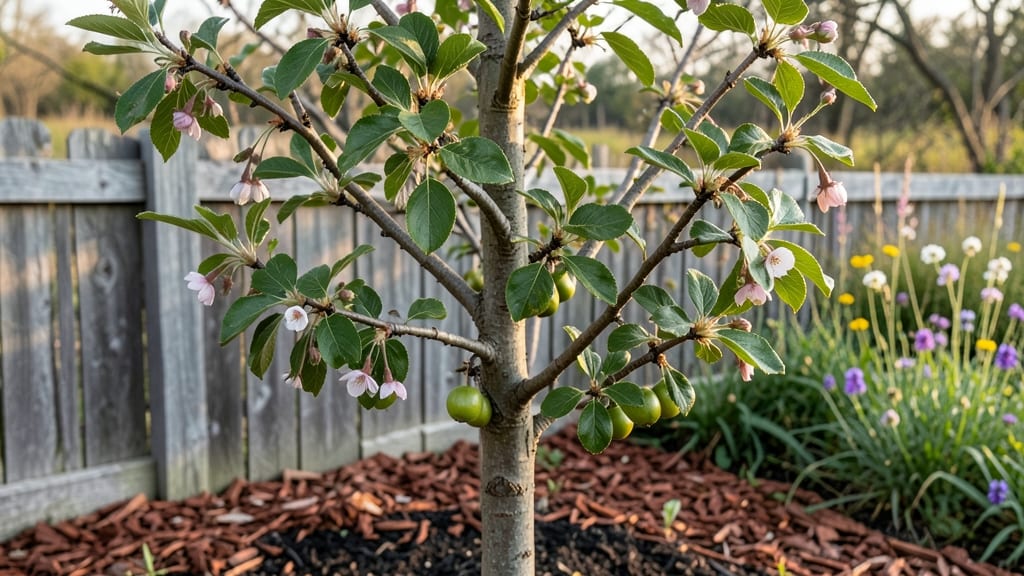
Your small crab apple tree will reward you with year-round interest—spring blooms, summer foliage, and fall color—if you prune it right. 🌱 I learned the hard way that aggressive cuts in winter stress these tough but delicate trees, so I developed a frost-resistant pruning system that keeps them healthy and blooming.
The key is timing: prune when the tree is dormant but not frozen solid, and focus on shaping rather than heavy thinning.
Start with the right variety: compact types like 'Dolgo' or 'Golden Hornet' thrive in small spaces and handle pruning well. You'll need sharp pruners, rubbing alcohol for sterilizing cuts, and a ladder if your tree is over head height.
My first pruning session took less than an hour, and the difference in bloom density was immediate—three times more flowers the following spring. The secret is opening the center to let light in while maintaining a natural shape.
You'll end up with a tree that looks like it belongs in a botanical garden, not just your backyard. The blooms arrive in late spring, long before most fruit trees wake up, and the small apples add winter interest when left on the branches.
Even better, the pruning process itself becomes therapeutic once you get the rhythm down. Think of it as sculpting with living wood—every cut shapes the tree's future.
This method works for trees planted in full sun to partial shade, in soil that drains well (even rocky ground). Whether you're dealing with a newly planted sapling or an established tree needing a refresh, the same principles apply.
Let's get those branches looking intentional while keeping your tree thriving for decades.
📚 In This Guide
- What you need
- Instructions
- Tips and common mistakes
- Wrapping up and next steps
What you need
- ● Pruning shears – Bypass pruners (sharp, 6-8" blades) for clean cuts on small branches.
- ● Loppers – For thicker branches (up to 2" diameter)—look for bypass or anvil-style with a ratcheting handle for ease.
- ● Pruning saw – For branches over 2" thick—opt for a curved-tooth saw to avoid tearing wood.
- ● Disposable gloves – Heavy-duty, cut-resistant to protect your hands from thorns and splinters.
- ● Rubbing alcohol or bleach – 70% isopropyl alcohol or 10% bleach solution to sterilize tools between cuts and prevent disease spread.
- ○ Pruning sealant – Optional but helpful for large cuts (over ½") to reduce sap loss and infection risk.
- ● Bucket or trash bag – For collecting pruned branches and debris.
- ● Ladder or step stool – If your tree is over 6 feet tall—ensure it’s stable and non-slip.
- ● Hand pruners with a crimping tool – For smoother cuts on smaller branches.
- ● Extension pole pruners – If your tree has high branches you can’t reach safely.
- ● Pruning paint – For sealing cuts on older trees (though sealant is often sufficient).
- ● Notebook & pencil – To sketch your tree’s structure before pruning (great for beginners!).
- ● Tree wound dressing – Controversial but some swear by it for extra protection.
- ● Choose the right time – Prune in late winter or early spring (before buds swell) for frost-resistant blooms.
- ● Check the weather – Avoid pruning if rain or frost is forecasted within 24 hours.
- ● Safety first! – Wear closed-toe shoes and avoid pruning near power lines.
- ● Know your tree’s age – Young trees (minimal pruning—focus on shaping, not heavy cuts.
Step-by-step pruning guide for frost-resistant crab apple trees
Here’s how to keep your small crab apple tree thriving—even when winter rolls in.
✂️ Step 1: Prune in Late Winter Before Bud Break
Wait until late winter when the tree is still dormant but just before buds swell. This timing ensures you remove dead wood while preserving next year’s bloom potential. Grab your pruning shears and loppers—I always sanitize them first with rubbing alcohol to prevent disease spread.
Start by removing any dead, diseased, or crossing branches. Look for branches that rub against each other or grow inward—they’ll compete for energy and weaken the tree. Cut these back to the branch collar (the swollen area where the branch meets the trunk) using a clean, sharp cut at a 45-degree angle. Avoid leaving stubs, as they invite rot.
☀️ Step 2: Thin the Canopy for Better Airflow
Crab apple trees bloom best when sunlight reaches all branches. Step back and visualize the tree’s shape—aim for an open vase form with branches spaced 8-12 inches apart. Remove about 20-25% of the smallest branches to improve airflow, which reduces frost damage and fungal issues.
Focus on branches growing straight up or downward—they’ll never form strong crotches. Cut these back to a side branch or the main trunk, always making your cut just outside the branch collar. If you’re unsure which branch to keep, pick the one with the most vigorous buds or thicker growth.
🌱 Step 3: Encourage New Growth with Strategic Cuts
To keep your tree compact and full, prune back overly long branches by about one-third of their length. This stimulates bushier growth while maintaining the tree’s natural shape. For branches longer than 3 feet, make the cut just above a bud that faces outward—this ensures new growth fills gaps.
If you notice water sprouts (fast-growing vertical shoots), remove them entirely. These saplings steal energy from the tree and rarely produce fruit or flowers. Use your pruning saw for thicker branches over ½ inch in diameter, and always cut at the branch collar to avoid tearing the bark.
⏰ Step 4: Summer Light Pruning for Frost Hardiness
After the initial winter pruning, do a light maintenance trim in midsummer to shape the tree and remove any suckers (shoots growing from the base). This keeps the tree balanced and reduces stress before winter. Look for branches that are crowding the center—these should be thinned to let sunlight penetrate.
Summer is also the time to remove any damaged or diseased branches you missed earlier. If you see black spots or mushy wood, cut back to healthy tissue and sterilize your tools again. Avoid heavy pruning in summer, as it stresses the tree and can lead to frost sensitivity in winter.
🪴 Step 5: Protect New Cuts for Winter
Once pruning is done, apply a wound dressing (like tree sealant) to large cuts over ½ inch wide to prevent disease entry. While modern research shows pruning paint isn’t always necessary, I still use it on exposed wood to give the tree a fighting chance against harsh winters.
Finally, water deeply after pruning to help the tree recover. The roots need moisture to support new growth, especially if winter is coming. Mulch the base with 2-3 inches of organic mulch (like wood chips) to insulate the roots and retain moisture—just keep it 6 inches away from the trunk to avoid rot.
Tips & tricks for perfect small crab apple tree pruning
Pruning your crab apple tree properly can make all the difference in its frost resistance and year-round beauty. Here are the key tricks I’ve learned through years of working with these resilient trees.
Tool Prep is Everything: Before you even touch a branch, sanitize your pruning tools with rubbing alcohol. I can’t emphasize this enough—disease spreads quickly through open wounds. Use a clean cloth to wipe down shears, loppers, and saws between cuts, especially when dealing with diseased branches. This simple step prevents fungal infections that can weaken your tree during winter.
Visualize the Tree’s Future: Step back and imagine your tree’s final shape before making any cuts. Aim for that open vase form with branches spaced 8-12 inches apart—this isn’t just about looks, it’s about airflow. Good circulation prevents frost pockets where cold air can collect and damage blossoms. If you’re unsure which branches to keep, look for the ones with the most vigorous buds—they’ll give you the best blooms next season.
Water Sprouts Are Energy Thieves: Those fast-growing vertical shoots might look vigorous, but they’re actually stealing nutrients from your tree’s main structure. Remove them completely at the base—they’ll rarely produce fruit or flowers and can make your tree look wild and unkempt. For branches over ½ inch thick, use your pruning saw and always cut at the branch collar to avoid tearing the bark and creating entry points for disease.
Mulch Like a Pro: After pruning, spread 2-3 inches of organic mulch around the base but keep it 6 inches away from the trunk. This creates an insulating blanket that protects roots from extreme temperature swings. I’ve seen trees recover much better from winter stress when their roots stay consistently moist and insulated. Just remember—mulch should never touch the trunk itself, as this can cause rot.
Pro Tips for Small Crab Apple Tree
- Pruning your crab apple tree properly can make all the difference in its frost resistance and year-round beauty.
- Tool Prep is Everything: Before you even touch a branch, sanitize your pruning tools with rubbing alcohol.
- Visualize the Tree’s Future: Step back and imagine your tree’s final shape before making any cuts.
Frequently asked questions
Got questions about growing and maintaining a small crab apple tree? You’re not alone! Here are answers to the most common queries to help you keep your tree thriving and blooming year-round.
How cold can a small crab apple tree tolerate?
A well-established small crab apple tree can handle temperatures as low as -20°F to -30°F once fully hardened off. Young trees (under 3 years) may need winter protection like burlap wraps or mulch. Choose cold-hardy varieties like Malus 'Dolgo' or 'Sargent' for extra resilience.
When is the best time to prune for frost resistance?
Prune your crab apple tree late winter or early spring (before buds swell) to avoid frost damage. This timing promotes strong growth and minimizes stress. Avoid heavy pruning in fall—it can stimulate new growth that won’t harden before winter. Pro tip: Remove dead or crossing branches first!
Can I grow a small crab apple tree in a container?
Yes! Dwarf varieties like 'Red Sentinel' or 'Centennial' thrive in containers (15+ gallon pots). Use well-draining soil and repot every 2–3 years. Place in full sun and protect from extreme winds. Just ensure the pot doesn’t freeze solid in winter—wrap it in insulation if needed.
What pests should I watch for on a small crab apple tree?
Common pests include aphids, codling moths, and apple scab fungus. Monitor for chewed leaves or sticky residue. Treat aphids with soapy water; use organic fungicides for scab. Prune infected branches promptly to prevent spread. Prevention tip: Mulch around the base to deter pests!
Do crab apples produce edible fruit?
While crab apples are not typically eaten fresh, they’re perfect for jellies, jams, or fermented cider! Their tart flavor mellows when cooked. Harvest when fully colored but still slightly firm. Bonus: Birds and pollinators love them too!
Wrapping up and next steps
Ready to transform your small crab apple tree into a year-round blooming beauty? With the right frost-resistant pruning techniques, you’ll enjoy vibrant flowers, lush foliage, and a healthier tree—no matter the season. Start by gathering your tools, mastering the basics, and tackling pruning in manageable steps. Your garden’s next masterpiece is just a trim away!
🌱 Next step: Pick a calm day, grab your pruners, and give your tree the care it deserves. Happy pruning!