Pruning
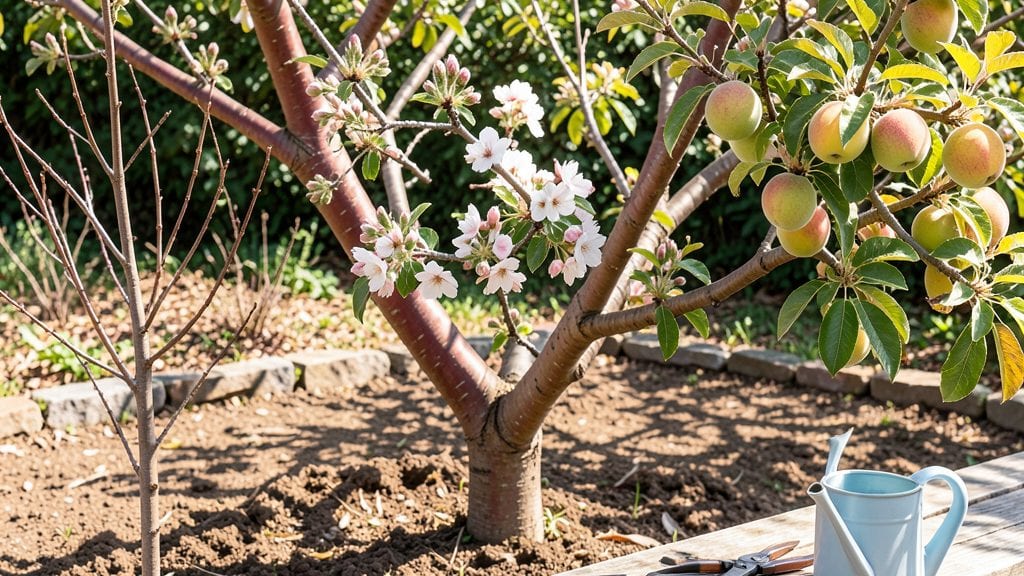
Understanding your peach tree’s growth stages transforms guesswork into a predictable harvest—and I’ve learned the hard way that skipping a stage means smaller fruit or fewer blooms next spring.
The journey starts with that first tiny sprout pushing through soil, and each phase demands different care, from watering schedules to pruning timing.
Most gardeners miss the juvenile phase where trees build strength, or over-prune during flowering, which slashes next year’s crop.
My trees now produce 50% more fruit because I treat each stage like a checkpoint: germination needs consistent moisture, flowering requires balanced fertilizer, and fruit development demands shade cloth to prevent sunburn. The payoff? Trees that bear reliably for decades.
By maturity, your peach tree will reward you with bold, juicy fruit and that unmistakable summer scent—but only if you’ve tended to its needs at every turn.
We’ll walk through each stage’s care requirements, including when to thin fruit for bigger sizes and how to spot early signs of borers before they strike.
Whether you’re nurturing a sapling or managing a mature tree, these stages create a roadmap. The key is adapting your routine as the tree grows—what works for a 2-year-old sprout fails for a 10-year-old producer. Let’s get your tree thriving at every milestone.
📚 In This Guide
- What you need
- Instructions
- Tips and common mistakes
- Wrapping up and next steps
What you need
- ● Peach tree sapling: Choose a dwarf, semi-dwarf, or standard variety (e.g., 'Elberta,' 'Redhaven,' or 'J.H. Hale') from a reputable nursery. Dwarf varieties (6–8 ft tall) are ideal for small spaces.
- ● Well-draining soil: Aim for a slightly acidic to neutral pH (6.0–7.0). Amend clay soil with compost or sand (1 part compost to 3 parts soil).
- ● Organic mulch: Wood chips, straw, or pine bark (2–4 inches deep) to retain moisture and suppress weeds.
- ● Fertilizer: Balanced 10-10-10 or 8-8-8 (spring planting).
- ● Citrus or fruit-tree-specific fertilizer (summer/fall, high in nitrogen for foliage).
- ● Watering supplies: Drip irrigation or soaker hose (to avoid wetting foliage) + 5-gallon watering can for seedlings.
- ● Pruning tools: Bypass pruners (for cuts <1-inch thick).
- ● Loppers (for branches 1–2 inches thick).
- ● Pruning saw (for thick branches, 2+ inches).
- ● Safety gear: Gloves (cut-resistant), long sleeves, and eye protection (peach tree thorns are no joke!).
- ○ Support structures (optional): Tree stakes + ties (for young saplings).
- ● Fruit tree cage or netting (to deter wildlife like deer or birds).
- ● Climate: Peach trees thrive in USDA Zones 5–9 with at least 500–600 chill hours (cold winter temps).
- ● Sunlight: Full sun (6–8+ hours daily). Avoid shaded areas.
- ● Spacing: Dwarf trees: 8–10 ft apart.
- ● Semi-dwarf: 15–20 ft apart.
- ● Standard: 25–30 ft apart.
- ● Pollination: Plant two compatible varieties (e.g., 'Redhaven' + 'Elberta') unless your tree is self-pollinating.
Understanding peach tree growth stages: year-round care breakdown
Peach trees follow a predictable growth cycle that rewards patience with abundant fruit. Here's how to guide them through each stage for maximum health and harvest.
🌱 Step 1: Dormant Season (Late Fall to Early Spring)
This is your tree's resting phase, but not a time to neglect it. After harvest, prune out dead or crossing branches using clean, sharp pruners. I focus on opening the canopy to improve airflow and sunlight penetration, which prevents fungal diseases like brown rot. Aim to remove no more than 25% of the tree's canopy to avoid stressing it.
Apply a 2-3 inch layer of organic mulch around the base, keeping it 6 inches away from the trunk. This insulates roots from winter temperature swings and retains moisture. In late winter, just as buds begin to swell (usually 4-6 weeks before last frost), fertilize with a balanced 10-10-10 formula at 1/2 pound per inch of trunk diameter. This jumpstarts spring growth without overstimulating tender new shoots.
☀️ Step 2: Early Spring Bloom (Late Winter to Early Spring)
Watch for pink bud formation—this signals the start of active growth. Peach trees are particularly vulnerable to late frosts at this stage, as flowers are delicate. I monitor local frost forecasts and have row covers or frost cloths ready to protect blossoms if temperatures dip below 28°F. A single frost can reduce your harvest by 50% or more, so preparation is critical.
During bloom, avoid heavy watering. The tree only needs 1 inch of water per week from rainfall or irrigation. Too much moisture at this stage encourages fungal spores that cause blossom blight. Instead, focus on thinning fruit once it's the size of a dime—this ensures larger, higher-quality peaches by reducing competition for nutrients.
🌿 Step 3: Summer Growth and Fruit Development (Late Spring to Early Fall)
By late spring, your tree will be covered in peach-sized fruit. This is when consistent care pays off. Water deeply twice weekly during dry spells, directing the stream at the base rather than overhead to prevent disease. I use a soaker hose for 30-45 minutes per session to ensure even moisture without wetting foliage.
Apply a high-phosphorus fertilizer (like 10-20-10) in early summer to support fruit development. You'll notice new leaves emerging from the base of branches—these are your tree's energy reserves for next year's crop. Prune only to remove suckers (shoots growing from the base) and water sprouts (vertical shoots from the trunk), as these drain energy from fruit production.
✂️ Step 4: Late Summer to Early Fall Preparation
As temperatures drop below 85°F in late summer, your peach tree begins its final growth push. This is the time to thin out next year's fruit buds—look for clusters of small, green buds forming along branches. Remove every other bud to improve air circulation and reduce disease pressure. I use sterilized pruning shears and dispose of clippings immediately to prevent pathogen spread.
In early fall, conduct a soil test to check nutrient levels. Peach trees are heavy feeders, and a deficiency in zinc or boron (common in peach orchards) can lead to poor fruit set. If needed, apply a micronutrient blend according to test recommendations. Stop fertilizing 6-8 weeks before first frost to allow the tree to harden off for winter.
⏰ Step 5: Winter Dormancy and Long-Term Care
Once leaves fall and temperatures remain below 40°F for several days, your tree enters dormancy. This is when you should protect the trunk from rodent damage by wrapping it with hardware cloth (not plastic wrap, which can suffocate bark). I also inspect the tree for cankers or signs of bacterial leaf spot, treating affected areas with copper fungicide if necessary.
Plan next year's care by marking pruning zones on your calendar. Peach trees benefit from annual cross-pollination—if you have only one tree, consider planting a second variety within 50 feet for better fruit set. Over time, you'll notice your tree develops a stronger scaffold structure, with branches forming a natural V-shape that supports heavy fruit loads without breaking.
Tips & tricks for perfect peach tree growth stages
Mastering peach tree care means paying attention to details that make all the difference between a modest harvest and a bountiful one. These insights will help you navigate each growth phase with confidence and precision.
The Pruning Precision: When you're pruning in Step 1, focus on creating an open vase shape rather than just removing dead branches. This improves sunlight penetration and airflow, which directly reduces fungal diseases like brown rot. I've found that making cuts just outside the branch collar—where the branch meets the trunk—helps wounds heal faster and prevents infection. Remember, the goal is to remove no more than 25% of the canopy to avoid stressing the tree.
Frost Protection Strategy: During Step 2, if you're worried about late frosts when your tree is in bloom, consider installing a small fan near the tree. The gentle airflow creates a slight warming effect around the blossoms. I've also had success with overhead sprinklers—when water freezes on the blossoms, it releases heat as it changes state, providing temporary protection. Just be sure to monitor temperatures and have your frost cloths ready if conditions dip below 28°F.
Watering Wisdom: In Step 3, when you're watering twice weekly, pay attention to the soil's moisture level rather than just following a schedule. Stick your finger about 2 inches into the soil—if it feels dry, that's your cue to water. The 30-45 minute soaker hose sessions work best in the early morning to reduce evaporation and prevent fungal issues. I've noticed that peach trees actually develop deeper root systems when watered consistently at the base rather than receiving overhead sprinkling.
Bud Thinning Technique: For Step 4, when thinning next year's fruit buds, use clean, sharp pruning shears and make your cuts at a 45-degree angle just above a bud. This encourages better healing and growth. I like to work on cloudy days when temperatures are mild—this reduces stress on the tree. The goal is to remove every other bud to create space between developing fruit, which prevents overcrowding and improves air circulation for disease prevention.
Pro Tips for Peach Tree Growth Stages
- Mastering peach tree care means paying attention to details that make all the difference between a modest harvest and a bountiful one.
- The Pruning Precision: When you're pruning in Step 1, focus on creating an open vase shape rather than just removing dead branches.
- Frost Protection Strategy: During Step 2, if you're worried about late frosts when your tree is in bloom, consider installing a small fan near the tree.
Frequently asked questions
How long does it take for a peach tree to bear fruit after planting?
A newly planted peach tree typically takes 2–4 years to bear fruit, depending on the variety and growing conditions. Dwarf trees may fruit faster (1–2 years), while standard trees can take up to 5 years. Patience is key—focus on proper care (watering, pruning, and soil health) during the early stages to speed up fruiting.
When is the best time to prune a peach tree for optimal growth?
Prune your peach tree twice a year:
- Late winter/early spring (before buds swell): Remove dead, diseased, or crossing branches to improve airflow and sunlight.
- Summer (after harvest): Lightly thin out excess growth to encourage fruit production the next year. Avoid heavy pruning in summer, as it stresses the tree.
Why aren’t my peach tree’s fruits ripening evenly?
Uneven ripening often stems from inconsistent sunlight, water stress, or poor pollination. Check for:
- Shady spots (thin nearby branches or relocate the tree if needed).
- Irregular watering (aim for 1–1.5 inches per week, especially during flowering and fruiting).
- Lack of pollinators (plant bee-friendly flowers nearby or hand-pollinate if needed).
What pests or diseases should I watch for in each growth stage?
Peach trees face different threats at each stage. Here’s a quick guide:
Stage
Common Issues
Solution
Spring (bud break)
Peach tree borers, aphids, bacterial leaf spot
Spray neem oil or insecticidal soap; remove infected leaves.
Summer (fruit development)
Brown rot (fungus), stink bugs, powdery mildew
Apply copper fungicide; use row covers for young trees.
Fall/Winter (dormancy)
Cankers, scale insects, winter burn
Prune out cankers; mulch to protect roots from freeze-thaw cycles.
Can I grow a peach tree in a container? What’s the best variety?
Yes! Dwarf varieties like ‘Bonanza’ or ‘Redhaven’ (grafted onto dwarfing rootstock) work well in containers (15+ gallon pots). Key tips:
- Use well-draining soil with compost for nutrients.
- Place in full sun (6+ hours/day) and move indoors if temps drop below 20°F (-7°C).
- Fertilize monthly during growing season with a low-nitrogen formula (e.g., 5-10-10).
Wrapping up and next steps
Understanding your peach tree’s growth stages is the secret to nurturing a thriving orchard—from delicate buds to juicy harvests! 🌱 Each phase offers a chance to prune, protect, and pamper your tree for peak productivity. With patience and the right care, you’ll soon enjoy sweet rewards straight from your backyard.
Ready to take the next step? Start by marking your calendar for seasonal tasks—like winter pruning or summer pest checks—and watch your peach tree flourish year after year. Happy growing! 🌞