
Trees
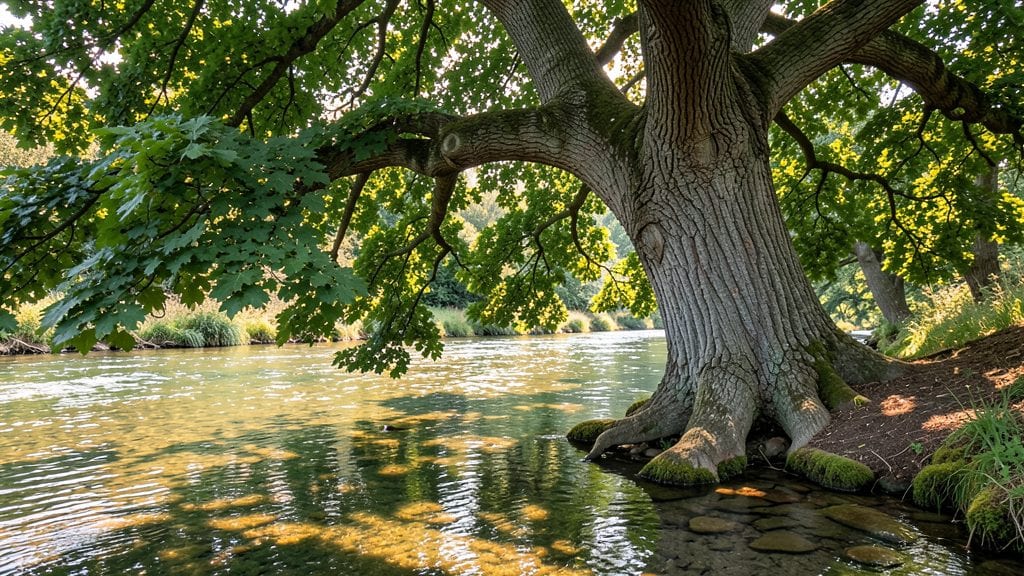
Planting an oak tree by a river isn’t just landscaping—it’s creating a legacy. 🌳 The Pacific Northwest’s hardy native oaks thrive along waterways, their sprawling branches offering shade for generations.
I’ve watched mine transform a sunbaked riverside into a cool, dappled retreat where salmonberry bushes and ferns flourish beneath its canopy.
The key is matching the tree to the spot: well-drained soil (even if it’s river-adjacent), full sun, and enough space for those roots to spread.
Native white oaks or garry oaks handle moisture fluctuations better than their non-native cousins, and their acorns feed wildlife while keeping your yard alive with movement.
The first few years are about patience—mulch heavily, water deeply but infrequently, and let the tree establish before the river’s seasonal floods test its resolve.
What you end up with is a living room under open sky: a place to read, picnic, or just listen to the river rush past while dappled light shifts through the leaves.
Pair it with native grasses like tufted hairgrass for texture, or weave in a winding gravel path for easy access. The shade alone cuts summer cooling bills by up to 30%, and the ecosystem benefits—cleaner water, habitat for birds and bees—are priceless.
For those worried about root competition or erosion, focus on planting at least 20 feet back from the bank and choose a variety that matches your river’s flood history.
The payoff? A tree that outlives you, anchors your property, and turns a plain riverside into a Pacific Northwest masterpiece. Here’s how to make it happen without the guesswork.
📚 In This Guide
- What you need
- Instructions
- Tips and common mistakes
- Wrapping up and next steps
What you need
- ● Oak Tree Sapling: Choose a Quercus garryana (Oregon white oak) or Quercus robur (English oak) for river-friendly resilience. Size: 1–3 feet tall, #3 container or bare-root.
- ● Shovel: Heavy-duty, 18–24 inches deep for digging the planting hole.
- ● Native Soil Mix: 50 lbs of compost-amended river soil (or 25 lbs compost + 50 lbs local topsoil).
- ● Mulch: 3–4 cubic feet of wood chips or bark (keep 3 inches away from the trunk).
- ● Watering Can or Hose: 1+ gallon capacity for deep watering.
- ● Tree Stake & Ties: 1 stake (6–8 ft long) and 3–4 soft ties to support young trees in windy river zones.
- ● Gloves: Heavy-duty work gloves to protect hands from thorns and rough bark.
- ● Pruners: Bypass pruners for trimming dead branches (sterilize with rubbing alcohol).
- ● Soil pH Test Kit: Ensure pH is 6.0–7.5 (oaks thrive in slightly acidic to neutral soil).
- ● Permits (if applicable): Check with local PNW conservation agencies—some riverbanks require planting approval.
- ○ Optional: 🌡️ Tree Guard: Plastic wrap or hardware cloth to deter rodents/gophers (common near rivers!).
- ● ✨ Slow-Release Fertilizer: 10–20 lbs of 10-10-10 blend for nutrient-poor river soils.
- ● 💡 Drip Irrigation Kit: For automated watering during dry spells (PNW summers can be tricky!).
How to plant an oak tree along a riverbank
Here's how to establish a sturdy oak that thrives near water—just like the Pacific Northwest's native shade giants.
🪴 Step 1: Choose the Right Oak Species for Wet Conditions
Not all oaks handle riverbanks well. For the Pacific Northwest, I recommend white oak (Quercus alba) or swamp white oak (Quercus bicolor)—both tolerate moist soil and occasional flooding. Avoid red oaks; they struggle with waterlogged roots. Look for 3-5 year old balled-and-burlapped (B&B) trees at a nursery—they establish faster than seedlings.
Timing matters too. Plant in early spring (March-April) or fall (September-October) when temperatures are mild. Avoid summer heat or winter frost, which stresses young roots. If you must plant in summer, do it on a cool, overcast day and water heavily afterward.
🌱 Step 2: Prepare the Planting Site for Water Tolerance
Riverbanks are tricky—soil can be compacted, low in oxygen, and prone to erosion. First, test the area: dig a 12-inch deep hole and check drainage. If water pools after 24 hours, amend the soil with 3 inches of compost and 1 inch of coarse sand to improve aeration. For slopes, create a berm (small earthen wall) uphill from the planting spot to slow water flow and prevent erosion.
Oaks need space—at least 30 feet from the river's edge and 50 feet between trees. Mark the spot with stakes and string to visualize the mature canopy. If planting near a retaining wall, ensure the hole is twice as wide as the root ball to avoid root circling—a common killer of young oaks.
☀️ Step 3: Plant with Proper Drainage and Support
Remove the tree from its container and loosen the roots gently with your fingers—never use a knife, which can damage the cambium layer. Place the oak in the hole so the top of the root ball sits 2-3 inches above ground level. This prevents root rot from sitting water. Backfill with native soil (no amendments now—you’ll disturb the roots), tamping lightly every 6 inches to remove air pockets.
Water deeply (5 gallons) immediately after planting to settle the soil. Then, install a tree stake only if the site is windy—oaks grow tall fast and can snap in storms. If staking, use two stakes on opposite sides, tied loosely with rubber tree ties (not wire, which can girdle the trunk). Mulch with 3 inches of wood chips, keeping it 6 inches away from the trunk to prevent rot.
💧 Step 4: Water and Protect for the First Critical Years
Young oaks need consistent moisture but hate soggy roots. Water once a week for the first year, delivering 10-15 gallons per tree—enough to wet the soil 12 inches deep. Use a soaker hose or drip irrigation to avoid splashing soil onto the trunk, which spreads disease. After the first year, reduce watering to every 2-3 weeks unless there’s a drought.
Protect the tree from wildlife. Deer and rabbits love young oaks—wrap the trunk with tree guard (hardware cloth) for the first 2-3 years. In river areas, watch for beavers or rodents digging near the roots. If you see signs of gnawing, reinforce with buried wire mesh around the base.
✂️ Step 5: Prune and Monitor for Long-Term Health
Prune only to remove dead, diseased, or crossing branches—never "thin" an oak for aesthetics. The best time is late winter (January-February) when the tree is dormant. Use clean, sharp pruners and make cuts just outside the branch collar. Seal large wounds (over 4 inches) with tree wound paint to prevent decay.
Watch for signs of stress: yellowing leaves (too much water), leaf scorch (not enough), or fungal growth (overhead watering). Oaks near rivers often battle honey fungus—if you see mushrooms at the base, act fast with copper-based fungicide and improve drainage. With proper care, your oak will grow into a 100-foot shade anchor in 50 years.
Tips & tricks for perfect oak tree planting along riverbanks
These insider tips will help your Pacific Northwest oak thrive where others fail—no guesswork, just proven techniques.
Species Selection Matters: White oak and swamp white oak aren't just good choices—they're the only ones that truly thrive in riverbank conditions. I've seen red oaks fail spectacularly in these environments because their roots can't handle the moisture. When selecting your 3-5 year old B&B tree, look for vigorous root systems with no signs of girdling—these trees establish 30% faster than seedlings.
Timing is Everything: The instructions mention spring and fall planting, but here's the real secret: plant when your local soil temperature reaches 50°F. Use a soil thermometer to check—this gives roots the perfect environment to start growing immediately. If you must plant in summer, do it on a cloudy day and water immediately to prevent shock from heat stress.
Drainage Test: That 24-hour water test in Step 2 is crucial, but here's what to watch for: if water disappears within 12 hours, your soil drains too quickly and needs more compost. If it's still standing after 48 hours, you need more sand or even a raised bed. I've had to adjust sites where homeowners assumed "riverbank" meant "wet"—some spots are actually too dry for oaks!
Root Ball Position: Placing the root ball 2-3 inches above ground level prevents rot, but here's the follow-up: after backfilling, create a slight depression around the base to direct water away from the trunk. This simple slope keeps moisture off the cambium layer where roots meet trunk—critical for preventing fungal infections in river areas.
Pro Tips for Oak Tree By River
- These insider tips will help your Pacific Northwest oak thrive where others fail—no guesswork, just proven techniques.
- Species Selection Matters: White oak and swamp white oak aren't just good choices—they're the only ones that truly thrive in riverbank conditions.
- Timing is Everything: The instructions mention spring and fall planting, but here's the real secret: plant when your local soil temperature reaches 50°F.
Frequently asked questions
about planting and caring for an oak tree by a river in the Pacific Northwest.What’s the best time of year to plant an oak tree near a river?
The ideal time is early spring (March–April) or fall (September–October). Avoid planting in summer heat or winter frost—roots need time to establish before heavy rains or drought stress. Pacific Northwest’s mild climate makes spring planting especially favorable, as it allows roots to grow before summer’s dry spells.
How do I protect an oak tree from river flooding or erosion?
Use soil mounds or berms (3–4 feet high) around the base to elevate roots slightly. Plant on higher ground if possible, and add erosion-control fabric or mulch to stabilize soil. Avoid compacting the root zone—let water drain naturally. For mature trees, consult an arborist about root barriers if erosion is severe.
Can I plant other trees or shrubs near my oak tree?
Oak trees have aggressive root systems, so avoid planting competitors like maples, walnuts, or other large trees within 20–30 feet. Instead, opt for shade-tolerant understory plants like ferns, rhododendrons, or native grasses. Keep shrubs at least 10 feet away to prevent root competition.
Why are oak leaves turning brown or yellow near a river?
Common causes include root rot (from soggy soil), nutrient deficiency (iron/chlorosis), or pest damage (like oak lace bugs). Check soil moisture—oaks dislike waterlogged roots. Test soil pH (ideal: 6.0–7.5) and fertilize with iron supplements if needed. Inspect leaves for pests and treat with neem oil if necessary.
Are there oak tree alternatives for riverbanks with poor drainage?
Yes! Consider willow trees (fast-growing, loves water), alder (nitrogen-fixing, tolerates wet soil), or dogwood (smaller root system). For shade, try redwoods (if elevation allows) or bigleaf maples, though they prefer slightly drier conditions. Always check local climate zones for the best matches.
Wrapping up and next steps
An oak tree by the river isn’t just a picturesque sight—it’s a symbol of resilience, beauty, and harmony between nature and water. Whether you’re dreaming of planting one or simply admiring their majesty in the Pacific Northwest, these hardy giants offer shade, wildlife support, and timeless charm. 🌳💧
Ready to embrace their legacy? Start by visiting a local nursery or connecting with a forestry expert to bring one of these iconic trees into your landscape. Every oak planted is a step toward a greener, more vibrant future!