
Trees
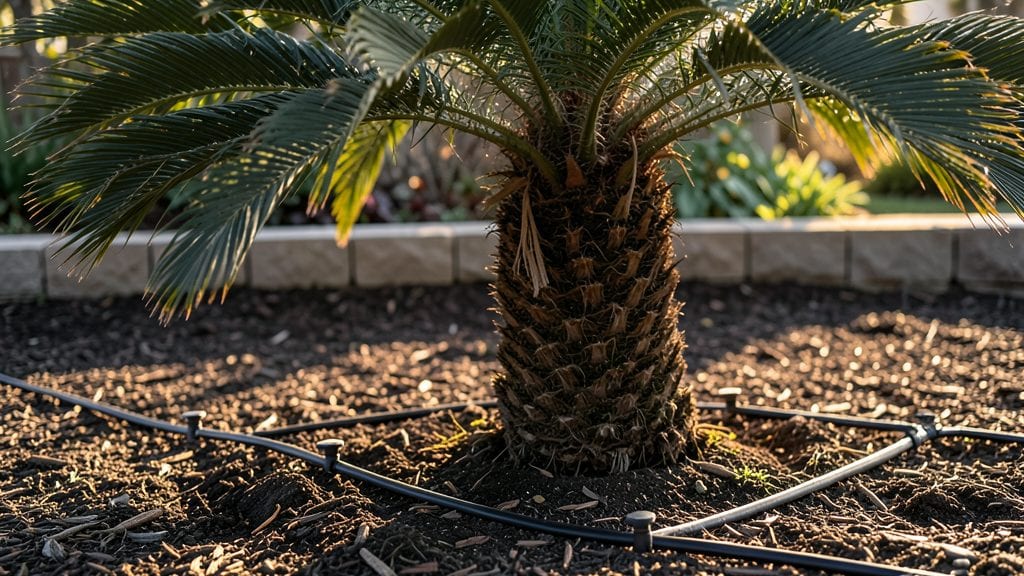
Installing drip irrigation for palm trees saved mine after just one summer—no more brown fronds from overwatering or underwatering. The key is matching the slow, deep watering palms crave to their shallow but sprawling root systems.
Most people drown their palms because they assume they need constant moisture, but palms actually prefer infrequent, thorough watering that mimics natural rainfall.
You’ll need a low-flow drip system with emitters spaced 12-18 inches apart around the tree’s drip line, plus a timer to run it 2-3 times per week for 30-45 minutes.
The right tubing and emitters cost around $50-$80 for a single palm, but it pays off in water savings and healthier roots that resist rot and fungus.
I started with a basic setup and upgraded to a smart controller after seeing how much easier it made adjustments for our dry season.
What you’ll end up with is a palm that stays vibrant green year-round, even in heatwaves, because the water goes straight to the roots where it’s needed most. No more soggy soil or wasted water running off—just consistent moisture that encourages strong growth.
The system also cuts down on weeds since the soil stays moist but not saturated, and you’ll notice fewer pests attracted to damp foliage.
This works for all palm types—from small pygmy palms to towering coconut palms—just adjust the emitter spacing and runtime based on your climate. In coastal areas, you might run it daily for 20 minutes, while inland desert palms might only need weekly deep waterings.
The beauty is that once it’s set up, it’s hands-off and lets you enjoy your palm without the guesswork.
📚 In This Guide
- What you need
- Instructions
- Tips and common mistakes
- Wrapping up and next steps
What you need
- ● Setting up drip irrigation for palm trees is a game-changer for efficient watering! Here’s everything you’ll need to get started—whether you’re tackling a small grove or a single statement palm. 🌴💧
- ● Pro tip: 💡 Measure your palm’s root zone radius (typically 2–3 ft from the trunk) to determine tubing length and emitter placement. Happy irrigating! 🌿
Step-by-Step guide to installing drip irrigation for palm trees
Here’s how to set up a system that delivers water exactly where your palms need it most.
Plan Your Layout and Calculate Water Needs
Start by mapping your palm trees’ mature spread—each tree needs 1-2 emitters spaced 12-18 inches apart around the drip line (the edge of the tree’s canopy). For 4 palm trees, plan for 4-8 emitters total, depending on size. I like to sketch a rough diagram first, marking where the mainline tubing will run and where branch lines will connect to each tree.
Check your local water pressure—most palm drip systems thrive at 20-40 psi. If your pressure runs higher, add a pressure regulator to prevent system overload. You’ll know your system is sized right when water flows steadily without sputtering or pooling.
Install the Mainline and Branch Lines
Lay the ½-inch mainline tubing along the perimeter of your palm area, burying it 2-4 inches deep or securing it with landscape staples if above ground. Use ¼-inch branch lines to connect to each emitter—run these directly to the base of each tree, keeping them 6-12 inches away from the trunk to avoid waterlogging.
I always test-fit connections before securing everything. Cut tubing to length with a sharp utility knife, then press fittings firmly until they click—no loose joints here. For 4 trees, you’ll need about 50 feet of mainline and 20 feet of branch lines (adjust based on spacing).
Attach Emitters and Set the Flow Rate
Place ¼-gph (gallons per hour) emitters at each connection point, spacing them evenly around the tree’s drip line. Palm trees need deep, slow watering—these emitters deliver ¼ gallon per hour per emitter, which translates to 1-2 gallons per tree per hour. For 4 trees, that’s 1-2 gallons total per hour, perfect for maintaining moisture without waste.
Adjust the flow by twisting the emitter’s flow notch—start with a ¼ turn and increase only if the soil feels dry after 24 hours. You’ll see the soil 12-18 inches deep stay consistently moist without puddling. Avoid placing emitters too close to the trunk; 6-12 inches away prevents rot.
Connect to a Water Source and Test the System
Attach the mainline to a garden hose bib or automatic timer. If using a timer, set it for 2-4 hours, 2-3 times per week—palms hate soggy roots but need steady moisture. Before turning it on, flush the system by running water for 5 minutes to clear any debris from the tubing.
Watch for uniform drips at each emitter. If water sputters or flows unevenly, check for kinks in the tubing or clogged emitters. A quick soak in vinegar clears most clogs—just remove the emitter, soak for 10 minutes, then rinse. Once everything’s flowing smoothly, let it run for 30 minutes and inspect the soil—it should be moist 6 inches down without standing water.
Schedule and Monitor for Optimal Palm Health
Set your irrigation timer to run early morning (4-8 AM) when evaporation is lowest. Palm trees in full sun may need daily watering in summer, while shaded palms can go every other day. I check soil moisture by pushing a 6-inch screwdriver into the ground—if it meets resistance, watering’s sufficient. If it slides in easily, increase frequency slightly.
Every 3 months, inspect emitters for clogs and tubing for cracks—palm roots can split weak lines over time. Trim any grass or weeds growing over the tubing to prevent damage. With this setup, your palms will develop strong, deep roots and stay lush without the risk of fungal diseases that come from overhead watering.
Tips & tricks for perfect drip irrigation setup for palm trees
A few smart strategies will help you avoid common pitfalls and get the most out of your palm drip irrigation system.
Precision Placement Pays Off: In Step 1, when mapping your layout, measure the mature spread of each palm tree—not just the current size. Palm roots spread wider than the canopy, so position emitters around the drip line where roots will eventually reach. I've seen systems fail when emitters were placed too close to the trunk in Step 3, leading to rot. Keep those emitters 6-12 inches away from the trunk at all times.
Pressure Control is Critical: The 20-40 psi range mentioned in Step 1 isn't just a suggestion—it's essential for proper emitter function. If your pressure exceeds 40 psi, install that pressure regulator immediately. I learned this the hard way when my system blew out fittings during the first test. For testing, run water for just 5 minutes as instructed, then check for steady flow at each emitter before proceeding to Step 4.
Tubing Depth Matters: Burying your ½-inch mainline tubing 2-4 inches deep in Step 2 protects it from UV damage and accidental damage from lawn equipment. If you must run tubing above ground, secure it with landscape staples every 2-3 feet. I recommend burying branch lines too when possible—they're more vulnerable to damage from mowing. The extra effort prevents costly repairs down the road.
Flow Rate Fine-Tuning: When adjusting emitter flow in Step 3, start with that ¼ turn and let the system run for the full 24 hours before making changes. The soil moisture at 12-18 inches deep is what matters most. I've found that palm trees in sandy soil often need slightly more flow than the standard ¼ gallon per hour—just increase by ⅛ turns if needed after monitoring for a week.
Pro Tips for Drip Irrigation For Palm Trees
- A few smart strategies will help you avoid common pitfalls and get the most out of your palm drip irrigation system.
- Precision Placement Pays Off: In Step 1, when mapping your layout, measure the mature spread of each palm tree—not just the current size.
- Pressure Control is Critical: The 20-40 psi range mentioned in Step 1 isn't just a suggestion—it's essential for proper emitter function.
Frequently asked questions
Got questions about drip irrigation for your palm trees?
You’re not alone! Here are answers to the most common concerns—from setup to maintenance—so you can keep your palms thriving with ease.
How often should I water palm trees with drip irrigation?
Palm trees typically need 2–4 gallons per tree per day during hot, dry months, but adjust based on soil type and climate. Use a timer for consistency—most palms prefer deep, infrequent watering (2–3 times per week) rather than daily shallow soaks. Monitor soil moisture; if the top 2 inches are dry, it’s time to water.
When is the best time of day to run drip irrigation for palm trees?
Run your system early morning (4–8 AM) to minimize evaporation and fungal risks. Avoid late evening or nighttime watering, as damp foliage can attract pests. In extreme heat, split watering into two sessions (morning + late afternoon) to reduce stress on roots.
Is drip irrigation more cost-effective than traditional sprinklers for palm trees?
Drip systems save 30–50% on water by delivering moisture directly to roots, reducing runoff and evaporation. While the upfront cost (~$1–$3 per emitter) is higher than sprinklers, long-term savings on water bills and reduced maintenance (no clogged nozzles or wasted water) make it a smart investment.
What should I do if my drip irrigation lines clog or stop working?
Clogs are common but fixable! First, flush the system with a vinegar-water mix (1:3 ratio) to dissolve mineral buildup. Check for debris or algae in emitters and replace filters if needed. For stubborn clogs, use a wire or pipe cleaner to clear the line. Pro tip: Install a filter at the source to prevent future issues.
Can I use drip irrigation for palm trees in sandy soil?
Yes! Sandy soil drains quickly, making drip irrigation ideal—it delivers water slowly and directly to roots, preventing runoff. Use longer emitters (e.g., 2–4 GPH) and space them 12–18 inches apart for even coverage. Add organic mulch to retain moisture and reduce evaporation.
Wrapping up and next steps
Drip irrigation is a game-changer for palm tree care—it delivers water directly to the roots, conserves resources, and keeps your trees thriving with minimal effort. 🌿 By avoiding overwatering or fungal risks, you’re setting your palms up for long-term health and beauty. Ready to upgrade your watering game?
🚀 Your Next Step:
- Plan your setup: Sketch your palm tree layout and calculate tubing needs.
- Shop smart: Grab the essentials (emitters, tubing, timer) from local nurseries or online.
- Install with confidence: Follow the steps, and soon you’ll be watering like a pro!
Your palms—and the planet—will thank you! 💧✨