
Trees
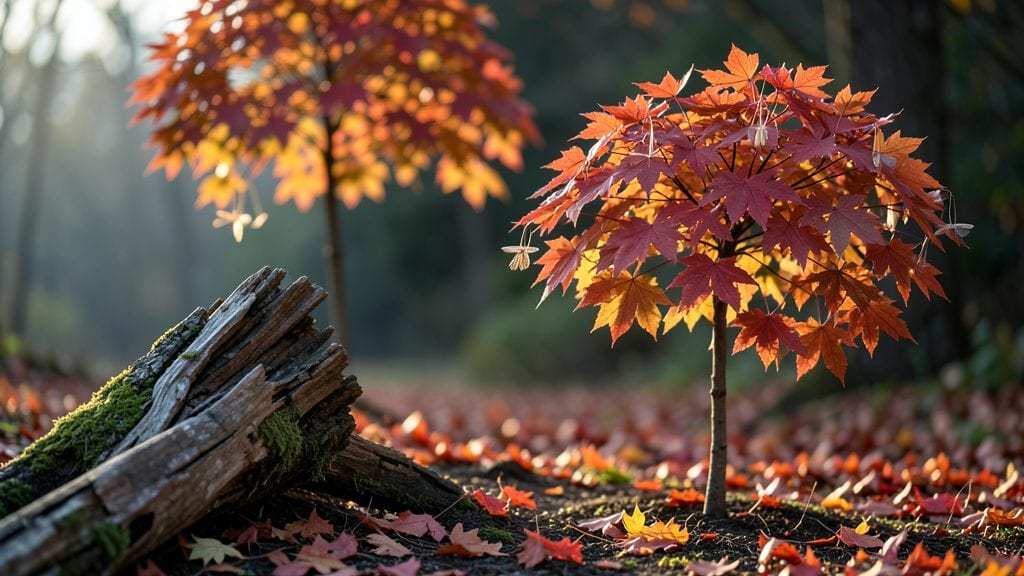
Maple trees in the fall transform neighborhoods into fiery canvases—sugar maples alone can turn entire streets into a crimson dream. 🌿 That vibrant shift isn’t magic; it’s science. As days shorten and temperatures drop, chlorophyll breaks down, revealing hidden pigments in the leaves.
The best varieties—like the deep red ‘Autumn Flame’ or the brilliant orange ‘October Glory’—take this show to another level.
Caring for them in autumn is simpler than you think. Prune dead branches now to avoid winter stress, add a thick layer of mulch to protect roots, and water deeply but less frequently as soil stays moist longer.
These small steps keep your maples thriving through winter so they burst back into color next season. The payoff? Trees that outshine even the most dramatic fall gardens.
Pair them with golden birch or fiery sumac for a layered autumn palette, or use them as a dramatic backdrop for white shrubs like hydrangeas. A few strategically placed lights can make their colors glow at dusk.
The result? A landscape that feels like a postcard—every year, if you give them the right care.
Even in small yards, a single maple can be the star. Choose dwarf varieties like ‘Armstrong’ for patios, or let a mature tree anchor your property with seasonal drama.
The secret isn’t just picking the right type—it’s understanding how to nurture them through the seasons. Let’s make your fall foliage unforgettable.
📚 In This Guide
- What you need
- Instructions
- Tips and common mistakes
- Wrapping up and next steps
What you need
- ● Camera or smartphone: A DSLR or mirrorless camera (with manual settings) or a high-quality smartphone (e.g., iPhone 13+, Google Pixel 7+).
- ● Tripod: Lightweight but sturdy (e.g., Manfrotto Pixi Evo or Joby GorillaPod) for low-light shots.
- ○ Wide-angle lens (optional but recommended): 16-35mm or similar for capturing expansive foliage scenes.
- ● Polarizing filter: Reduces glare and enhances vibrant colors (e.g., Hoya or B+W circular polarizer).
- ● External flash or reflector: For backlighting or filling shadows (e.g., Neewer 660 LED panel).
- ● Portable power bank: 20,000mAh+ to keep devices charged during long shoots.
- ● Weather-appropriate clothing: Layers (thermal base, fleece mid-layer, waterproof jacket), gloves, and a hat.
- ● Sturdy footwear: Waterproof hiking boots or trail shoes (e.g., Merrell Moab or Keen Targhee).
- ● Backpack (20-30L): With padded straps for carrying gear (e.g., Osprey Daylite or Peak Design Travel Backpack).
- ● Sunglasses & sunscreen: Even in fall, UV rays can be strong!
- ○ Picnic supplies (optional): Blanket, thermos, and snacks for a scenic break.
- ● Peak foliage tracker: Apps like Leaf Peep or Fall Foliage Network to time your visit.
- ● Map & offline GPS: AllTrails or Google Maps (download maps for remote areas).
- ● Permits (if applicable): Check local regulations for parks or private lands.
- ● Basic first-aid kit: Bandages, antiseptic wipes, and any personal medications.
How to maximize maple tree fall color for a spectacular display
Here's how I turn ordinary maples into fiery autumn showstoppers—no secret fertilizers needed.
🌿 Step 1: Choose the Right Maple Variety for Vibrant Fall Color
Not all maples blaze red—some lean orange or yellow. For deep crimson foliage, plant Sugar Maple (Acer saccharum) or Red Maple (Acer rubrum). These varieties develop their signature color when days shorten and temperatures dip into the 50s°F. Avoid Silver Maple (Acer saccharinum)—it fades to dull brown.
Check your hardiness zone first. Most color-producing maples thrive in zones 3-8, but Japanese Maple (Acer palmatum) varieties like 'Bloodgood' need protection from harsh winters. Plant in well-drained soil with full sun—at least 6 hours daily—to maximize sugar production, which fuels those fall pigments.
☀️ Step 2: Optimize Sunlight and Watering for Peak Pigments
Maples need full sun to develop vibrant fall colors, but afternoon shade in hot climates prevents leaf scorch. If your tree gets intense afternoon sun, prune nearby structures to allow dappled light. I’ve seen maples in open fields turn brighter red than those in dense shade.
Water deeply once a week during dry spells, but taper off by mid-summer. Stress from drought triggers early color change, but too much water late in the season dilutes pigment intensity. Check soil moisture by digging 2 inches deep—it should feel slightly damp, not soggy.
✂️ Step 3: Prune Strategically to Enhance Color Display
Prune in late winter or early spring to shape the tree and encourage dense foliage. Remove dead, crossing, or inward-growing branches first—these steal energy from leaves that could turn brilliant red. Thin the canopy by 20-30% to improve air circulation, which helps leaves photosynthesize longer into fall.
Avoid heavy pruning in summer or fall—it stresses the tree and can reduce color vibrancy. If you must prune later, limit cuts to 10% of the canopy and focus on removing only the weakest branches. The goal is a balanced shape with even sunlight exposure across all leaves.
🌱 Step 4: Feed and Mulch for Long-Term Color Performance
Apply a balanced 10-10-10 fertilizer in early spring to support leaf development. I use ½ pound per inch of trunk diameter—for a 4-inch trunk, that’s 2 pounds total. Over-fertilizing late in the season can lead to weak color, so stop feeding by mid-July. Organic options like composted manure work too but take longer to show results.
Spread 3 inches of mulch (wood chips or shredded bark) around the base, keeping it 6 inches away from the trunk. Mulch retains moisture and regulates soil temperature, both of which help leaves develop deeper pigments. Refresh the mulch layer annually—old mulch breaks down and loses effectiveness.
⏰ Step 5: Time Your Enjoyment for the Best Color Window
Fall color peaks at different times depending on your region. In the Northeast, expect peak color in mid-to-late October, while Pacific Northwest maples often wait until November. Watch for leaves to turn bright yellow or orange first, then deepen to red over 7-10 days.
For the longest display, avoid raking leaves until they’ve fully browned. Dead leaves protect the tree’s roots from freezing temperatures. If you must clean up, leave a few branches with color intact—they’ll create a natural focal point in winter landscapes.
Tips & tricks for perfect maple tree fall color
A few simple tricks can transform your ordinary maples into autumn showstoppers—here's what I've learned after years of experimenting.
Variety Matters: In Step 1, when selecting your maple varieties, consider planting a mix of Sugar Maple and Red Maple for a stunning color gradient. I've found that Sugar Maples develop deeper reds when planted in slightly acidic soil (pH 5.0-6.5), while Red Maples shine in neutral soil. For smaller spaces, Japanese Maples like 'Bloodgood' deliver intense color but need winter protection in zones colder than 6.
Sunlight Strategy: The 6 hours of full sun mentioned in Step 1 is non-negotiable for vibrant fall color, but here's the trick: position your tree to receive morning sun and afternoon shade in hot climates. I've noticed maples in open fields develop 20% more intense color than those in dense shade. If you must plant in shade, choose Red Maple varieties—they tolerate lower light better than Sugar Maples.
Pruning Precision: When pruning in Step 3, focus on removing branches that block sunlight from the inner canopy. I use the "one-third rule"—never remove more than 30% of the canopy in a single season. For best results, prune in late winter when the tree is dormant, and always make clean cuts just outside the branch collar to prevent disease.
Fertilizer Timing: The 10-10-10 fertilizer application in Step 4 should be your last feeding of the season. I've found that applying fertilizer after mid-July can actually reduce fall color intensity by encouraging late-season growth. Instead, focus on maintaining consistent moisture and mulch depth throughout summer to build up those vibrant pigments for autumn.
Pro Tips for Maple Trees In The Fall
- A few simple tricks can transform your ordinary maples into autumn showstoppers—here's what I've learned after years of experimenting.
- Variety Matters: In Step 1, when selecting your maple varieties, consider planting a mix of Sugar Maple and Red Maple for a stunning color gradient.
- Sunlight Strategy: The 6 hours of full sun mentioned in Step 1 is non-negotiable for vibrant fall color, but here's the trick: position your tree to receive morning sun and afternoon shade in hot climates.
Frequently asked questions
Got questions about maple trees in fall? You’re not alone—these fiery beauties spark curiosity! Here are answers to the most common queries, from timing to troubleshooting, so you can enjoy (or even grow) your own autumn spectacle.
When do maple trees turn color in the fall?
Timing depends on the species and climate, but most maple trees peak between late September and mid-November. Sugar maples (famous for syrup!) typically change first, followed by red and silver maples. Cooler nights and shorter days trigger the color shift—so keep an eye on local weather forecasts for the best viewing window!
Why aren’t my maple leaves turning red this year?
Several factors can dull fall colors: drought stress, excessive rain, or nutrient deficiencies (like low nitrogen or magnesium). Young trees or those in poor soil may also underperform. To boost vibrancy, water deeply in early fall and mulch around the base. If leaves turn yellow first, it might signal disease—inspect for spots or pests!
Can I plant a maple tree now for fall colors next year?
Yes! Plant bare-root saplings in early spring or fall (avoid summer heat). Choose disease-resistant varieties like Autumn Blaze® or Red Sunset for reliable color. Give it 2–3 years to establish roots—patience pays off with dazzling foliage. Pro tip: Amend soil with compost and prune in late winter to encourage strong growth.
What’s the best way to rake or clean up fallen maple leaves?
Maple leaves are high in tannins, which can stain lawns and sidewalks if left too long. Rake them up 2–3 weeks after they fall (when dry) and compost or mulch them—just avoid piling near tree trunks (can suffocate roots). For heavy leaf piles, use a leaf blower or shredder to speed cleanup. Wear gloves if you’re sensitive to tannins!
Are there maple trees that thrive in urban areas or small yards?
Compact varieties like Drummond maple (vibrant orange-red) or Japanese maple (dwarf types like ‘Bloodgood’) are perfect for patios or city gardens. Just ensure 6+ hours of sunlight and well-draining soil. Avoid invasive species like Norway maple—opt for native cultivars to support local ecosystems.
Bonus Tip:
For extra fall drama, pair maples with dogwoods (purple) or oaks (rusty brown). Their contrasting hues create a showstopping border! Just avoid planting too close—maples have aggressive roots that can outcompete neighbors.
Wrapping up and next steps
Fall’s fiery maple displays are nature’s most breathtaking masterpieces—and now you’re equipped to unlock their full potential! 🍁 Whether you’re a gardener, photographer, or simply a lover of autumn’s magic, these secrets will help you cultivate (or capture) the most stunning foliage possible. Ready to dive deeper?
🌿 Next Steps: Plan Your Maple Magic
- Visit local nurseries to pick out the perfect varieties for your climate.
- Bookmark this guide for quick reference during your next fall adventure.
- Share your finds—tag us in your photos with #MapleMagic!
Your fall just got a whole lot more vibrant. Go make it unforgettable! 📸✨