Pruning
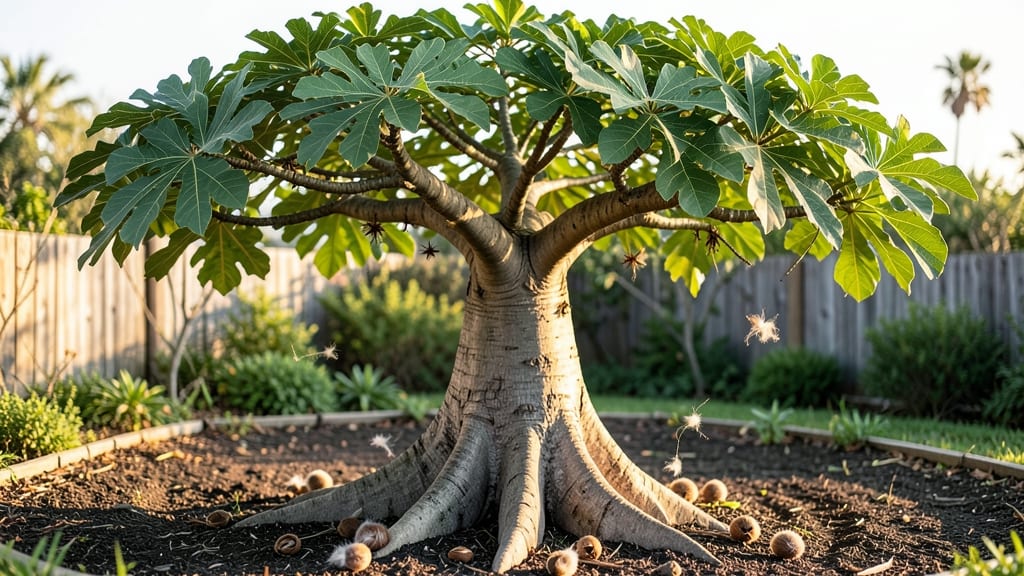
Growing a kapok tree in Florida means you can enjoy its towering beauty and fragrant blooms year-round—if you prune it right. 🌿 The key is understanding how this tropical giant handles Florida’s humidity, storms, and rare frosts, because what works in its native rainforests won’t always translate to your backyard.
I’ve learned the hard way that aggressive pruning in winter can stress the tree, while strategic cuts in early spring encourage that lush, frost-resistant growth you’re after.
The Florida climate gives kapok trees a fighting chance—they thrive in USDA zones 10-12, where they naturally resist pests and drought once established.
But here’s the catch: they need well-draining soil (think sandy loam mixed with compost) and full sun to avoid those leggy, weak branches that snap in storms.
Urban gardeners can grow them in large containers (10+ gallons), but even then, you’ll need to prune aggressively to keep them manageable—think 10-15 feet tall instead of their wild 100-foot giants.
When you nail the pruning, you’ll see bright pink blooms appearing year-round, especially after a good rain. The secret is cutting back 1/3 of the oldest growth in late winter (just before new shoots appear) and removing any dead or crossing branches.
This keeps the tree compact, encourages airflow (reducing fungal issues), and ensures it bounces back from Florida’s occasional cold snaps. Plus, the fibrous bark makes it surprisingly resilient against hurricane winds—if you prune the lower branches to reduce wind resistance.
Fair warning: kapok trees aren’t native to Florida, so check local regulations before planting—some areas consider them invasive. If you’re in a conservation-minded neighborhood, opt for a native alternative like the Florida stopgap (Vitex magnoliafolia), which offers similar height and drought tolerance without the ecological concerns.
Either way, with the right approach, your kapok tree will become the showstopper of your landscape—just don’t blame me if your neighbors start asking where you got yours.
📚 In This Guide
- What you need
- Instructions
- Tips and common mistakes
- Wrapping up and next steps
What you need
- ● Kapok tree seeds or saplings: Seeds: 3–5 (for germination testing or multiple plants)
- ● Saplings: 1–2 (pre-germinated, 12–18" tall, from a Florida-friendly nursery)
- ● Soil: Well-draining, slightly acidic soil (pH 5.5–6.5). Mix 2 parts garden soil with 1 part perlite or sand.
- ○ Optional: Compost (1 part) for nutrient-rich planting.
- ● Pruning tools: Bypass pruners (for clean cuts on small branches)
- ● Loppers (for thicker branches, ½"–1" diameter)
- ● Saw (for branches >1" diameter)
- ● Disinfectant (70% isopropyl alcohol or bleach solution) to sterilize tools.
- ● Protective gear: Gloves (cut-resistant for pruning)
- ● Safety glasses (for debris protection)
- ● Frost protection: Burlap wraps or frost cloth (for young trees in rare cold snaps)
- ● Mulch (2–3" layer of pine straw or wood chips to insulate roots).
- ● Fertilizer: Slow-release, balanced fertilizer (10-10-10 or 8-3-9) (apply in early spring).
- ● Avoid high-nitrogen fertilizers (kapok trees prefer phosphorus/potassium).
- ● Support structures: Stakes or a tree tie kit (for young saplings in windy areas).
- ● Monitoring tools: Moisture meter (to check soil hydration)
- ● pH test kit (to verify soil acidity).
Step-by-Step instructions for planting and pruning kapok trees in Florida
Here’s how to establish a thriving kapok tree (Ceiba pentandra) in Florida’s climate—where pruning for frost resilience and year-round blooms makes all the difference.
🪴 Step 1: Select the Right Planting Site and Soil
The kapok tree thrives in full sun and Florida’s warm climate, but it needs well-draining soil to prevent root rot—a common issue in heavy, clay-heavy soils. Choose a site with at least 8 feet of vertical clearance since mature kapok trees can reach 100 feet tall (yes, really). If your soil is dense, amend it with 2-3 inches of organic compost and a handful of coarse sand to improve drainage.
Dig a hole twice as wide as the root ball but only as deep—planting too deep smothers the roots. Gently loosen the root ball before placing it in the hole to encourage root spread. Water deeply right after planting to settle the soil around the roots. You’ll know it’s right when the soil surface looks slightly compacted but not muddy.
✂️ Step 2: Prune for Frost Resilience and Structure
Florida’s occasional cold snaps can damage kapok trees, but strategic pruning helps. In late winter (just before the last frost), remove dead, diseased, or crossing branches first—these are easy to spot as they’re brown, brittle, or growing inward. Next, thin the canopy to improve airflow by cutting back 25% of the smallest branches from the outer edges. This reduces frost damage risk and encourages stronger regrowth.
For frost protection, wrap young trees in burlap or frost cloth during cold snaps below 30°F. Avoid heavy pruning in summer—kapok trees bloom year-round, and aggressive cuts can reduce flower production. Instead, focus on light shaping to maintain an open canopy, which Florida’s humidity loves.
☀️ Step 3: Water and Fertilize for Year-Round Blooms
Kapok trees are drought-tolerant once established, but young trees need deep watering every 7-10 days (check when the top 2 inches of soil feel dry). Overwatering is worse than underwatering—kapok roots rot quickly in soggy soil. Mulch the base with 3-4 inches of wood chips, keeping it 6 inches away from the trunk to prevent moisture buildup.
Fertilize lightly in early spring and late summer with a balanced 10-10-10 formula—kapok trees don’t need heavy feeding. Over-fertilizing leads to weak wood and fewer blooms. You’ll notice healthy growth when new leaves emerge bright green and glossy, not yellow or wilted.
🌿 Step 4: Monitor for Pests and Adjust Pruning
Florida’s pests rarely bother kapok trees, but keep an eye out for aphids or scale on new growth. Spray with neem oil if you see sticky residue (honeydew) on leaves. If branches grow too dense, prune again in early spring to maintain an open structure—this prevents fungal issues and keeps the tree’s iconic silhouette.
Every 2-3 years, do a light structural prune to remove water sprouts (shoots growing straight up from the trunk) and sucker growth at the base. This keeps the tree’s energy focused on upward growth and blooms. You’ll see the difference in thicker branches and more abundant flowers within a season.
Tips & tricks for perfect kapok tree care in Florida
Kapok trees thrive with the right care, and these pro tips will help you avoid common pitfalls while maximizing their stunning year-round blooms and frost resilience.
Soil Preparation: Before planting, test your soil's drainage by digging a hole and filling it with water. If it drains slower than 4 hours, your soil is too dense and needs the 2-3 inches of organic compost and sand amendment mentioned in Step 1. I've seen kapok trees struggle in Florida's heavy clay soils until we improved drainage—don't make that mistake.
Pruning Precision: When thinning the canopy in Step 2, focus on removing branches that grow inward or cross each other. These compete for sunlight and nutrients, weakening the tree's structure. I always use sharp, sterilized pruners to make clean cuts just outside the branch collar (the swollen area where the branch meets the trunk). This promotes faster healing and stronger regrowth.
Watering Wisdom: The 7-10 day deep watering schedule in Step 3 works best when you water slowly at the base, allowing moisture to penetrate 12-18 inches deep. I use a soil probe to check moisture levels—if it comes out dry at 6 inches, it's time to water again. Overwatering is the #1 killer of kapok trees in Florida's humid climate, so always let the top 2 inches dry between waterings.
Frost Protection Strategy: For those rare Florida cold snaps below 30°F, I've found that wrapping young trees in burlap works best when you leave the top open like a tent. This allows heat to escape while protecting vulnerable branches. You can also create a windbreak on the north side using shrubs or a temporary fence—Florida's cold winds can be just as damaging as the temperature.
Pro Tips for Kapok Tree Florida
- Kapok trees thrive with the right care, and these pro tips will help you avoid common pitfalls while maximizing their stunning year-round blooms and frost resilience.
- Soil Preparation: Before planting, test your soil's drainage by digging a hole and filling it with water.
- Pruning Precision: When thinning the canopy in Step 2, focus on removing branches that grow inward or cross each other.
Frequently asked questions
Got questions about growing kapok trees in Florida? You’re not alone!
Here are answers to the most common queries—from frost prep to pruning hacks—to keep your tree thriving year-round.
Can kapok trees survive Florida’s occasional freezes?
Yes! While kapok trees (Ceiba pentandra) are tropical, Florida’s mild winters (rarely below 20°F) usually spare them severe damage. Pro tip: Young trees may need frost cloth or mulch for extra protection. Prune dead branches in spring to encourage new growth.
When’s the best time to prune for blooms?
Prune lightly after the first frost (late fall) to remove dead wood, but avoid heavy cuts—kapok trees bloom on old wood. Spring is key: Trim just before bud break (Feb–March) to shape the tree and encourage vibrant flowers.
What’s a frost-resistant alternative if kapok trees struggle?
If your kapok tree struggles with Florida’s cooler snaps, try silk cotton tree (Ceiba aesculifolia) or champak (Michelia champaca)—both handle mild frost better. For a native option, Florida stopper (Eugenia axillaris) is a low-maintenance, frost-tolerant beauty.
Why are my kapok tree’s leaves yellowing?
Yellow leaves often signal overwatering or nutrient deficiency. Kapok trees prefer well-draining soil—amend heavy clay with compost. Check for pests (like spider mites) and fertilize lightly in spring with a balanced 10-10-10 mix.
How do I prune kapok trees safely?
Use sterilized tools and avoid cutting into the main trunk—kapok trees are sensitive to wounds. Focus on:
- Removing crossing branches (to prevent disease).
- Thinning overcrowded growth for airflow.
- Trimming dead wood post-frost.
Wrapping up and next steps
Growing a kapok tree in Florida is a rewarding journey—especially when you master frost-resistant pruning to keep those stunning blooms thriving year-round! 🌿 With the right tools, timing, and techniques, you’ll enjoy a lush, healthy tree that stands up to Florida’s unique climate challenges.
Whether you’re a seasoned gardener or just starting, every trim brings you closer to a vibrant, low-maintenance landscape.
Ready to take the next step? Start small: pick one pruning session to practice, then gradually refine your approach. Before you know it, your kapok tree will be the star of your garden—blooming effortlessly and resiliently! 🌸