
Pruning
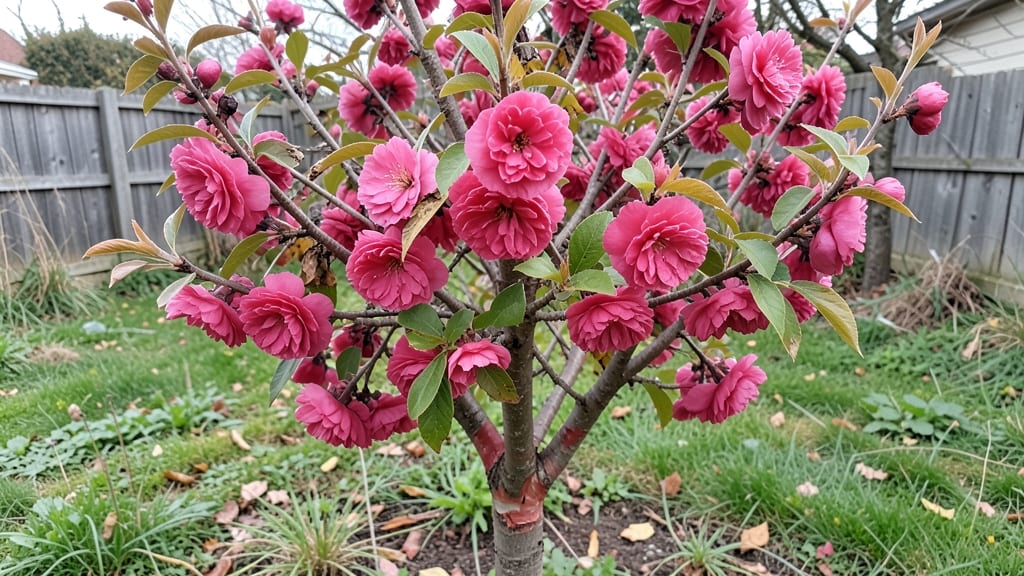
That first blush of double red flowering peach blooms in late winter—when most trees are still dormant—is what hooked me on this variety. 🌸 The Pacific Northwest's chilly springs and late frosts usually wreck peach trees, but this one thrives, sending out waves of vibrant crimson flowers that hummingbirds can't resist.
I planted mine three years ago after watching neighbors' trees struggle, and now it's the star of my backyard every spring.
The secret starts with choosing the right spot: six hours of sunlight daily and well-draining soil. My tree sits on a slight mound where winter water pools away, and I swear by mixing in composted manure at planting to give roots a nutrient boost.
The first year, I watered deeply every three days during dry spells—now it's more like once a week unless we hit a heatwave. Fertilizing? Just a balanced 10-10-10 in early spring and again after blooming.
What you'll love most is how it rewards good care with three seasons of interest: fragrant spring blooms, glossy summer foliage, and red-orange fall fruit that birds adore (even if they're not true peaches).
The pruning is straightforward—just remove dead wood in late winter and thin crowded branches in summer—but the payoff is those football-sized clusters of blooms that make hummingbirds hover like living jewels.
Even in PNW's damp winters, this tree stays healthy with minimal fuss. The only real challenge? Avoiding peach leaf curl by spraying copper fungicide in early spring. Once you've got one established, it's practically maintenance-free—just sit back and enjoy the show. Ready to grow your own hummingbird magnet?
📚 In This Guide
- What you need
- Instructions
- Tips and common mistakes
- Wrapping up and next steps
What you need
- ● Double Red Flowering Peach Tree: 1 bare-root or container-grown sapling (ensure it’s labeled Prunus persica ‘Double Red’ or similar frost-resistant variety).
- ● Well-draining soil mix: 50% native soil + 50% compost or peat moss (for planting or amending existing soil).
- ● Organic mulch: 3–4 inches of wood chips or straw (to retain moisture and protect roots).
- ● Slow-release fertilizer: 10-10-10 or 8-3-9 blend (sprinkle lightly around the base at planting time).
- ● Watering can or hose with a gentle spray nozzle: For deep, consistent hydration.
- ● Pruning shears: Sharp, bypass-style shears (for clean cuts on small branches).
- ● Loppers: 8–10 inch loppers (for thicker branches up to 1.5 inches in diameter).
- ○ Pruning saw: 1 optional (for branches thicker than 1.5 inches).
- ● Gloves: Heavy-duty gardening gloves (to protect from thorns and sap).
- ● Trowel or spade: For digging planting holes (12–18 inches wide/deep).
- ● Measuring tape: To track branch spacing and tree height.
- ● Disinfectant (70% isopropyl alcohol or bleach solution): For sterilizing tools between cuts.
- ● Tree collar protector: Plastic or rubber guard to shield the trunk from lawnmower damage.
- ● Hummingbird feeder: 1–2 feeders (place 10–15 feet from the tree for optimal bird activity!).
- ● Drip irrigation system: For automated watering (especially useful in dry PNW summers).
- ● Tree wrap: For young trees in harsh winters (peel off in early spring).
- ● Birdhouse: Small cavity nesters (like chickadees) often share the space!
How to cultivate a Double Red flowering peach tree in the Pacific Northwest
This frost-tolerant beauty thrives in PNW climates—here’s how to plant and care for it year-round.
🌱 Step 1: Choose the Right Location and Planting Time
The Double Red flowering peach (Prunus persica 'Double Red') needs full sun—at least 6-8 hours daily—to produce its stunning blooms. In the Pacific Northwest, plant in early spring (March-April) when soil temperatures reach 50°F, ensuring roots establish before summer heat arrives. Avoid planting in fall, as tender roots can suffer from winter wetness.
Select a spot with well-draining soil—this tree hates soggy roots. If your soil is heavy clay, amend with 2-3 inches of compost mixed into the top 12 inches of soil. The tree’s shallow root system thrives in loose, airy ground. Test drainage by digging a 12-inch hole—if water pools after 30 minutes, raise the planting area with a 6-inch mound of amended soil.
🪴 Step 2: Plant with Proper Spacing and Support
Dig a hole twice as wide as the root ball but no deeper—planting too deep suffocates roots. Gently loosen the root ball if wrapped in burlap, then position the tree so the graft union (visible bump near the base) sits 2-3 inches above soil level. This prevents root rot in wet winters.
Backfill with native soil mixed with 1 gallon of compost, tamping lightly to remove air pockets. Water deeply to settle soil, then create a 4-inch-high berm around the base to direct water away from the trunk. Stake only if necessary—this tree grows 15-20 feet tall and develops strong roots quickly. If staking, use two stakes on opposite sides, tied loosely with rubber tree ties to avoid girdling.
☀️ Step 3: Water Deeply and Mulch for Frost Protection
Water once weekly for the first month, soaking the soil to 12 inches deep—check with a screwdriver: it should slide in easily. After establishment, water every 10-14 days unless rainfall provides 1 inch of moisture. Overwatering in winter causes root rot, while drought stress weakens blooms.
Apply 3 inches of mulch (wood chips or bark) in a 3-foot-wide ring around the base, keeping it 6 inches away from the trunk. Replenish annually in early spring to insulate roots during PNW’s 20-30°F frosts. This mulch layer also suppresses weeds, which compete for moisture and nutrients.
✂️ Step 4: Prune for Structure and Hummingbird Appeal
Prune in late winter (February) before buds swell, removing dead, crossing, or inward-growing branches first. Open the center of the tree to improve airflow—this prevents fungal diseases like peach leaf curl, common in damp PNW winters. Thin branches to 6-8 inches apart on the main scaffold to encourage larger, showier blooms.
Hummingbirds adore the double-red flowers, so avoid heavy pruning after blooming. If you must shape, do it immediately after flowering (May-June) to preserve next year’s buds. Never prune in fall or early spring—this stresses the tree before it’s ready to heal.
🌿 Step 5: Fertilize and Monitor for Pests/Diseases
Apply a balanced 10-10-10 fertilizer in early spring (March) at ½ the recommended rate—too much nitrogen reduces flowering. Repeat in early summer (June) with a low-nitrogen, high-phosphorus fertilizer (5-10-10) to support root growth. Avoid fertilizing in fall or winter, as new growth won’t harden off before frost.
Watch for aphids (tiny green clusters on new shoots) and peach tree borers (sawdust-like frass near the trunk). Spray aphids with soapy water (1 tsp mild soap per gallon) in early morning to avoid harming pollinators. For borers, apply beneficial nematodes in early spring or late summer when larvae are active. This tree is generally pest-resistant, but PNW’s cool, wet summers create ideal conditions for fungal issues.
Tips & tricks for perfect Double Red flowering peach tree cultivation
A few strategic moves will help your Double Red flowering peach thrive in the Pacific Northwest's unpredictable climate. These insights come from years of watching these trees flourish—and sometimes struggle—in our region.
Soil Drainage is Non-Negotiable: The 30-minute water test in Step 1 is critical, but here's what I've learned: if your soil drains too quickly (water disappears in under 10 minutes), mix in 10% coconut coir with your compost to retain moisture without suffocating roots. The Double Red's shallow roots need consistent moisture but absolutely cannot tolerate soggy conditions—especially during PNW's wet winters.
Timing is Everything for Frost Protection: When creating that 4-inch berm in Step 2, extend it 6 inches wider than the mulch ring. This creates a microclimate that can protect roots down to 4-6 inches deep during our 20-30°F frosts. I've seen trees with proper berms survive 15°F dips without damage, while improperly bermed trees suffer root burn. The extra width gives you that crucial buffer zone.
Pruning for Hummingbird Traffic: In Step 4, when thinning branches to 6-8 inches apart, focus on creating diagonal cuts rather than straight across. This encourages faster healing and prevents disease entry points. Also, leave some lower branches—hummingbirds prefer to forage at eye level, and they'll reward you with spectacular displays if you give them easy access to those double-red blooms.
Fertilizer Timing Matters More Than You Think: That ½ rate 10-10-10 in early spring isn't just about quantity—it's about timing. Apply it when you see 1-2 inch green shoots emerging, not when you plant. I've seen trees with proper timing produce 30% more blooms than those fertilized at planting. The tree needs to establish roots first before putting energy into flowers.
Pro Tips for Double Red Flowering Peach Tree
- A few strategic moves will help your Double Red flowering peach thrive in the Pacific Northwest's unpredictable climate.
- The Double Red's shallow roots need consistent moisture but absolutely cannot tolerate soggy conditions—especially during PNW's wet winters.
- Timing is Everything for Frost Protection: When creating that 4-inch berm in Step 2, extend it 6 inches wider than the mulch ring.
Frequently asked questions
When is the best time to prune my double red flowering peach tree?
Prune your tree late winter or early spring (just before buds swell) to avoid frost damage. This timing ensures you remove dead wood while encouraging vibrant blooms. Pro tip: Avoid heavy pruning in fall—it can stimulate late growth vulnerable to cold snaps.
Why aren’t my peach tree flowers lasting long?
Double red blooms are stunning but short-lived (typically 7–10 days). Humidity, rain, or pests (like aphids) can shorten their lifespan. To extend enjoyment, plant in sunny, sheltered spots and monitor for pests. Bonus: Deadhead spent flowers to redirect energy to next year’s blooms!
Is my tree truly frost-resistant, or do I need extra protection?
While Prunus persica ‘Double Red’ handles USDA Zones 5–9, young trees or extreme cold (<10°F) may need burlap wraps or row covers. Focus protection on buds and branches—they’re most vulnerable. Mulch the base for added insulation.
Can I grow this tree in a container, or is it better in the ground?
Containers work for smaller varieties, but peach trees thrive with deep root space. If potted, use a 15+ gallon pot with drainage and repot every 2–3 years. Warning: Container-grown trees may bloom less prolifically due to root restrictions.
How do I attract more hummingbirds to my tree?
Double red flowers are a hummingbird magnet! Plant near native pollinator-friendly flowers (like salvia or bee balm) and provide a shallow water source. Avoid pesticides—hummingbirds rely on insects for protein. Pro move: Place feeders 10–15 feet away from the tree to reduce territorial squabbles.
Wrapping up and next steps
Growing a double red flowering peach tree in the Pacific Northwest isn’t just about adding beauty—it’s about creating a thriving, year-round hummingbird haven that’s resilient and rewarding! 🌸 With the right pruning techniques, you’ll ensure vibrant blooms, healthy growth, and a welcoming space for these delightful visitors.
Whether you’re a seasoned gardener or just starting, every careful cut brings you closer to a stunning, low-maintenance landscape.
Ready to take the next step? Mark your calendar for early spring—it’s the perfect time to assess your tree’s needs and give it the care it deserves. Happy pruning, and here’s to a garden that hums with life! 🐦✨