
Pruning
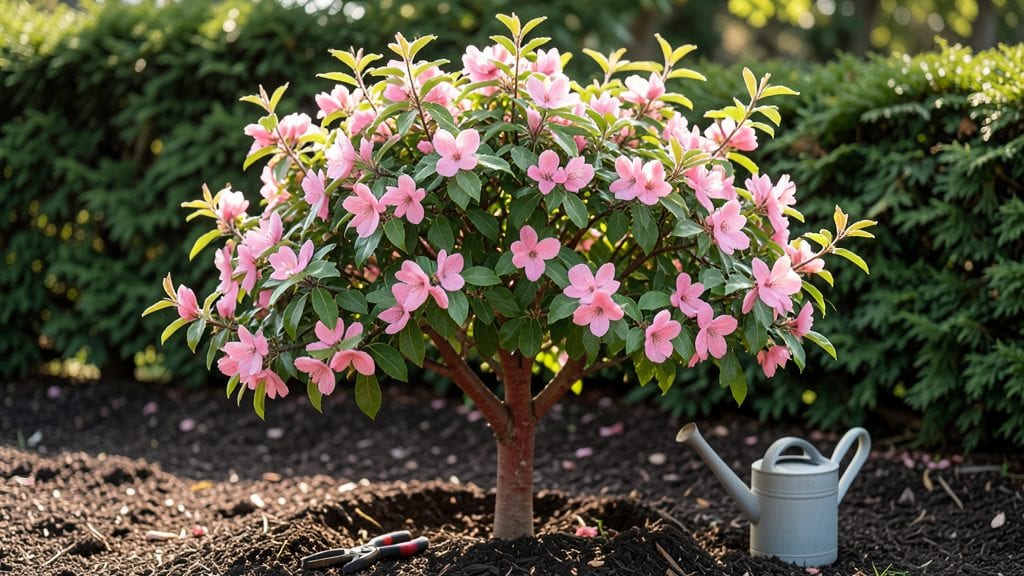
The Bonfire flowering peach tree’s first burst of blossoms in late winter—when most gardens are still gray and bare—is what hooked me. This cold-hardy tree thrives in the Pacific Northwest’s chilly springs, bursting into pink and white flowers that last for weeks, even through light frosts.
The secret to keeping it blooming reliably? Pruning at the right time, which I learned the hard way after my first tree produced half the flowers it should have.
You’ll need sharp pruning shears, a 3-foot ladder (these trees stay compact but grow upward), and a clear morning to work—prune after the last frost but before new buds swell.
The goal is to remove dead wood and shape the tree to let light reach the center branches, where the best blooms form. My tree now produces more flowers each year, and the pruned branches make it easier to admire those vibrant clusters from every angle.
What you’ll end up with is a tree that looks like a living lantern in winter, with fewer pests than fruit-bearing peaches (they’re less attractive to borers) and minimal maintenance once established.
The flowers even have a faint almond scent on warm days, which I’ve learned to associate with spring’s first real promise. Ready to turn your yard into a winter wonderland?
This method works for USDA zones 5-8, so whether you’re in Seattle or Portland, the same pruning rules apply. The key difference? In colder zones, wait until late April to prune—earlier cuts can invite frost damage to fresh wounds. Let’s get those shears sharpened.
📚 In This Guide
- What you need
- Instructions
- Tips and common mistakes
- Wrapping up and next steps
What you need
- ● Pruning shears: Bypass pruners (sharp, clean, and sterilized with rubbing alcohol). Size: 6–8 inches for small branches.
- ● Loppers: For thicker branches (½–1½ inches in diameter). Look for: Bypass blades and a comfortable grip.
- ○ Pruning saw: Optional but helpful for branches >1½ inches. Type: Curved-tooth saw for clean cuts.
- ● Gloves: Heavy-duty gardening gloves (cut-resistant for safety). Bonus: Waterproof if rain is forecasted!
- ● Disinfectant: 70% isopropyl alcohol or a 10% bleach solution (1 part bleach to 9 parts water) to sterilize tools between cuts.
- ○ Sealing wax or pruning paste: (Optional but recommended for larger cuts >½ inch to prevent disease). Size: Small jar (4–8 oz).
- ● Trash bags or bucket: For collecting pruned branches and debris.
- ● Ladder (if needed): Sturdy, extendable ladder (12–16 ft) for tall trees. Safety tip: Use stabilizers!
- ● Timing: Prune during dormant season (late winter/early spring, before buds swell) for best results in the PNW’s mild climate.
- ● Weather check: Choose a dry, calm day (humidity <60% ideal) to minimize disease risk.
- ● Tree health assessment: Inspect for dead, diseased, or crossing branches before starting.
- ● Fire safety (if burning prunings): Check local burn bans and have a fire extinguisher or water source nearby.
- ● Handheld magnifying glass for spotting pests or small cuts.
- ● Sharpener for pruners/loppers to maintain blade efficiency.
- ● Tree tanglefoot or sticky traps to monitor for pests post-pruning.
- ● Notebook or pruning map to sketch the tree’s structure before/after cuts.
Step-by-step instructions for pruning your Bonfire flowering peach tree
Here’s how I prune my Bonfire peach tree to keep it blooming reliably through Pacific Northwest winters.
Time Your Pruning for Late Winter or Early Spring
Prune your Bonfire flowering peach tree between late February and early March, just as buds begin to swell but before new growth starts. This timing ensures you remove dead wood while avoiding late frosts that could damage fresh cuts. In the Pacific Northwest, where winters linger, waiting until after the last frost date (usually around March 15 in most zones) gives you a buffer.
If you miss this window, you can still prune in early fall, but avoid heavy cuts after September 1—new growth won’t harden off before winter. I always check the USDA Plant Hardiness Zone Map for my exact location to confirm safe pruning dates. Cold-hardy varieties like Bonfire handle pruning better in cooler months, so don’t rush—patience prevents stress on the tree.
Gather Tools and Sanitize for Disease Prevention
Use sharp, clean pruning tools—a bypass pruner for smaller branches and a pruning saw for thicker limbs over ½ inch in diameter. Sanitize your tools with 70% isopropyl alcohol or a 10% bleach solution before and after pruning to prevent bacterial or fungal infections. Diseased wood can spread quickly in peach trees, so this step is non-negotiable.
Wear gloves to protect your hands from thorns and sap. I also keep a bucket of soapy water nearby to clean tools between cuts on different branches. Removing infected or dead wood first minimizes the risk of contaminating healthy parts of the tree. If you notice oozing sap or discolored bark, isolate those branches for last to avoid cross-contamination.
Remove Dead, Diseased, or Crossing Branches First
Start by identifying and cutting out dead wood—branches that are brown, brittle, or lacking buds. Next, remove any branches that are rubbing against each other or growing inward, as these compete for energy and create entry points for pests. For Bonfire peaches, thinning the center of the tree improves airflow and sunlight penetration, which is critical for cold-hardy blooms.
Make cuts just outside the branch collar (the swollen area where the branch meets the trunk) at a 45-degree angle for branches over ¼ inch thick. For smaller branches, a clean, straight cut is fine. Avoid leaving stubs—this invites disease and weakens the tree. If a branch is larger than 2 inches, make a three-cut technique to prevent bark tearing. I always step back after each cut to assess the tree’s shape—this helps me spot hidden issues like suckers or water sprouts growing from the base or trunk.
Thin Out to Encourage Stronger Blooms
Bonfire flowering peach trees bloom on both old and new wood, so selective thinning promotes better flower production. Aim to open the canopy by removing 20-30% of the total branches, focusing on overcrowded areas and weak, spindly growth. Prioritize branches that originate from the lower third of the tree—this encourages a balanced, sturdy structure that can handle Pacific Northwest winds and snow.
Look for branches with multiple buds—these are prime candidates for keeping. If you see a branch with only one or two buds, it’s likely not worth retaining. After thinning, step back and visualize sunlight—every major branch should receive at least 6 hours of direct light daily. In the PNW’s often cloudy climate, maximizing light exposure is key to vibrant, long-lasting blooms. If the tree looks too dense, repeat the thinning process until you see open spaces between branches.
Apply Wound Dressing and Monitor for Recovery
Once pruning is complete, do not apply wound dressing (like pruning paste) unless the cut is larger than 6 inches in diameter. Peach trees self-seal cuts naturally, and dressings can trap moisture, leading to rot. Instead, water deeply to help the tree recover—1-2 inches of water per week is ideal, especially during the first 4-6 weeks after pruning.
Watch for new growth within 2-3 weeks—this is a sign the tree is healing. If you notice yellowing leaves, wilting, or oozing sap on pruned areas, it could indicate bacterial canker or fungal infection, common in peach trees. In that case, prune out infected areas immediately and sterilize tools again. Bonfire peaches are resilient, but proactive care ensures they thrive through the PNW’s wet, mild winters and cool, damp summers. Keep an eye on the tree’s growth pattern—adjust future pruning as needed to maintain its natural shape and vigor.
Tips & tricks for pruning your Bonfire flowering peach tree
These practical tips will help you prune your Bonfire flowering peach tree like a pro, ensuring vibrant blooms and a healthy tree through the Pacific Northwest seasons.
Timing is Everything: The late February to early March window is critical because it aligns with the tree's natural dormancy period. If you're unsure about your last frost date, check your local agricultural extension service—they provide precise data for your specific zone. I've learned that pruning too early can expose the tree to late frosts, while pruning too late risks encouraging new growth that won't harden off before winter. For those who miss the spring window, early fall pruning works but requires lighter cuts before September 1st.
Tool Sanitization Matters: I can't stress this enough—disease prevention starts with clean tools. After using a bleach solution, rinse your pruners thoroughly with water to remove any residue that could harm the tree. I keep a dedicated bucket of soapy water specifically for cleaning tools between cuts on different branches. This simple step has saved my trees from multiple fungal infections over the years. For extra protection, especially in wet PNW climates, consider using a 10% bleach solution between trees if you're working with multiple peach varieties.
Visualize the Canopy: When thinning in Step 4, step back every 5-10 cuts to visualize the tree's structure. You're aiming for an open vase shape that allows sunlight to reach all branches. In the PNW's often cloudy conditions, every extra hour of sunlight matters for those cold-hardy blooms. I find it helpful to imagine the tree's silhouette against the sky—you should see clear spaces between branches rather than a dense mass. This open structure also improves airflow, which is crucial for preventing fungal diseases in our damp climate.
Recovery Monitoring: After pruning, mark your calendar for 2-3 weeks later to check for new growth. This is your tree's way of telling you it's healing properly. If you notice any yellowing leaves or oozing sap during this period, it's a red flag for potential infection. I've found that keeping a pruning journal helps track recovery patterns—note the weather conditions, how much you pruned, and any issues that arise. This record becomes invaluable for future pruning decisions, especially when dealing with our unpredictable PNW weather patterns.
Pro Tips for Bonfire Flowering Peach Tree
- These practical tips will help you prune your Bonfire flowering peach tree like a pro, ensuring vibrant blooms and a healthy tree through the Pacific Northwest seasons.
- Timing is Everything: The late February to early March window is critical because it aligns with the tree's natural dormancy period.
- Tool Sanitization Matters: I can't stress this enough—disease prevention starts with clean tools.
Frequently asked questions
about your Bonfire flowering peach tree—because even the hardiest bloomers need a little extra care! Here’s what PNW gardeners ask most often:When is the best time to prune my Bonfire flowering peach tree?
The ideal window is late winter to early spring (February–March), just before new growth begins. This timing balances cold-hardiness and encourages vibrant blooms. Avoid pruning in fall or during frost—it stresses the tree. Pro tip: If you missed the window, prune in early summer (June) but avoid heavy cuts, as the tree needs energy for fruit and flowers.
How cold-hardy is the Bonfire flowering peach tree, really?
This variety is USDA Zone 5-8 hardy, meaning it can survive down to -20°F (-29°C) with proper care. However, young trees or newly planted ones need extra protection (mulch, burlap wraps) in harsh winters. Established trees thrive in the PNW’s chilly climate, but avoid planting in windy spots—they’re more vulnerable to frost damage.
Should I remove dead branches now, or wait for spring?
Remove obviously dead or diseased branches anytime—they won’t regrow and can spread issues. But for structural pruning (shaping, thinning), wait until late winter. If you spot mummified fruit or cankers (shriveled, brown spots), prune those out now with sterilized tools to prevent pests.
Will my Bonfire tree produce fruit, or is it just for flowers?
Yes! While it’s prized for its stunning spring blooms, it also bears small, edible peaches in late summer. The fruit is tart and best for jams/jellies, not fresh eating. If you want sweeter peaches, consider a separate variety like ‘Reliance’ for a side-by-side pollination boost.
Why are my leaves curling or yellowing after pruning?
Curling/yellowing can signal stress from over-pruning or peach leaf curl disease. If it’s new growth, you likely pruned too late or too aggressively. For leaf curl, apply copper fungicide in fall/winter and prune infected branches immediately. Check for pests too! Aphids or mites can cause similar symptoms.
Can I grow a Bonfire tree in a container?
While possible, it’s not ideal—this tree grows 12–15 feet tall and needs deep roots. If you must, use a large pot (20+ gallons) with well-draining soil and move it indoors in winter (if temps drop below 10°F). For containers, dwarf varieties like ‘Bonanza’ are better suited.
Wrapping up and next steps
Growing a bonfire flowering peach tree in the Pacific Northwest is a rewarding way to enjoy stunning blooms and delicious fruit—even in cold winters! 🌸 With the right pruning techniques, you’ll keep your tree healthy, productive, and thriving year-round.
Now that you’re equipped with the knowledge to prune like a pro, grab your tools and get started—your tree (and future harvests!) will thank you.
Ready to take the next step? Mark your calendar for late winter or early spring to prune, and watch your tree flourish with vibrant blooms and sweet rewards. Happy gardening! 🌱✨