
Pruning
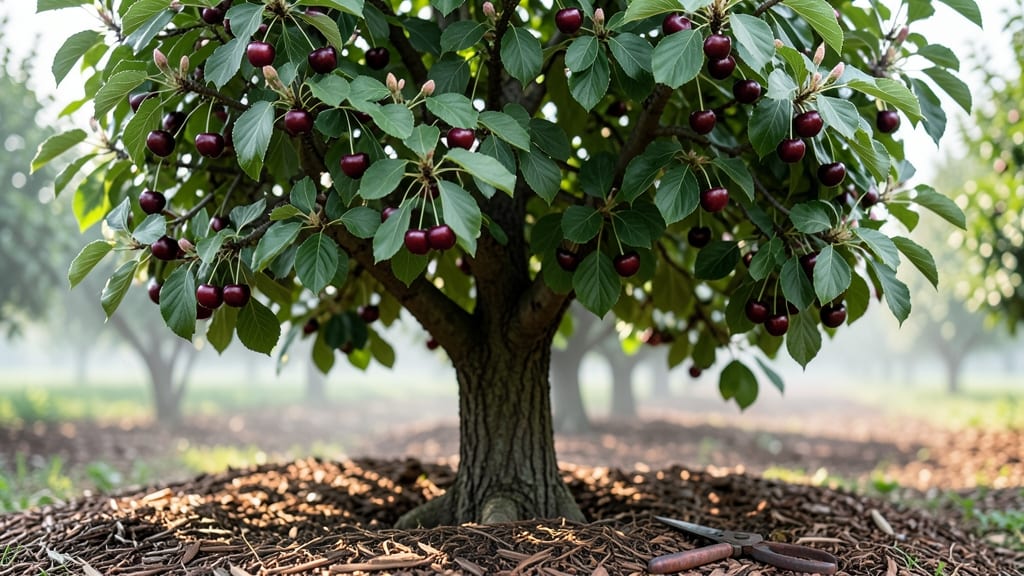
Growing a Bing cherry tree that produces fruit year after year starts with three simple cuts—each one timed to keep your tree healthy, productive, and looking its best.
I learned this the hard way after my first tree grew wild, with tangled branches and sparse harvests, until I finally understood the rhythm of pruning. The secret isn’t just when to cut, but how it transforms the tree’s energy from chaotic growth to focused fruit production.
You’ll need basic pruning tools—a sharp pair of shears, a small saw for thicker branches, and rubbing alcohol to sterilize cuts.
The real magic happens in three strategic sessions: late winter to shape the structure, early summer to encourage fruit-bearing branches, and late summer to clean up any dead or crossing limbs. Each cut opens the tree’s canopy to sunlight, which means more cherries and fewer disease problems.
Even if you’ve never pruned before, these steps are foolproof once you know the signs of healthy growth.
What you end up with is a tree that looks like it belongs in a cherry orchard, not just your backyard. The branches become sturdy and well-spaced, the fruit clusters grow larger, and the tree resists pests better because air circulates freely.
By next summer, you’ll be picking Bing cherries that burst with that classic tart-sweet flavor—exactly what you’d expect from a tree this well-cared-for. The best part? This method works for any Bing cherry tree, whether it’s a young sapling or a mature plant needing a rejuvenation.
Fair warning: the first year might feel like overkill, but trust the process. Your tree will thank you with stronger wood, more blossoms, and a harvest that keeps improving every season. And if you miss a cut?
No stress—even a single session still makes a difference. Let’s get those pruners out and turn your Bing cherry tree into the star of your garden.
📚 In This Guide
- What you need
- Instructions
- Tips and common mistakes
- Wrapping up and next steps
What you need
- ● Pruning shears: Sharp, bypass-style shears (for clean cuts on branches up to ½ inch thick). Example: Felco F-2 or Corona Tools Classic.
- ● Loppers: For branches ½ to 1½ inches thick. Look for ratcheting or bypass models for precision.
- ● Pruning saw: For thick branches 1½+ inches. A curved-tooth saw (like the Fiskars X7) prevents tear-out.
- ● Disinfectant: 70% isopropyl alcohol or a pruning sealant (e.g., Tanglefoot Tree Wound Pruning Seal) to prevent disease.
- ● Gloves: Heavy-duty gardening gloves (e.g., Dr. McGregor’s) to protect from thorns and sap.
- ● Safety glasses: ANSI-rated goggles to shield from debris.
- ● Ladder: Sturdy, extendable (e.g., 12–15 ft) with non-slip feet for tall trees.
- ● Marking twine or flags: Bright-colored twine or small flags to tag branches for removal.
- ● Trash bags: Heavy-duty contractor bags (30–50 gallon) for debris disposal.
- ● Pruning paint: Tree wound dressing (e.g., Ortho Fruit Tree Spray) to seal larger cuts (controversial but some swear by it!).
- ● Extension pole: For shears/loppers to reach high branches safely (e.g., 3–6 ft telescoping pole).
- ● Sharpener: A file or whetstone to keep blades razor-sharp mid-pruning.
- ● Work vest: With pockets for tools (e.g., Husqvarna Garden Vest) to stay organized.
- ● Camera/phone: To document progress before/after cuts!
How to prune a Bing cherry tree for year-round health
Three well-timed cuts keep your Bing cherry tree productive and pest-resistant for decades.
Perform Late Winter Dormant Pruning
Prune your Bing cherry tree in late winter—between mid-February and early March—while it's still dormant but before buds swell. This is the most critical cut of the year, shaping the tree's structure and removing dead or crossing branches. Start by removing any branches that are dead, diseased, or damaged—these are easy to spot as they're brown, brittle, or lack leaves.
Next, look for branches that cross or rub against each other. These create wounds that invite pests and diseases. Use sharp pruning shears to make clean cuts just outside the branch collar—the swollen area where the branch meets the trunk. Avoid leaving stubs, as they can rot and weaken the tree. Aim to open the center of the tree to improve airflow, which reduces humidity and fungal risks.
Light Summer Pruning After Harvest
After your Bing cherries are harvested—typically in late June or early July—give your tree a light pruning to encourage new growth and maintain its shape. Focus on removing suckers (shoots growing from the base or trunk) and water sprouts (fast-growing vertical shoots). These compete with fruit-bearing branches for energy and can make the tree look unkempt.
Trim back any branches that grew excessively during the spring. Cut just above a bud or lateral branch to redirect the tree's energy toward fruit production rather than leafy growth. Avoid heavy pruning now—this can stimulate late-season growth that won’t harden off before winter, leaving branches vulnerable to cold damage.
Final Light Pruning in Early Fall
In early October, do a final light pruning to prepare your Bing cherry tree for winter. Remove any branches that grew poorly during the season—these are often thin, weak, and prone to breaking under snow or ice. Also, trim back any shoots that grew from the graft union (the area where the tree was attached to its rootstock). These can weaken the tree’s structure and reduce fruit quality.
This final cut is about cleanup and prevention. Remove any branches that show signs of infection or pest damage, even if they’re small. Sterilize your pruning tools with rubbing alcohol between cuts to prevent spreading disease. Avoid pruning too late in the fall, as new growth won’t have time to harden off before winter.
Monitor and Adjust Through the Year
Between these three main pruning sessions, keep an eye on your Bing cherry tree for signs of stress or disease. If you notice branches dying back unexpectedly, prune them out immediately to prevent the issue from spreading. Thin out crowded areas to ensure sunlight reaches the center of the tree—this improves fruit quality and reduces the risk of fungal diseases like brown rot.
Every few years, reassess the tree’s overall shape. Bing cherries benefit from an open-center canopy, so aim to maintain that structure. If the tree becomes too dense, it’s harder to harvest cherries and more prone to pests. A little maintenance between pruning seasons keeps your tree healthy and productive for years to come.
Tips & tricks for pruning a Bing cherry tree
These simple strategies will help you keep your Bing cherry tree thriving with minimal effort—and avoid the mistakes that lead to poor fruit production.
Timing is Everything: The late winter window between mid-February and early March is your best shot for Step 1 pruning. I've learned this the hard way—pruning too early can stimulate premature growth that gets damaged by late frosts, while waiting too long risks losing the dormant season advantage. If you miss this window, don't panic—just wait until buds begin to swell before pruning.
The Branch Collar Rule: When making cuts in Step 1, always cut just outside the branch collar—the swollen area where the branch meets the trunk. This is the tree's natural healing point, and cutting here prevents unsightly stubs that can rot. I've seen so many trees with ugly stubs that become entry points for diseases. A good rule of thumb is to make your cut at a 45-degree angle, about 1/8 inch outside the collar.
Seasonal Focus for Each Cut: Each of the three main pruning sessions serves a different purpose. In Step 2 (summer), focus on removing suckers and water sprouts that steal energy from fruit production. In Step 3 (fall), prioritize cleanup—removing weak branches and sterilizing tools prevents winter pests. Between seasons, thin crowded areas to improve sunlight penetration and fruit quality. This targeted approach keeps your tree productive without over-stressing it.
Pro Tips for Bing Cheery Tree
- These simple strategies will help you keep your Bing cherry tree thriving with minimal effort—and avoid the mistakes that lead to poor fruit production.
- Timing is Everything: The late winter window between mid-February and early March is your best shot for Step 1 pruning.
- The Branch Collar Rule: When making cuts in Step 1, always cut just outside the branch collar—the swollen area where the branch meets the trunk.
Frequently asked questions
When is the best time to prune a Bing Cheery tree for maximum fruit?
The ideal time is late winter or early spring (before buds swell) to remove dead/diseased wood and shape the tree. For summer pruning, focus on thinning out crowded branches after harvest to improve airflow and sunlight. Avoid heavy cuts in fall—it can stimulate new growth vulnerable to winter damage.
Can I prune a Bing Cheery tree in winter? What about frost?
Yes, but only on dry, frost-free days (below 40°F/4°C). Winter pruning is safe if the tree is dormant, but avoid extreme cold snaps. If frost is forecasted, wait—wet wood can crack. Pro tip: Prune in the late afternoon when temps are warmer to reduce stress on the tree.
Will pruning reduce my Bing Cheery tree’s fruit yield?
Not if done correctly! Strategic pruning increases fruit quality by improving airflow and sunlight exposure. Remove water sprouts and crossing branches first—these compete for energy. Over-pruning (removing >25% of foliage) may temporarily lower yield, but proper cuts boost long-term production.
What’s the difference between thinning and heading cuts for Bing Cherries?
| Thinning Cuts | Heading Cuts |
|---|---|
| Remove entire branches back to the trunk or larger branch. Best for: Opening the canopy, reducing weight, and improving fruit size. | Trim the end of a branch to encourage bushier growth. Best for: Shaping young trees or stimulating new fruiting spurs. |
| Use 3/4"–1" cuts for mature branches. | Avoid over-heading—it can lead to weak, crowded growth. |
My Bing Cheery tree’s leaves are yellowing after pruning. Is this normal?
Mild yellowing is normal if pruned in early spring—the tree redirects energy. But if leaves curl, drop early, or show brown spots, you may have over-pruned or stressed the tree. Fix it: Water deeply, avoid fertilizing for 4–6 weeks, and prune less aggressively next time. Pro tip: Sterilize tools with rubbing alcohol to prevent fungal spread.
Wrapping up and next steps
The Bing cheery tree isn’t just a stunning addition to your garden—it’s a year-round health powerhouse when pruned with purpose! 🌿 With just three strategic cuts, you’ll boost fruit production, improve air circulation, and keep your tree thriving for decades.
Remember, timing and technique are everything, so grab those pruners and get to work with confidence!
Ready to take the next step? Start small—pick one season to practice your cuts, then expand your skills as you go. Before you know it, you’ll be harvesting juicy Bing cherries and basking in the pride of a perfectly pruned tree. Happy pruning! 🌟