
Trees
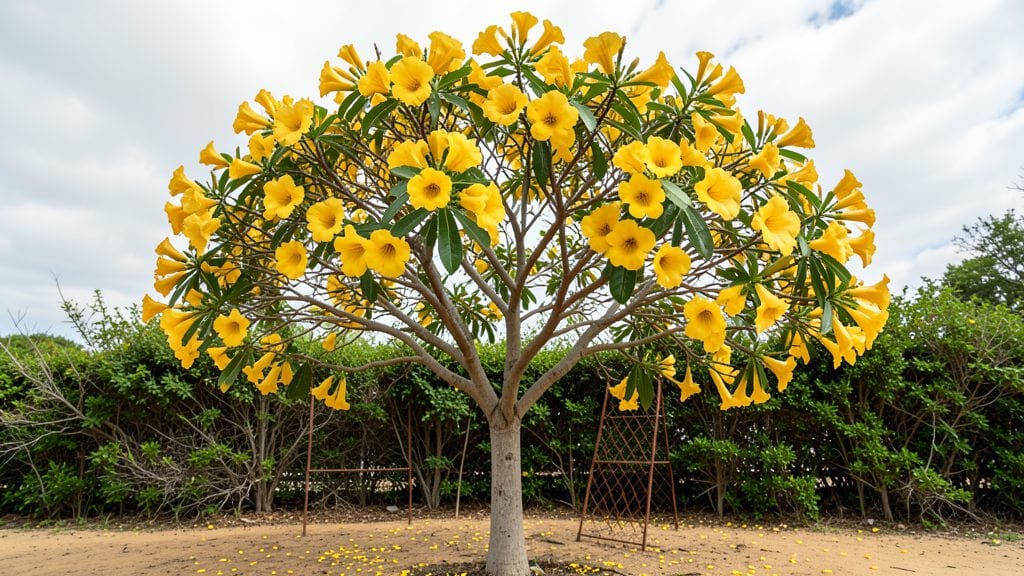
Florida’s golden rain canopy starts with the right yellow-flowering tree—one that thrives in humidity, resists pests, and turns your yard into a hummingbird magnet. 🌿 I planted my first Koelreuteria paniculata five years ago, and it’s now the star of my landscape, bursting with golden blooms that last from summer into fall.
The key isn’t just picking a pretty tree; it’s choosing one that handles Florida’s heat, occasional droughts, and salty coastal breezes without breaking a sweat.
Native options like the fragrant Yellow Jessamine (Gelsemium sempervirens) or the hardy Golden Rain Tree deliver year-round interest with minimal fuss. Both handle Florida’s soil types—even sandy or slightly alkaline—and grow in full sun or partial shade.
You’ll get three-season blooms, drought tolerance, and that coveted hummingbird traffic without the fuss of constant pruning or fertilizing. The trade-off? A little slower growth than non-natives, but the payoff in pollinator activity and low maintenance makes it worth the wait.
Imagine your backyard in late summer: sunlight filtering through cascades of golden-yellow flowers, hummingbirds darting between branches, and a tree that stays lush even after a dry spell. That’s the reality with these Florida-friendly yellow bloomers.
They’ll anchor your landscape as a shade provider, a seasonal focal point, or a privacy screen—whatever fits your design goals. The best part? Once established, they’re nearly self-sufficient, letting you enjoy the show without the upkeep.
Whether you’re planting along a driveway, framing a patio, or filling a large container, these trees adapt beautifully to Florida’s varied climates. Just watch for the first flush of blooms in late spring to time your pruning, and you’ll have a showstopper that keeps giving for decades.
Ready to transform your yard into a golden paradise?
📚 In This Guide
- What you need
- Instructions
- Tips and common mistakes
- Wrapping up and next steps
What you need
- ● Tree: 1 Cassia fistula (Golden Rain Tree) or Senna bicapsularis (Florida Senna) sapling (1–3 feet tall, potted or bare-root). Pro tip: Check local nurseries for Florida-friendly varieties!
- ● Shovel: 1 medium-sized digging spade (for planting holes).
- ● Garden Gloves: 1 pair (to protect your hands from thorns or rough bark).
- ● Mulch: 2–3 bags (2–3 cubic feet each) of organic mulch (pine bark, wood chips, or compost).
- ● Watering Can or Hose: 1 with a gentle spray nozzle (for post-planting hydration).
- ○ Tree Stake (Optional but Recommended): 1–2 wooden or metal stakes (for young trees in windy areas).
- ● Pruning Shears: 1 pair (for shaping or trimming after planting).
- ● Sunlight: A full-sun location (6+ hours of direct sunlight daily). Partial shade is tolerable but may reduce flowering.
- ● Soil: Well-draining, slightly acidic to neutral soil (pH 6.0–7.5). Amend heavy clay with compost or sand if needed.
- ● Space: Minimum 20–30 feet of clearance from structures, power lines, or other trees (they grow 20–40 feet tall!).
- ● Water Access: A nearby hose or irrigation system for the first 2–3 weeks post-planting.
- ● Permits (Check Local Laws): Some Florida counties require permits for large trees—verify before planting!
- ● 1 Slow-Release Fertilizer (balanced 10-10-10 or citrus-specific blend).
- ● 1 Tree Guard (plastic wrap to protect young trunks from pests).
- ● 1 Hummingbird Feeder (to attract pollinators once flowers bloom!).
- ● 1 Soil pH Test Kit (to ensure optimal growing conditions).
How to plant and care for golden rain tree in Florida
Here's the method I rely on to establish a thriving golden rain tree that hummingbirds will adore.
🌱 Step 1: Choose the Optimal Planting Location
The golden rain tree (Koelreuteria paniculata) thrives in Florida's climate when planted in full sun—at least 6 hours of direct sunlight daily. I always select a spot with well-draining soil, as these trees hate soggy roots. In Florida's heat, afternoon shade helps prevent leaf scorch, so a location with morning sun and afternoon shade works best.
Dig a hole twice as wide as the root ball but no deeper. The top of the root ball should sit 1-2 inches above ground level—this prevents water pooling around the trunk. Amend the native soil with 2-3 inches of compost mixed into the bottom of the hole to improve drainage and fertility.
☀️ Step 2: Plant at the Right Time and Prepare the Tree
Plant your golden rain tree in late winter or early spring (February-March) when Florida's soil is warm but not yet scorching. Before removing the tree from its container, water it thoroughly to reduce transplant shock. Gently loosen the root ball if it's tightly bound—this encourages roots to spread outward instead of circling.
Place the tree in the hole and backfill with native soil, tamping lightly every 6 inches to eliminate air pockets. Water deeply immediately after planting to settle the soil and remove any air gaps. Mulch around the base with 2-3 inches of organic mulch, keeping it 6 inches away from the trunk to prevent rot.
💧 Step 3: Water and Fertilize for Strong Establishment
Water your golden rain tree deeply once a week for the first 6-8 weeks after planting, or whenever the top 2 inches of soil feel dry. Overwatering is the biggest mistake—these trees are drought-tolerant once established, but young roots need consistent moisture. You'll see new growth within 4-6 weeks if the tree is thriving.
Apply a balanced, slow-release fertilizer (10-10-10) in early spring and mid-summer. Follow the package instructions, but I usually use half the recommended dose—Florida's soil is already nutrient-rich, and too much fertilizer can burn roots. Avoid fertilizing in fall or winter when the tree is dormant.
✂️ Step 4: Prune for Shape and Health
Prune your golden rain tree in late winter or early spring before new growth begins. Remove any dead, diseased, or crossing branches first—these can harbor pests or block sunlight. Thin out crowded branches to improve airflow, which reduces fungal diseases common in Florida's humidity.
Shape the tree by cutting back overly long branches to maintain a balanced canopy. Never remove more than 25% of the tree's foliage in one season—this stresses the plant. After pruning, apply a wound dressing to larger cuts to prevent disease entry. You'll notice fresh, vibrant growth in 3-4 weeks if the pruning was done correctly.
🪴 Step 5: Protect and Maintain for Long-Term Growth
Watch for scale insects or spider mites, which can infest golden rain trees in Florida's heat. I treat infestations early with neem oil or insecticidal soap, applying it in the early morning or evening to avoid harming beneficial insects like hummingbirds. Avoid chemical pesticides—they can harm pollinators and disrupt the tree's natural defenses.
Monitor the tree for signs of stress, like yellowing leaves or wilting. If the soil is too dry, water deeply; if it's too wet, improve drainage by adding sand or gravel around the base. Mature golden rain trees are drought-tolerant but still appreciate monthly deep watering during dry spells. With proper care, your tree will bloom with golden-yellow flowers in late spring to early summer, attracting hummingbirds for weeks.
Tips & tricks for perfect golden rain tree planting in Florida
Want your golden rain tree to thrive and attract hummingbirds for years? These insider tips will help you avoid common pitfalls and create ideal growing conditions.
Soil Preparation Secret: Florida's native soil can be heavy and clay-like, which drains poorly. Before planting, mix 2-3 inches of compost into the bottom of the hole AND work it into the surrounding soil. This improves drainage while providing essential nutrients. I also add a handful of perlite to the mix to create air pockets—this prevents soggy roots that can suffocate golden rain trees.
Timing is Everything: The 6 hours of daily sunlight requirement is non-negotiable, but placement matters just as much. In Florida's intense afternoon sun, position your tree where it gets morning sun and afternoon shade. This prevents leaf scorch while still providing enough light for vigorous growth. I've seen trees in full afternoon sun develop brown patches within weeks.
Watering Wisdom: That first 6-8 weeks of weekly deep watering is critical, but don't overdo it. I check soil moisture by sticking my finger 2 inches deep—if it's dry, water; if it's damp, wait. Overwatering is the #1 killer of young golden rain trees. Once established, these trees are surprisingly drought-tolerant, but young roots need consistent moisture to spread properly.
Pruning Pro Tip: When shaping your tree in Step 4, focus on creating an open canopy that allows sunlight to reach all branches. This not only improves flower production (and hummingbird visits!) but also reduces fungal diseases common in Florida's humidity. I always sterilize my pruning shears with rubbing alcohol between cuts to prevent spreading any potential infections.
Pro Tips for Yellow Flower Tree Florida
- Want your golden rain tree to thrive and attract hummingbirds for years?
- Soil Preparation Secret: Florida's native soil can be heavy and clay-like, which drains poorly.
- Timing is Everything: The 6 hours of daily sunlight requirement is non-negotiable, but placement matters just as much.
Frequently asked questions
Got questions about Florida’s golden bloomers? Here are answers to the most common queries about yellow-flowering trees that’ll make your yard hum with life!
What’s the best yellow-flowering tree for Florida’s climate?
The Golden Rain Tree (Koelreuteria paniculata) and Yellow Jessamine (Gelsemium sempervirens) are top picks! Golden Rain thrives in full sun and offers dramatic fall color, while Jessamine’s fragrant blooms attract hummingbirds year-round. For shade lovers, Crapemyrtle (Lagerstroemia) is a low-maintenance star.
When do yellow flower trees bloom in Florida?
Timing varies! Golden Rain Tree blooms in summer (June–August), while Yellow Jessamine flowers spring through fall (March–October). Crapemyrtle typically blooms late summer to fall (August–October). Choose based on your preferred season—hummingbirds will thank you!
How fast do yellow-flowering trees grow in Florida?
Growth rates differ:
- Golden Rain Tree: 3–5 ft/year (fast!)
- Yellow Jessamine: 1–2 ft/year (moderate, vining habit)
- Crapemyrtle: 2–3 ft/year (depends on variety)
Which yellow-flowering tree attracts the most hummingbirds?
Yellow Jessamine is the #1 hummingbird magnet! Its tubular, nectar-rich blooms are irresistible. Crapemyrtle also draws them, especially its late-season flowers. Plant near feeders for a non-stop hummingbird buffet.
Why aren’t my yellow flowers blooming this year?
Check these common issues:
- Cold stress: Florida’s rare freezes can delay blooms. Mulch roots in winter.
- Light issues: Some trees (like Golden Rain) need full sun (6+ hours/day).
- Watering: Overwatering or drought can stress trees. Aim for deep, infrequent watering.
- Age/maturity: Young trees may take 2–3 years to bloom. Patience pays off!
Are there non-invasive yellow-flowering alternatives to Golden Rain Tree?
Yes! If you’re wary of Golden Rain’s aggressive spread, try:
- Black Olive Tree (Bucida buceras): Drought-tolerant, yellow spring blooms, and hummingbird-friendly.
- Firebush (Hamelia patens): Bright red-orange/yellow flowers, native, and a hummingbird superstar.
- Yellow Bells (Tecoma stans): Compact, drought-resistant, and blooms spring–fall.
Wrapping up and next steps
Transforming your Florida landscape with a yellow flower tree isn’t just about beauty—it’s about creating a vibrant, pollinator-friendly haven. These golden bloomers bring joy, support local wildlife, and add year-round charm to your yard.
Whether you’re a seasoned gardener or just starting, planting one is a simple yet rewarding step toward a greener, happier home.
Ready to get started? Pick your favorite variety, gather your supplies, and dig in! 🌱 Your future hummingbird feasts—and stunning views—await!