
Watering
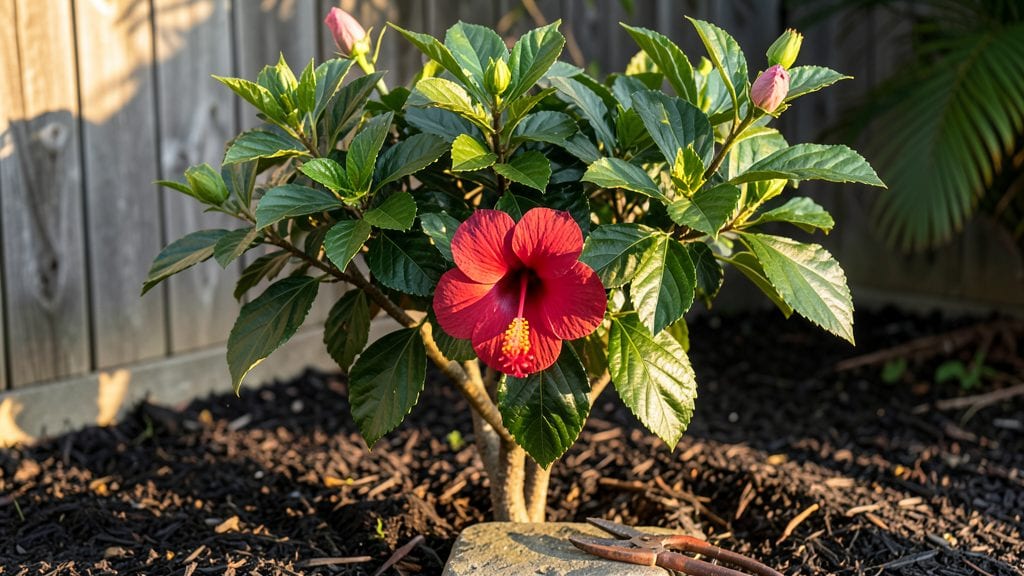
Knowing when to water your hibiscus tree is key—its thirst shifts dramatically between the Pacific Northwest’s damp summers and chilly winters. I learned the hard way that treating it like a tropical houseplant outdoors leads to root rot or stunted growth.
The key is matching water to what your plant actually needs, not what you think it does.
Start by checking soil moisture 2 inches down—if it’s dry, water deeply until it drains from the bottom. In summer, that might mean every 2-3 days, while winter slows things down to once a week or less.
Mulch helps retain moisture and keeps roots cool, but avoid piling it against the trunk.
You’ll know you’ve got it right when leaves stay deep green and glossy, not yellow or crispy. Overwatering shows up as drooping despite wet soil, while underwatering means leaves curl and edges brown. The goal is consistent moisture without soggy roots—like a well-worn favorite sweater, not a soggy rag.
This method works for both Hibiscus rosa-sinensis and hardy varieties like ‘Dwarf Red’ in PNW climates. The trade-off? More hummingbirds at your feeder and fewer stressed plants. Let’s get those roots happy and blooms plentiful.
📚 In This Guide
- What you need
- Instructions
- Tips and common mistakes
- Wrapping up and next steps
What you need
- ● Water hibiscus plant: 1 healthy nursery-grown sapling (3–6 feet tall) or a container-grown specimen.
- ● Well-draining potting mix: 5–10 gallons (for containers) or amended garden soil (for in-ground planting). Pro tip: Mix in perlite or sand (20–30%) to prevent root rot!
- ○ Container (optional for in-ground planting): 1 large pot (15–20 gallons) with drainage holes, or
- ● 1 raised bed (4’x4’ minimum) if planting multiple trees.
- ● Fertilizer: Balanced liquid fertilizer (10-10-10) or slow-release granules (e.g., Osmocote).
- ● Mulch: 2–3 inches of organic mulch (e.g., wood chips or pine straw) to retain moisture.
- ● Pruning shears: Sharp, sterilized shears for shaping and maintenance.
- ○ Hummingbird-friendly plants (optional but encouraged): 2–3 companion plants like fuchsias or salvias to attract pollinators.
- ● Gloves: 1 pair of gardening gloves (to protect from thorns!).
- ● Watering can or hose with a gentle spray nozzle: For consistent moisture without over-saturating.
- ○ pH test kit (optional): To ensure soil pH is between 6.1–7.5 (hibiscus loves slightly acidic soil!).
- ● Sunlight access: A spot with 6+ hours of direct sun daily (even in PNW’s partial shade).
- ● Winter protection (PNW-specific): Frost cloth or a small greenhouse for young trees during cold snaps.
Instructions for watering a hibiscus tree in the Pacific Northwest
Here’s how to keep your hibiscus thriving year-round—even with our region’s unpredictable rain and cooler summers.
Understand Your Hibiscus’s Water Needs
Hibiscus trees in the Pacific Northwest need consistent moisture but hate soggy roots. In summer, water deeply 2-3 times per week—enough to soak the top 12 inches of soil. You’ll know it’s right when water runs out the drainage holes and the soil feels damp 6 inches down. In winter, cut back to once every 10-14 days unless we get heavy rain.
I always check moisture by sticking my finger in the soil. If it feels dry at 2 inches deep, it’s time to water. Overwatering is the fastest way to kill a hibiscus—yellow leaves or wilting despite damp soil means you’ve gone too far.
Water Deeply and Correctly
Use a hose with a gentle spray nozzle or a watering can with a narrow spout to direct water at the base of the tree. Avoid overhead watering, which can lead to fungal issues. Water slowly until you see runoff from the drainage holes—this ensures the roots get hydrated, not just the top layer.
Morning is the best time to water. This gives leaves time to dry before evening, reducing the risk of mildew. If you’re using a drip irrigation system, set it to run for 20-30 minutes per session to reach deep roots. Hibiscus trees in containers dry out faster—check them daily in summer heat.
Adjust for Seasonal Changes
In spring, as new growth appears, increase watering gradually. Hibiscus trees in the PNW often need extra water in May and June as they push out leaves and flowers. Watch for drooping leaves—this is a classic sign of thirst, not overwatering.
By late summer, reduce watering slightly if temperatures drop below 70°F. In fall, taper off as the tree prepares for dormancy. If we get consistent rain (more than 1 inch per week), you can skip watering entirely. Always prioritize soil moisture over a schedule—your hibiscus will tell you what it needs.
Mulch to Retain Moisture
Spread a 3-inch layer of organic mulch (like wood chips or straw) around the base of your hibiscus, keeping it 6 inches away from the trunk. This helps retain moisture, regulates soil temperature, and prevents weeds. Replenish mulch as it breaks down—typically once or twice a year in the PNW’s mild climate.
Mulch also protects roots from temperature swings, which are common in our coastal and inland valleys. Just avoid piling it too high—too much mulch can suffocate roots and trap excess moisture. A light, even layer is all you need.
Monitor for Signs of Stress
Keep an eye out for yellowing leaves, which often mean overwatering, or crispy edges, a sign of underwatering. If leaves drop suddenly, it could be root rot from poor drainage or heat stress in an unexpected heatwave. Adjust your watering routine immediately—hibiscus trees recover quickly if caught early.
Hummingbirds will thank you for a well-watered hibiscus! A healthy tree produces bright, abundant blooms that attract these tiny visitors year-round. If flowers fade quickly, it might need more consistent water or balanced fertilizer—but start with the basics first.
Tips & tricks for perfect hibiscus tree watering in the Pacific Northwest
These simple strategies will help you keep your hibiscus thriving through the PNW's ever-changing weather patterns.
Soil Test Technique: Instead of guessing, use the finger test from Step 1 as your guide. Push your finger into the soil about 2 inches deep—if it feels dry, it's time to water. In summer heat, I check this every morning before deciding whether to water. The key is that consistent moisture we talked about, not following a rigid schedule. Remember, hibiscus roots need that deep soak to reach down 12 inches!
Seasonal Adjustments: The 70°F temperature threshold in Step 3 is your friend. When temperatures drop below this, reduce watering frequency. In our coastal areas, this might happen as early as July—watch for those drooping leaves mentioned in Step 3. I've seen hibiscus trees in Seattle thrive with watering every 4-5 days in summer, while inland valleys might need daily watering during heatwaves. Always check that soil moisture first!
Drip Irrigation Setup: If you're using a drip system for that 20-30 minute session, place emitters at the base of the tree, not near the trunk. The water should spread outward in a gentle arc. I like to set my timer for 25 minutes initially, then adjust based on how quickly water drains from the holes. Too fast means you're not getting that deep soak, too slow means you're wasting water. A good rule is to see steady runoff after about 15 minutes of watering.
Mulch Refresh Strategy: That 3-inch layer of organic mulch from Step 4 needs occasional attention. In our mild PNW climate, I refresh my mulch in early spring and again in late summer. Look for signs it's breaking down—if you can see soil through gaps, it's time to add more. I use a mix of wood chips and straw for best moisture retention. Just remember to keep it 6 inches away from the trunk to prevent rot.
Pro Tips for Water Hibiscus Tree
- These simple strategies will help you keep your hibiscus thriving through the PNW's ever-changing weather patterns.
- Soil Test Technique: Instead of guessing, use the finger test from Step 1 as your guide.
- Seasonal Adjustments: The 70°F temperature threshold in Step 3 is your friend.
Frequently asked questions
Got questions about growing a water hibiscus tree in the Pacific Northwest? You’re not alone!
Here are some of the most common queries—and their answers—to help you cultivate a thriving hummingbird magnet.
How cold can a water hibiscus tree tolerate?
A water hibiscus (Hibiscus tiliaceus) is a tropical plant, so it’s not frost-hardy—it thrives in USDA zones 10–11. In the PNW (zones 7–9), grow it in containers and bring it indoors or to a garage when temps drop below 30°F (-1°C). If planted in the ground, mulch heavily and wrap the trunk for extra protection.
How often should I water a water hibiscus in the PNW’s rainy climate?
While the PNW’s rain helps, water hibiscus hates soggy roots. Water deeply 2–3 times per week in summer, ensuring the top 2 inches of soil dry out between waterings. In winter (or when potted), reduce to once a week unless it’s unusually dry. Drainage is key—use pots with holes or raised beds to prevent root rot.
Why aren’t hummingbirds visiting my water hibiscus?
Hummingbirds love water hibiscus, but a few factors might deter them:
- Lack of nectar: Ensure flowers are fully open (they produce nectar in the morning).
- No perches: Add a small branch or nearby shrub for them to rest.
- Pesticides: Avoid chemicals—hummingbirds are sensitive to them.
- Timing: Flowers bloom in late summer/fall; plant early spring for peak attraction.
Can I grow a water hibiscus indoors in the PNW?
Yes! Place it near a south- or west-facing window for 6+ hours of sunlight daily. Use a grow light if natural light is insufficient. Keep humidity high (mist leaves or use a pebble tray) and fertilize monthly with a balanced liquid fertilizer. Watch for spider mites—a common indoor pest.
When and how should I prune my water hibiscus?
Prune in early spring (before new growth) to shape the tree and encourage blooms. Remove:
- Dead, diseased, or crossing branches.
- Overly long stems to maintain an open canopy.
- Suckers at the base to direct energy upward.
What’s the best alternative if I can’t grow a water hibiscus?
If your climate or space is challenging, try these hummingbird-friendly PNW natives:
- Red Columbine (Aquilegia formosa) – Blooms spring to summer.
- Ocean Spray (Holodiscus discolor) – White spring flowers, drought-tolerant.
- Salal (Gaultheria shallon) – Evergreen with red berries.
- Pacific Dogwood (Cornus nuttallii) – Stunning spring blooms.
Wrapping up and next steps
The water hibiscus tree is a stunning, low-maintenance gem that transforms your Pacific Northwest garden into a hummingbird haven—year-round! 🌸 With the right care, this drought-tolerant beauty thrives in your region’s climate, offering vibrant blooms and a steady food source for pollinators.
Whether you’re a gardening newbie or a seasoned pro, its resilience and beauty make it a must-have.
Ready to plant your own? Start by gathering your supplies, then follow the steps to give your water hibiscus the perfect home. Check out our planting guide next to turn your vision into a flourishing reality!