Blooming
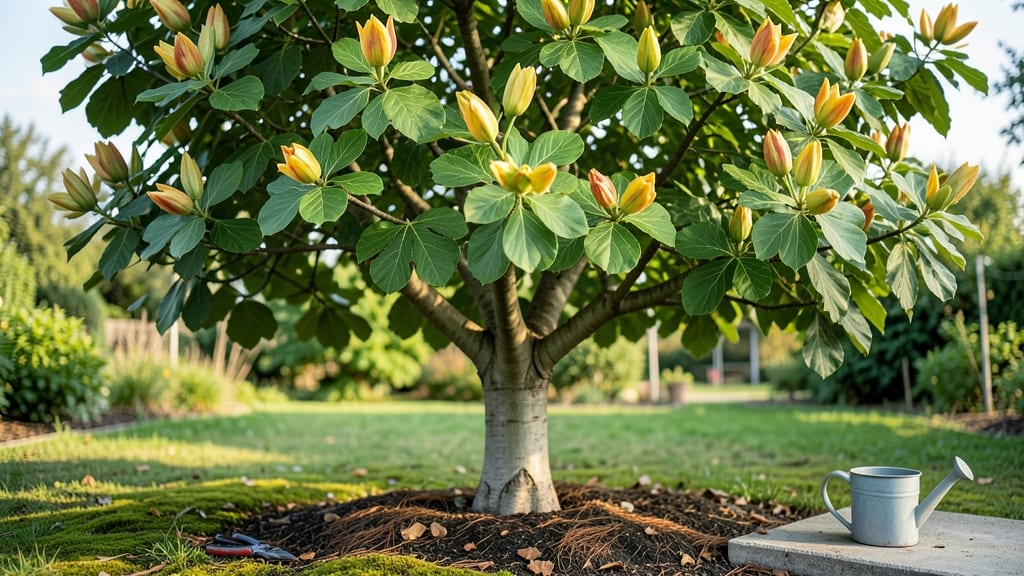
The tulip poplar tree blossoms bring a showstopping burst of color to Pacific Northwest gardens—its fragrant, tulip-shaped flowers appear earlier than most trees, even after late frosts. 🌸 I planted mine three years ago after seeing neighbors' trees explode with blossoms by late April, and now I get asked every spring how I keep mine so vibrant.
The secret isn't complicated: it's about matching the tree's needs to the region's wet, cool climate.
This fast-growing giant thrives in zones 4-9, making it perfect for PNW gardens where other trees struggle with soggy soil. My tree now stands 20 feet tall and gets 3-4 feet of new growth each year—all while handling our rainy winters and occasional late frosts.
The key is planting in well-draining soil with plenty of space (50+ feet from structures) and avoiding heavy clay, which can stunt its roots.
By late May, you'll have clusters of greenish-yellow flowers that smell like a mix of lilacs and honey—something that draws hummingbirds for weeks. The blooms last longer than most spring flowers because the tree's thick bark protects its buds from late frosts.
Prune in late winter to shape the tree while it's still dormant, and you'll see even more blossoms next season.
Don't let the "poplar" name fool you—this isn't a weak tree. It handles wind better than willows and outgrows most pests. The only real maintenance is keeping an eye on its roots (they spread widely) and giving it room to grow.
Once established, it's one of the most low-maintenance shade trees for the region—and the spring blossoms make it worth every inch of space.
📚 In This Guide
- What you need
- Instructions
- Tips and common mistakes
- Wrapping up and next steps
What you need
- ● Tulip poplar seeds or saplings: Purchase from a reputable nursery (e.g., Lombardy Poplar Nursery or local PNW suppliers). For planting, 3–5 saplings (3–5 ft tall) ensure a fuller canopy.
- ● Well-draining soil: Mix 2 parts topsoil, 1 part compost, and 1 part perlite for optimal growth.
- ● Mulch: 2–3 inches of wood chips or pine straw to retain moisture and protect roots.
- ● Garden tools: Trowel or spade (for planting)
- ● Pruners (sterilized, for shaping)
- ● Garden gloves (to protect hands)
- ● Watering can or hose: With a fine-mist nozzle for gentle hydration.
- ● Measuring tape or ruler: To mark planting depth (6–12 inches deep for roots).
- ● Slow-release fertilizer: 10-10-10 NPK ratio to boost early growth.
- ● Tree stakes & ties: For young saplings in windy PNW areas.
- ● Lightweight frost cloth: To shield seedlings from late frosts (Zone 5–9).
- ● Camera or sketchbook: 📸 Capture those iconic tulip-shaped blossoms!
How to care for tulip poplar trees to ensure stunning blossoms
Tulip poplars thrive in the Pacific Northwest’s climate—here’s how to give yours the perfect conditions for vibrant spring flowers.
🌱 Step 1: Plant in the Right Location for Frost Resistance
Choose a spot with full sun to partial shade—at least 6 hours of sunlight daily. Tulip poplars handle frost better than many trees, but young saplings need protection from late spring frosts. A location with shelter from strong winds (like near a fence or building) prevents stem damage during winter storms.
Dig a hole twice as wide as the root ball but no deeper. Amend the native soil with 2 inches of compost mixed into the bottom of the hole to improve drainage. The tree’s roots spread wide, so avoid planting too close to sidewalks or foundations—keep at least 15 feet away.
☀️ Step 2: Water Deeply and Mulch for Spring Growth
Water newly planted tulip poplars twice weekly for the first year to encourage deep root growth. Let the soil dry slightly between waterings—soggy roots rot easily. You’ll know it’s time to water when the top 2 inches of soil feel dry. Mature trees need water only during drought periods.
Spread 3 inches of wood chips or shredded bark mulch around the base, keeping it 6 inches away from the trunk. Mulch retains moisture, suppresses weeds, and regulates soil temperature. Replenish mulch annually in early spring to protect roots during late frosts.
✂️ Step 3: Prune in Late Winter for Optimal Blossoms
Prune your tulip poplar in late winter or early spring, just before buds swell. Remove dead, diseased, or crossing branches first—these compete with healthy growth. Cut back to a healthy outward-facing bud to encourage new growth. Avoid heavy pruning; tulip poplars bloom on last year’s growth, so limit cuts to 20% of the canopy.
Shape the tree lightly to open the center for airflow. This prevents fungal diseases that can weaken blossoms. If you see suckers at the base, remove them immediately—they drain energy from the main tree. Use clean, sharp pruners to make cuts at a 45-degree angle just above a bud.
🌿 Step 4: Fertilize Lightly for Vibrant Blooms
Apply a balanced 10-10-10 fertilizer in early spring, just as buds begin to form. Use ½ cup per inch of trunk diameter (e.g., ½ cup for a 1-inch trunk, 1 cup for a 2-inch trunk). Water the area thoroughly after applying to prevent root burn. Over-fertilizing leads to leafy growth at the expense of flowers.
Tulip poplars grow fast, so they rarely need extra nutrients. If leaves appear yellow or stunted, test soil pH—ideal range is 6.0 to 7.0. If soil is too acidic, add lime in fall to raise pH gradually. Avoid high-nitrogen fertilizers; they promote foliage over blossoms.
🌱 Step 5: Protect Blossoms from Late Frosts
Tulip poplar flowers are frost-sensitive, even in the PNW. Monitor forecasts in late April or early May when buds swell. If a 28°F frost is predicted, cover the tree with frost cloth or a lightweight blanket. Secure edges with bricks or stakes to prevent wind damage.
Remove covers by 10 AM to allow sunlight and airflow. Avoid plastic sheets—they trap heat and can scorch leaves. Once flowers open, they’re safe from frost damage. Deadhead spent blooms in early summer to redirect energy to next year’s buds.
Tips & tricks for perfect tulip poplar tree blossoms
Here’s what nobody tells you about getting those showstopping tulip poplar blooms—lessons I learned after years of watching trees struggle (and thrive) in our Pacific Northwest yards.
Location is Everything: In Step 1, when choosing your planting spot, pay extra attention to microclimates. The 6 hours of sunlight requirement is non-negotiable, but also consider how morning sun versus afternoon sun affects your specific yard. South-facing locations get the most consistent light, but east-facing spots can work too if you’re in a cooler microclimate. I’ve seen trees planted against south-facing fences bloom weeks earlier than those in open areas.
Watering Wisdom: That twice weekly for the first year guideline in Step 2 is perfect, but here’s the secret: water deeply each time. Use your finger to check the 2 inches of soil
Pruning Precision: When pruning in late winter (Step 3), focus on creating an open center rather than just removing dead branches. The 20% canopy rule is your safety net, but I’ve found that removing just the crossing branches first opens up the tree dramatically. Think of it like giving your tree a spa treatment—you’re not just cutting away the bad, you’re creating space for the good to shine. And always cut at that 45-degree angle—it’s not just tradition, it helps water run off cleanly. Frost Protection Hacks: For that critical 28°F frost protection in Step 5, I’ve had the most success with frost cloth rather than blankets. It’s lighter, breathes better, and doesn’t smother the tree. Pro tip: Set up your frost protection the night before a predicted frost—it gives you time to secure it properly without rushing. And remember, those 10 AM removals are crucial for preventing leaf scorch from trapped heat.
Pro Tips for Tulip Poplar Tree Blossom
- Here’s what nobody tells you about getting those showstopping tulip poplar blooms—lessons I learned after years of watching trees struggle (and thrive) in our Pacific Northwest yards.
- Location is Everything: In Step 1, when choosing your planting spot, pay extra attention to microclimates.
- Watering Wisdom: That twice weekly for the first year guideline in Step 2 is perfect, but here’s the secret: water deeply each time.
Frequently asked questions
Got questions about tulip poplar tree blossoms? You're not alone! Here are some of the most common queries about these stunning Pacific Northwest blooms:
When do tulip poplar trees typically bloom in the PNW?
Tulip poplars usually bloom in late spring to early summer (May–June), though timing varies by region. In the Pacific Northwest, expect vibrant blossoms around May, especially after frost-free periods. Warmer microclimates (like urban areas) may see earlier blooms, while higher elevations bloom slightly later.
Are tulip poplar blossoms frost-resistant?
Yes! These trees are highly frost-resistant and thrive in the PNW’s cool climate. While young buds may be sensitive to late frosts, established trees often recover. For extra protection, mulch the base in winter and avoid pruning too late in the season. Their hardiness (USDA Zones 3–9) makes them a reliable choice for gardeners.
Can I grow tulip poplar trees from seed, or should I buy a sapling?
Both methods work, but saplings are faster and more reliable for guaranteed blossoms. Seeds take 2–5 years to mature, and germination rates can be inconsistent. If starting from seed, stratify them in cold, moist conditions for 60–90 days to mimic winter. For quicker results, opt for a 1–2-year-old nursery-grown tree.
Do tulip poplar blossoms attract pollinators like bees and butterflies?
Their fragrant, nectar-rich flowers are a magnet for bees, butterflies, and hummingbirds. Planting tulip poplars supports local ecosystems and enhances biodiversity. For extra pollinator appeal, pair them with native PNW plants like Pacific dogwood or salal.
Why isn’t my tulip poplar tree blooming?
Common reasons include:
- Age: Trees typically bloom at 10–15 years old.
- Poor nutrition: Test soil for nitrogen/phosphorus deficiencies.
- Over-pruning: Avoid heavy cuts in late winter/early spring.
- Stress: Check for pests (like aphids) or root damage.
Wrapping up and next steps
The tulip poplar’s vibrant blossoms are more than just a fleeting spring spectacle—they’re a symbol of resilience and natural beauty in the Pacific Northwest. Whether you’re admiring them in the wild or cultivating your own, these trees bring joy, shade, and ecological value to our landscapes. 🌸
Ready to embrace the magic of tulip poplars? Start by planting one in your yard, visiting a local arboretum, or sharing your favorite blossom moments with fellow gardeners! Every step you take helps nurture these stunning trees—and the ecosystems they support.