
Trees
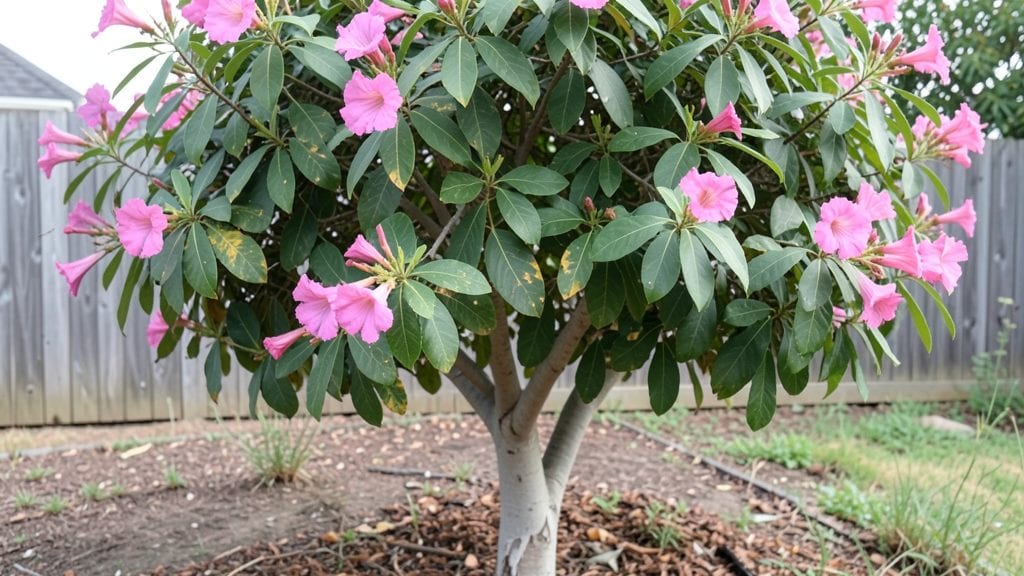
Tropical trees with pink flowers transform any garden into a hummingbird magnet—especially in the Pacific Northwest, where their vibrant blooms stand out against misty skies. 🌸 I’ve designed gardens where frangipani and hibiscus create fragrant tunnels, their delicate petals drawing bees and butterflies while adding a touch of island paradise to rainy climates.
The key is choosing varieties that thrive in cooler summers: hibiscus for bold blooms, bougainvillea for cascading color, and plumeria for sweet fragrance. These trees handle partial shade better than most gardeners realize, and with the right pruning, they’ll stay compact enough for patios or borders.
Even in Zone 8, they reward patience with year-round interest—glossy leaves in winter, buds in spring, and nonstop blooms through fall.
Imagine a moisture-loving bougainvillea spilling over a trellis near your deck, its magenta blooms contrasting with ferns and hostas. Or a fragrant frangipani as a focal point, its waxy flowers lighting up evening air. The secret?
Pair them with native plants like salal or sword fern to soften their tropical vibe while keeping maintenance low. Hummingbirds will visit daily, and your neighbors will ask how you pulled it off.
This works for containers too—just pick dwarf varieties and keep roots warm with mulch. The PNW’s humidity actually helps these trees thrive, so don’t let "tropical" fool you.
Start small: one potted hibiscus on your porch will prove how easy it is to bring pink paradise north. Ready to design your own hummingbird haven?
📚 In This Guide
- What you need
- Instructions
- Tips and common mistakes
- Wrapping up and next steps
What you need
- ● Tropical Tree Pink Flowers: 1-3 young plants (3-5 feet tall) of Plumeria (e.g., 'Ice Cream' or 'Red Hawaiian') or Bougainvillea (e.g., 'San Diego Red'). Choose healthy, disease-free specimens from a local nursery.
- ● Well-Draining Potting Mix: 1-2 bags (1-2 cubic feet each) of a blend like cactus/succulent mix or amend regular soil with 50% perlite/pumice and 30% compost.
- ● Container or Planting Hole: For containers: 1-2 large pots (15-20 gallons) with drainage holes.
- ● For in-ground planting: A hole twice as wide as the root ball, with amended soil.
- ● Fertilizer: 1 bag of balanced, slow-release fertilizer (e.g., 10-10-10) or a citrus-specific formula for tropical plants.
- ● Mulch: 1 bag of pine bark fines or orchid bark (2-3 inches thick) to retain moisture and regulate temperature.
- ● Garden Tools: Trowel or spade
- ○ Gloves (optional but recommended)
- ● Watering can or hose with a gentle spray nozzle
- ● Sunlight Access: A south- or west-facing location with at least 6-8 hours of direct sunlight daily (use a sun calculator for your PNW zone).
- ○ Frost Protection (Optional but Critical for PNW): Burlap wraps or frost cloth (for young plants)
- ● Grow lights or a sunroom/greenhouse for overwintering (if temperatures drop below 35°F).
- ○ Hummingbird-Friendly Additions (Optional): 1-2 hummingbird feeders (4:1 sugar-water ratio)
- ● Native nectar plants like Salvia or Penstemon for companion planting.
Step-by-step guide to cultivating tropical tree pink flowers in the Pacific Northwest
With the right approach, these fragrant blooms thrive even in cooler climates.
🌱 Step 1: Select the Right Variety for Your Climate
Choose Allamanda cathartica or Plumeria rubra for the Pacific Northwest’s milder summers. These tropical trees tolerate brief dips below 50°F better than other pink-flowering varieties. I always opt for grafted plants—rooted cuttings struggle with our damp winters and often succumb to fungal issues.
Look for established 2-3 foot plants at nurseries specializing in tropicals. Avoid seedlings; they’re too delicate for our climate. The graft union (visible as a slight bulge near the base) ensures stronger disease resistance. If you find a plant with pink buds already forming, it’s a good sign it’s acclimated to your region.
☀️ Step 2: Position for Maximum Sun and Shelter
Place your tropical tree in a south-facing location where it gets at least 6 hours of direct sunlight daily. In the PNW, this means positioning it against a sunny wall or on a patio where afternoon sun isn’t blocked by trees. I’ve had success growing mine in large containers (15+ gallons) on patios, where I can move them indoors during frost warnings.
Protect from winter winds—even gentle breezes can stress the leaves. Use burlap screens or plant near a windbreak like a fence or hedge. If you’re planting in the ground, choose a spot with morning sun and afternoon shade during summer to prevent leaf scorch. The key is mimicking their natural tropical environment where they grow under partial shade in humid forests.
💧 Step 3: Master Watering for Humidity-Loving Blooms
Water deeply once a week during the growing season, ensuring the top 2-3 inches of soil are moist but not soggy. Tropical trees hate dry soil but also despise waterlogged roots. I use a moisture meter to check—if it reads below 40%, it’s time to water. In winter, reduce to every 10-14 days unless your home has dry air, which can stress the plant.
Mist the leaves daily in summer to recreate their humid habitat. I set up a gentle misting system near the plant in the morning so leaves dry by evening. Avoid overhead watering in cool weather—it promotes fungal diseases like powdery mildew. If you notice yellowing leaves with brown edges, you’re either overwatering or the humidity is too low.
✂️ Step 4: Prune for Shape and Encourage More Blooms
Prune after flowering in late summer to shape the tree and encourage bushier growth. Use clean, sharp pruners to make cuts just above a leaf node at a 45-degree angle. I never remove more than one-third of the foliage in a single pruning session—this prevents shock. Focus on removing dead or leggy branches first, then thin out crowded areas to improve airflow.
Fertilize monthly from spring to fall with a balanced tropical plant fertilizer (10-10-10 or 20-20-20). I mix it at half-strength to avoid burning the roots. The goal is to promote steady, lush growth without excessive leaf production at the expense of flowers. If your plant produces fewer blooms than expected, it’s likely getting too much nitrogen—switch to a low-nitrogen, high-phosphorus formula (like 5-10-10) for a few months.
🪴 Step 5: Overwinter for Pacific Northwest Survival
Before the first frost (below 40°F), bring container-grown tropical trees indoors to a bright, cool room (ideally 60-65°F). Place them near a south-facing window or under grow lights for 12-14 hours daily. If you’re planting in the ground, mulch heavily with 4-6 inches of straw or wood chips to insulate the roots and protect against freezing.
Reduce watering to every 2-3 weeks in winter, only enough to keep the soil slightly moist. Watch for dropping leaves—this is normal in winter dormancy, but if leaves turn yellow or brown, you’re overwatering. In early spring, resume regular watering and fertilizing as new growth appears. The first pink flower buds usually form by late May, signaling the plant is ready for another blooming season.
Tips & tricks for perfect tropical tree pink flowers in Pacific Northwest gardens
These insider tips will help you coax vibrant pink blooms from your tropical trees even in our cooler climate.
Variety Selection: When choosing between Allamanda cathartica and Plumeria rubra, opt for Plumeria rubra if you want more fragrant blooms—its flowers release a sweet citrusy scent that hummingbirds adore. For hardier plants that handle our damp winters better, Allamanda cathartica produces showy trumpet-shaped flowers that bloom continuously. I've found that grafted plants (look for the visible graft union) establish roots faster and resist fungal diseases common in our climate.
Sunlight Strategy: The 6 hours of direct sunlight mentioned is non-negotiable, but here's how to maximize it: position your tree against a south-facing wall where it gets reflected light for an extra 1-2 hours. In summer, when afternoon sun can scorch leaves, use a sheer white curtain to filter the harshest rays. For container plants, rotate them weekly so all sides get even sunlight exposure—this prevents lopsided growth and ensures blooms form all around the plant.
Humidity Hack: Creating that tropical humidity is easier than you think. Beyond daily misting, place your container on a tray filled with pebbles and water (keep the pot above water level). The evaporating water increases humidity around the plant. For indoor overwintering, group your tropical plants together—their collective transpiration creates a microclimate of higher humidity. Just avoid letting leaves stay wet overnight to prevent fungal issues.
Pruning Precision: When pruning in late summer, focus on creating an open center that allows airflow—this prevents fungal diseases that thrive in crowded foliage. Make your cuts just above a leaf node at a 45-degree angle to promote faster healing. I always sterilize my pruners with rubbing alcohol between cuts to prevent spreading any potential diseases. For maximum blooms next season, remove any branches that haven't flowered in the current season—they're using energy that could go toward new blooms.
Pro Tips for Tropical Tree Pink Flowers
- These insider tips will help you coax vibrant pink blooms from your tropical trees even in our cooler climate.
- Variety Selection: When choosing between Allamanda cathartica and Plumeria rubra, opt for Plumeria rubra if you want more fragrant blooms—its flowers release a sweet citrusy scent that hummingbirds adore.
- Sunlight Strategy: The 6 hours of direct sunlight mentioned is non-negotiable, but here's how to maximize it: position your tree against a south-facing wall where it gets reflected light for an extra 1-2 hours.
Frequently asked questions
Got questions about growing or enjoying tropical pink-flowering trees in the Pacific Northwest?
Here are answers to the most common ones—so you can dive in with confidence!
What are the best tropical pink-flowering trees for the PNW’s climate?
The Jacaranda mimosifolia (though not fully hardy) and Lagerstroemia indica (Crape Myrtle) are top picks for milder PNW zones (7-9). For cooler areas, opt for Hibiscus syriacus (Rose of Sharon) or Cercis canadensis (Eastern Redbud) with pink varieties. Always check USDA hardiness zones!
When do tropical pink trees bloom, and how long do the flowers last?
Bloom times vary: Jacarandas peak in late spring to early summer (May-June), while Crape Myrtles shine from mid-summer to fall (July-September). Most flowers last 2-4 weeks per flush, but deadheading spent blooms can encourage reblooming.
How much water do these trees need, especially in the PNW’s rainy season?
Young trees need 1-2 inches of water weekly (more in summer), but mature trees are drought-tolerant once established. Overwatering can rot roots—ensure well-draining soil and mulch to retain moisture. Skip watering during heavy PNW rains!
Are these trees truly hummingbird magnets, and how can I attract more?
Pink flowers = hummingbird nectar signal. Plant in sunny spots, add native pollinator-friendly plants (like Salvia or Penstemon), and avoid pesticides. Bonus: Hang a hummingbird feeder nearby for extra appeal!
Can I grow these trees in containers, or do they need to be planted in the ground?
Small varieties (like Hibiscus syriacus) thrive in 15+ gallon containers with drainage holes, but larger trees (e.g., Jacarandas) need permanent ground planting. Use lightweight potting mix and repot every 2-3 years. Pro tip: Move containers to sunny outdoor spots in summer!
What should I do if my pink-flowering tree isn’t blooming?
Check these fixes:
- Sunlight: Most need 6+ hours of sun daily—move to a sunnier spot.
- Pruning: Trim old wood in late winter to encourage new growth.
- Fertilizer: Use a balanced bloom booster (like 10-10-10) in early spring.
- Patience: Young trees may take 2-3 years to flower.
Still no blooms? Test soil pH—slightly acidic (6.0-7.0) works best.
Wrapping up and next steps
Transforming your Pacific Northwest garden into a hummingbird haven with fragrant, pink-blossomed tropical trees is easier—and more rewarding—than you think! 🌸 From the vibrant Bougainvillea to the delicate Plumeria, these stunning blooms bring color, life, and a sweet perfume to your outdoor space.
Whether you're a seasoned gardener or just starting, these trees offer beauty, resilience, and a touch of paradise right in your backyard.
Ready to take the next step? Start by researching the specific varieties that thrive in your local climate, then visit a local nursery or check online seed suppliers. Plant your tropical tree today and watch your garden—and its tiny, feathery visitors—thrive! 🐦⬛✨