
Pruning
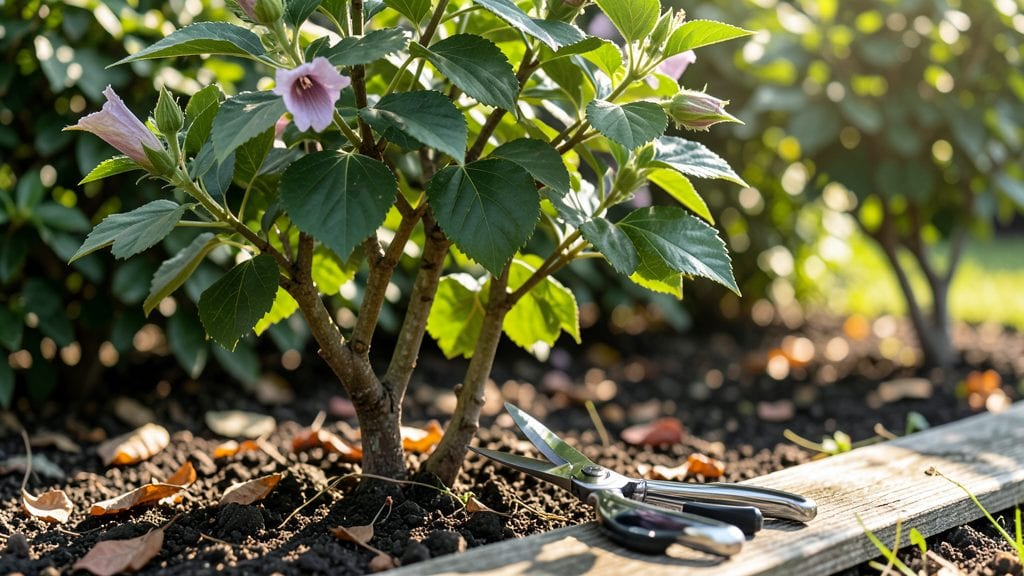
When you prune your Rose of Sharon tree correctly, you unlock a second wave of blooms that rivals the first—year-round color becomes possible with just a few strategic cuts.
I learned this after my first pruning attempt left the tree looking like a tangled mess, but now it’s the star of my late-summer garden with clusters of lavender blooms well into fall.
The key isn’t just when you prune, but how—balancing shape, airflow, and growth signals to encourage more flowers instead of just leaves.
You’ll need basic tools: sharp pruning shears for clean cuts, gloves to handle thorns, and a ladder if your tree is over 6 feet tall. Timing matters too—late winter or early spring is ideal for shaping, while summer pruning can extend the bloom season.
The process takes about 30 minutes for a mature tree, and you’ll end up with a bushier, healthier plant that flowers longer than unpruned neighbors. Even if you’ve avoided pruning before, this method is beginner-friendly once you understand the simple rules.
What you’ll gain is a tree that blooms heavier and longer, with flowers appearing on both old and new wood. The secret is cutting back about one-third of the oldest stems each year to stimulate fresh growth, while thinning crowded branches to improve airflow.
After pruning, your tree will reward you with vibrant clusters of blooms from early summer through fall, and the foliage stays lush and disease-free. The transformation happens faster than you’d expect—just a few weeks after cutting, new shoots emerge ready to flower.
This method works for all Rose of Sharon varieties, whether you’re dealing with a young sapling or a mature tree that’s lost its shape. For colder climates, wait until after the last frost to prune, while warmer zones can prune year-round with minimal stress.
The biggest mistake? Over-pruning or cutting too close to the trunk—always leave at least ¼ inch of stem above the bud. With these adjustments, your tree will thrive no matter where you live.
📚 In This Guide
- What you need
- Instructions
- Tips and common mistakes
- Wrapping up and next steps
What you need
- ● Pruning shears: Bypass pruners with sharp, sterilized blades (for cuts up to ¾ inch in diameter). Example: Felco F-2 or Corona 3-in-1.
- ● Loppers: For thicker branches (1–2 inches). Look for bypass-style loppers with a ratchet mechanism for ease.
- ● Pruning saw: A curved-tooth bow saw or folding pruning saw for branches over 2 inches thick.
- ● Gloves: Heavy-duty, cut-resistant gloves (e.g., Mechanix Wear or gardening-specific options).
- ● Disinfectant: 70% isopropyl alcohol or a pruning sealant (e.g., Tanglefoot Tree Wound Pruning Sealer) to prevent disease.
- ○ Extension pole: Optional but helpful for high branches (10–12 feet).
- ● Weather: Prune on a dry, calm day (avoid rain for 24 hours before/after).
- ● Timing: Best done in late winter/early spring (before buds swell) or post-bloom (summer/fall).
- ● Safety gear: Safety glasses and long sleeves (protection from debris and thorns).
- ● Cleanup supplies: Heavy-duty trash bags (for debris) and a wheelbarrow (if pruning large branches).
- ● ✨ Sharpen your tools before starting—dull blades tear wood, stressing the tree.
- ● 🌡️ Work in layers: Remove ⅓ of the tree’s oldest wood first, then thin out crowded branches.
- ● 🎯 Label branches (if unsure) with twine to track cuts before making them.
Instructions for pruning your Rose of Sharon tree
Here’s how to keep your tree blooming beautifully year after year with simple, effective cuts.
Prune at the Right Time for Maximum Blooms
Rose of Sharon trees bloom on new wood, meaning you can prune anytime without sacrificing flowers. I always tackle it in late winter or early spring (just before buds swell) to shape the tree and encourage vigorous growth. If you missed that window, don’t worry—prune after blooms fade to keep the tree tidy and healthy.
Start by removing any dead, diseased, or crossing branches first. These compete with healthy growth and can weaken the tree. Use clean, sharp pruners to make precise cuts just above a bud or outward-facing branch. Avoid leaving stubs—this encourages rot and weak regrowth.
Thin Out Crowded Branches for Better Airflow
The key to a lush Rose of Sharon is airflow. Overcrowded branches trap moisture, leading to fungal issues and fewer blooms. Look for branches growing inward or rubbing against others—these need to go. I remove about one-third of the oldest wood each year to encourage new, flower-filled growth.
Focus on thinning from the inside out. Start at the center of the tree and work your way outward, removing branches that block sunlight from reaching the inner canopy. You’ll see a noticeable difference in bloom density after just one season of proper thinning.
Shape the Tree for Balance and Strength
Rose of Sharon trees grow fast, so they need occasional shaping to stay balanced. Step back and assess the tree’s form—aim for a natural, open shape that allows light to reach all branches. Cut back any overly long or leggy branches by about one-third to encourage bushier growth.
For a more formal look, you can prune to create a rounded or vase-like shape. Just remember: Rose of Sharon thrives on light pruning. Heavy cuts can stress the tree, so avoid removing more than 25% of the foliage in one session. Watch for new shoots emerging from old wood—these are your signal that the tree is responding well.
Clean Up and Maintain Year-Round
After pruning, rake up and dispose of all clippings to prevent disease. I like to sterilize my pruners with rubbing alcohol between cuts to avoid spreading pathogens. Once the tree is shaped, apply a balanced fertilizer in early spring to support new growth.
Throughout the growing season, keep an eye out for suckers (shoots growing from the base) and remove them promptly. These drain energy from the main tree. A little maintenance now means fewer surprises later—your Rose of Sharon will reward you with bold, vibrant blooms for years to come.
Tips & tricks for pruning your Rose of Sharon tree
Transforming your Rose of Sharon into a blooming powerhouse starts with these pruning secrets that go beyond the basics.
Timing is Everything: While you can prune anytime, late winter or early spring just before buds swell gives you the best head start. I've seen trees that missed this window still thrive when pruned after blooms fade, but you'll get more vigorous growth if you stick to the early season. Watch for bud swelling—that's your cue to start shaping.
Tool Prep Prevents Problems: Sterilize your pruners between cuts with rubbing alcohol to prevent spreading disease. I learned this the hard way after losing a branch to fungal infection. Also, make sure your pruners are sharp—dull tools crush branches instead of making clean cuts. A quick sharpening before you start makes all the difference.
The One-Third Rule: When thinning or shaping, never remove more than one-third of the oldest wood in a single session. This keeps the tree from getting overwhelmed. I've seen gardeners get overzealous and end up with stressed trees that produce fewer blooms. Think of it as a haircut—you want to shape, not shave.
Sucker Control Strategy: Those shoots growing from the base (suckers) might look harmless, but they drain energy from your main tree. Remove them promptly throughout the growing season. I set a reminder for every other month to check for new suckers—it takes just 5 minutes but prevents major energy loss.
Pro Tips for Rose Of Sharon Tree Pruning
- Transforming your Rose of Sharon into a blooming powerhouse starts with these pruning secrets that go beyond the basics.
- Timing is Everything: While you can prune anytime, late winter or early spring just before buds swell gives you the best head start.
- Tool Prep Prevents Problems: Sterilize your pruners between cuts with rubbing alcohol to prevent spreading disease.
Frequently asked questions
Got questions about pruning your Rose of Sharon tree?
You’re not alone! Here are answers to the most common concerns—from timing to troubleshooting—to keep your tree thriving with stunning blooms year after year.
When is the best time to prune a Rose of Sharon tree?
Prune your Rose of Sharon late winter or early spring (before buds swell) for best results. You can also do light pruning after blooming to shape the tree. Avoid heavy cuts in fall or winter, as it may stimulate tender new growth vulnerable to cold. Pro tip: If you miss the ideal window, a light pruning anytime is better than none!
How often should I prune my Rose of Sharon?
Prune annually for maintenance, focusing on removing dead, diseased, or crossing branches. Every 2–3 years, give it a structured pruning to encourage airflow and blooms. Over-pruning weakens the tree, so aim for no more than 25% of the canopy in a single session.
What if I prune too late in the season?
Pruning too late (after mid-summer) can delay next year’s blooms since new growth needs time to harden off before winter. If you must prune late, stick to light shaping or cleanup cuts. Avoid heavy pruning—your tree may struggle to recover before cold weather hits. Mark your calendar for late winter!
Can I prune a Rose of Sharon for smaller growth?
Yes! To control size, prune back to the desired height in late winter, cutting just above a bud or branch collar. For a bushier shape, trim back 1/3 of the current season’s growth. Avoid topping (cutting flat across the top), as it weakens the tree and reduces blooms.
Why aren’t there as many flowers after pruning?
Fewer blooms often mean over-pruning or cutting old wood (Rose of Sharon blooms on new growth). Focus on light, strategic cuts that leave healthy branches. If you’ve pruned aggressively, give your tree 1–2 seasons to recover—patience pays off with a bigger, healthier bloom next year!
What’s the difference between pruning and trimming?
| Pruning | Trimming |
|---|---|
| Structured cuts to shape, rejuvenate, or remove branches. Done seasonally (late winter/early spring). | Light maintenance to clean up deadwood, crossing branches, or minor shaping. Can be done anytime. |
| Uses sharp pruners/loppers and targets larger branches. | Uses hand pruners or shears for small branches or leaves. |
Think of pruning as a health spa for your tree, while trimming is daily grooming!
Wrapping up and next steps
Pruning your Rose of Sharon tree isn’t just about shaping—it’s about unlocking its full potential for vibrant, year-round blooms! 🌸 By following seasonal strategies, you’ll encourage healthier growth, prevent disease, and keep those stunning flowers coming back stronger than ever.
Whether you’re a pruning pro or just starting, every thoughtful cut brings you closer to a lush, thriving tree.
Ready to see the difference? Grab your pruners, mark your calendar for the next pruning window, and give your Rose of Sharon the care it deserves! Your future blooms will thank you—literally! 🌿✨