
Pruning
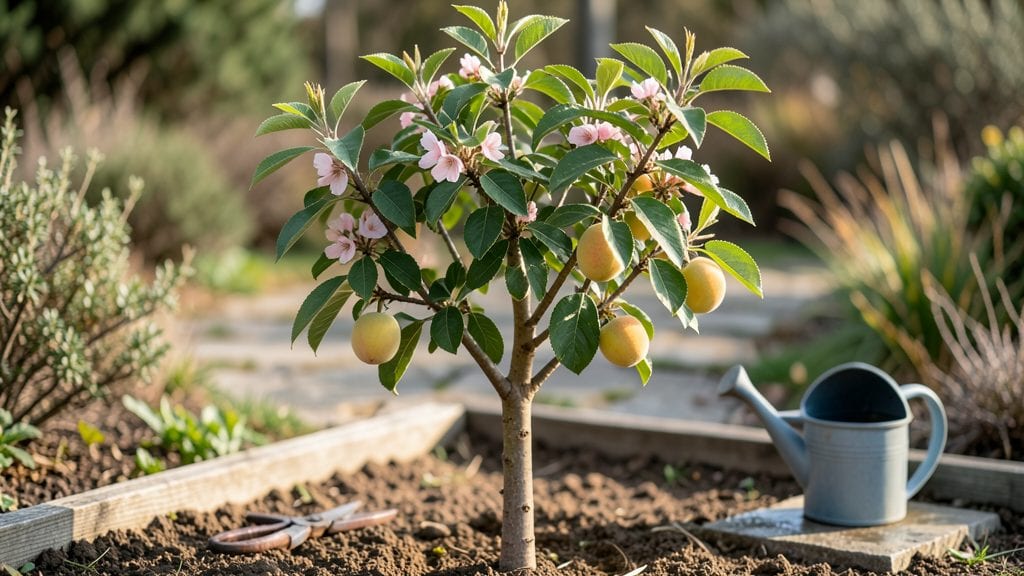
Your small peach tree can produce fruit for decades if you prune it right from day one. I learned this the hard way after my first tree grew into a tangled mess—now I keep mine compact, productive, and easy to manage with just a few strategic cuts each season.
The key is shaping it young so it never outgrows your space while still getting enough light and air to bear sweet fruit. You’ll end up with a tree that’s half the size of its neighbors but twice as efficient at producing peaches.
Start with a dwarf variety like ‘Bonanza’ or ‘Redhaven’—they’re bred to stay under 10 feet tall, perfect for small yards or large containers. Pruning begins in late winter before buds swell, then continues lightly after harvest to encourage next year’s growth.
All you need is a sharp pair of pruners, rubbing alcohol for cleaning cuts, and about 30 minutes of focused work. The goal isn’t to remove leaves but to open the canopy so sunlight reaches every branch, which means fewer diseases and bigger fruit.
By summer, you’ll notice new growth shooting from where you made cuts—these are your future fruit-bearing branches. Keep an eye out for suckers (shoots growing from the base) and water sprouts (vertical growth from the trunk), as they drain energy from your tree.
With consistent pruning, your tree will reward you with vibrant blossoms in spring and juicy peaches by midsummer, all while staying neatly contained. The best part? You’ll spend less time cleaning up fallen fruit and more time enjoying the harvest.
This method works for both in-ground trees and container-grown varieties, though potted trees need slightly more frequent pruning to control root growth. Whether you’re dealing with a backyard tree or a patio-sized peach in a 15-gallon pot, the same principles apply.
Let’s get those branches shaped so your tree stays healthy—and delicious—for years to come.
📚 In This Guide
- What you need
- Instructions
- Tips and common mistakes
- Wrapping up and next steps
What you need
- ● Pruning shears: Sharp, bypass-style shears (2–4-inch blade) for clean cuts.
- ● Loppers: For thicker branches (8–12-inch blade), only if needed (peach trees rarely require them).
- ● Disinfectant: 70% isopropyl alcohol or bleach solution (1 part bleach to 9 parts water) to sterilize tools between cuts.
- ● Gloves: Heavy-duty gardening gloves (to protect from thorns and sap).
- ○ Pruning sealant: Optional but helpful for large cuts (e.g., Tanglefoot Tree Wound Pruning Seal).
- ● Bucket or bag: For collecting debris (a 5-gallon bucket works great!).
- ● Hand saw: For stubborn, thick branches (rare in small peach trees).
- ● Pole saw: If your tree is tall and you dislike ladders!
- ● Marking spray: To tag branches for later (e.g., white spray paint).
- ● Notebook & pen: To jot down pruning notes (e.g., "remove suckers near graft").
- ● Safety glasses: Just in case debris flies (better safe than sorry!).
How to prune a small peach tree for year-round growth
Here's my straightforward approach to keeping your peach tree healthy and productive.
Identify the Right Time for Each Pruning Season
Peach trees need pruning at three key times: late winter (before buds swell), summer (after harvest), and light touch-ups during spring. Late winter is the most critical—this is when you remove dead, diseased, or crossing branches that compete for sunlight. I always prune on a dry day when temperatures are above 40°F to avoid stressing the tree.
Summer pruning focuses on suckers (shoots growing from the base) and water sprouts (vertical shoots). These grow fast and drain energy from fruit production. Remove them when they're less than 6 inches long—they're easier to cut cleanly at this size. Never prune more than 25% of the tree's canopy in one session, or you risk shock.
Remove Dead, Diseased, and Problem Branches First
Start by scanning the tree for dead wood (branches with no leaves or bark that peels easily) and diseased wood (discolored, oozing, or fungal growth). Use sterilized pruning shears (wipe blades with rubbing alcohol between cuts) to avoid spreading disease. Cut these branches back to the main trunk or a healthy lateral branch—never leave stubs, as they invite rot.
Next, look for crossing branches (where two limbs grow toward each other) and rubbing branches (branches that scrape against each other). These create wounds where bacteria and fungi can enter. Remove the weaker of the two branches at the branch collar (the swollen area where the branch meets the trunk). If you're unsure which is weaker, cut the smaller one.
Thin the Canopy for Better Airflow and Sunlight
Peach trees need good airflow to prevent fungal diseases like brown rot. Aim to create an open center by removing branches that grow inward. Start at the outer edges of the tree and work your way in, cutting branches that block light from reaching the center. A well-thinned tree will have sunlight reaching all the way to the trunk by mid-morning.
For scaffolding branches (the main structural limbs), select 4-6 evenly spaced branches growing outward from the trunk. These should be at least 6 inches in diameter and spaced 12-18 inches apart. If a branch grows too close to another, remove the weaker one to prevent competition. Always make cuts just outside the branch collar to encourage proper healing.
Shape the Tree for Optimal Fruit Production
Peach trees fruit best on 1-2 year old wood, so avoid heavy pruning of older branches. Instead, focus on lightening the load by removing suckers (shoots from the base or roots) and water sprouts (fast-growing vertical shoots). These compete with fruit production for energy. Cut them back to a bud or lateral branch—never leave a long stub.
If your tree has too many fruit buds, thin them out to 1 bud per 6-8 inches of branch length. This ensures larger, higher-quality peaches. I like to leave 1-2 main fruiting branches per scaffold limb to keep the tree manageable. After pruning, step back and visualize sunlight reaching all parts of the tree—this is your goal.
Clean Up and Protect the Tree After Pruning
Rake up all pruned debris and dispose of it in the trash (never compost diseased wood). This prevents pests and diseases from overwintering in your yard. Next, apply a layer of mulch (2-3 inches thick) around the base of the tree, keeping it 6 inches away from the trunk to avoid rot.
If you made large cuts (over ½ inch in diameter), seal them with pruning sealant to protect against disease. For smaller cuts, let the tree's natural healing response take over—sealant isn't necessary unless the tree is in a wet or high-disease area. Water the tree deeply after pruning to help it recover, especially if you pruned in dry conditions.
Tips & tricks for perfect small peach tree pruning
Here's what nobody tells you about pruning that'll make all the difference in your tree's health.
Timing is Everything: The late winter pruning window is critical—aim for when buds are still dormant but before they swell. I've learned the hard way that pruning too early (below 40°F) can stress the tree, while waiting too long risks encouraging new growth that might be damaged by late frosts. Mark your calendar for early February in most climates, but check your local frost dates to be safe.
Tool Prep Matters: Sterilize your pruning shears between each cut, especially when dealing with diseased wood. I keep a small bottle of rubbing alcohol in my pruning kit and wipe blades after every 3-4 cuts. This simple step prevents spreading fungal spores to healthy parts of your tree. For larger branches, use clean, sharp loppers or a pruning saw—dull tools crush branches instead of making clean cuts.
Visualize the Sunlight: Step back frequently during Step 3 to visualize how sunlight will reach the tree's center. I imagine drawing lines from the sun to every part of the tree—if any branches block these lines, they need to go. This open-center approach prevents fungal diseases like brown rot by ensuring all parts of the tree dry quickly after rain. Aim for sunlight reaching the trunk by mid-morning as your goal.
Pruning Sealant Strategy: Only seal cuts larger than ½ inch in diameter—smaller cuts heal better on their own. For larger wounds, use a high-quality pruning sealant to create a protective barrier against disease. I've found that applying sealant immediately after cutting gives the best protection. Remember, the branch collar (that swollen area where the branch meets the trunk) should always remain intact—never cut into it.
Pro Tips for Small Peach Tree
- Here's what nobody tells you about pruning that'll make all the difference in your tree's health.
- Timing is Everything: The late winter pruning window is critical—aim for when buds are still dormant but before they swell.
- Tool Prep Matters: Sterilize your pruning shears between each cut, especially when dealing with diseased wood.
Frequently asked questions
When is the best time to prune a small peach tree?
Prune your small peach tree in late winter or early spring (before buds swell) to encourage strong growth. Avoid heavy pruning in fall, as it can leave wounds vulnerable to disease. Light shaping cuts can be done in summer after harvest, but focus on removing dead or diseased branches.
How much can I prune a young peach tree in its first year?
For a young peach tree (1–2 years old), aim to remove no more than 25% of the foliage in the first year. Focus on:
- Dead or crossing branches
- Suckers at the base
- Water sprouts (fast-growing vertical shoots)
Why are my peach tree’s leaves turning yellow after pruning?
Yellowing leaves post-pruning are often due to over-pruning or nutrient stress. If you cut too much, the tree struggles to support remaining foliage. Water deeply, apply a balanced fertilizer (like 10-10-10), and avoid pruning during extreme heat. If yellowing persists, check for pests or fungal issues.
Will pruning my small peach tree reduce fruit production?
Not if done correctly! Proper pruning increases fruit quality and yield by:
- Improving airflow (reduces disease)
- Directing energy to fruit-bearing branches
- Opening the canopy for sunlight
Can I use the same pruning techniques for dwarf and standard peach trees?
Yes, but adjust the scale! Dwarf peach trees (grafted onto smaller rootstock) need lighter pruning—focus on shaping and air circulation. Standard trees can handle slightly bolder cuts, but both benefit from the same principles: remove dead wood, thin crowded branches, and maintain an open center.
Wrapping up and next steps
Growing a thriving small peach tree is all about patience, precision, and a little love! 🌱 With the right pruning techniques—whether it’s shaping young branches, thinning for airflow, or preparing for winter—you’re setting your tree up for years of sweet, juicy fruit.
Remember, every cut is a step toward a healthier, more productive tree, so don’t hesitate to roll up your sleeves and get started.
Ready to take the next step? Grab your tools, mark your calendar, and schedule your first pruning session this season. Your peach tree—and your future harvest—will thank you! 🍑✨