
Pruning
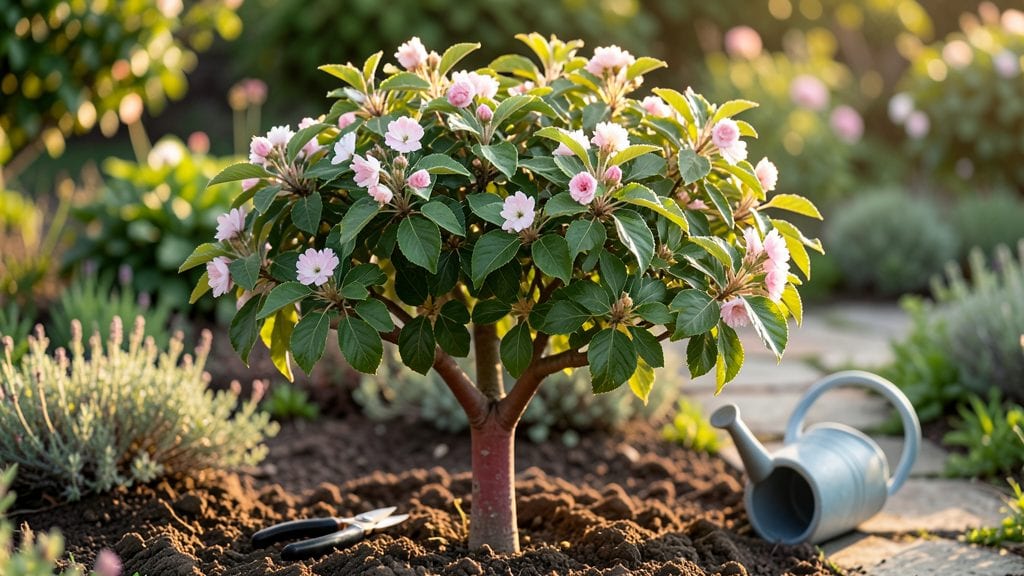
The Ruby Ruffle patio peach tree turns any Pacific Northwest patio into a hummingbird magnet with its ruffled foliage and delicate peaches. 🌸 I fell in love with this tree the first time I saw it—its ornamental leaves alone make it a showstopper, but the fruit adds a sweet bonus.
The best part? It thrives in small spaces, making it perfect for urban gardens where big trees won't fit.
This tree’s ruffled, burgundy-tinged leaves create texture that pairs beautifully with silver foliage plants like lamb’s ear or dusty miller. Place it near seating areas where you can enjoy the show, and watch hummingbirds flock to its spring blossoms.
For extra charm, add trailing ivy or ornamental grasses to soften the edges of its compact form.
You’ll create a low-maintenance focal point that blooms, fruits, and stays manageable—ideal for balconies or courtyard gardens. The peaches are small but stunning, perfect for display or snacking, and the tree’s slow growth means no pruning headaches. It’s the kind of plant that makes neighbors stop and ask, “What’s that?”
Works equally well in containers or planted in the ground, so adapt it to your space. Pair it with lavender for fragrance or salvia for pollinator appeal, and you’ve got a year-round conversation starter. Let’s design your hummingbird haven!
📚 In This Guide
- What you need
- Instructions
- Tips and common mistakes
- Wrapping up and next steps
What you need
- ● Pruning shears: Bypass pruners (sharp, clean, and sterilized to prevent disease—think blank">Felco F-2 or blank">Gonicc models).
- ● Loppers: For thicker branches (1.5"–2" diameter), opt for ratcheting loppers (e.g., blank">Fiskars X27).
- ● Hand saw: Pruning saw with a curved blade (e.g., blank">Bahco) for stubborn branches.
- ● Disinfectant: 70% isopropyl alcohol or blank">horticultural spray (e.g., blank">Concrobium) to sterilize tools between cuts.
- ● Gloves: Garden gloves (nitrile-coated for grip) to protect from thorns and sap.
- ○ Pruning sealant: Optional but helpful (e.g., blank">Tanglefoot Tree Wound Pruning Sealer) for large cuts to prevent disease.
- ● Ladder or step stool: If your tree is over 6 feet tall, use a stable, extendable ladder (e.g., blank">Little Giant).
- ● Bucket or tarp: For collecting pruned debris—a 5-gallon bucket or heavy-duty tarp works great.
- ○ Sharpie marker: Optional for labeling branches if you’re training the tree (e.g., blank">Sharpie Ultra Fine).
- ● Timing: Prune in late winter or early spring (before buds swell) to avoid stressing the tree. Never prune in fall in the PNW—humidity invites fungal issues! ⏳
- ● Weather: Choose a dry, overcast day (no rain for 24 hours before/after pruning).
- ● Safety gear: Safety glasses (to shield from debris) and closed-toe shoes (thorns are no joke!).
- ● Tree health check: Inspect for pests/diseases (e.g., peach leaf curl) before pruning. blank">PNW Extension resources can help ID issues.
Step-by-step guide to planting your Ruby Ruffle patio peach tree
This stunning dwarf variety thrives in the Pacific Northwest's mild climate—here's how to plant it for years of peaches and hummingbird visits.
🪴 Step 1: Choose the Perfect Planting Spot
Pick a location with at least 6 hours of direct sunlight daily, though Ruby Ruffles tolerate partial shade better than standard peaches. In the PNW, a south or southwest exposure works best, but avoid areas where cold air settles—like low spots or near north-facing walls. The tree needs 6-8 feet of clearance all around for airflow and future growth.
I always dig a test hole first to check drainage. If water pools after 30 minutes, amend the soil with 2-3 inches of compost to improve drainage. Ruby Ruffles hate soggy roots, so proper drainage is non-negotiable. The ideal soil pH is 6.0-6.5—test your soil if you're unsure, or add sulfur to lower pH if needed.
🌱 Step 2: Prepare the Planting Hole and Amend Soil
Dig a hole twice as wide as the root ball but only as deep—planting too deep suffocates the graft union. Loosen the sides of the hole with a shovel to encourage root spread. Mix the native soil with half a 40-pound bag of premium compost and a handful of balanced 10-10-10 fertilizer to give it a nutrient boost right away.
Place the tree in the hole so the graft union (the bump near the base) sits 1-2 inches above soil level. This prevents rot while allowing the tree to establish. Backfill with your amended soil mixture, tamping gently every 2 inches to remove air pockets. Water thoroughly to settle everything—you'll see the soil compact naturally.
☀️ Step 3: Mulch and Water for Establishment
Spread 2-3 inches of wood chip mulch in a 2-foot diameter circle around the base, keeping it 3 inches away from the trunk to prevent rot. Mulch conserves moisture and regulates soil temperature, which is especially helpful in the PNW's cool, wet springs. Water deeply immediately after planting—aim for 1-2 gallons to encourage root growth into the surrounding soil.
For the first 4-6 weeks, water 2-3 times per week until the soil is 6 inches deep and evenly moist. Check by sticking your finger in—it should feel like a damp sponge, not dripping wet. Avoid overhead watering after planting; instead, water at the base to prevent fungal diseases that love the PNW's humidity.
✂️ Step 4: Prune for Shape and Health
Wait until late winter or early spring before your tree's first bloom to prune. Remove any dead, crossing, or inward-growing branches first—these compete for energy and block airflow. Cut just outside the branch collar (the swollen area where the branch meets the trunk) using clean, sharp pruners. For Ruby Ruffles, I also trim back any overly vigorous shoots to maintain that beautiful, rounded patio shape.
Open the center of the tree slightly to let light and air circulate. This reduces disease risk and encourages fruit production. After pruning, apply a thin layer of horticultural oil to protect any fresh cuts from fungal spores. The goal is to create an open, airy structure that's easy to maintain and harvest from.
🌿 Step 5: Protect and Maintain for Long-Term Success
In the PNW, young trees benefit from frost cloth or row covers during late spring frosts (after last frost date, remove immediately). Ruby Ruffles are more cold-hardy than standard peaches, but young trees still need protection until established. Once fruit forms, cover the tree with netting to deter birds—hummingbirds will visit, but they won't steal your peaches!
Fertilize lightly in early spring with ½ cup of 10-10-10 fertilizer spread around the drip line (the edge of the tree's canopy). Water deeply after applying to help nutrients reach the roots. Avoid heavy fertilization—the PNW's rich soil often provides enough nutrients, and Ruby Ruffles produce best when slightly underfed compared to standard peaches.
Tips & tricks for perfect Ruby Ruffle patio peach tree planting
Here's what I've learned after planting Ruby Ruffles that thrive for years in the PNW—these little details make all the difference!
Sunlight Secret: That 6 hours of sunlight is non-negotiable for fruit production, but here's the thing—morning sun is more important than afternoon in our cooler climate. Position your tree so it gets direct rays in the morning, then partial shade in the afternoon. This prevents heat stress while still giving enough energy for those sweet peaches. I've seen trees in full afternoon shade produce tiny, tart fruit—don't make that mistake!
Drainage Test: The 30-minute drainage test is your best friend—don't skip it! I've planted three Ruby Ruffles, and the one that got soggy roots died within two years. After your test hole fills, poke it with a stick—if water comes back up, you definitely need that 2-3 inches of compost. For extra insurance in heavy clay soil, consider adding perlite or coarse sand to your amendment mix.
Graft Union Placement: Positioning that graft union 1-2 inches above soil level is critical—this prevents rot while allowing the tree to establish properly. I learned this the hard way when my first Ruby Ruffle developed fungal issues because it was planted too deep. Use a small stake to mark the correct height before planting, and double-check once the tree's in the hole. The graft union is like the tree's "heart"—keep it healthy!
Mulch Magic: That 2-3 inches of wood chip mulch isn't just decoration—it's a game-changer for moisture retention and temperature regulation. In our wet PNW springs, mulch prevents soil compaction from rain while keeping roots cool. Pro tip: Refresh the mulch every spring—decomposed mulch loses its effectiveness. And always keep it 3 inches away from the trunk to prevent rot.
Pro Tips for Ruby Ruffle Patio Peach Tree
- Here's what I've learned after planting Ruby Ruffles that thrive for years in the PNW—these little details make all the difference!
- Sunlight Secret: That 6 hours of sunlight is non-negotiable for fruit production, but here's the thing—morning sun is more important than afternoon in our cooler climate.
- Drainage Test: The 30-minute drainage test is your best friend—don't skip it!
Frequently asked questions
Got questions about your Ruby Ruffle Patio Peach Tree? You’re not alone!
Here are some of the most common queries from gardeners in the Pacific Northwest—plus quick, actionable answers to keep your hummingbird haven thriving.
When is the best time to prune my Ruby Ruffle Patio Peach Tree for optimal growth?
Prune in late winter or early spring (February–March) before new growth begins. This encourages strong blooms and fruit (if pollinated) while avoiding late-season cuts that can invite pests. Skip summer pruning—it stresses the tree and disrupts hummingbird feeding patterns!
Will pruning reduce the number of flowers that attract hummingbirds?
Not if done right! Focus on removing dead, crossing, or overcrowded branches—this actually boosts airflow and sunlight, leading to more vibrant blooms. Aim to keep the tree’s open, airy shape; hummingbirds love the easy access to nectar!
How much can I trim back without harming the tree?
For young trees (under 5 years), limit pruning to 10–20% of the foliage per year. Mature trees can handle up to 30% if needed, but avoid cutting back more than 1/3 of the canopy in one season. Never top the tree—it weakens growth and reduces flowers.
What should I do if my Ruby Ruffle’s leaves turn yellow after pruning?
Yellowing leaves often signal over-pruning or nutrient stress. Check for:
- Root damage (gentle watering + mulch helps)
- Nutrient deficiency (use a balanced fertilizer in spring)
- Fungal issues (prune in dry weather, avoid wetting leaves)
Are there low-maintenance alternatives to Ruby Ruffle for PNW hummingbird gardens?
Try these hummingbird-friendly, drought-tolerant options:
- Oregon Grape (Mahonia aquifolium)
- Red Flowering Currant (Ribes sanguineum)
- Salal (Gaultheria shallon)
- Pacific Dogwood (Cornus nuttallii)
Wrapping up and next steps
Transforming your Pacific Northwest patio into a hummingbird haven with a Ruby Ruffle Patio Peach Tree is easier—and more rewarding—than you think! 🌸 With its stunning blooms, minimal upkeep, and irresistible charm, this tree is the perfect way to blend beauty with functionality.
Whether you’re a seasoned gardener or just starting out, the key is confidence in your pruning skills and a little patience to watch your garden thrive.
Ready to take the next step? Grab your pruners, mark your calendar for spring and fall pruning sessions, and enjoy the buzzing visitors (and compliments!) your tree will bring. Your future hummingbird oasis awaits—let’s make it happen! 🐦⬛✨