
Flowers
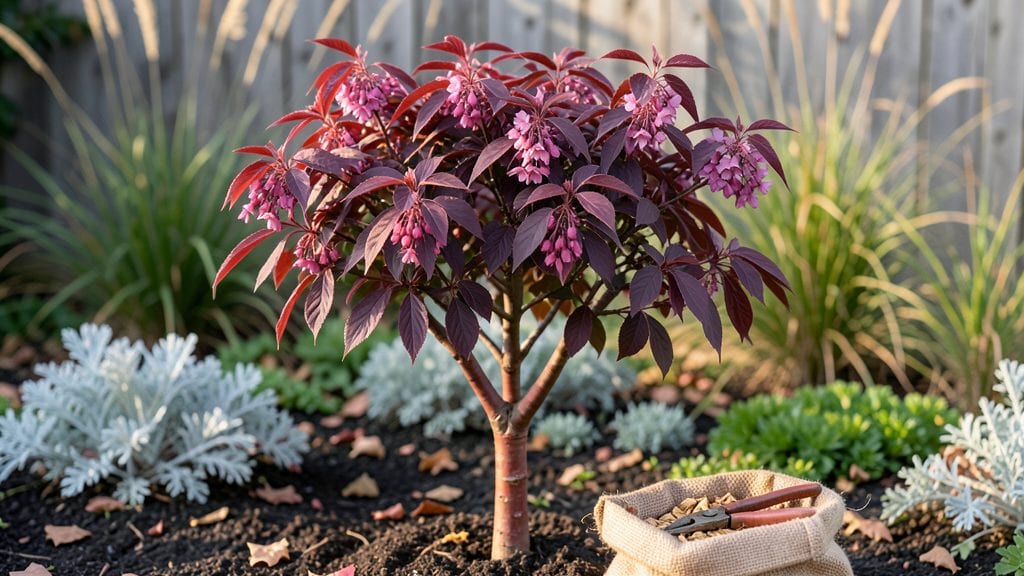
That first flush of purple leaf plum tree flowers in late winter is one of spring’s most dramatic moments—pink-white blossoms against deep purple foliage that hummingbirds can’t resist. 🌸 I’ve watched mine transform a dull corner of the yard into a magnet for pollinators, and the secret isn’t complicated: it’s about matching the tree’s natural rhythm with the right care.
The key starts with sunlight and soil. Plant in full sun where the tree gets at least 6 hours of light daily, and amend heavy clay soil with compost to improve drainage—this tree hates soggy roots.
Water deeply once a week after establishment, but don’t overdo it; purple leaf plums thrive when slightly dry between waterings. The vibrant foliage and abundant flowers reward this balance every spring.
Pruning in late winter (before buds swell) keeps the tree open and flowering strong. Cut back dead wood and shape lightly—just enough to encourage airflow and sunlight penetration. With the right approach, you’ll see those signature blossoms return year after year, followed by edible (though seedy) fruit that birds love.
The foliage stays stunning even after flowering, making it a four-season star.
Pair it with spring bulbs like daffodils or early perennials to extend the show, and place it where you can enjoy the hummingbird traffic from a porch or patio.
The tree’s compact size (15–25 feet) makes it perfect for smaller gardens too. Here’s how to keep yours thriving for decades of color and life.
📚 In This Guide
- What you need
- Instructions
- Tips and common mistakes
- Wrapping up and next steps
What you need
- ● Purple Leaf Plum Tree Sapling: 1–3 trees (depending on garden size; spacing 15–20 ft apart for full visual impact)
- ● Prunus cerasifera ‘Atropurpurea’ (most common variety) or similar cultivars
- ● Choose bare-root (fall/winter) or container-grown (spring) saplings from a reputable nursery
- ● Well-Draining Soil Mix: 50% native soil + 30% compost + 20% perlite/sand (for sandy or clay-heavy soils)
- ● pH: 6.0–7.0 (test with a soil kit or send a sample to a lab)
- ● Mulch: 2–3 inches of wood chips or pine straw (keep 6 inches away from the trunk)
- ● Planting Tools: Shovel or d-handle spade (for digging)
- ● Garden trowel (for root adjustment)
- ● Wheelbarrow (for soil/mulch transport)
- ○ Safety Gear: Gloves (gardening or work gloves), knee pads (optional but helpful!)
- ● Watering Supplies: Hose with soaker nozzle or drip irrigation kit
- ● 5-gallon watering can (for young saplings)
- ● Fertilizer: Slow-release balanced fertilizer (10-10-10) or organic compost tea (apply in early spring)
- ● Pruning Shears: Bypass pruners (for shaping after flowering)
- ● Hummingbird Feeders: 1–2 red feeders (place 10–15 ft from the tree)
- ● Tree Stake & Ties: Only if planting in windy areas (use biodegradable ties)
Step-by-Step instructions for encouraging purple leaf plum tree flowers
Here's how I coax stunning spring blooms from your purple-foliaged plum—no fancy tricks, just smart care.
🌱 Step 1: Prune for Light and Airflow in Late Winter
Start your prep work 4-6 weeks before your last frost date when the tree is still dormant. I always prune on a dry, sunny day—this helps wounds dry faster and reduces disease risk. Remove any dead, crossing, or inward-growing branches first using clean, sharp pruners. These are the branches that block light and airflow, which your plum needs for strong flowering.
Next, thin out about 20% of the total branches to open up the center of the tree. This isn't about drastic cutting—think of it as giving your plum a spa day. You'll see where branches are too crowded by looking for clusters where sunlight can't reach the inner leaves. Make your cuts just above an outward-facing bud or branch collar to encourage healthy regrowth.
☀️ Step 2: Ensure Full Sun Exposure for Flower Bud Formation
Purple leaf plums need at least 6 hours of direct sunlight daily to set abundant flower buds. If your tree is in partial shade, prepare to move it—or at least prune surrounding trees/shrubs to open up the canopy. I've seen plums in morning sun with afternoon shade still produce flowers, but the blooms will be fewer and less vibrant.
Watch for signs of insufficient light: if new growth appears pale green or yellowish rather than the characteristic purple, or if leaves are small and sparse, your tree needs more sun. You'll also notice fewer flower buds forming along the branches. If you can't move the tree, consider transplanting it to a sunnier location in early spring before buds swell.
💧 Step 3: Water Deeply and Consistently During Bud Development
Once flower buds begin to swell (usually late winter to early spring), water your plum deeply once a week unless you've had recent rainfall. The soil should be moist 12 inches down—stick your finger in to check. Purple leaf plums are somewhat drought-tolerant once established, but consistent moisture during bud development leads to larger, more abundant flowers.
Here's the trick: water early in the morning to reduce evaporation and fungal risks. Avoid wetting the leaves or flowers themselves, as this can encourage powdery mildew. If your area experiences freeze-thaw cycles, water deeply before cold snaps to help the roots absorb moisture before the ground freezes. You'll see buds plump up and turn pinkish as they prepare to bloom.
✂️ Step 4: Lightly Prune After Flowering to Maintain Shape
Once the flowers have faded (usually 4-6 weeks after blooming), do a light maintenance prune to remove any dead flowers, damaged branches, or suckers growing from the base. This keeps your tree looking tidy and encourages next year's blooms. I never remove more than 10% of the tree's canopy at this stage—we want to preserve leaf production for summer color.
Pay special attention to any branches that grew too vigorously during the spring flush. Cut these back by about one-third to maintain balance. You'll notice the tree's natural shape more clearly after flowering, making it easier to see where light might be blocked. This is also the perfect time to fertilize lightly with a balanced 10-10-10 formula if your soil is poor.
🌿 Step 5: Mulch and Feed for Next Year's Blooms
Spread 2-3 inches of organic mulch (like shredded bark) around the base of your plum, keeping it 6 inches away from the trunk to prevent rot. This helps retain moisture, regulate soil temperature, and gradually enrich the soil as it breaks down. I always use disease-free mulch—old wood chips or untreated bark work best.
In early fall, apply a slow-release fertilizer (like 10-10-10) around the drip line of the tree. This gives your plum a head start on nutrient uptake for next year's flower buds. Water deeply after applying fertilizer to help it reach the roots. You'll see the difference in next spring's blooms—more vibrant colors and potentially even larger clusters of flowers.
Tips & tricks for perfect purple leaf plum tree flowers
Want to turn your purple leaf plum into a springtime showstopper? These practical tips will help you maximize blooms while keeping your tree healthy and vibrant.
The Timing Secret: That 4-6 week window before your last frost date in Step 1 is critical for dormant pruning. I check my local frost calendar and mark the date—this ensures the tree has enough time to heal before spring growth begins. If you prune too late, new growth might sprout before winter's end, leaving it vulnerable to cold damage.
Sunlight Strategy: The 6 hours of direct sunlight mentioned in Step 2 is non-negotiable for optimal blooming. If your tree gets morning sun but afternoon shade, consider strategically pruning nearby trees to extend sunlight exposure. I've seen dramatic improvements in flower quantity when I opened up just 2 hours more of afternoon sun—even if it meant sacrificing a few leaves.
Watering Wisdom: When buds start swelling, that deep watering once a week should reach 12 inches down. Use a screwdriver to test soil moisture—if it comes out dry, water again. I've noticed buds plump up noticeably within 48 hours of proper deep watering, especially in dry climates. The early morning timing is key to prevent fungal issues from overnight moisture.
Pruning Precision: In Step 4, when you're doing your light maintenance prune, pay special attention to branches that grew too vigorously. Cutting them back by one-third helps maintain balance while preserving that gorgeous purple foliage. I always make my cuts just above a bud that's facing outward—this encourages new growth in the right direction and prevents crowded branches.
Pro Tips for Purple Leaf Plum Tree Flowers
- Want to turn your purple leaf plum into a springtime showstopper?
- The Timing Secret: That 4-6 week window before your last frost date in Step 1 is critical for dormant pruning.
- Sunlight Strategy: The 6 hours of direct sunlight mentioned in Step 2 is non-negotiable for optimal blooming.
Frequently asked questions
Got questions about growing and enjoying purple leaf plum tree flowers? You’re not alone—these stunning trees spark curiosity! Here are answers to the most common questions to help you make the most of your plum tree’s beauty.
When do purple leaf plum trees typically bloom?
Purple leaf plum trees usually burst into vibrant pink, purple, or white flowers in early to mid-spring, often as early as February or March, depending on your climate. They’re one of the first trees to flower, making them a hummingbird magnet before other blooms appear.
Do purple leaf plum trees need full sun to flower well?
Yes! While they can tolerate partial shade, full sun (6+ hours daily) ensures the most abundant and vibrant flowers. In shadier spots, blooms may be fewer but still stunning. Just avoid hot afternoon sun in extreme climates—light afternoon shade can help prevent leaf scorch.
Why aren’t my purple leaf plum flowers opening, or they’re sparse?
Sparse or closed blooms often signal stress or poor care. Check these common culprits:
- Pruning at the wrong time: Avoid heavy pruning in late fall or winter—do it right after flowering to encourage next year’s blooms.
- Over-fertilizing: Too much nitrogen = leafy growth, fewer flowers. Use a balanced 10-10-10 fertilizer in early spring.
- Drought or waterlogging: Plums hate soggy roots but also consistent moisture. Water deeply 1-2 times per week (adjust for rain).
- Pests/disease: Yellow leaves or sawdust-like frass? Scale insects or spider mites can stress the tree. Treat with neem oil or insecticidal soap.
Can I grow purple leaf plums in containers, or do they need to be planted in the ground?
While dwarf varieties (like ‘Okame’ or ‘Kwanzan’) can thrive in large containers (20+ gallons), most purple leaf plums prefer permanent ground planting. Containers limit root growth, reducing flower production and long-term health. If you must pot it, use well-draining soil and repot every 2-3 years.
Are purple leaf plum flowers fragrant, and do they attract pollinators?
Most purple leaf plum varieties have minimal to no fragrance, but their bright colors and nectar make them a top hummingbird and bee magnet! Early blooms provide critical food sources when other flowers are scarce. For extra scent, consider ‘Accolade’ or ‘Santa Rosa’—their sweet, almond-like fragrance adds a lovely bonus.
What’s the best alternative if I want fragrant plum flowers?
If fragrance is a priority, try these plum tree alternatives with showy flowers and scent:
- ‘Santa Rosa’ Plum: Pink flowers + fragrant, edible fruit.
- ‘Methley’s Redleaf’ Plum: Deep purple foliage + sweet blossoms.
- ‘Fruitscents’ Plum: Highly fragrant flowers + ornamental.
For low-maintenance color, stick with purple leaf plums—they’re hardy, disease-resistant, and hummingbird-approved!
Wrapping up and next steps
The purple leaf plum tree isn’t just a stunning addition to your garden—it’s a lifeline for early spring pollinators, especially hummingbirds, and a year-round foliage showstopper. 🌸 With its vibrant blooms, low-maintenance care, and adaptability, this tree brings joy, color, and ecological benefits to any landscape.
Whether you're a seasoned gardener or just starting, now’s the perfect time to plant one and invite nature’s beauty into your backyard!
Ready to transform your outdoor space? Start by researching local nurseries or checking soil conditions in your area—then dig in and watch your garden bloom with purpose!