
Companion Plants
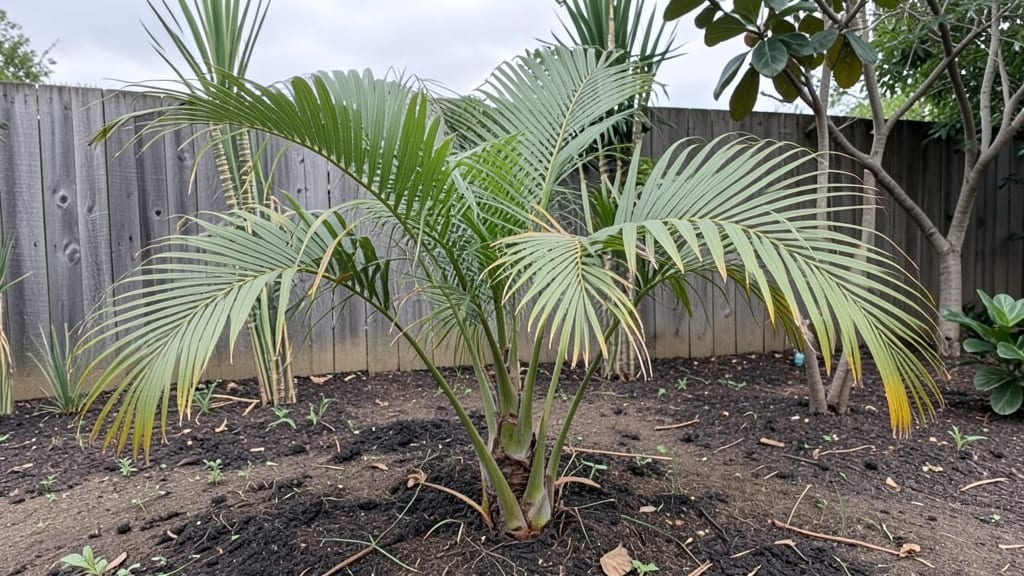
Plants around palm trees can transform your yard into a lush, sun-drenched paradise—if you pick the right companions. 🌿 I learned this the hard way when my first attempt at pairing palms with thirsty ferns left my palm struggling for water in the summer heat.
The secret lies in matching moisture needs, sun tolerance, and root competition while keeping the palm as the star.
Start with drought-tolerant ground covers like creeping thyme or sword ferns that thrive in partial shade while respecting the palm’s roots. Add bromeliads or bird-of-paradise for pops of color that won’t outcompete your palm for water.
Spacing matters too—keep plants 18-24 inches away from the palm trunk to avoid root battles, and group similar water needs together.
What you’ll end up with is a layered look that feels effortless but takes years to perfect: velvety foliage at the base, mid-height plants to frame the palm’s trunk, and airy climbers like passionflower weaving through the fronds.
The palm stays the focal point while the understory creates depth and texture that feels intentional, not accidental.
This approach works for Mediterranean courtyards, desert oases, or tropical retreats—just adjust for your climate. The key is patience: let plants establish before expecting dramatic results, and always prioritize the palm’s needs over flashy companions. Your yard will thank you with years of sun-soaked beauty.
📚 In This Guide
- What you need
- Instructions
- Tips and common mistakes
- Wrapping up and next steps
What you need
- ● Plants (Shade-Tolerant & Drought-Resistant): 1–3 Bird of Paradise (Strelitzia nicolai) (for bold foliage)
- ● 2–4 Elephant Ears (Colocasia) (dramatic leaves, 1–2 ft tall)
- ● 3–5 Calatheas (Calathea spp.) (patterned leaves, low-light lovers)
- ● 1–2 Ferns (e.g., Maidenhair or Boston Fern) (soft texture, 1–3 ft tall)
- ● 1–3 Hibiscus (Hibiscus rosa-sinensis) (tropical blooms, 3–6 ft tall)
- ● 1–2 Bromeliads (e.g., Aechmea or Neoregelia) (air plants, vibrant colors)
- ● Soil & Mulch: 5–10 gallons well-draining potting mix (or amend garden soil with perlite/peat)
- ● 2–3 bags organic mulch (pine bark or coconut coir, 2–3 inches deep)
- ● Tools: 1 garden trowel (for transplanting)
- ● 1 pruners (clean, sharp for trimming)
- ● 1 watering can or hose with nozzle (gentle spray for delicate plants)
- ● 1 measuring tape (to space plants 2–4 ft apart)
- ● 1–2 fertilizer spikes (slow-release, for tropical plants)
- ● 1 garden kneeler/pad (for comfort during planting)
- ● 1–2 decorative rocks or pebbles (for a polished look)
- ● 1 spray bottle (for misting ferns/bromeliads)
- ● 1 plant support stakes (if using tall hibiscus or elephant ears)
Step-by-step guide to planting around palm trees
Here's how to create a thriving understory that complements your palm's natural beauty.
🌿 Step 1: Assess Soil and Light Conditions
Start by testing your soil's moisture retention and pH—palm trees thrive in slightly acidic, well-draining soil with a pH of 5.5-7.0. Use a simple soil test kit to check these levels before planting. The shade pattern under your palm varies: the trunk creates deep shade, while the canopy allows dappled light to filter through. Note where the light shifts throughout the day—this determines which plants will thrive.
If your soil is heavy clay, mix in 2-3 inches of organic compost to improve drainage. I've found that amending the soil first prevents root competition later. Avoid planting directly against the palm trunk where roots compete aggressively for water—keep a 12-inch buffer zone around the base.
🌱 Step 2: Select Complementary Understory Plants
Choose plants that match your palm's water needs and tolerate partial to full shade. For dry-shade areas, select drought-tolerant options like elephant ears (Colocasia), hostas (Hosta spp.), or caladiums—these thrive with minimal water once established. In moist-shade spots, opt for ferns (Nephrolepis), ginger (Hedychium), or pothos (Epipremnum) which appreciate consistent humidity.
I recommend planting in groups of 3-5 for visual impact. Space smaller plants like ferns 12-18 inches apart, while larger specimens like elephant ears need 2-3 feet of clearance. Avoid competitive groundcovers like ivy—they'll strangle your palm's roots over time. Instead, use moss (Selaginella) or sword ferns (Nephrolepis cordifolia) for delicate texture.
💧 Step 3: Prepare Planting Holes and Amend Soil
Dig holes twice as wide as the root ball but only as deep as the container—palm roots spread horizontally, so depth matters less than width. Loosen the sides of the hole with a garden fork to encourage root penetration. For each plant, mix 1 part compost with 2 parts native soil to create a nutrient-rich planting medium.
Place each plant so the top of the root ball sits 1 inch below soil level—this prevents stem rot from sitting water. Gently backfill with the amended soil, pressing lightly to remove air pockets. Water deeply immediately after planting to settle the soil and eliminate gaps. Mulch with 2-3 inches of shredded bark to retain moisture and suppress weeds.
☀️ Step 4: Establish Watering and Maintenance Routine
Newly planted shade companions need consistent moisture for the first 4-6 weeks. Water deeply 2-3 times per week, aiming for 1-1.5 inches of water per session. Check soil moisture by sticking your finger 2 inches deep—if it feels dry, water again. Avoid overhead watering in the evening to prevent fungal diseases like anthracnose that thrive in damp foliage.
After establishment, adjust watering based on plant type. Drought-tolerant plants like hostas only need water when the soil feels dry to the touch, while tropicals like caladiums prefer evenly moist conditions. Fertilize lightly in spring with a balanced 10-10-10 formula—palm trees are heavy feeders, and their roots will compete for nutrients, so use half-strength applications.
Tips & tricks for perfect palm tree understory plantings
Creating a stunning understory around your palm trees takes thoughtful planning—here are my go-to tricks to ensure everything thrives together.
Soil Preparation Strategy: Before planting, I always do a quick soil test to check moisture retention—palm roots need well-draining soil, and adding 2-3 inches of compost to heavy clay makes all the difference. For sandy soils, mix in 1 part peat moss to the native soil to improve moisture retention. The 12-inch buffer zone around the palm trunk is non-negotiable—this prevents root competition that can stunt both plants.
Light Mapping Technique: Palm canopies create two distinct light zones: deep shade under the trunk and dappled light under the fronds. I mark these zones with stakes before planting—this helps me place moisture-loving plants like ferns in dappled areas and drought-tolerant hostas in deeper shade. A simple trick: Observe the light patterns throughout the day, especially around midday when shadows are shortest.
Plant Grouping Psychology: Planting in groups of 3-5 creates visual impact while mimicking natural ecosystems. For smaller plants like ferns, I use 12-18 inch spacing to fill gaps quickly, while larger elephant ears get 2-3 feet clearance to prevent overcrowding. The key is to create layers—tall plants at the back, medium in the middle, and low-growing moss at the front for that lush tropical look.
Watering Wisdom: Those first 4-6 weeks are critical for new plantings. I set a rain gauge to track my 1-1.5 inches of water per session—this ensures consistent moisture without overwatering. A pro move: Water in the morning so foliage dries quickly, preventing fungal issues like anthracnose. For tropical plants, I add mulch with 2-3 inches of shredded bark to lock in moisture and suppress weeds while keeping roots cool.
Pro Tips for Plants Around Palm Trees
- Creating a stunning understory around your palm trees takes thoughtful planning—here are my go-to tricks to ensure everything thrives together.
- Soil Preparation Strategy: Before planting, I always do a quick soil test to check moisture retention—palm roots need well-draining soil, and adding 2-3 inches of compost to heavy clay makes all the difference.
- Light Mapping Technique: Palm canopies create two distinct light zones: deep shade under the trunk and dappled light under the fronds.
Frequently asked questions
Got questions about creating a lush, tropical garden with palm trees as your centerpiece?
Here are some of the most common ones—and their answers—to help you design with confidence!
What are the best shade-tolerant plants to pair with palm trees?
Look for hostas, ferns, calatheas, and impatiens—these thrive in dappled shade. For ground cover, try sweet potato vine or asparagus fern. Just ensure they match your palm’s moisture and soil needs!
How long does it take for plants around palm trees to establish?
Most shade-loving plants take 3–6 months to root and show new growth. Palms themselves can take 1–2 years to fully adjust. Water consistently (but avoid soggy soil) to speed up the process!
Do palm trees compete with other plants for water?
Yes! Palms are thirsty and can outcompete smaller plants. Solution: Water companion plants separately (early morning) and use mulch to retain moisture for them. Drip irrigation helps too!
Can I plant flowers around palm trees?
Opt for shade-friendly bloomers like begonias, fuchsias, or bromeliads. Avoid sun-lovers (e.g., marigolds) unless your palm provides partial shade with filtered light.
Why are my plants around the palm tree wilting or yellowing?
Check for:
- Overwatering (palms hate soggy roots).
- Nutrient competition (fertilize companions separately).
- Too much shade (some plants need bright indirect light).
Wrapping up and next steps
Creating a lush, tropical garden around your palm trees is easier than you think!
By choosing the right shade-loving companions—like ferns, hibiscus, or bird of paradise—you’ll enhance beauty, reduce maintenance, and even boost your palm’s health. 🌿✨ The key is matching light, soil, and water needs while letting nature do the work.
Ready to transform your space? Start small—pick one or two plants to test, observe how they thrive, and expand from there. Before you know it, your garden will be a vibrant, low-stress paradise that’s all yours to enjoy! 🌴💚