
Pruning
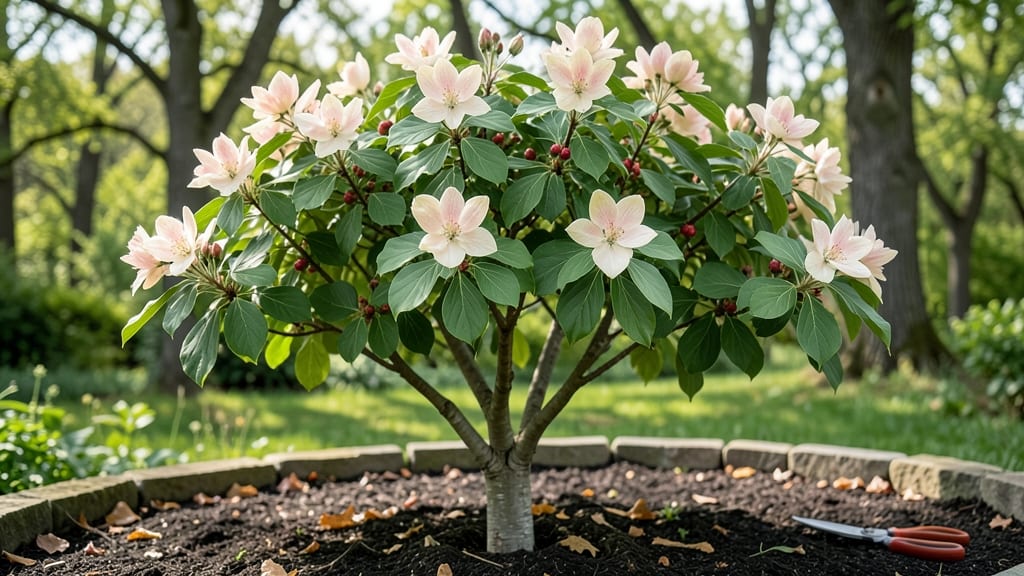
The pink dogwood tree typically reaches 20-30 feet tall at maturity, but its height depends on soil, sunlight, and pruning habits. My first dogwood grew wild in a wooded lot—unpruned, it stretched toward the sky like a natural obelisk.
The same species in my urban yard, with regular trimming, stays a graceful 15-foot sentinel along the fence line.
Soil richness and sunlight exposure can push heights toward the upper range, while well-timed pruning keeps them manageable. Varieties like Cornus florida 'Cherokee Brave' max out around 25 feet, while dwarf cultivars like 'Appalachian Red' stay under 12 feet.
The key to compact growth is pruning in late winter or early spring, before new growth begins.
You’ll end up with a tree that fits your space while still showcasing those iconic spring blooms. Pruned dogwoods also produce thicker branches, meaning more flowers and berries for wildlife.
The trade-off? You’ll sacrifice a few years of mature height, but the trade-off is worth it for a tree that stays in proportion with your landscape.
Works for both formal gardens and woodland edges—just adjust pruning intensity based on your goals. Whether you want a towering specimen or a neatly trimmed accent, this approach gives you control without sacrificing beauty. Ready to shape your dogwood’s future?
📚 In This Guide
- What you need
- Instructions
- Tips and common mistakes
- Wrapping up and next steps
What you need
- ● Pruning shears: Bypass pruners (for small branches, ¼”–¾” thick)
- ● Loppers: 8”–12” bypass loppers (for branches ¾”–2” thick)
- ● Pruning saw: Curved-tooth saw (for branches 2”+ thick)
- ● Gloves: Heavy-duty gardening gloves (cut-resistant, waterproof)
- ● Disinfectant: 70% isopropyl alcohol or bleach solution (1 part bleach:9 parts water) (to sterilize tools)
- ○ Pruning sealant: Optional but recommended (for large cuts, latex-based)
- ● Extension pole: 6’–10’ telescoping pole (for high branches, adjustable)
- ● Ladder: Sturdy, non-slip ladder (if tree exceeds 8’ tall)
- ● Trash bags: Heavy-duty bags (for debris disposal)
- ● Weather check: Prune on a dry, calm day (avoid rain or wind)
- ● Safety glasses: Protective eyewear (to shield from debris)
- ● Long sleeves/pants: Wear closed-toe shoes and long clothing
- ● Tree identification: Confirm it’s a Cornus florida (pink dogwood) to avoid harming other species
- ● Plan ahead: Sketch a rough outline of your desired height and shape before starting
- ● Tree growth regulator: Hormonal spray (to slow growth, follow label instructions)
- ● String line: Lightweight twine (to guide pruning cuts for symmetry)
- ● Camera/phone: For documenting progress or sharing your masterpiece!
- ● Mulch: Organic mulch (to protect roots post-pruning)
Instructions for pruning pink dogwood to control height
Here's how I keep my dogwoods lush and manageable—without sacrificing their stunning spring blooms.
Time Your Pruning for Optimal Growth
Prune pink dogwood (Cornus florida) immediately after flowering, typically in late spring to early summer. This timing ensures you don’t remove next year’s flower buds, which form on old wood. I wait until all blooms have faded completely—usually 4-6 weeks after peak bloom—before touching the shears. Pruning too early risks cutting off flower buds, while waiting too long encourages excessive growth that’s harder to control.
If you missed the window, avoid heavy pruning in fall or winter. Light shaping is fine, but major height reduction should wait until next spring. Dogwoods are forgiving, but they respond best when you work with their natural growth cycle rather than against it.
Assess the Tree’s Structure and Growth Habits
Examine the tree’s central leader (main upward stem) and lateral branches. Pink dogwoods naturally grow 15-25 feet tall if unpruned, but with strategic cuts, you can limit them to 8-12 feet for smaller landscapes. Look for water sprouts (vigorous vertical shoots) and crossing branches—these are your first targets. I use a notebook to sketch the tree’s shape before cutting, marking branches to remove and those to preserve for structure.
Focus on removing 1/3 of the oldest wood each year to encourage new growth from the base. This prevents a "top-heavy" look and keeps the tree fuller at the bottom. Avoid cutting back more than 25% of the canopy in a single season—dogwoods are sensitive to drastic reductions.
Make Clean, Precise Cuts for Healthy Regrowth
Use sharp, bypass pruners for branches under ½ inch thick, and loppers for thicker stems. Cut just outside the branch collar (the swollen area where the branch meets the trunk) at a 45-degree angle. This ensures the wound heals properly and reduces the risk of disease. For height reduction, target the uppermost branches first, cutting them back to a bud or lateral branch that faces outward. This maintains an open canopy and prevents a dense, shaded interior.
Never leave stubs—this invites decay. If a branch is too large for clean cuts, make two cuts: the first 6-12 inches out from the trunk, then a second just outside the collar. For water sprouts, cut them at the base to redirect energy to the tree’s main structure. Seal larger wounds (over 2 inches) with pruning sealant to protect against pests and disease.
Thin the Canopy for Airflow and Light Penetration
Step back and evaluate the tree’s light exposure. Dogwoods need dappled sunlight to maintain vibrant foliage and flowers. Remove 20-30% of the smallest, interior branches to improve airflow and reduce humidity, which can lead to fungal issues like powdery mildew. Focus on branches that cross or rub against others—these create weak points and entry for pests. I prioritize removing dead, diseased, or damaged wood first, as this keeps the tree healthier overall.
If the tree looks uneven, selectively prune longer branches to balance the shape. Avoid "lion’s tailing" (cutting all branches back to a single point)—this creates a weak, unstable structure. Instead, aim for a naturally tapered silhouette, wider at the base and narrower at the top. This mimics the tree’s natural growth pattern and ensures long-term stability.
Post-Pruning Care to Encourage Recovery
Water the tree deeply after pruning to help it recover, especially if the season is dry. Mulch around the base with 2-3 inches of organic mulch (like shredded bark) to retain moisture and regulate soil temperature. Avoid piling mulch against the trunk—keep it 3-4 inches away to prevent rot. Fertilize lightly with a balanced, slow-release fertilizer (10-10-10) in early spring to support new growth, but skip heavy feeding after pruning, as this can stress the tree.
Monitor the tree for new shoots emerging from the base or along branches—these indicate successful pruning. If you see excessive dieback or yellowing leaves in the following weeks, the cuts may have been too severe. Dogwoods are resilient, but they signal stress through leaf color. Adjust your approach for the next pruning cycle if needed.
Tips & tricks for pruning pink dogwood trees to control height
These expert insights will help you maintain your dogwood's compact shape while preserving its stunning blooms and overall health.
Timing is Everything: The 4-6 week window after peak bloom is critical—this is when flower buds for next year have already formed. I mark my calendar after the last pink dogwood bloom fades completely, as this visual cue ensures I'm not cutting potential flowers. If you're unsure about your local bloom timing, consult your local cooperative extension service—they track average bloom dates by region. Confession: I skipped this step for years and wondered why my dogwoods never rebloomed reliably.
Structural Assessment Technique: Before making any cuts, step back and evaluate the tree's natural shape from multiple angles. I use a simple trick: hold a string from the top of the central leader to the ground—this creates a visual guideline for your ideal height. For compact growth, aim to keep the string within your target height (typically 8-12 feet for smaller landscapes). This visual method helps prevent over-pruning, which can stress the tree. Remember, dogwoods naturally grow 15-25 feet tall—we're just guiding that growth rather than forcing it.
Precision Cutting Strategy: When targeting height reduction in Step 3, focus on cutting back the uppermost branches to a lateral branch that faces outward. This creates a natural taper and prevents that "broomstick" look many pruned trees develop. For branches thicker than 2 inches, I always make the second cut just outside the branch collar—this healing response is crucial for preventing disease entry points. Pro tip: Use a permanent marker to mark your cuts before making them; this helps maintain clean angles even with larger branches.
Canopy Thinning Secrets: The 20-30% interior branch removal in Step 4 isn't about quantity—it's about quality. I target branches that are growing inward or crossing others, as these create weak points and reduce airflow. Think of it like creating a "tree window" that allows sunlight to penetrate to the lower branches. This not only improves flower production but also reduces humidity in the canopy, which is particularly important for preventing powdery mildew in humid climates. I've seen dogwoods go from sparse bloomers to flowering spectacularly after just one proper thinning.
Pro Tips for Pink Dogwood Tree Height
- These expert insights will help you maintain your dogwood's compact shape while preserving its stunning blooms and overall health.
- Timing is Everything: The 4-6 week window after peak bloom is critical—this is when flower buds for next year have already formed.
- Structural Assessment Technique: Before making any cuts, step back and evaluate the tree's natural shape from multiple angles.
Frequently asked questions
Got questions about managing your pink dogwood tree’s height? We’ve got answers! Whether you’re a first-time pruner or just curious about care, these FAQs will help you keep your tree lush and at the perfect height.
How tall does a pink dogwood tree typically grow?
A mature pink dogwood (Cornus florida) usually reaches 15–30 feet tall, though some varieties stay shorter (like the dwarf ‘Cherokee Brave’ at 6–8 feet). Soil, sunlight, and pruning all influence height—regular trimming can keep it compact and encourage bushier blooms.
When is the best time to prune a pink dogwood for height control?
Prune right after flowering (late spring) to avoid cutting off next year’s blooms. Avoid heavy pruning in fall or winter, as it can stress the tree. For minor height adjustments, you can also trim lightly in early summer—but never prune during bud formation (winter/early spring).
Can I keep my pink dogwood tree under 10 feet tall?
Yes! With consistent pruning, you can maintain a height of 6–10 feet. Focus on removing only the tallest branches each year, avoiding the center trunk. Use sharp pruners to make clean cuts just above outward-facing buds. Patience is key—it may take 2–3 years to see dramatic results.
Why is my pink dogwood growing too fast or too tall?
Fast growth often means over-fertilization or poor pruning habits. Check for these red flags:
- Too much nitrogen (use a balanced 10-10-10 fertilizer instead).
- Lack of height control pruning (trim 1–2 branches annually).
- Overcrowded roots (mulch properly but avoid piling near the trunk).
What’s a good alternative if I want a shorter flowering tree?
Consider these compact flowering trees that stay under 10 feet:
- Dwarf Fothergilla (Fothergilla gardenii): 3–6 ft, fragrant white blooms.
- Serviceberry (Amelanchier): 6–12 ft, edible berries + spring flowers.
- Japanese Maple (Acer palmatum): 6–10 ft, stunning foliage (not a dogwood but low-maintenance).
Wrapping up and next steps
Growing a stunning pink dogwood tree with controlled height is absolutely achievable with the right pruning techniques! Remember, timing, tools, and patience are key—whether you’re aiming for a compact shrub or a taller specimen. Start small, stay consistent, and enjoy the vibrant blooms year after year.
Ready to transform your landscape? Grab your pruners and get started! 🌸 For even more tips, check out our full pruning guide or consult a local arborist for personalized advice.