
Blooming
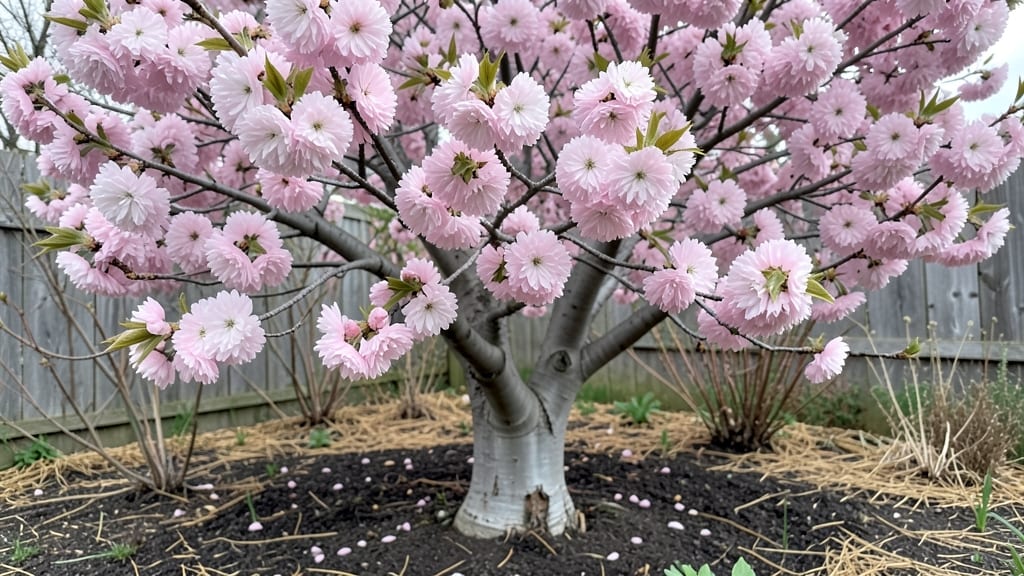
A pink cherry blossom tree turns your yard into a springtime masterpiece with clouds of delicate blossoms that steal the show. I remember the first time I saw one in full bloom—it felt like walking through a dream, where every petal seemed to glow under the sunlight.
The way they transform a dull landscape into something magical is unmatched, and once you plant one, you’ll understand why so many gardeners chase that same breathtaking effect.
These trees aren’t just pretty—they’re versatile landscape stars. Pair them with early-blooming bulbs like daffodils for a layered look, or plant them near evergreens to create contrast year-round.
Their dramatic height (30–40 feet at maturity) makes them perfect as focal points, while their graceful branches add movement to any setting. The best part? Their seasonal impact doesn’t end in spring—their foliage turns a rich gold in fall, giving you double the drama.
Imagine your front yard becoming the neighborhood’s spring highlight, where neighbors pause to admire the soft pink cascades before they even step inside. With the right spacing (20–30 feet apart) and a sunny spot, you’ll create a canopy that feels like a private escape.
The key is combining them with complementary plants—think azaleas, wisteria, or even climbing roses—to extend the show through summer and beyond.
Whether you’re designing a backyard oasis or a street-side statement, this tree delivers year after year. The secret lies in the details: pruning for shape, choosing the right variety for your climate, and letting them shine as the centerpiece.
Ready to make your garden unforgettable? Let’s bring that spring magic to life.
📚 In This Guide
- What you need
- Instructions
- Tips and common mistakes
- Wrapping up and next steps
What you need
- ● Pink cherry blossom tree (Prunus serrulata 'Kanzan' or similar) – Choose a healthy, disease-free 1- to 3-gallon container-grown sapling (height: 4–6 ft). 💡 Pro tip: Look for trees with vibrant pink buds and minimal leaf drop!
- ● High-quality potting soil or native soil mix – 5+ bags (2–3 cubic feet each) enriched with compost for optimal drainage.
- ● Organic mulch (cedar or pine) – 2–3 cubic feet to retain moisture and suppress weeds.
- ● Slow-release fertilizer (10-10-10 or 20-20-20) – 1–2 lbs for initial planting.
- ● Watering can or hose with a gentle spray nozzle – 5+ gallons of water for the first deep soak.
- ● Shovel or digging spade – For planting holes (width: 2x the root ball; depth: slightly shallower than the root ball).
- ● Garden gloves – A pair to protect your hands from thorns and soil.
- ● Pruning shears – For trimming dead branches or shaping the tree post-planting.
- ○ Stakes & tree ties (optional) – 2–3 stakes + ties if your tree needs temporary support in windy areas.
- ○ Soil pH test kit (optional) – To ensure your soil is slightly acidic (pH 6.0–7.0) for optimal growth.
- ● Sunlight access – A full-sun location (6+ hours of direct sunlight daily) for vibrant blooms.
- ● Well-draining soil – Avoid waterlogged areas; amend clay soil with sand or perlite if needed.
- ● Space to grow – Mature height: 20–25 ft; spread: 15–20 ft. Plan accordingly!
- ● Local climate check – Pink cherry blossoms thrive in USDA Zones 5–8; verify your hardiness zone.
Step-by-step guide to planting and caring for a pink cherry blossom tree
Transform your landscape with this stunning tree that blooms like a springtime masterpiece.
Choose the Right Location and Prepare the Soil
Pink cherry blossom trees thrive in full sun, requiring at least 6-8 hours of direct sunlight daily. Select a spot with well-draining soil—these trees despise soggy roots, which can lead to root rot and weaken the tree over time. If your soil is heavy clay, amend it with 2-3 inches of compost mixed into the top 12 inches of soil to improve drainage and fertility.
Dig a hole twice as wide as the tree’s root ball but no deeper. The top of the root ball should sit 1-2 inches above ground level—this prevents water from pooling around the trunk. Loosen the soil at the bottom of the hole with a shovel to encourage root spread into the surrounding earth.
Plant the Tree at the Correct Depth and Stake for Support
Carefully remove the tree from its container and gently tease apart any circling roots with your fingers. Place the tree in the hole so the root flare (where the roots begin to spread from the trunk) is visible above the soil line. Backfill the hole with the amended soil, pressing lightly to eliminate air pockets but avoiding compaction.
Water the tree deeply to settle the soil, then add 2-3 inches of mulch around the base, keeping it 3-4 inches away from the trunk to prevent moisture buildup. Install 2-3 stakes if needed, securing the tree with flexible ties to prevent wind damage during its first year. Avoid over-tightening—the tree should have room to sway slightly.
Water Deeply and Establish a Consistent Irrigation Schedule
Water the tree deeply 2-3 times per week for the first month, ensuring the soil is moist 6-8 inches down. After that, reduce to once a week unless your area experiences dry spells longer than 5 days. Pink cherry blossoms are drought-tolerant once established, but young trees need consistent moisture to develop strong roots.
Check soil moisture by inserting your finger 2 inches deep—if it feels dry, water again. Overwatering is just as harmful as underwatering, so avoid soggy conditions. In the first year, the tree’s roots are shallow, so focus on keeping the top 12 inches of soil consistently moist.
Prune for Structure and Health During Dormancy
Prune your pink cherry blossom tree in late winter or early spring, just before buds swell but before new growth begins. Remove dead, diseased, or crossing branches first, then thin out 10-20% of the canopy to improve airflow and sunlight penetration. Avoid heavy pruning—cherry blossoms bloom on last year’s growth, so aggressive cuts reduce next year’s flowers.
Use clean, sharp pruners to make cuts at a 45-degree angle just outside the branch collar (the swollen area where the branch meets the trunk). Sterilize your tools with rubbing alcohol between cuts to prevent spreading disease. After pruning, apply a balanced fertilizer (10-10-10) to support new growth.
Protect Against Pests and Diseases for Long-Term Beauty
Monitor for cherry leaf spot and powdery mildew, common issues that can defoliate the tree. At the first sign of fungal spores (yellow spots or white powder), apply neem oil or copper fungicide according to package instructions. For aphids or borers, use insecticidal soap or introduce ladybugs as natural predators.
Mature trees benefit from annual deep root feeding in early spring. Spread 2-3 cups of slow-release fertilizer around the drip line (the edge of the tree’s canopy) and water thoroughly. Avoid fertilizing in fall or winter, as new growth can’t harden off before cold weather, making the tree vulnerable to frost damage.
Tips & tricks for perfect pink cherry blossom tree planting and care
These expert insights will help you transform your landscape into a breathtaking springtime display with minimal stress.
Sunlight Strategy: The 6-8 hours of direct sunlight requirement is non-negotiable for vibrant blooms. If your location gets less than 6 hours, consider planting near a south-facing wall or using reflective surfaces like light-colored fences to maximize sunlight exposure. I've seen blossoms thrive in partial shade, but they'll be less dramatic—think of it as trading showstopper pink canopies for subtle garden accents.
Soil Preparation Secret: When amending heavy clay soil with 2-3 inches of compost, mix it thoroughly into the top 12 inches—not just the surface. I learned this the hard way after planting in amended surface soil only to have roots struggle to penetrate the compacted clay below. Use a broadfork to loosen the soil without disturbing the root ball's placement in the hole.
Watering Wisdom: The first month's 2-3 weekly deep waterings are critical for root establishment. Use a moisture meter to verify the 6-8 inch depth—many gardeners overestimate how deeply water penetrates. For established trees, water deeply but less frequently, allowing the top 12 inches to dry slightly between waterings to encourage deep root growth.
Pruning Precision: That 10-20% canopy thinning recommendation is about balance, not quantity. Focus on removing branches that cross or rub against each other first, then selectively thin to improve light penetration. I always make cuts at the branch collar to prevent unsightly stubs, and I never remove more than 25% of any branch in a single cut to avoid stressing the tree.
Pro Tips for Pink Cherry Blossom Tree
- These expert insights will help you transform your landscape into a breathtaking springtime display with minimal stress.
- Sunlight Strategy: The 6-8 hours of direct sunlight requirement is non-negotiable for vibrant blooms.
- Soil Preparation Secret: When amending heavy clay soil with 2-3 inches of compost, mix it thoroughly into the top 12 inches—not just the surface.
Frequently asked questions
Got questions about your pink cherry blossom tree? You’re not alone! Whether you’re a first-time grower or a seasoned gardener, these answers will help you nurture a stunning spring display. Let’s dive in!
How long does it take for a pink cherry blossom tree to bloom?
A newly planted pink cherry blossom tree typically takes 3 to 5 years to produce its first blooms, depending on the variety and growing conditions. Patience is key—ensure it gets full sun (6+ hours daily) and well-draining soil to encourage faster flowering. Pro tip: Young trees focus on root growth first, so don’t rush it!
Can pink cherry blossom trees grow in containers?
Yes, but with limitations! Dwarf varieties like ‘Okame’ or ‘Shirotae’ thrive in large containers (15+ gallons), but standard types need permanent ground planting. Containers dry out faster, so water deeply 2–3 times weekly in summer. Warning: Root-bound trees bloom poorly—repot every 2–3 years if growing in pots.
Why did my cherry blossom tree lose all its buds this spring?
Bud drop is often caused by late frosts (below 28°F), heavy snow, or winter desiccation. Prune damaged branches in early spring, but avoid heavy cuts—cherry blossoms set buds on last year’s wood. For next year, mulch heavily in fall and water deeply before winter to protect roots.
Are pink cherry blossom trees edible? Can I eat the flowers or fruit?
While the flowers are edible (used in teas and garnishes), the fruit of ornamental cherry blossoms is bitter and inedible—it lacks the sweetness of commercial cherries. If you crave edible blooms, try ‘Stella Rosa’ (a dual-purpose tree with sweet fruit). Always confirm variety before consuming!
How do I keep pests away from my cherry blossom tree?
Prevent pests like aphids or borers with these steps:
- Neem oil spray (early spring/fall)
- Encourage ladybugs (natural predators)
- Remove fallen leaves/debris (pest hiding spots)
- Avoid over-fertilizing (weak trees attract pests)
Wrapping up and next steps
The pink cherry blossom tree isn’t just a seasonal spectacle—it’s a timeless investment in beauty, tranquility, and even value for your landscape. With its delicate blooms, fragrant allure, and adaptability, this tree transforms any space into a serene haven that truly stands out.
Whether you’re a gardening novice or a seasoned green thumb, now’s the perfect time to bring this dream to life! 🌸
Ready to plant your own slice of spring magic? Start by researching local nurseries or trusted online retailers, then sketch a simple plan for placement—your future self (and neighbors!) will thank you. Let the petals lead the way!