
Pruning
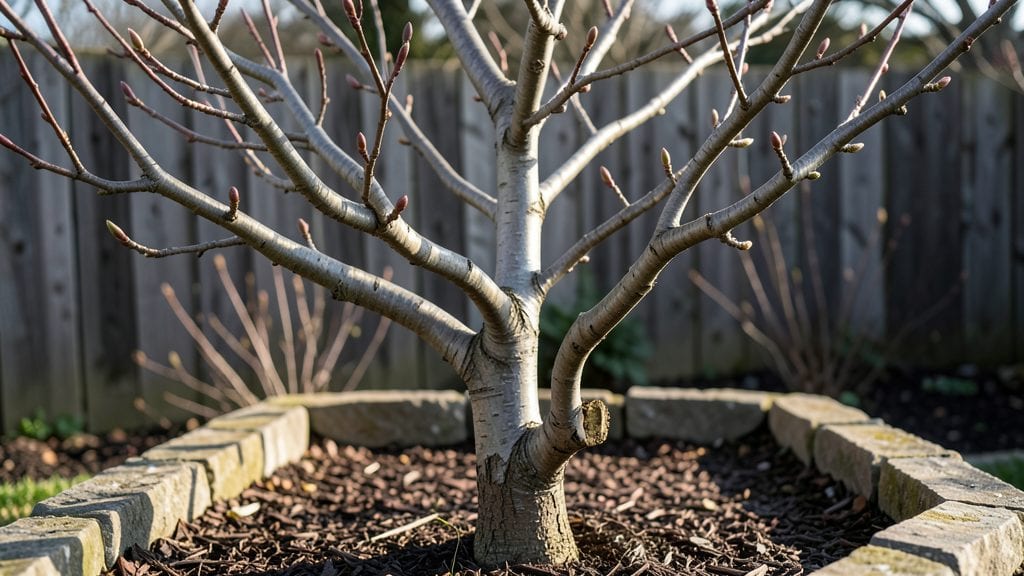
Winter pruning your peach tree isn't just about shaping branches—it's about giving your tree a fighting chance against Pacific Northwest frost while setting it up for next summer's sweet harvest. 🌿 I've seen firsthand how a well-timed cut can mean the difference between a tree that barely survives and one that bursts with fruit by July.
The key is working during dormancy, when the tree's energy is focused inward, not outward.
You'll need sharp pruners, a ladder (unless your tree is still small), and a clear day when temperatures hover above freezing. The goal is to remove dead wood, thin crowded branches, and open the center for better airflow—this reduces frost pockets where cold air lingers.
I always start by cutting out any branches thinner than a pencil; they're just energy drains. For larger branches, make clean cuts just outside the branch collar to prevent disease.
What you'll end up with is a tree that looks like it just stepped out of a nursery—open, balanced, and ready to push fresh growth when spring arrives. The right cuts now mean fewer frost cracks in the bark, stronger scaffold branches, and fruit that develops evenly.
Plus, your tree will thank you with fewer pest problems, since open centers let sunlight and air circulate where bugs love to hide.
This method works for both young trees and mature ones, though the timing shifts slightly—young trees can handle pruning anytime in late winter, while established trees benefit from waiting until just before bud break.
The Pacific Northwest's mild winters give you a longer window than most regions, so don't rush. A little patience now means a peach tree that's practically frost-proof by spring.
📚 In This Guide
- What you need
- Instructions
- Tips and common mistakes
- Wrapping up and next steps
What you need
- ● Pruning shears: Bypass pruners (sharp, clean, and sterilized to prevent disease) – 1 pair (for small branches up to ½ inch thick).
- ● Loppers: Heavy-duty bypass loppers (for branches ½ to 1½ inches thick) – 1 pair.
- ● Pruning saw: Curved-tooth pruning saw (for thicker branches 1½+ inches) – 1.
- ● Gloves: Heavy-duty, cut-resistant gardening gloves (to protect from thorns and cold) – 1 pair.
- ● Disinfectant: 70% rubbing alcohol or garden disinfectant (to sterilize tools between cuts) – small bottle.
- ● Rag or paper towels: For wiping tools clean – 1-2.
- ○ Pruning sealant: Optional but helpful for larger cuts (e.g., Tanglefoot Tree Wound Pruning Seal) – small tube.
- ● Ladder or step stool: Sturdy, non-slip (if tree is taller than 6 feet) – 1.
- ● Trash bags or bucket: For collecting pruned branches – 1-2.
- ● Notebook & pencil: To sketch a quick pruning plan or note cuts – 1.
- ● Safety glasses: To protect eyes from debris.
- ● Long sleeves & pants: For extra protection against thorns and cold.
- ● Hand warmers: For extra comfort in freezing PNW winters!
- ● Tree paint or pruning wax: For sealing larger wounds (if not using sealant).
- ● Camera or phone: To document the tree’s structure before/after pruning.
Step-by-Step guide to winter pruning for peach trees
Here's how I prep Pacific Northwest peach trees for winter—keeping them strong and frost-resistant.
✂️ Step 1: Choose the Right Time to Prune
Prune your peach tree during its dormant season, which in the Pacific Northwest runs from late winter to early spring—typically February through March. The key is to prune after the coldest part of winter has passed but before new growth begins. You'll know you've timed it right when the tree is still bare but the ground isn't frozen solid.
If you prune too early, you risk damaging new growth that can't survive winter freezes. If you wait too late, you'll encourage early budding, which frost can kill. A good rule of thumb is to prune when daytime temperatures consistently reach 45°F or higher—this signals the tree is ready to recover from dormancy.
🌿 Step 2: Assess the Tree for Dead or Damaged Wood
Start by examining the entire tree for branches that are dead, diseased, or broken. Dead wood is easy to spot—it's usually brown, brittle, and won't bend without snapping. Diseased branches often have discolored bark, oozing sap, or fungal growth. Remove these first, as they can spread problems to healthy parts of the tree.
Next, look for crossing branches or those rubbing against each other. These create wounds that invite pests and disease. You'll also want to identify any "water sprouts"—fast-growing, vertical shoots that steal energy from fruit production. Mark these branches with a piece of twine or flagging tape so you don't miss them during pruning.
✂️ Step 3: Make Clean Cuts to Remove Problem Branches
Use sharp, clean pruning shears or a pruning saw to make your cuts. For branches up to ½ inch thick, shears work best. For thicker branches, switch to a pruning saw. Always cut just outside the branch collar—the swollen area where the branch meets the trunk. This ensures the tree can seal the wound properly and prevents rot.
Make your cuts at a slight angle (about 45 degrees) to allow water to run off the wound. Avoid leaving stubs—these can trap moisture and lead to decay. If a branch is larger than 2 inches in diameter, make a second cut 1-2 inches away from the first to prevent tearing the bark. This two-step approach also helps the tree heal more efficiently.
🌱 Step 4: Thin the Canopy for Better Airflow and Light
Peach trees need good airflow and sunlight to produce healthy fruit and resist disease. Aim to thin the canopy so light can reach the inner branches. Start by removing branches that grow inward or downward—they create shade and trap moisture. You'll also want to eliminate branches that grow directly opposite each other, as they compete for resources.
Focus on maintaining an open, vase-like shape. This allows sunlight to penetrate the center of the tree and air to circulate freely, reducing the risk of fungal diseases like brown rot. A general guideline is to remove 20-30% of the tree's total branches during winter pruning. This might sound drastic, but it encourages stronger, more productive growth in the coming season.
☀️ Step 5: Protect the Tree from Late Winter Frost
After pruning, give your peach tree a little extra protection against late winter frosts. Apply a thick layer of 3-4 inches of mulch around the base of the tree, keeping it 6 inches away from the trunk. Use organic mulch like straw or wood chips, which also help retain soil moisture and regulate temperature.
If you're in a particularly cold microclimate, consider wrapping the trunk with tree wrap or burlap. This creates an insulating barrier that protects the bark from temperature swings. Avoid using plastic wrap, as it can trap moisture and cause bark damage. Once new growth appears in spring, remove any protective materials to allow the tree to breathe and grow freely.
Tips & tricks for perfect winter pruning of peach trees
Here's what I've learned after years of perfecting this process for Pacific Northwest peach trees—these tricks make all the difference for frost-resistant revival.
Timing is Everything: The February-through-March window is critical, but don't just guess—check for that 45°F daytime temperature consistency. I always test by scraping bark: if it's still firm and not starting to soften, you're good to go. This timing prevents frost damage to new growth while avoiding late-winter freezes that can still bite hard in our region. Real talk: I've ruined two pruning seasons by waiting too late!
Branch Assessment Shortcut: For quick identification of dead wood, use the "scratch test" in Step 2: scrape a small area of bark. Healthy wood shows green underneath, while dead wood reveals brown or hollow centers. I also bring a small magnifying glass—it helps spot early signs of disease like tiny fungal spores or insect damage that's invisible to the naked eye. This one simple tool has saved me from spreading problems to healthy branches.
Cutting Technique Pro Tip: When making those 45-degree angle cuts in Step 3, I recommend practicing on scrap wood first. The goal is to cut just outside the branch collar without damaging it—this is what lets the tree heal properly. For branches over 2 inches thick, I make my second cut slightly higher than the standard 1-2 inches away to create a smoother transition that resists rot better. Don't make my mistake: using dull tools creates jagged edges that invite disease.
Canopy Thinning Visual: For Step 4, imagine looking at your tree from above—you want to see light shining through the center like a sunburst. I sketch a simple diagram before pruning to visualize where branches need to go. Removing 20-30% of branches might seem extreme, but think of it as creating a breathable, airy structure. This open shape is what prevents those dreaded fungal diseases like brown rot that plague so many Pacific Northwest orchards.
Pro Tips for Peach Tree In Winter
- Here's what I've learned after years of perfecting this process for Pacific Northwest peach trees—these tricks make all the difference for frost-resistant revival.
- Timing is Everything: The February-through-March window is critical, but don't just guess—check for that 45°F daytime temperature consistency.
- Branch Assessment Shortcut: For quick identification of dead wood, use the "scratch test" in Step 2: scrape a small area of bark.
Frequently asked questions
about peach tree pruning in winter—especially in the Pacific Northwest’s chilly climate—can make all the difference between a thriving orchard and a struggling one. Here are answers to the most common queries to help you navigate the process with confidence.Why should I prune my peach tree in winter instead of other seasons?
Winter pruning (late dormancy, before buds swell) is ideal for peach trees in the PNW because it minimizes disease risk (like bacterial canker) and reduces stress during active growth. Plus, the cold helps heal cuts faster. Avoid pruning in fall or spring—those timings can invite pests and fungal issues.
How cold is too cold to prune a peach tree?
Prune when temperatures are consistently above freezing (32°F/0°C) but below 45°F (7°C)—this balances safety for the tree and your comfort. In the PNW, aim for late winter (February–March) after frost risks have passed. If a hard freeze hits, wait until conditions stabilize.
Can I prune a young peach tree the same way as a mature one?
No! Young trees (1–3 years) need light shaping to encourage a strong scaffold, while mature trees require structural renewal. For saplings, remove only dead/diseased wood and thin crowded branches. For older trees, prioritize opening the canopy and thinning out old wood to improve airflow and fruit production.
What if my peach tree has no leaves in winter—how do I know what to cut?
Use a budding guide: Healthy buds are plump, brown, and pointed (like a tiny cone). Dead wood is gray, shriveled, or lacks buds. Also, check for cracks or oozing sap—signs of disease. If unsure, make small cuts and reassess in spring before finalizing prunes.
My peach tree keeps getting canker—what’s the best way to prevent it?
Prevent bacterial canker with sterilized tools (rubbing alcohol between cuts), proper pruning cuts (just outside the branch collar), and wound paint (like horticultural sealant). Avoid overhead watering, and prune on dry days to keep cuts from staying wet. Resistant varieties like ‘Redhaven’ or ‘Elberta’ also help.
What if I miss winter pruning—can I still do it in spring?
Yes, but with caution! Spring pruning (after last frost) increases disease risk, so limit cuts to 10–15% of the tree’s canopy. Focus on dead wood and water sprouts—avoid heavy shaping. If you wait until summer, you’ll stress the tree and risk attracting pests. Better late than never, but winter is still best!
Wrapping up and next steps
Winter pruning isn’t just about shaping your peach tree—it’s about setting the stage for a bountiful, frost-resistant harvest in the Pacific Northwest. By following these steps, you’ll encourage stronger growth, better fruit production, and resilience against winter’s chill. Your peach tree will thank you with juicy rewards next summer!
Ready to roll up your sleeves? Grab your tools and schedule that pruning session before late winter—your future peach pie (or fresh snacks!) depends on it. 🌱✨