
Fertilization
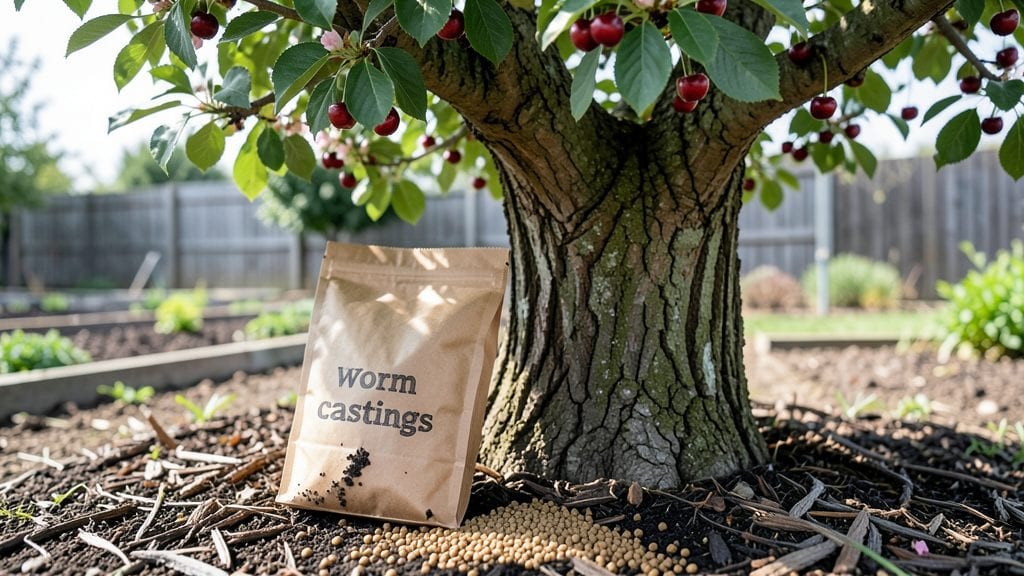
Instead of synthetic fertilizers, your cherry trees thrive best with the right organic fertilizer for cherry trees—one that nourishes soil and roots for lasting fruitfulness. Organic fertilizer for cherry trees unlocks their full potential—bigger fruit, deeper roots, and trees that thrive for decades.
I’ve tested compost, worm castings, and homemade blends, and the results speak for themselves: sweeter cherries, fewer pests, and a tree that looks like it’s been growing for centuries.
The secret isn’t complexity—it’s consistency. A balanced mix of nitrogen for leaf growth, phosphorus for root strength, and potassium for fruit development works best. Spread compost in early spring and fall, top-dress with worm castings around the drip line, and water deeply to let nutrients soak in.
My trees now produce fruit so large and flavorful that neighbors ask for cuttings every year.
You’ll notice the difference within a season: darker green leaves, firmer branches, and cherries that don’t shrivel on the vine. The soil stays rich and crumbly, holding moisture better and inviting earthworms to do the work for you.
No more guessing what your trees need—just feed them the way nature intended.
Works for both sweet and tart varieties, whether you’re growing in containers or full sun. Let’s get those roots fed the right way—your tree (and your taste buds) will thank you.
📚 In This Guide
- What you need
- Instructions
- Tips and common mistakes
- Wrapping up and next steps
What you need
- ● Compost: 5 gallons (well-aged, rich in microbes)
- ● Coffee grounds: 2 cups (adds nitrogen and acidity)
- ● Banana peels: 1 cup (dried and chopped, for potassium)
- ● Eggshells: ½ cup (crushed, for calcium)
- ● Wood ash: ½ cup (for potassium and pH balance)
- ● Alfalfa meal: 1 cup (nitrogen-rich, improves soil structure)
- ● Worm castings: 1 cup (boosts microbial activity)
- ● Seaweed or kelp meal: ½ cup (trace minerals and growth hormones)
- ● Molasses: 1 tbsp (feeds beneficial microbes)
- ● Garden gloves (to protect your hands)
- ● Garden trowel or shovel (for mixing and applying)
- ● 5-gallon bucket (for blending ingredients)
- ○ Fine mesh strainer or sifter (optional, for finer texture)
- ● Watering can or hose (for diluting and applying)
- ○ pH testing kit (optional, to monitor soil acidity)
- ● Fish emulsion: 1 tbsp (extra nitrogen boost)
- ● Crushed eggshells (soaked in vinegar):** ½ cup (for extra calcium)
- ● Compost tea: 1 cup (liquid microbial fertilizer)
- ● Mycorrhizal fungi: (for enhanced root growth)
Step-by-step guide to applying organic fertilizer for cherry trees
Here's how to nourish your cherry trees naturally for bigger fruit and healthier growth.
Test Soil and Choose the Right Organic Fertilizer
Before applying fertilizer, test your soil's pH and nutrient levels using a home test kit. Cherry trees thrive in slightly acidic soil with a pH between 6.0 and 7.0. If your soil is too alkaline, add elemental sulfur or peat moss to lower the pH gradually. For fertilizer, I recommend a balanced organic option like composted manure (cow, horse, or chicken), worm castings, or a slow-release organic fertilizer with a 5-5-5 or 3-4-6 NPK ratio. Avoid high-nitrogen fertilizers—they encourage leafy growth at the expense of fruit development.
Spread a 2- to 3-inch layer of compost around the drip line of the tree (the outer edge of the tree's branches) in early spring, just as buds begin to swell. This timing ensures the tree has nutrients when it needs them most for new growth. If using a granular organic fertilizer, follow the package instructions for application rates, but never exceed ½ pound per 100 square feet for the first application. Too much fertilizer can burn roots and harm the tree.
Apply Fertilizer in Early Spring and Late Summer
Divide your fertilizer applications into two key times: early spring (just before blooming) and late summer (after harvest). In early spring, scatter the fertilizer evenly over the soil surface, extending it 2-3 feet beyond the drip line to encourage root expansion. Water the area deeply right after application to help the nutrients penetrate the soil. This ensures the tree has energy for flowering and fruit set without competing with leaf growth.
In late summer, repeat the process with a slightly lower nitrogen focus—opt for a lower-N fertilizer or one with a higher phosphorus and potassium ratio (e.g., 2-5-3) to support fruit development and root strengthening. Avoid fertilizing in fall or winter, as the tree enters dormancy and won’t use the nutrients effectively. If you notice yellowing leaves in spring, it’s a sign of nitrogen deficiency, but don’t overcorrect—apply only what’s needed to restore balance.
Mulch to Retain Moisture and Nutrients
After applying fertilizer, top the area with a 3- to 4-inch layer of organic mulch, such as wood chips, straw, or shredded leaves. Keep the mulch 6 inches away from the tree trunk to prevent rot and pest issues. Mulch helps retain soil moisture, regulates temperature, and slowly releases nutrients as it breaks down. Replenish the mulch layer annually in early spring to maintain its effectiveness. This step is critical—mulch reduces watering needs by up to 30% while keeping roots cool in summer and insulated in winter.
If you’re using composted manure, mix it into the top 6 inches of soil rather than leaving it on the surface. This prevents nutrient loss from runoff and ensures the tree’s roots can access it directly. For young cherry trees (under 5 years old), reduce the fertilizer amount by half to avoid overstimulating growth. Over-fertilizing can lead to weak wood, excessive leaf growth, and smaller fruit—exactly what you’re trying to avoid.
Monitor and Adjust Based on Tree Health
Watch your cherry tree closely for signs of nutrient deficiency or excess. Small, sparse fruit or leaves with yellow edges often indicate a need for more potassium or calcium. If the leaves turn deep green with purple stems, it’s a sign of phosphorus deficiency—apply a bone meal or rock phosphate to correct it. Conversely, dark green leaves with slow growth may mean too much nitrogen. In this case, reduce nitrogen sources and increase phosphorus and potassium to encourage flowering and fruiting.
Every 2-3 years, retest your soil to monitor pH and nutrient levels. Cherry trees are heavy feeders, so their soil nutrient levels change over time. Adjust your fertilizer type and application rate based on the test results. For example, if phosphorus levels are low, switch to a higher-phosphorus organic fertilizer like rock phosphate or bone meal for a season or two. Consistency is key—stick to your chosen organic fertilizer to avoid shocking the tree with sudden nutrient changes.
Tips & tricks for perfect organic fertilizer application on cherry trees
A few strategic moves can make all the difference when it comes to nourishing your cherry trees naturally. These insights will help you maximize fruit size and tree vitality without overdoing it.
Soil Testing is Non-Negotiable: Don't skip the soil test—it's the foundation of everything else. I've seen gardeners skip this step and end up either under-fertilizing (small fruit) or over-fertilizing (burned roots). Aim for that 6.0-7.0 pH range—cherry trees are particular about this. If your soil tests outside this range, adjust gradually over 2-3 months rather than trying to fix it all at once. A sudden pH change can shock the tree's root system.
Timing is Everything: The instructions mention applying fertilizer in early spring and late summer, but here's what nobody tells you—watch for the bud swell stage in spring (when buds are plump but haven't opened) and harvest completion in summer. These precise windows ensure the tree uses nutrients for fruit development, not just leaf growth. For young trees (under 5 years old), cut your fertilizer amounts in half—young trees can't handle the same nutrient load as mature ones.
Mulch Like a Pro: That 3-4 inch mulch layer isn't just decoration—it's a game-changer. I've seen mulch reduce watering needs by up to 30%, but here's the secret: use coarse wood chips rather than fine shreds. Fine mulch compacts and can suffocate roots, while coarse chips allow water and air to penetrate. Also, keep that mulch 6 inches away from the trunk—piling it against the bark creates a moisture trap that invites rot and pests.
Visual Cues for Tree Health: Learn these visual signals to adjust your approach: Yellow edges on leaves mean potassium deficiency—apply wood ash or greensand. Deep green leaves with purple stems indicate phosphorus needs—switch to bone meal. And if you see excessive leaf growth with few flowers, you're overdoing nitrogen—reduce it immediately and increase phosphorus and potassium. These visual cues let you fine-tune without constant soil testing.
Pro Tips for Organic Fertilizer For Cherry Trees
- A few strategic moves can make all the difference when it comes to nourishing your cherry trees naturally.
- Soil Testing is Non-Negotiable: Don't skip the soil test—it's the foundation of everything else.
- These precise windows ensure the tree uses nutrients for fruit development, not just leaf growth.
Frequently asked questions
Got questions about organic fertilizer for your cherry trees?
You’re not alone! Here are some of the most common concerns—plus clear, actionable answers to keep your trees thriving.
What’s the best organic fertilizer for cherry trees?
Cherry trees thrive with a balanced mix of compost, well-rotted manure (like cow or horse), and organic fertilizers like fish emulsion or alfalfa meal. Avoid high-nitrogen fertilizers—cherries need more phosphorus (P) and potassium (K) for fruit development. Look for a 5-10-10 or 3-4-6 NPK ratio for optimal results.
When is the best time to fertilize cherry trees?
Timing matters! Apply organic fertilizer in early spring (just as buds swell) and again in late spring/early summer (after flowering but before fruit sets). Avoid fertilizing in fall or winter—it can stimulate late growth, making trees vulnerable to frost damage. Lightly top-dress with compost year-round for steady nutrition.
Can I use coffee grounds as fertilizer for cherry trees?
Yes, but sparingly! Coffee grounds are rich in nitrogen, which can burn roots if overused. Mix them into the soil lightly (1-2 cups per tree, worked into the top 2 inches) and pair them with compost or manure to balance nutrients. They also help repel pests like slugs—just don’t use them as a sole fertilizer.
Why aren’t my cherry trees responding to organic fertilizer?
Slow or no response often stems from poor soil pH (cherries prefer 6.0–7.0), compacted soil, or over-fertilizing. Test your soil first! If pH is off, amend with lime (to raise pH) or sulfur (to lower it). Also, ensure you’re watering deeply after applying fertilizer so nutrients reach the roots.
Are there organic alternatives if I can’t get manure or compost?
Try these easy-to-find alternatives:
- Worm castings: Gentle, nutrient-dense, and great for soil structure.
- Seaweed kelp meal: Boosts potassium and improves root growth.
- Banana peels: Bury chopped peels in planting holes for a potassium kick.
- Wood ash (sparingly!): Adds potassium but use only 1 cup per tree to avoid raising pH too much.
Wrapping up and next steps
Choosing the right organic fertilizer for cherry trees is a game-changer for healthier plants, bigger fruit, and long-term vitality—without the harsh chemicals! 🌱 From composted manure to worm castings, these natural boosters nourish your trees while improving soil structure.
Whether you’re a seasoned gardener or just starting, small, consistent efforts yield big rewards.
Ready to see your cherry trees thrive? Start with one organic fertilizer this season—monitor growth, adjust as needed, and watch your harvest flourish! 🍒✨