Container Gardens
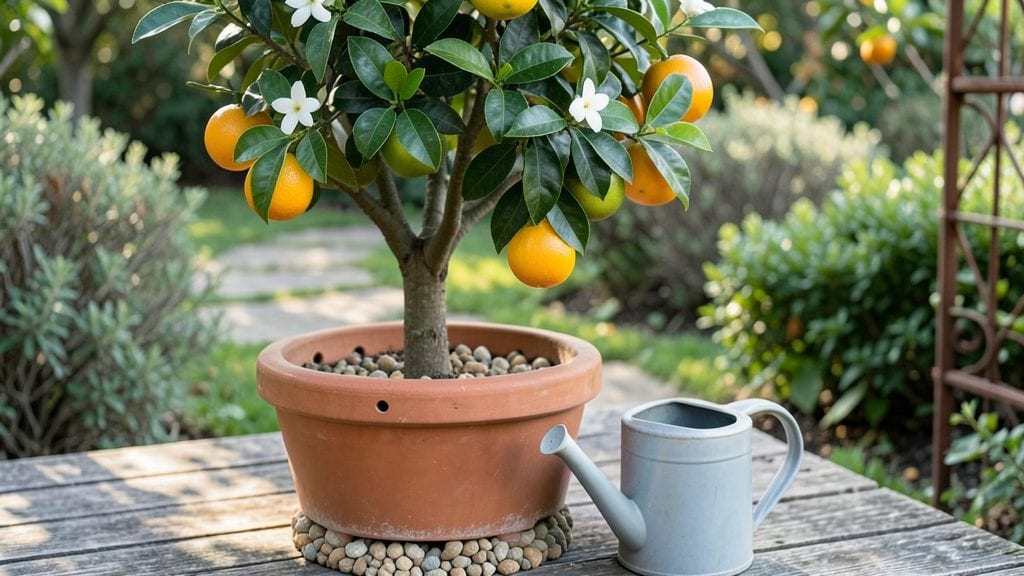
Growing orange trees in containers is easier than you think—and those first golden fruits are the best reward. 🌱 I’ve watched my Meyer lemon-orange tree produce over a dozen oranges in a 5-gallon pot on my balcony, proving you don’t need a backyard to grow citrus.
The key? Choosing the right variety, giving it enough sunlight, and keeping the roots cozy without letting them drown.
Start with dwarf varieties like Calamondin, Meyer lemon-orange, or Improved Meyer lemon, bred to thrive in pots. You’ll need a container with drainage holes (at least 12 inches deep for mature trees), a well-draining potting mix, and a sunny spot—6+ hours of direct sunlight daily.
Overwatering is the #1 killer, so let the top inch of soil dry out between waterings, and always use a pot with drainage.
With proper care, your container orange tree will reward you with fragrant blossoms in spring and sweet, juicy fruit by late fall. Prune lightly after harvest to shape the tree, and move it indoors (or protect it from frost) when temperatures dip below 40°F.
The best part? You’ll harvest oranges that taste fresher—and cost less—than store-bought.
Even in small spaces, container citrus thrives with the right balance of light, water, and patience. Once you master the basics, you can experiment with larger pots or even indoor growing lights. Here’s how to get started without the common mistakes that kill container citrus trees.
📚 In This Guide
- What you need
- Instructions
- Tips and common mistakes
- Wrapping up and next steps
What you need
- ● Container: A large pot (at least 15–20 gallons) with drainage holes. Pro tip: 💡 Use a fiberglass, ceramic, or heavy plastic pot to retain moisture and stability.
- ● Orange tree: A dwarf variety (e.g., 'Calamondin,' 'Improved Meyer,' or 'Ponkan') for container-friendly growth.
- ● Potting soil: A well-draining citrus mix (50% potting soil + 50% perlite/sand or cactus mix). Avoid heavy garden soil!
- ● Drainage layer: 3–4 inches of gravel, pumice, or broken pottery at the container’s bottom.
- ● Fertilizer: A balanced citrus fertilizer (e.g., 6-6-6 or 8-3-9 NPK ratio) or organic options like fish emulsion or compost.
- ● Watering can or hose: With a gentle spray nozzle for hydration without disturbing roots.
- ● Pruning shears: Sharp, sterilized shears for shaping and maintaining your tree.
- ● Mulch: Organic mulch (e.g., pine bark) to retain moisture and regulate soil temperature.
- ● Support stake: For young trees to prevent tipping in windy conditions.
- ● pH test kit: To monitor soil acidity (citrus thrives in 6.0–7.0 pH).
- ● Self-watering system: A reservoir or drip irrigation for consistent moisture.
- ● Citrus food or micronutrients: To supplement iron, zinc, or magnesium if leaves show deficiencies.
- ● Grow lights: If indoors, a full-spectrum LED (12–16 hours/day) for winter sunlight shortages.
Step-by-Step instructions for growing orange trees in containers
Here’s how to nurture a thriving citrus tree on your balcony—no backyard needed.
🪴 Step 1: Choose the Right Container and Drainage
Start with a 5-gallon pot or larger (at least 12 inches deep) for your first orange tree. Dwarf varieties like ‘Calamondin’ or ‘Meyer Lemon’ adapt well to containers, but even standard citrus can thrive if you upgrade pots every 2-3 years. Ensure the pot has multiple drainage holes—citrus roots rot quickly in soggy soil.
Line the bottom with 2-3 inches of gravel or broken pottery to create an air gap. This prevents water from pooling at the roots while allowing excess moisture to escape. I like to use unglazed terra cotta because it breathes, but plastic works too if you’re in a humid climate. Just avoid metal—citrus acid can corrode it over time.
🌱 Step 2: Use Well-Draining Soil and Plant Properly
Fill the pot with a mix of equal parts potting soil, perlite, and compost. Citrus trees hate soggy roots, so the perlite keeps the soil loose and aerated. Avoid garden soil—it compacts and suffocates roots. I like to add a slow-release citrus fertilizer (like Osmocote) at planting time to give the tree a nutrient boost.
Dig a hole twice as wide as the root ball and place the tree so the top of the root ball sits 1 inch below the pot’s rim. This prevents water from spilling out when you water. Gently press the soil around the roots to remove air pockets, then water deeply until it drains from the bottom holes. Watch for 10-15 minutes—you’ll see water trickle out, signaling the roots are settled.
☀️ Step 3: Place in Full Sun and Protect from Cold
Orange trees need 6-8 hours of direct sunlight daily—a south- or west-facing balcony is ideal. If your space gets less light, supplement with a grow light for 12-14 hours a day. You’ll notice leaves yellowing or stretching toward light if it’s not enough. In winter, keep the pot away from drafts—citrus thrives in 60-80°F and wilts below 50°F. A frost cloth or moving the pot indoors saves it from cold snaps.
Rotate the pot a quarter turn weekly so the tree grows evenly. You’ll see one side leaning toward the sun if you skip this. Water when the top 1-2 inches of soil feel dry—stick your finger in to check. Overwatering is the #1 killer of container citrus, so let the soil dry slightly between waterings. In summer, you might water every 3-4 days; in winter, every 1-2 weeks.
💧 Step 4: Fertilize and Prune for Healthy Growth
Feed your tree every 4-6 weeks during spring and summer with a balanced citrus fertilizer (like 6-6-6 or 8-3-9). I dilute it to half-strength the first few times to avoid burning the roots. Stop fertilizing in fall and winter—citrus trees rest then. You’ll see new growth slow down in cooler months, which is normal.
Prune in late winter or early spring before new growth starts. Remove dead, crossing, or crowded branches with clean sterilized pruners. Cut just above a leaf node (the bump where leaves grow) to encourage bushier growth. Avoid heavy pruning—citrus trees fruit on new wood, and over-pruning can reduce blooms. After pruning, give the tree a light fertilizer to recover.
⏰ Step 5: Harvest and Overwinter for Next Year
Oranges ripen in 12-18 months for dwarf varieties, but patience pays off. Pick fruit when it’s fully colored and slightly soft to the touch. Store unripe oranges at room temperature to finish ripening. In fall, reduce watering and stop fertilizing to prepare the tree for dormancy. Move it to a cool but bright spot (like a garage with windows) if temperatures drop below 50°F.
Before spring, repot if roots are circling (you’ll see them growing in circles or poking out drainage holes). Trim back 1/3 of the roots with sterilized shears and refresh the soil mix. This jumpstarts growth for the new season. With consistent care, your container orange tree can live—and fruit—for decades.
Tips & tricks for perfect container-grown orange trees
Container citrus care is all about balance—too much water, not enough light, or the wrong pot can spell disaster. Here’s how to keep your balcony orange tree thriving like a pro.
Drainage is Non-Negotiable: In Step 1, that 2-3 inches of gravel isn’t just decoration—it’s your tree’s lifeline. After planting, I like to add a layer of hydroponic clay pebbles above the gravel for extra aeration. If you notice water pooling in the saucer after 10-15 minutes of draining, your pot has too few holes. Citrus roots need oxygen as much as water!
Soil Mix Secrets: The equal parts potting soil, perlite, and compost in Step 2 is your foundation, but here’s the pro move: mix in 10% coarse sand (like horticultural sand) to prevent compaction. I also add a handful of worm castings at planting—they boost microbial activity that citrus roots love. Avoid anything with peat moss, which can acidify the soil over time.
Lighting Hacks for Small Spaces: Those 6-8 hours of sunlight in Step 3 are critical, but if your balcony only gets morning sun, try this: place your tree on a rolling plant stand so you can rotate it toward the sun throughout the day. For indoor growers, LED grow lights (not cheap CFL bulbs) should be 6-12 inches from the leaves for the 12-14 hours/day requirement. You’ll know it’s working when new growth appears uniformly green, not stretched and pale.
Watering Wisdom: The top 1-2 inches dry test in Step 3 is foolproof, but here’s the trick: water in the morning so excess drains by evening. In summer, I weigh my pot—when it’s 5% lighter than when fully watered, it’s time again. Overwatering causes yellow leaves, while underwatering creates crispy edges. Both are fixable, but prevention is easier!
Pro Tips for Growing Orange Trees In Containers
- Container citrus care is all about balance—too much water, not enough light, or the wrong pot can spell disaster.
- Drainage is Non-Negotiable: In Step 1, that 2-3 inches of gravel isn’t just decoration—it’s your tree’s lifeline.
- Soil Mix Secrets: The equal parts potting soil, perlite, and compost in Step 2 is your foundation, but here’s the pro move: mix in 10% coarse sand (like horticultural sand) to prevent compaction.
Frequently asked questions
Got questions about growing orange trees in containers? You’re not alone! Here are some of the most common concerns—and their solutions—to help you cultivate happy, fruiting citrus on your balcony or patio.
Can orange trees in containers actually produce fruit?
With the right care—full sun, well-draining soil, and proper fertilization—container-grown orange trees (like Citrus × aurantium or Citrus sinensis) can bear fruit in 3–5 years. Dwarf varieties are ideal for small spaces, yielding sweet, bite-sized oranges perfect for snacks or zesting. Just be patient and consistent!
How long does it take for a container orange tree to bear fruit?
Timing varies by variety, but most container-grown orange trees take 3–5 years to produce fruit. Dwarf varieties (like ‘Calamondin’ or ‘Improved Meyer’) may fruit sooner—sometimes in just 1–2 years—while standard sizes take longer. Patience pays off with bigger, sweeter oranges over time!
What’s the best way to water a potted orange tree?
Container orange trees need consistent moisture but hate soggy roots. Water when the top 1–2 inches of soil feel dry (usually 2–3 times per week in summer, less in winter). Use a pot with drainage holes and a saucer to catch excess water. Overwatering is the #1 killer—let the soil dry slightly between waterings!
Can I grow orange trees in containers indoors?
Indoor success depends on light! Orange trees thrive on 6+ hours of direct sunlight daily—a south-facing window or grow lights work. If natural light is limited, supplement with a full-spectrum LED bulb 12–14 hours/day. Humidity helps too; mist leaves or use a pebble tray to mimic outdoor conditions. Expect slower growth indoors.
Why are my container orange tree leaves turning yellow?
Yellow leaves usually signal overwatering, nutrient deficiency, or pests. Check for:
- Root rot: Let soil dry out; repot if roots smell foul.
- Nitrogen deficiency: Feed with citrus-specific fertilizer every 2–3 months.
- Spider mites/scale: Wipe leaves with soapy water or neem oil.
What’s the best alternative if I don’t have space for oranges?
Try these space-friendly citrus alternatives:
- Calamondin: Tiny, fragrant oranges (great for cocktails!).
- Lemon or Lime: Faster to fruit, more cold-hardy.
- Meyer Lemon: Sweet, hybrid variety perfect for containers.
Wrapping up and next steps
Growing orange trees in containers is a rewarding way to enjoy fresh citrus—even in small spaces! With the right dwarf variety, proper sunlight, and a little TLC, you’ll soon be harvesting juicy oranges right from your balcony.
Start small, stay consistent, and watch your citrus tree thrive year after year.
Ready to get started? Pick your favorite dwarf variety today and begin your container citrus journey! 🌱🍊