Trees
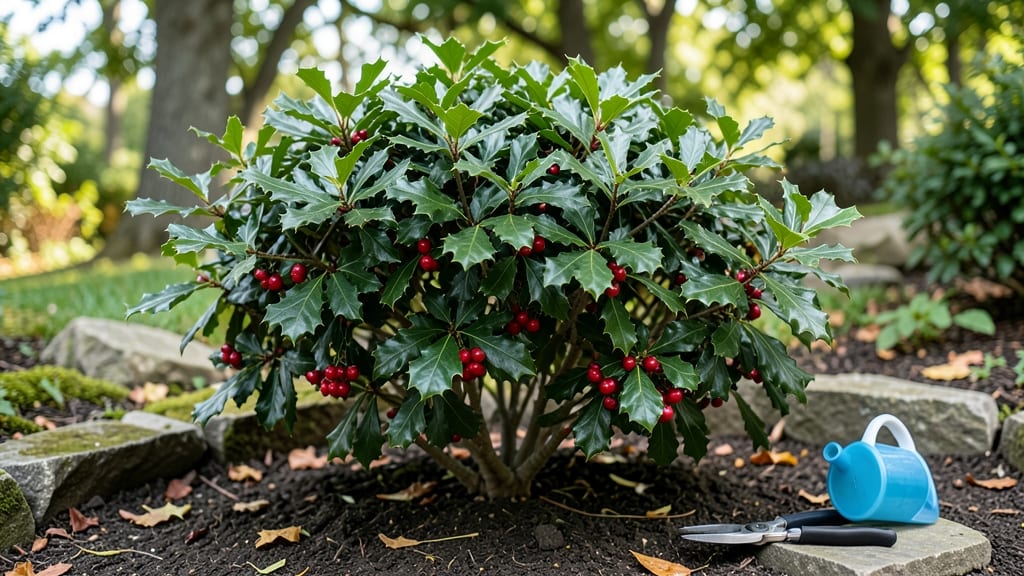
Oakleaf holly trees bring the Pacific Northwest's signature charm with their glossy leaves and bright red berries—year after year, no matter the season. 🌿 I remember the first time I planted one in my Seattle yard, and how it transformed a dull corner into a winter wonderland with its deep green foliage and festive berries.
These trees aren't just pretty; they're tough, thriving in our damp climate while adding structure and color to any landscape.
The key to growing them well starts with the right spot: partial shade to full sun works best, and they love well-draining soil that stays slightly moist but never soggy.
Plant them in early spring or fall, spacing them 15-20 feet apart to give their branches room to spread beautifully over time. Once established, they're low-maintenance, but a little pruning in late winter keeps their shape tidy and encourages those stunning berries.
What makes oakleaf hollies special is their dual-season appeal—spring brings fresh, leathery leaves, while winter showcases clusters of berries that birds adore. They're perfect for hedges, specimen planting, or even as a focal point near patios where you can enjoy their texture up close.
The best part? They stay evergreen, so your garden never loses its structure or color.
For Pacific Northwest gardeners, these trees are a no-brainer: they handle our rainy winters, resist pests, and grow slowly enough that you won't need to prune often.
Whether you're a beginner or a seasoned gardener, oakleaf hollies deliver reliable beauty with minimal fuss. Let's get yours planted for a garden that shines all year!
📚 In This Guide
- What you need
- Instructions
- Tips and common mistakes
- Wrapping up and next steps
What you need
- ● Oakleaf holly sapling(s): 1-3 plants (depending on desired coverage). Choose 1-2 gallon containers for mature trees (6-10 ft tall) or 3-5 gallon for larger specimens.
- ● Shovel or spade: Heavy-duty, 12-14 inches wide for digging holes.
- ● Garden gloves: Durable, water-resistant pair to protect hands.
- ● Mulch (pine bark or wood chips): 2-3 cubic feet (enough to cover the root zone in a 3-inch layer).
- ● Slow-release fertilizer: 10-10-10 NPK ratio (1 lb per tree).
- ● Watering can or hose with nozzle: Adjustable spray for gentle watering.
- ● Pruning shears: Bypass-style (sharp, 6-8 inch blades for clean cuts).
- ○ Stakes & twine (optional for young trees): 2-3 stakes per tree (if needed for support).
- ● Soil test kit: To check pH (ideal: 5.0–6.5) and adjust if needed.
- ● Epsom salt (magnesium sulfate): 1 tbsp per gallon of water for yellowing leaves.
- ● Tree guard or barrier: Plastic or metal to protect from deer/browsing.
- ● Drip irrigation system: For automated watering during dry spells.
- ● Compost or organic matter: Mix with soil to improve drainage.
How to plant and care for oakleaf holly trees in the Pacific Northwest
These stunning evergreens thrive with the right approach—here's my battle-tested method for healthy, vibrant growth.
🌱 Step 1: Choose the Perfect Planting Location
Oakleaf hollies love partial shade to full sun—in the Pacific Northwest, that means 4-6 hours of direct sunlight daily with afternoon shade protection. I always plant mine where the morning sun warms the soil but afternoon clouds shield from harsh afternoon rays. The key is finding that sweet spot where leaves stay lush but don't scorch.
Check soil drainage first—these trees hate soggy roots. Dig a hole twice as wide as the root ball but only as deep. If your soil drains poorly (common in PNW clay), mix in 3 inches of compost at the bottom of the hole. The roots should sit at the same level as they were in the nursery container—burying too deep suffocates them.
🪴 Step 2: Plant with Proper Spacing and Support
Space your oakleaf hollies 10-15 feet apart for mature size—these trees grow 20-30 feet tall and wide over time. I plant mine in groups of 3-5 for that classic holly hedge look, but single specimens work beautifully as specimen plants too. The wider spacing prevents root competition and makes maintenance easier later.
Remove the plant from its container and loosen any circling roots gently with your fingers. Place it in the hole and backfill with native soil mixed with 1 part compost. Water deeply as you fill, tamping down lightly to remove air pockets. After planting, create a 2-inch deep watering basin around the base—this directs water right to the roots where it's needed most.
☀️ Step 3: Water and Mulch for Pacific Northwest Conditions
Water deeply 2-3 times per week for the first 6-8 weeks until the tree establishes. You'll know it's getting enough when the top 6 inches of soil stay moist but not soggy. After that initial period, reduce to once a week unless we're in a heatwave—then bump it back up to twice weekly. Oakleaf hollies are drought-tolerant once established, but young trees need consistent moisture.
Apply 3-4 inches of mulch around the base, keeping it 6 inches away from the trunk. I use shredded bark mulch because it breaks down slowly and improves soil structure over time. This mulch blanket locks in moisture, regulates soil temperature, and keeps weeds at bay—three wins in one!
✂️ Step 4: Prune for Shape and Health Year-Round
Prune late winter to early spring before new growth begins. Remove any dead, diseased, or crossing branches first—these are easy to spot as they'll be brown, brittle, or growing inward. Then shape the tree by cutting back to just above a leaf bud or outward-facing branch. I never remove more than 25% of the tree's foliage in one season to avoid stressing it.
For a more formal look, I make cuts just outside the branch collar where the branch meets the trunk. For a natural shape, simply trim to maintain the tree's inherent form. Remember, oakleaf hollies are slow growers—you won't see dramatic changes overnight, but consistent pruning keeps them looking their best for decades.
🌿 Step 5: Fertilize and Monitor for Pacific Northwest Challenges
Fertilize in early spring with a balanced 10-10-10 formula at half strength. Spread it evenly over the root zone and water it in well. These trees don't need much feeding—over-fertilizing leads to weak growth and more pests. I skip fertilizer entirely in the second year unless the leaves look pale, which usually means the tree needs more iron rather than nitrogen.
Watch for holly leaf miner and spider mites—common PNW pests that love oakleaf hollies. You'll spot leaf miners as tiny white trails between leaf veins in summer. For mild cases, a strong spray of water usually knocks them off. For mites, I treat with neem oil in early spring before they get established—prevention is always easier than cure.
Tips & tricks for perfect oakleaf holly trees in your Pacific Northwest garden
Here's what nobody tells you about growing these stunning evergreens—tricks that'll make your oakleaf hollies thrive for decades.
Soil Test First: Before planting, grab a soil test kit from your local extension office—oakleaf hollies prefer slightly acidic soil (pH 5.0-6.5). In the PNW's clay-heavy soils, I've seen trees struggle when pH gets above 7.0. If needed, mix in sulfur or peat moss at planting to adjust acidity. The roots will thank you with vibrant green leaves all winter long!
Root Ball Protection: When removing your oakleaf holly from its container, I can't stress this enough—wrap the root ball in burlap or old towels before lifting it out. The roots are surprisingly delicate, and even a small tear can set back establishment. For larger trees, two people should carry it by the root ball, not the trunk. This simple step prevents transplant shock that can kill young trees.
Mulch Timing Trick: After planting, wait 2-3 weeks before applying your 3-4 inches of mulch. This gives the roots time to establish without competing with the mulch for moisture. I also refresh the mulch every spring—just rake away the top inch of old mulch and add fresh. This prevents that compacted, water-resistant layer that suffocates roots.
Winter Care for Young Trees: In the PNW's wet winters, young oakleaf hollies can develop root rot from too much moisture. After the first 6-8 weeks, I reduce watering to once every 2 weeks unless we have a dry spell. For extra protection, mound soil 2-3 inches high around the base to create a slight berm—this keeps roots elevated and prevents water pooling.
Pro Tips for Oakleaf Holly Trees
- Here's what nobody tells you about growing these stunning evergreens—tricks that'll make your oakleaf hollies thrive for decades.
- Soil Test First: Before planting, grab a soil test kit from your local extension office—oakleaf hollies prefer slightly acidic soil (pH 5.0-6.5).
- Root Ball Protection: When removing your oakleaf holly from its container, I can't stress this enough—wrap the root ball in burlap or old towels before lifting it out.
Frequently asked questions
Got questions about oakleaf holly trees?
Whether you're a Pacific Northwest gardener or just curious about this stunning evergreen, here are some of the most common queries—and their answers!
What’s the best time to plant oakleaf holly trees?
Plant oakleaf hollies in early spring or fall when temperatures are mild. This gives roots time to establish before summer heat or winter frost. Avoid planting in extreme heat or deep freeze—root shock is their worst enemy!
Do oakleaf hollies lose their leaves in winter?
Nope! These are evergreens—they keep their glossy, dark green leaves year-round. However, they may drop a few in harsh winters, but they bounce back beautifully once spring arrives.
How do I prune oakleaf holly for shape and health?
Prune in late winter or early spring before new growth starts. Use clean, sharp shears to trim back overgrown branches or shape the tree. Avoid heavy pruning in fall—it can stress the plant before winter.
Are oakleaf hollies deer-resistant?
While they’re more resistant than many plants, deer will nibble if hungry. Young trees are especially vulnerable. Use deer repellent or plant them near other deer-resistant shrubs for extra protection.
Can I grow oakleaf holly in containers?
Yes! They thrive in large containers (at least 15-gallon) with well-draining soil. Just ensure the pot has drainage holes and move it indoors or to a sheltered spot if winter temps drop below 10°F.
Pro Tip:
For berry production, plant both male and female trees—females need pollination! Male trees can be planted up to 30 feet away for best results.
Wrapping up and next steps
Oakleaf holly trees are the Pacific Northwest’s hidden gem—elegant, resilient, and packed with year-round charm. Whether you’re drawn to their glossy leaves, vibrant berries, or low-maintenance nature, these evergreens bring effortless beauty to any landscape. 🌿
Ready to make one your own? Start by researching local nurseries, checking soil conditions, and sketching a planting plan. With the right care, your oakleaf holly will thrive for decades, becoming a stunning focal point in your outdoor space. Happy planting!