
Pruning
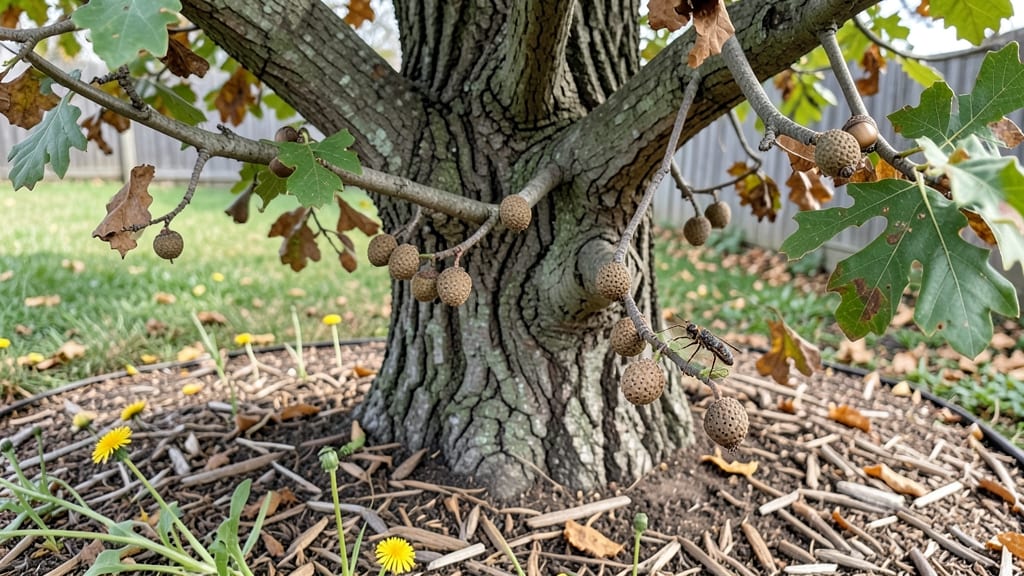
Those lumpy growths on your oak branches might look alarming, but oak tree galls are usually harmless—though they can be unsightly. 🌿 I’ve removed dozens of these bumpy formations from my own oak without ever harming the tree, and I’ll show you how to spot them, decide if they need removal, and do it safely.
Most galls form when wasp larvae trigger plant tissue to grow around them, creating those familiar round or elongated bumps. Common types include oak apple galls (smooth, round) and knopper galls (spiky, elongated).
While they rarely kill the tree, heavy infestations can weaken branches over time—especially if they grow near critical areas like branch crotches.
Removing them is simple: just prune out infected branches in late winter or early spring when the tree is dormant. Sterilize your tools with rubbing alcohol first to prevent spreading disease.
The key is to cut back to healthy wood, and you’ll end up with cleaner branches that look better—and last longer.
For severe cases, encourage natural predators like parasitic wasps or birds that feed on the larvae inside. If galls persist year after year, a targeted application of horticultural oil in late winter can disrupt the wasp life cycle. Either way, your oak will stay strong while looking its best.
📚 In This Guide
- What you need
- Instructions
- Tips and common mistakes
- Wrapping up and next steps
What you need
- ● Safety gear: Nitrile or latex gloves (2–3 pairs) – thick enough to protect against sap and sharp edges
- ● Safety goggles (1 pair) – to shield eyes from debris or sap splashes
- ● Long-sleeved shirt and pants – preferably lightweight and breathable
- ● Pruning tools: Bypass pruners (1 pair) – sharp, 6–8" blades for clean cuts
- ● Loppers (1 pair) – for thicker branches (up to 2" diameter)
- ● Pruning saw (1) – for branches >2" in diameter (bow saw or folding pruning saw)
- ● Cleaning & disinfecting: Rubbing alcohol (70% isopropyl, 8 oz bottle) – for sterilizing tools between cuts
- ● Paper towels or lint-free cloths (1 roll or pack) – for wiping tools and branches
- ● Identification aids: Hand lens or magnifying glass (10x magnification) – for close-up inspection of galls
- ○ Smartphone with a plant-ID app (e.g., PictureThis or iNaturalist) – optional but helpful for confirmation
- ● Horticultural oil or neem oil (8 oz spray bottle) – for treating infestations (follow label instructions!)
- ● Tree wound dressing (e.g., Tanglefoot Tree Wound Pruning Seal) – controversial but some gardeners swear by it for large cuts
- ● Disposable trash bags (2–3) – for collecting gall debris and pruned branches
- ● Step ladder or extension pole (6–10 ft) – if galls are high up (ensure it’s stable!)
How to safely remove oak tree galls without damaging the tree
Galls might look alarming, but they’re usually harmless. Here’s how I carefully remove them while keeping your oak tree healthy.
🌿 Step 1: Identify the Gall Type and Assess the Damage
First, examine the gall closely. Oak tree galls often look like swollen, lumpy growths on branches or leaves, sometimes caused by wasps or mites. Most are harmless, but if the gall is oozing sap or the branch beneath feels soft, it could indicate a fungal infection or serious pest infestation.
Gently run your fingers along the branch to check for cracks or weak spots. Healthy galls are firm and attached to sturdy wood. If the gall is large—over 2 inches in diameter—or if multiple galls cluster on a single branch, note the location for removal later. Never prune healthy wood just because of a gall unless it’s obstructing growth.
✂️ Step 2: Gather the Right Tools for Safe Removal
You don’t need much, but precision matters. Grab a pair of clean, sharp bypass pruners for small galls and a sturdy hand saw for larger ones. Disinfect your tools with rubbing alcohol before and after use to prevent spreading disease. Wear gloves—some galls can irritate skin, and you’ll want to avoid sap stains.
Have a bucket or trash bag ready to collect debris. I like to lay a tarp underneath the tree first to catch fallen galls and prevent them from spreading pests or seeds to the ground. If the gall is high up, consider using a pole saw or calling a professional to avoid damaging the tree while reaching.
🌱 Step 3: Remove the Gall Without Harming the Branch
Start by making a clean cut just outside the gall’s base, angled slightly away from the branch. This ensures water runs off the cut and prevents rot. For small galls, a single cut is enough. For larger ones, you may need to make two cuts—one on each side of the gall—to avoid tearing the bark.
If the gall is attached to a thin branch, support it with your other hand while cutting to prevent the branch from snapping. Once removed, inspect the cut area for signs of decay or pest activity. If the wood beneath looks healthy and firm, you’re good to go. If it’s mushy or discolored, the issue runs deeper, and you may need to prune further or consult an arborist.
💧 Step 4: Clean Up and Monitor the Tree’s Recovery
Dispose of the galls immediately in a sealed bag or trash can—don’t leave them under the tree. Some galls can harbor pests or diseases that might reinfect the tree. Wipe down your tools again with alcohol to ensure they’re sterile for future use.
After removal, keep an eye on the pruned area for a few weeks. Healthy tissue should seal over within a month, and new growth should emerge nearby. If you notice excessive sap oozing, dark streaks in the wood, or wilting leaves, the tree may be under stress or infected. In that case, consider applying a wound dressing or contacting a local arborist for advice.
☀️ Step 5: Prevent Future Galls with Proper Tree Care
Healthy trees are less prone to galls. Make sure your oak gets enough water—deep watering once a week is usually sufficient, but adjust based on your climate. Mulch around the base (but not touching the trunk) to retain moisture and reduce stress. A 2-3 inch layer of mulch works well, spread evenly in a circle.
Finally, prune your oak tree regularly to encourage airflow and reduce humidity around the branches, which can deter pests. I like to do a light pruning in late winter or early spring to remove dead or crossing branches before gall season peaks. This keeps the tree strong and less attractive to gall-causing insects.
Tips & tricks for safely removing oak tree galls
Removing oak tree galls without harming the tree takes patience and precision—here's how to do it right the first time.
Identification Tip: When examining galls in Step 1, look for the classic "spongy" texture that distinguishes wasp-induced galls from fungal ones. Healthy galls should feel firm like a small rubber ball, while infected ones often have a mushy center or oozing sap. I've seen many gardeners mistake fungal galls for wasp galls—always check for that telltale softness beneath the surface.
Tool Selection Strategy: For Step 2, I recommend using bypass pruners over anvil pruners—they make cleaner cuts that heal better. If you're dealing with galls over 2 inches in diameter, a sturdy hand saw is your best friend. Just remember to disinfect your tools thoroughly between cuts to prevent spreading any potential diseases hiding in those galls.
Cutting Technique: In Step 3, when making your angled cuts, think of it like peeling an apple—you want to remove just the gall without taking any healthy bark. For larger galls, I've found that making two small cuts (one on each side) works better than one big cut, which can tear the bark. This method also makes cleanup easier since you're not dealing with large chunks of wood.
Recovery Monitoring: After removal in Step 4, mark the pruned area with a small piece of flagging tape so you can easily monitor it over the next few weeks. Healthy oak trees should show new growth within a month, and the cut area should gradually seal over. If you notice excessive sap oozing or dark streaks, that's your tree's way of saying "help me!"—time to call an arborist.
Pro Tips for Oak Tree Galls On Branches
- Removing oak tree galls without harming the tree takes patience and precision—here's how to do it right the first time.
- Identification Tip: When examining galls in Step 1, look for the classic "spongy" texture that distinguishes wasp-induced galls from fungal ones.
- Tool Selection Strategy: For Step 2, I recommend using bypass pruners over anvil pruners—they make cleaner cuts that heal better.
Frequently asked questions
Got questions about oak tree galls? You’re not alone—these weird growths can be puzzling! Here are answers to the most common concerns, so you can tackle them with confidence.
What exactly are oak tree galls on branches?
Oak tree galls are abnormal growths caused by insects (like gall wasps) or mites injecting eggs or saliva into branches, leaves, or stems. They often look like swollen lumps, bumps, or deformed tissue. While they’re usually harmless to mature trees, they can weaken young or stressed oak trees over time.
Are oak galls harmful to my tree’s health?
Most oak galls don’t kill healthy trees, but severe infestations can stress younger trees or those already weakened by drought or disease. Heavy gall presence may reduce photosynthesis or attract pests. If galls cover more than 10-15% of a branch, consider removal or treatment to protect your tree’s vitality.
When is the best time to remove oak galls?
Remove galls in late winter or early spring (before buds swell) or fall (after leaf drop). This timing minimizes stress on the tree and prevents insects from emerging. Avoid pruning during active growth (spring/summer) unless galls are severely damaging branches—just trim the affected section cleanly with sterilized tools.
How do I safely prune galls without hurting the tree?
Use sharp, sterilized pruners to cut 1-2 inches below the gall (into healthy tissue) to avoid leaving stubs. For large galls, remove the entire branch if it’s dead or >1/3 the diameter of the main branch. Seal larger cuts with pruning sealant to prevent disease. Never use herbicides—galls aren’t a fungal issue!
Can I prevent oak galls from returning next year?
Prevention focuses on tree health: water deeply during droughts, fertilize in early spring, and remove galls promptly. Horticultural oil (applied in late fall or early spring) can smother overwintering insects. For severe cases, consult an arborist about beneficial nematodes or insecticidal soap (use sparingly). Healthy trees resist infestations better!
Pro Tip:
If galls persist year after year, test for oak wilt disease (a fungal threat) or borers, which can mimic gall symptoms. Contact your local Cooperative Extension Service for diagnostics—early action saves trees!
Wrapping up and next steps
Oak tree galls on branches may seem puzzling at first, but with the right knowledge, you can confidently identify and remove them safely without harming your tree. 🌳 Remember, these growths are often harmless and even serve as homes for beneficial insects—so act only when necessary.
If you’ve spotted galls, take action now by gathering your tools and inspecting your tree with care.
Ready to tackle the task? Start small—remove just a few galls to see how your tree responds, and monitor for any changes. Happy pruning! 🌿