
Trees
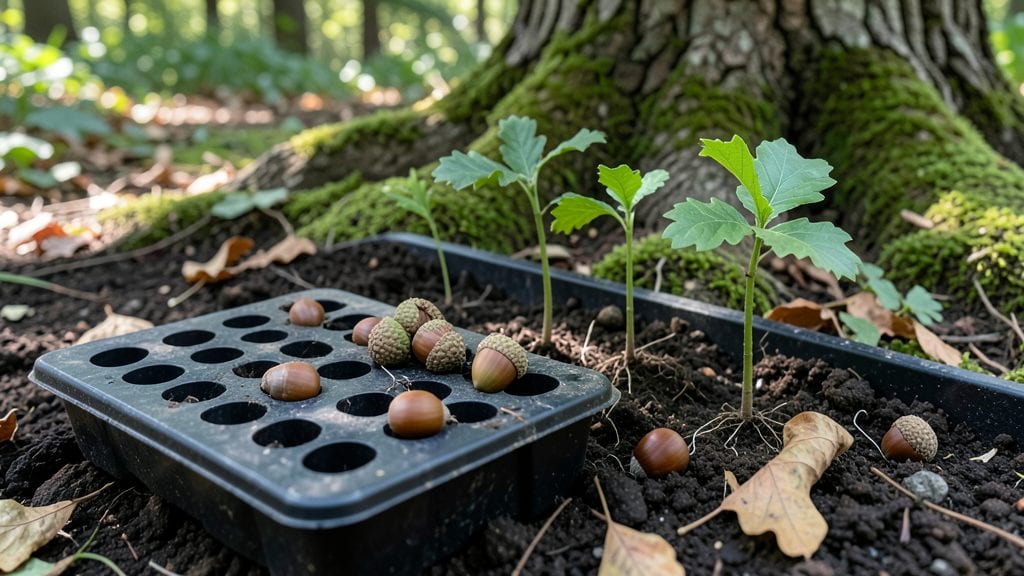
Oak trees start seed with a process that feels like nature’s slow-motion masterpiece—one that demands patience but rewards you with towering giants decades later. 🌿 The journey begins when acorns drop in fall, but true germination won’t happen until spring, after months of cold stratification softening the hard seed coat.
I’ve watched my own oak seedlings emerge after this exact wait, their first leaves unfurling like tiny hands reaching for sunlight.
The secret lies in mimicking nature’s timing: collect fresh acorns in late fall, store them in moist sand or peat moss in the fridge for 3-6 months, then plant them shallowly in well-draining soil.
Young oaks need consistent moisture but hate soggy roots—think of them as finicky toddlers who’ll either thrive or sulk depending on your care. Most gardeners quit here, but the ones who stick with it see those first 2-inch shoots within weeks of planting.
What you’ll end up with isn’t instant shade—oak seedlings grow at a glacial pace, often less than 6 inches per year early on. But by year 10, you’ll have a sturdy sapling that outgrows anything else in your yard.
The real magic happens underground, where roots spread wider than the canopy will for years. This isn’t a quick project; it’s a legacy.
For those tempted to rush, here’s the hard truth: oak seeds need that cold period to break dormancy, and skipping it means waiting years—or never seeing sprouts at all. If you’re in a hurry, grafting is faster, but growing from seed gives you that raw, wild connection to the forest.
Start small, but think big—your great-grandkids might still be sitting under this tree.
📚 In This Guide
- What you need
- Instructions
- Tips and common mistakes
- Wrapping up and next steps
What you need
- ● Oak acorns: Fresh, mature acorns (preferably from Quercus species like white oak or red oak). Aim for 20-50 acorns to account for germination variability.
- ● Well-draining potting mix: A blend of 50% peat moss or coconut coir, 30% perlite or coarse sand, and 20% compost (sterilized to prevent mold). Use 1-2 gallons per 10 acorns.
- ● Seed trays or small pots: 2-3 inch deep with drainage holes. 10-20 trays/pots (1 acorn per container or spaced 1 inch apart in trays).
- ● Plastic wrap or humidity dome: To maintain moisture during germination (e.g., clear plastic sheet or a propagator lid).
- ● Spray bottle: For gentle watering (avoid soaking the mix).
- ● Labeling tags: To track planting dates and species.
- ○ Scissors or pruners: For trimming acorn caps (optional but helpful for faster germination).
- ● Refrigerator or cold frame: A stratification space (33–41°F / 0–5°C) for 60–90 days.
- ● Grow lights or sunny windowsill: A bright, indirect light source (12–16 hours/day) for post-stratification growth.
- ● Fungicide: A mild solution (e.g., 1 tsp hydrogen peroxide per quart of water) to prevent rot during stratification.
- ● Heat mat: For accelerating germination (70–75°F / 21–24°C after stratification).
- ● Moisture meter: To monitor soil dampness (aim for 40–60% moisture).
- ● Journal: To log germination progress, dates, and conditions.
- ● Outdoor nursery area: A shaded, sheltered spot for transplanting seedlings once they’re 6–12 inches tall.
Nature’s step-by-step guide to oak tree seed germination
Oak trees don’t rush—here’s how their seeds break dormancy over months, not days.
🌱 Step 1: Acorns Must Undergo Cold Stratification
Freshly fallen acorns won’t sprout immediately. First, they need a 60-90 day cold period at 35-45°F to break dormancy. This mimics winter’s natural cycle. I store acorns in a damp paper towel inside a sealed plastic bag, then place them in the refrigerator’s crisper drawer. Check monthly—they should feel slightly firm but not mushy.
The cold treatment softens the seed coat and jumpstarts root growth. If you skip this step, the acorn will either rot or take years to germinate. Real talk: Patience is key here. Some acorns need up to six months of cold treatment, especially from white oak varieties.
☀️ Step 2: Warmth and Moisture Trigger Root Growth
After stratification, move the acorns to a warm, moist environment. I use a seedling tray with well-draining potting mix (never garden soil) and plant them 1 inch deep. Keep the soil consistently moist—like a wrung-out sponge—so roots can push through without drying out. A humidity dome helps maintain even moisture while preventing rot.
Within 2-4 weeks, you’ll see the first sign of life: a tiny white root emerging from the acorn. This is your signal that germination has begun. Don’t water from above now—direct pressure can dislodge the fragile root. Instead, water at the base or use a spray bottle.
🌿 Step 3: Shoot Emergence and First True Leaves
Once the root is 1-2 inches long, the shoot will follow. This happens when soil temperatures reach 65-75°F. The first leaves—called cotyledons—will appear as small, rounded lobes. They’re not the oak’s signature leaves but its first food source. Here’s the thing—these seedlings are delicate. A sudden temperature drop or overwatering can kill them.
After 4-6 weeks, the true oak leaves will unfurl, resembling miniature versions of the adult tree’s leaves. This is when you’ll know the seedling is established enough to handle outdoor conditions. Watch for leggy growth—a sign the seedling needs more light. Move it to a bright spot but avoid direct midday sun for the first few weeks.
⏰ Step 4: Transplanting to Soil and Long-Term Care
When seedlings have 3-4 sets of true leaves and are 6-8 inches tall, they’re ready for their forever home. Choose a spot with full sun and well-draining soil. Dig a hole twice as wide as the root ball but no deeper. Gently loosen the roots if they’re circling the pot—this prevents girdling as the tree grows.
Water deeply after transplanting to settle the soil around the roots. Mulch with 2-3 inches of organic matter (like wood chips) to retain moisture and regulate temperature. Oak seedlings grow slowly—expect only 6-12 inches of growth per year in their first few years. That’s normal. The key is consistency: water during droughts but avoid soggy soil.
Tips & tricks for perfect oak tree seed germination
Oak trees take their time—here are the secrets to giving your acorns the best chance at sprouting successfully.
Cold Stratification is Non-Negotiable: The 60-90 day cold period at 35-45°F is absolutely critical. I learned this the hard way—skipping this step means your acorn might never germinate or take years to do so. For extra insurance, especially with white oaks, extend the cold treatment to up to six months. Think of it like winter's natural hibernation period for the seed.
Moisture Balance is Everything: When planting your stratified acorns in Step 2, aim for soil moisture that's like a wrung-out sponge—damp but not soggy. Too much water can cause rot, while too little prevents root growth. I use a humidity dome during this phase, which creates a mini greenhouse effect that maintains perfect moisture levels without overwatering.
Patience with Seedling Development: The 2-4 week window for root emergence might feel long, but rushing this process can damage fragile roots. Once you see that first tiny white root, switch to bottom-watering or use a spray bottle to avoid dislodging it. Remember, these seedlings are delicate—sudden temperature swings or overwatering can kill them before they even get started.
Light Management for Healthy Growth: After the true leaves emerge in Step 3, watch for leggy growth—a classic sign your seedling needs more light. Move it to a bright spot with indirect sunlight, especially during those first few critical weeks. Direct midday sun can scorch tender new leaves, while too little light leads to weak, stretched-out seedlings that struggle to establish themselves.
Pro Tips for How Does Oak Trees Start Seed
- Oak trees take their time—here are the secrets to giving your acorns the best chance at sprouting successfully.
- Cold Stratification is Non-Negotiable: The 60-90 day cold period at 35-45°F is absolutely critical.
- Moisture Balance is Everything: When planting your stratified acorns in Step 2, aim for soil moisture that's like a wrung-out sponge—damp but not soggy.
Frequently asked questions
Got questions about oak tree seeds? You’re not alone!
Here are some of the most common queries—and answers—to help you navigate the fascinating (and sometimes tricky) world of oak seed germination.
How long does it take for oak acorns to sprout?
Oak acorns are slow to germinate—often taking 6 months to 2 years in ideal conditions. Some even require a cold stratification period (like winter) to break dormancy. Patience is key! If you’re growing from seed, expect little progress until spring or the following year.
Can I plant an acorn directly in the ground, or does it need special treatment?
While some acorns can be planted directly, they germinate better with a little prep. Try stratification (mimicking winter by chilling them in moist sand for 2–3 months) or scarification (lightly nicking the hard shell). This tricks the seed into thinking it’s ready to grow!
Why won’t my acorn sprout? Troubleshooting tips.
Acorns may fail to sprout due to immature seeds (green inside), disease (moldy or rotting), or poor conditions (too dry/wet, wrong soil). Check for a firm, brown shell and a white embryo inside—if it’s green, it’s not ready. Also, oaks need well-draining soil; soggy roots = no sprouts!
Do all oak trees produce acorns? What about male vs. female trees?
Not all oaks produce acorns! Only female trees bear acorns (male trees release pollen but no seeds). Look for capsules (the spiky husks) on branches—if you see them, you’ve got a female. Pro tip: Young oaks may take 10–20 years to produce acorns, so don’t rush!
Can I grow an oak tree from a store-bought acorn?
Store-bought acorns can work, but they’re often immature or treated to prevent sprouting. For best results, source acorns from mature, local oaks (fall is ideal!). If you’re buying, check for freshness (no cracks, no mold) and follow stratification steps. Wild acorns = higher success rates!
Wrapping up and next steps
Understanding how oak trees start seeds is more than just fascinating—it’s a reminder of nature’s resilience and the quiet magic of growth. From acorn production to root development, each step plays a crucial role in nurturing the next generation of these majestic trees. 🌱
Now that you’re armed with this knowledge, why not take the next step? Whether you’re planting an acorn in your backyard or simply admiring the cycle of life, you’re part of the story. Grab a few acorns, find a sunny spot, and let nature work its wonders!