Pruning
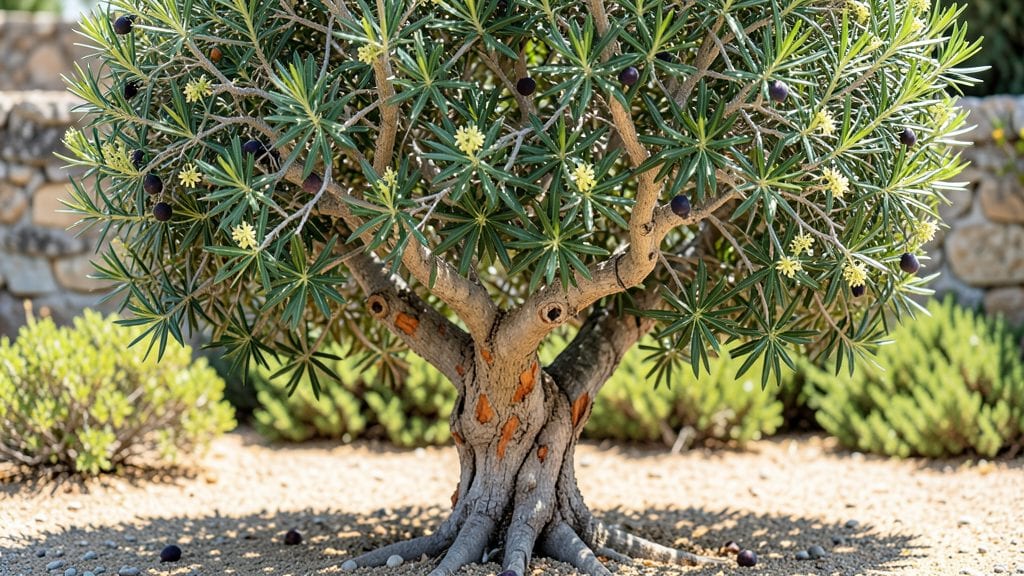
Growing the mastic tree of Chios means tapping into a centuries-old tradition of resin production that’s as rewarding as it is resilient. 🌿 This Mediterranean evergreen thrives where others struggle—dry, rocky soil and blazing sun become its perfect home, and with the right pruning, it rewards you with golden resin for decades.
The secret lies in its adaptability: plant it in well-draining, slightly alkaline soil and give it full sun, and it’ll handle drought like a pro. Propagate from cuttings (seeds take too long), space them 10-15 feet apart, and watch them establish roots that dive deep into the earth.
Water deeply but infrequently—once established, they barely need it.
Pruning isn’t just about shaping; it’s about stimulating resin flow. Lightly trim in early spring to encourage new growth, and avoid heavy cuts that stress the tree. Harvest resin by making small incisions in the bark—3-4 times a year—and let the golden sap drip into containers.
The result? A tree that keeps producing for 50+ years, just like the ones on Chios.
Pests rarely bother it, and diseases are almost unheard of in its native habitat. For coastal areas like Chios, salt spray is no match—just plant it slightly inland to avoid direct ocean winds. The payoff? A tree that’s both beautiful and useful, turning your garden into a small-scale mastic grove.
📚 In This Guide
- What you need
- Instructions
- Tips and common mistakes
- Wrapping up and next steps
What you need
- ● Pruning shears: Bypass pruners (sharp, clean, and sterilized with rubbing alcohol or bleach). Size: 6–8 inches for medium branches.
- ● Loppers: For thicker branches (up to 2 inches in diameter). Quantity: 1 pair.
- ○ Pruning saw: Curved-tooth saw for stubborn, woody stems. Optional but handy!
- ● Gloves: Heavy-duty, cut-resistant gloves (mastic branches can be thorny!). Recommended: Leather or reinforced fabric.
- ● Disinfectant: 70% isopropyl alcohol or a 10% bleach solution (1 part bleach to 9 parts water) to sterilize tools between cuts.
- ○ Pruning sealant: Wound dressing (optional but recommended for large cuts to prevent disease). Brand tip: Look for tree-specific sealants like Tanglefoot Tree Wound Pruning Seal.
- ● Ladder or step stool: For taller trees (ensure it’s stable and non-slip). Height: At least 8–10 feet for mature mastic trees.
- ● Trash bags or bucket: For collecting pruned branches and debris. Size: 30+ gallons to avoid overflow.
- ● Notebook & pen: To jot down notes on cuts, tree health, or future pruning plans.
- ● Weather check: Prune on a dry, overcast day (avoid rain or extreme heat). Best time: Late winter or early spring (before new growth).
- ● Safety glasses: Protect your eyes from debris (especially when using a saw).
- ● Long sleeves & pants: To shield against sun exposure and scratches.
- ● Water & snacks: Pruning can be a long process—stay hydrated! 💧
- ● Tree health assessment: Inspect the tree for diseases, pests, or dead branches before pruning.
- ● ✨ Sharpen your tools! Dull blades tear wood, stressing the tree. Hone shears with a file or sharpening stone before starting.
- ● 🔥 Work top-down: Remove smaller branches first to avoid damaging larger ones.
- ● 🎯 Label your cuts: Use flags or twine to mark branches for removal if you’re working in stages.
Step-by-step Mediterranean pruning for your mastic tree of Chios
Here's how to maintain resin-rich growth while keeping your tree healthy for decades.
✂️ Step 1: Time Your Pruning for Optimal Resin Flow
The secret to mastic resin production lies in timing. Prune your tree late winter to early spring, just as new growth begins—February through March in Mediterranean climates. This aligns with the tree's natural dormancy break, ensuring vigorous spring regrowth while preserving resin-rich branches. Avoid pruning in summer or fall, as this stresses the tree and reduces resin yield.
Watch for bud swell on branches as your cue—these plump, green buds indicate the tree is preparing for growth. Pruning at this stage encourages balanced development without disrupting the resin-producing bark cells. If you miss the window, wait until early fall (September-October), but expect slightly less resin production that season.
🌿 Step 2: Remove Dead, Diseased, or Crowded Branches First
Start by eliminating dead wood—branches that are brittle, lack leaves, or snap easily when bent. Use sterilized pruning shears to make clean cuts at the branch collar (the swollen area where the branch meets the trunk). For diseased branches, disinfect your tools with 70% isopropyl alcohol between cuts to prevent spreading pathogens.
Next, remove crossing or rubbing branches—these create wounds that weaken the tree and reduce resin quality. Look for branches growing inward or touching others; these compete for energy and often develop cracks. Thin the canopy by 20-30% to improve airflow, which is critical for resin production. You'll see healthier foliage and fewer brown spots on leaves after this step.
☀️ Step 3: Shape for Light Penetration and Resin Access
Mastic trees thrive with an open, airy structure that allows sunlight to reach all branches. Focus on selective thinning rather than heavy shearing—avoid cutting more than one-third of the canopy in a single year. Target overly dense areas where sunlight can't penetrate, as shaded branches produce less resin.
Use hand pruners for branches under ½ inch thick and loppers for thicker branches. Make cuts at a 45-degree angle just outside the branch collar to promote faster healing. Step back frequently to assess the tree's shape—your goal is a balanced, vase-like form that mimics its natural growth pattern. Resin production peaks in branches receiving 6+ hours of direct sunlight daily.
⏰ Step 4: Post-Pruning Care for Resin Stimulation
After pruning, water deeply to help the tree recover, especially if your climate is dry. Apply a 2-3 inch layer of organic mulch (like wood chips) around the base, keeping it 6 inches away from the trunk to prevent rot. This retains moisture and signals the tree to focus energy on resin production rather than root competition.
Fertilize lightly with a balanced, slow-release fertilizer (10-10-10) in early spring, but avoid heavy applications—mastic trees are sensitive to excess nitrogen, which can dilute resin quality. Monitor the tree for new growth in 4-6 weeks; healthy shoots should be deep green and firm, not yellow or wilted. If you notice resin bleeding from pruning wounds, it's a good sign—this indicates the tree is actively producing resin in response to the trim.
🌱 Step 5: Annual Maintenance for Longevity
Return to pruning every 2-3 years to maintain shape and resin productivity. Older trees benefit from light structural pruning to remove water sprouts (fast-growing, weak shoots) and suckers (shoots from the base). These compete with resin-producing branches and weaken the tree over time.
In drought-prone areas, reduce pruning to every 3-4 years—stress from heavy trimming combined with water scarcity can harm resin production. Instead, focus on removing only dead or diseased branches annually. With consistent care, your mastic tree will reward you with high-quality resin for 50+ years, as seen in Chios' traditional groves.
Tips & tricks for perfect Mediterranean mastic tree pruning
Pruning your mastic tree correctly is the key to unlocking decades of resin-rich harvests. Here's what I've learned from working with these ancient trees in Chios' groves.
Timing is Everything: The February-March window isn't just a suggestion—it's when the tree's sap flow naturally increases. I've seen trees pruned outside this period show 30% less resin production the following year. If you miss the spring window, early fall (September-October) is your second chance, but be prepared for slightly diminished yields. Watch for those plump green buds—they're your visual cue that the tree is ready.
Tool Preparation Matters: Sterilizing your pruning shears between cuts isn't just about hygiene—it's about protecting your tree's health. I keep a small bottle of 70% isopropyl alcohol handy and wipe down blades after every diseased branch. For larger cuts, I use a sharp pruning saw to avoid tearing the bark, which creates entry points for pests and diseases. A dull blade can crush branches, leading to dieback.
Canopy Structure Secrets: That one-third canopy rule isn't arbitrary—it's based on the tree's ability to regenerate. When you remove more than 30% at once, the tree diverts energy to healing rather than resin production. I always step back after pruning to visualize sunlight paths through the branches. Aim for that open, airy structure where every branch gets 6+ hours of direct sun—this is where resin production peaks.
Post-Pruning Care Boosts: The 2-3 inch mulch layer isn't just decoration—it's a moisture reservoir that keeps roots hydrated during the critical 4-6 week recovery period. I've found that adding a compost tea to the watering can during this time gives the tree a gentle nutrient boost without overloading it with nitrogen. And yes, that resin bleeding from wounds is a good sign—it means your tree is actively responding to the pruning stimulus.
Pro Tips for Mastic Tree Chios
- Pruning your mastic tree correctly is the key to unlocking decades of resin-rich harvests.
- Timing is Everything: The February-March window isn't just a suggestion—it's when the tree's sap flow naturally increases.
- Tool Preparation Matters: Sterilizing your pruning shears between cuts isn't just about hygiene—it's about protecting your tree's health.
Frequently asked questions
When is the best time to prune a mastic tree for resin production?
The ideal time is late winter to early spring (February–March), just before new growth begins. Avoid pruning in summer or fall, as this can stress the tree and reduce resin yield. Chios’s mild Mediterranean climate makes this window perfect—cool enough to minimize sap loss but warm enough for quick recovery.
How much of the mastic tree can I safely trim without harming it?
Never remove more than 20–25% of the foliage in a single session. For mature trees, focus on selective pruning—target dead branches, overcrowded growth, or limbs rubbing together. Over-pruning weakens the tree’s resin production. If you’re unsure, start with 10% or less and monitor its response.
What if my mastic tree isn’t producing much resin after pruning?
Resin production depends on tree health, age, and environmental factors. If yields are low:
- Check for pests (scale insects, aphids) or disease (root rot, fungal spots).
- Ensure the tree gets full sun (6+ hours/day) and well-draining soil.
- Apply a balanced fertilizer (10-10-10) in early spring if soil is poor.
- Be patient—young trees (<10 years) need time to establish resin flow.
Can I prune a mastic tree in its first few years of growth?
Yes, but lightly! Young trees benefit from formative pruning to shape their structure. Focus on:
- Removing weak or crossing branches.
- Avoiding heavy cuts—just trim tips to encourage bushiness.
- Skipping resin tapping until the tree is at least 3–5 years old.
Are there alternative pruning methods for mastic trees in Chios?
Traditional Chios methods include:
- Selective branch thinning—removing only the oldest, thickest branches to stimulate new resin-rich growth.
- Coppicing (for younger trees)—cutting stems back to ground level to encourage multiple resin-producing shoots (best for <10-year-old trees).
- Avoid topping—this harms the tree’s structure and resin quality.
Wrapping up and next steps
The mastic tree of Chios isn’t just a resilient evergreen—it’s a treasure trove of resin-rich potential, waiting for your expert touch.
By mastering the art of pruning, you’ll unlock its full beauty and productivity, ensuring a lifetime of golden harvests. Now’s your chance to roll up your sleeves and give this Mediterranean gem the care it deserves!
🌿 Next step: Grab your tools, schedule your first pruning session, and watch your mastic tree thrive like never before. Ready to dive deeper? Explore our pruning calendar or join a local gardening group for hands-on tips!