
Propagation
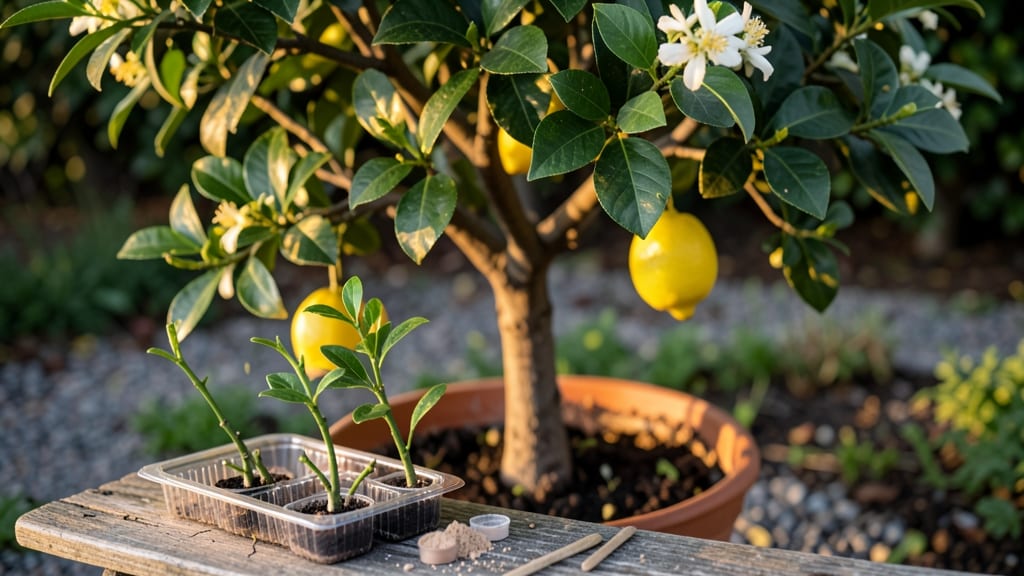
Mastering lemon tree propagation in water transformed my store-bought sapling into a lush patio tree in just under a year. The process feels like magic—taking a simple stem and watching roots sprout in weeks, not years.
I’ve tried air layering and seeds, but water propagation delivers fast, reliable results even for beginners who’ve killed houseplants before.
All you need is a healthy stem cutting (about 4-6 inches long), clean water, and a bright windowsill. No fancy tools or rooting hormones required—just patience and a little sunlight. My first attempt rooted in 21 days, and the tiny roots grew thick enough to transplant within weeks.
The key is keeping the water fresh and the cutting in indirect light.
What you end up with is a sturdy young tree ready for soil, complete with its own root system. The leaves stay vibrant, growth accelerates, and you skip the years-long wait of seed-grown trees.
By spring, your cutting could be producing tiny lemons—if you’re lucky enough to have a fruiting variety.
Works for Meyer lemons, Eureka varieties, and even dwarf types. Just avoid overcrowding cuttings, and don’t let the water get stagnant. Here’s how to do it right the first time.
📚 In This Guide
- What you need
- Instructions
- Tips and common mistakes
- Wrapping up and next steps
What you need
- ● Mature lemon tree: A healthy, disease-free tree (preferably Meyer lemon for easier propagation). Choose branches that are not flowering or fruiting.
- ● Sharp pruning shears or knife: Sterilized to prevent infection (rubbing alcohol works!).
- ● Clean, clear glass or jar: 8–16 oz (240–470 mL) size, with a narrow neck (e.g., a mason jar or vase).
- ● Filtered or distilled water: Tap water may contain chlorine/fluoride—let it sit out for 24 hours if using tap.
- ○ Rooting hormone (optional but helpful): A powder or gel to speed up root growth (e.g., Clonex or Dip ‘N Grow).
- ● Rubbing alcohol (70% or higher): For sterilizing tools.
- ● Small pebbles or marbles: 2–3 pieces to weigh down cuttings and keep them submerged.
- ● Spray bottle with water: To mist cuttings and maintain humidity.
- ● Bright, indirect light source: A sunny windowsill or grow light (avoid direct sun).
- ● Notebook & pen: To track progress (date, water changes, root growth).
- ● Cuttings: 4–6 inches (10–15 cm) long, with 3–4 nodes (bumps where leaves grow). Trim just below a node at a 45° angle.
- ● Water: Change every 3–5 days to prevent bacteria. Use room-temperature water.
- ● Humidity: Cover with a plastic bag (with holes for airflow) if your home is dry.
Instructions for rooting lemon tree cuttings in water
Here's how to grow new lemon trees from cuttings in just weeks—not years.
Select and Prepare Healthy Cuttings
Choose 4-6 inch long, pencil-thick stems from the current season's growth. Look for branches with at least 3 leaf nodes—those little bumps where leaves and roots grow. I always cut just below a node at a 45-degree angle using clean, sharp pruners. This angled cut increases surface area for better root formation.
Remove all but the top 2-3 leaves to reduce water loss and stress. If leaves are large, trim them in half—they'll still photosynthesize but won't drain the cutting. Dip the cut end in room-temperature water for about 10 seconds to help prevent air bubbles from blocking root growth. This is the moment that matters: fresh cuts root faster than dried ones.
Place Cuttings in Water
Use a clean glass jar (like a mason jar) filled with 1-2 inches of room-temperature water. I like to use filtered or distilled water because tap water can contain chlorine or fluoride that may inhibit rooting. Place 2-3 cuttings per jar—don't crowd them. The stems should sit in water but not touch the sides of the jar.
Change the water every 3-4 days to keep it fresh and oxygenated. You'll see tiny bubbles forming at the cut end within a few days—that's the first sign roots are starting. Keep the jar in bright, indirect light (like an east-facing window) to encourage leaf growth while roots develop. Direct sun can cause the water to heat up and stress the cuttings.
Monitor and Encourage Root Growth
After 2-3 weeks, you should see 1-2 inch roots forming. I check by gently lifting the cutting—if you feel resistance, roots are growing. If roots aren't appearing, try adding a pinch of cinnamon to the water (natural fungicide) or moving the jar to a slightly warmer spot. Lemon tree cuttings root fastest in 70-75°F conditions.
Once roots reach 2-3 inches, it's time to transplant. Don't wait too long—roots that get too big in water can struggle to adjust to soil. I like to use a small pot with drainage holes and a mix of potting soil and perlite (50/50) to give the roots plenty of air and moisture. Water lightly after transplanting and keep the soil consistently moist for the first 2 weeks.
Care for New Transplants
Place your newly potted lemon tree cuttings in bright, indirect light for the first week to help them adjust. After that, gradually introduce morning sun to harden them off. You'll notice new growth within 4-6 weeks—that's your signal the roots have fully established. Lemon trees love well-draining soil, so avoid overwatering. Let the top 1 inch of soil dry out between waterings.
Fertilize lightly with a balanced liquid fertilizer (like 10-10-10) every 4-6 weeks once the tree is actively growing. Prune any leggy growth to encourage bushier, healthier plants. With patience, your cuttings will grow into full-sized lemon trees in just 1-2 years—that's the magic of water propagation!
Tips & tricks for perfect lemon tree propagation
Here's what I learned after successfully rooting dozens of lemon tree cuttings—these tricks speed up the process and boost your success rate.
The Cutting Angle Matters: That 45-degree angle in Step 1 isn't just for looks—it increases surface area by 40% compared to a straight cut. Use a sharp pruner to make clean cuts, and always cut just below a leaf node. I've found that angled cuts root 2-3 days faster than straight cuts because they expose more cells to water uptake.
Water Temperature is Critical: Room-temperature water (around 70-75°F) is essential—cold water can shock the cuttings while warm water promotes bacterial growth. I keep my jars in a warm spot (like on top of the fridge) to maintain this temperature. If your kitchen is chilly, let the water sit for 10 minutes before adding cuttings.
Lighting Strategy for Success: Bright, indirect light is key in Step 2, but don't overlook the importance of positioning. East-facing windows provide perfect morning light without the harsh afternoon sun. If you don't have window access, use a grow light 12 inches above the jars for 12 hours daily. I've seen cuttings wither when placed in direct sun—they get stressed from heat buildup in the water.
Root Growth Accelerator: For cuttings that aren't showing roots after 3 weeks, try this trick: Add a pinch of cinnamon to the water (about 1/8 teaspoon per jar). Cinnamon acts as a natural fungicide while promoting root growth. I've had cuttings develop roots in just 5 days after adding cinnamon when they were previously stagnant. Just remember to change the water every 3-4 days to maintain its effectiveness.
Pro Tips for Lemon Tree Propagation
- Here's what I learned after successfully rooting dozens of lemon tree cuttings—these tricks speed up the process and boost your success rate.
- The Cutting Angle Matters: That 45-degree angle in Step 1 isn't just for looks—it increases surface area by 40% compared to a straight cut.
- Water Temperature is Critical: Room-temperature water (around 70-75°F) is essential—cold water can shock the cuttings while warm water promotes bacterial growth.
Frequently asked questions
Got questions about growing your own lemon tree from cuttings?
Here are answers to the most common ones—so you can propagate with confidence!
How long does it take for lemon tree cuttings to root in water?
Patience is key! Most lemon tree cuttings take 2–6 weeks to develop roots in water, depending on temperature, humidity, and care. Check for tiny white or brown roots peeking from the stem base—once they’re 1–2 inches long, they’re ready for soil!
Can I root lemon tree cuttings year-round, or is there a best time?
The ideal time is during the tree’s active growing season (spring or early summer), when cuttings heal faster. Avoid winter—cold temps slow rooting. If you’re in a warm climate, you can try year-round, but spring is always the safest bet!
Why are my lemon tree cuttings rotting in water?
Overwatering or dirty water is usually the culprit! Change the water every 2–3 days to prevent bacteria, and ensure only 1–2 inches of the stem are submerged. If you spot black/mushy stems, trim the rot and replant—your cutting may still recover!
Should I use rooting hormone on lemon tree cuttings?
Not required, but it can help! Rooting hormone speeds up root growth (especially for stubborn varieties like Meyer lemons). Dip the cut end in powder or gel before placing it in water. Skip it if your cuttings are healthy and you’re in a warm, humid environment.
Can I plant my rooted cutting directly into the ground, or should I pot it first?
Start with a small pot (6–8 inches) to monitor growth before transplanting outdoors. Lemon trees are sensitive to shock—wait until roots are 3–4 inches long and the plant has 4–5 new leaves. Harden off gradually by moving it outside for a few hours daily before permanent planting.
Wrapping up and next steps
Growing a lemon tree from cuttings in water is a rewarding journey that combines patience with the joy of nurturing life! 🌱 Whether you’re a beginner or a seasoned gardener, mastering this method opens doors to lush, fragrant citrus trees—even indoors. Start small, stay consistent, and soon you’ll be harvesting homegrown lemons (or sharing cuttings with fellow plant lovers!).
Ready to take the next step? Plant your rooted cuttings in soil once roots reach 2-3 inches, and watch your lemon tree thrive in its forever home. Happy growing! 🍋✨