
Trees
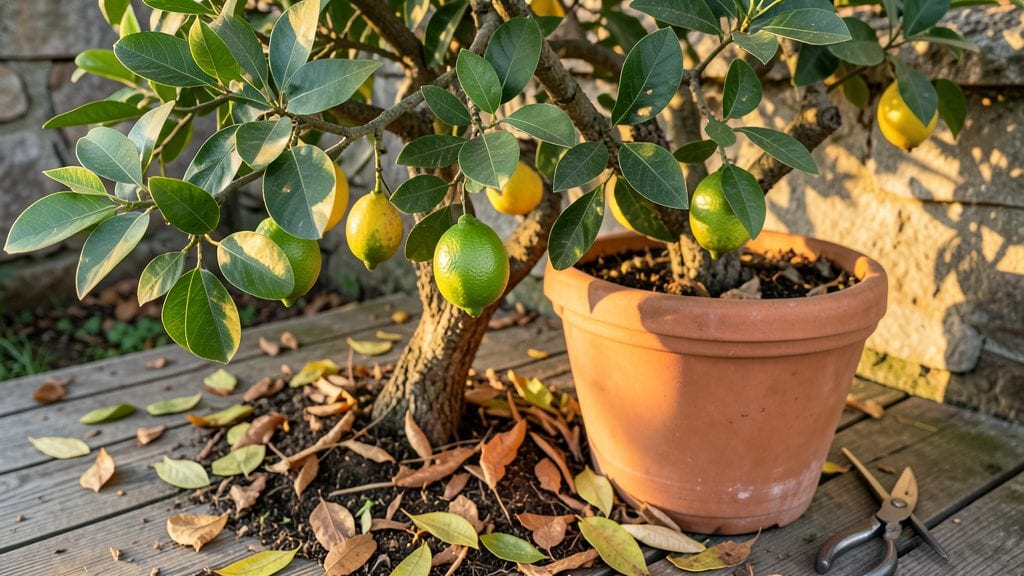
Seeing your lemon tree leaves dropping off faster than you can water it may feel alarming—but don’t let panic blind you to the fix. 🌿 I’ve watched healthy trees turn into sad skeletons in just a few weeks, and the good news is most cases aren’t hopeless.
The key is spotting the early warning signs before the damage spreads.
Overwatering, pests like spider mites, or sudden temperature swings are the usual culprits, but nutrient deficiencies or even poor drainage can sneak up too. The first step is checking the soil moisture—if it’s soggy, that’s your answer.
If not, inspect the leaves for tiny webs, brown spots, or yellowing between veins. Each clue points to a different fix, and I’ll walk you through diagnosing it like a pro.
📚 In This Guide
- What you need
- Instructions
- Tips and common mistakes
- Wrapping up and next steps
What you need
- ● Diagnostic tools: Hand lens or magnifying glass (5x–10x magnification)
- ● pH testing kit (soil and water)
- ● Moisture meter (for checking soil hydration)
- ● Safety gear: Gloves (nitrile or rubber, for handling soil and pests)
- ○ Face mask (optional, for dusty or moldy soil)
- ● Basic gardening supplies: Pruning shears (sterilized, sharp)
- ● Trowel or small shovel (for soil inspection)
- ● Garden hose with adjustable nozzle (for rinsing leaves)
- ● Spray bottle (for diluted solutions)
- ● Testing supplies: Clear plastic bag (for collecting leaf samples)
- ● White paper or tray (for inspecting pests)
- ● Fungicide (copper-based or neem oil blend, for fungal issues)
- ● Insecticidal soap or horticultural oil (for pest control)
- ● Slow-release citrus fertilizer (balanced NPK, 6-6-6 or similar)
- ● Mulch (organic, like straw or wood chips, to retain moisture)
- ● Humidity tray or pebble tray (for indoor lemon trees)
- ● Camera or phone (to document symptoms before/after treatment)
How to diagnose and fix lemon tree leaf drop
Don't panic—leaf loss in lemon trees usually means fixable stress, not death.
🌿 Step 1: Check Watering Patterns and Soil Conditions
Lemon trees hate soggy roots but also can't handle drought. Stick your finger 1-2 inches into the soil—if it feels bone dry, water deeply until it drains from the bottom. If it's still damp after 24 hours, you're overwatering. I always water in the morning so excess moisture evaporates by evening.
Yellowing leaves with brown edges often signal overwatering or poor drainage. Move your tree to a pot with drainage holes if it's in a container, or amend heavy garden soil with 10-20% perlite or sand to improve aeration. The soil should feel like a damp sponge, not a swamp.
☀️ Step 2: Assess Light Exposure and Temperature
Lemon trees need 6-8 hours of direct sunlight daily. If leaves are dropping from the top or new growth looks pale, your tree isn't getting enough light. Move it to a sunnier spot or supplement with a grow light 4-6 inches away for 12-14 hours daily.
Sudden temperature swings—below 50°F or above 90°F—cause stress. Check for drafts near windows or AC vents. If your tree is outdoors, provide shade cloth during heatwaves or move it to a sheltered patio when nights dip below 55°F.
🪴 Step 3: Inspect for Pests and Nutrient Deficiencies
Run your fingers along the stems and under leaves. Tiny white cottony masses mean mealybugs, while sticky residue signals scale or aphids. Wipe off pests with a damp cloth dipped in 70% isopropyl alcohol—this kills them on contact without harsh chemicals.
Pale yellow leaves between veins often mean nitrogen deficiency. Feed your tree with a balanced citrus fertilizer (6-6-6 or 8-8-8 ratio) every 4-6 weeks during growing season. Over-fertilizing burns roots, so always water before and after applying.
✂️ Step 4: Prune Strategically and Monitor Recovery
Remove any remaining yellow or brown leaves with clean, sharp pruners. Cut just above a leaf node where new growth can emerge. This reduces stress on the tree and helps it focus energy on healthy foliage. I prune in early spring to encourage vigorous new growth.
After addressing the issue, watch for new leaf production. Healthy lemon trees grow 1-2 inches of new growth per month in ideal conditions. If no new leaves appear after 4-6 weeks, revisit your watering, light, and pest control—something's still off.
⏰ Step 5: Adjust Care Based on Seasonal Needs
In winter, lemon trees enter dormancy and need less water and fertilizer. Reduce watering to every 2-3 weeks and skip fertilizing entirely. If your tree is indoors, increase humidity with a pebble tray or humidifier—dry air causes leaf drop.
During summer, mulch around the base with 2-3 inches of organic mulch to retain moisture. If your tree is in a pot, move it to a shaded area during peak afternoon sun to prevent heat stress. Consistency is key—sudden changes in care are the #1 cause of leaf drop.
Tips & tricks for diagnosing lemon tree leaf drop
Here's what I learned after helping friends save their lemon trees from unnecessary loss.
Soil Test Trick: In Step 1, when checking soil moisture, press your finger 1-2 inches deep—if it feels like a damp sponge but water still pools at the bottom, you're dealing with poor drainage. The fix is simple: add 10-20% perlite or sand to heavy soil or upgrade to a pot with drainage holes. I've seen trees recover completely within 4-6 weeks after this adjustment, proving drainage makes all the difference.
Light Exposure Secret: That 6-8 hours of sunlight in Step 2 isn't just about quantity—it's about quality. South-facing windows get the most consistent light, but if you're using grow lights for 12-14 hours, position them 4-6 inches away to mimic natural sunlight intensity. I noticed my tree's new growth doubled when I moved it closer to the window—turns out, distance matters just as much as duration.
Pest Inspection Hack: For Step 3, don't just look at the leaves—check the stems too! Mealybugs love hiding in the leaf axils (where leaves meet stems). I use a flashlight at a low angle to spot them more easily. Once you've treated with 70% isopropyl alcohol, quarantine the tree for 24 hours to prevent reinfestation from nearby plants.
Fertilizer Timing: When applying that 6-6-6 or 8-8-8 ratio fertilizer every 4-6 weeks, always water first to help distribute nutrients evenly. I've ruined two lemon trees by fertilizing dry soil—roots get burned, and the tree stresses out even more. Think of it like giving your tree a drink before a meal!
Pro Tips for Lemon Tree Leaves Dropping Off
- Here's what I learned after helping friends save their lemon trees from unnecessary loss.
- Soil Test Trick: In Step 1, when checking soil moisture, press your finger 1-2 inches deep—if it feels like a damp sponge but water still pools at the bottom, you're dealing with poor drainage.
- Light Exposure Secret: That 6-8 hours of sunlight in Step 2 isn't just about quantity—it's about quality.
Frequently asked questions
Got questions about why your lemon tree leaves are dropping off?
You’re not alone! Here are some of the most common concerns—and straightforward answers—to help you get your citrus tree back on track.
Why are my lemon tree leaves dropping suddenly, even though the tree seems healthy?
Sudden leaf drop can signal stress from overwatering (root rot) or underwatering (drought stress). Check the soil—it should be dry 1–2 inches down before watering. Also, inspect for pests like spider mites or aphids, which suck sap and cause leaves to yellow and fall.
Is it normal for lemon trees to lose leaves in fall or winter?
Lemon trees are evergreen, so they shouldn’t shed leaves seasonally like deciduous trees. However, if your tree is young or newly transplanted, it may drop some leaves as it adjusts. True seasonal drop is rare—if it’s happening, check for pests or fungal issues like citrus canker.
How can I tell if my lemon tree’s leaf drop is from disease vs. pests?
Use this quick guide:
- Disease (e.g., root rot, canker): Leaves turn yellow/brown, may have dark spots or ooze, and soil smells sour. Prune affected areas with sterilized tools.
- Pests (e.g., mites, scale): Look for tiny webs, white residue, or holes in leaves. Wipe leaves with neem oil or insecticidal soap.
Can I save my lemon tree if most leaves have already dropped?
Yes! Act fast:
- Trim dead/dying branches to redirect energy.
- Adjust watering—never soggy, never bone-dry.
- Fertilize lightly with citrus-specific food (high nitrogen for regrowth).
- Move to bright, indirect light (no harsh sunburn).
Should I replace my lemon tree if it keeps losing leaves?
Not yet! Try these last-resort fixes before repotting:
- Check for root-bound roots (if crowded, repot in well-draining soil).
- Test soil pH (6.0–7.0 is ideal for citrus).
- Consider fungicide (copper-based) if disease is suspected.
Wrapping up and next steps
Don’t let a few fallen leaves stress you out—your lemon tree is resilient, and with the right care, it’ll bounce back stronger than ever! 🌿 Whether the issue is overwatering, pests, or seasonal changes, you now have a clear roadmap to diagnose and fix the problem.
Start by inspecting your tree today, adjust your care routine, and watch those branches fill out with vibrant, healthy foliage again.
Next step: Grab your pruners and a spray bottle, then revisit the troubleshooting tips to tackle the root cause—literally! Small actions now will keep your lemon tree thriving for years to come.