
Pruning
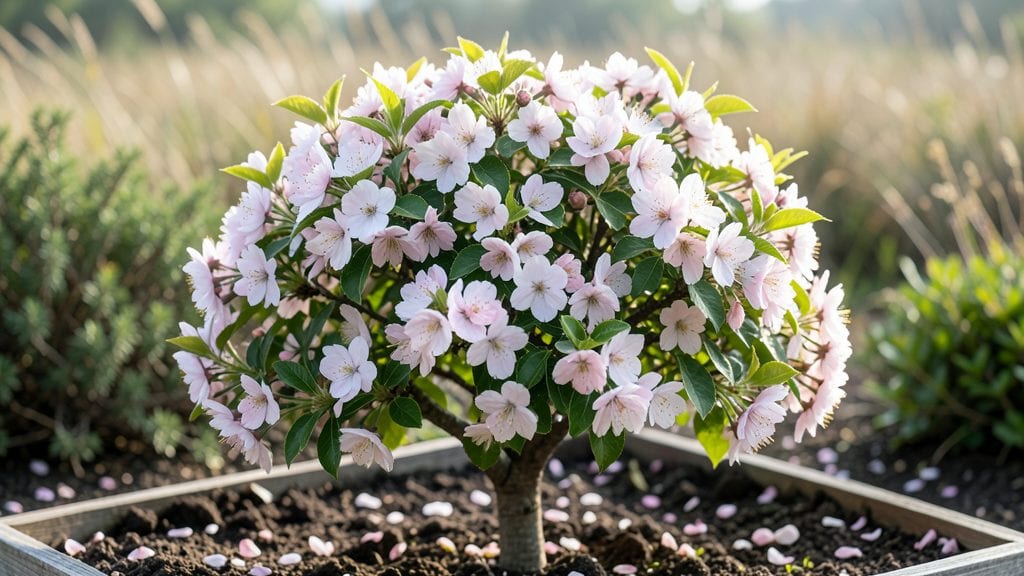
The Juliet dwarf cherry tree transforms your Pacific Northwest yard into a hummingbird magnet with stunning pink blooms and minimal fuss. I planted mine last spring, and within weeks, the air buzzed with tiny visitors—no pruning required beyond the occasional shape-up.
The key is matching its needs to your climate, and I’ve learned exactly how to keep it thriving through all four seasons.
This tree thrives in well-draining soil and full sun, but it’s forgiving—even partial shade works if you’re in a shadier corner. Watering is simple: deep soaks once a week in summer, less in winter.
The dwarf variety stays compact (12–15 feet tall), so it fits small yards perfectly while still feeding hummingbirds from spring through fall. The real magic? Those pink blossoms that appear before leaves, turning your garden into a living postcard.
Pruning is a breeze—just remove dead branches in late winter and shape lightly after flowering. No heavy cuts needed! The tree’s natural form keeps it looking effortless, and with the right care, it produces cherries (though they’re tart and best for birds).
By summer’s end, you’ll have a low-maintenance centerpiece that hummingbirds can’t resist. Ready to make your garden their favorite stop?
Works beautifully in containers too, making it ideal for patios or small spaces. Just ensure proper drainage, and you’ll enjoy years of color and wildlife—without the upkeep of larger trees. Here’s how to get started with confidence.
📚 In This Guide
- What you need
- Instructions
- Tips and common mistakes
- Wrapping up and next steps
What you need
- ● Juliet Dwarf Cherry Tree (1-2 plants, 6-8 ft mature height, Prunus avium ‘Juliet’ cultivar)
- ● Well-draining soil mix (50% native soil + 50% compost or potting mix for planting)
- ● Organic mulch (3-4 inches of shredded bark or pine needles to retain moisture)
- ● Slow-release fertilizer (balanced 10-10-10 or organic option like fish emulsion)
- ● Watering can or hose with a gentle spray nozzle (for deep, infrequent watering)
- ● Bypass pruners (sharp, clean, for clean cuts on small branches)
- ● Loppers (for thicker branches, if needed)
- ● Hand pruners (for fine-tuning and shaping)
- ● Rubbing alcohol or bleach solution (70% isopropyl alcohol or 1-part bleach to 9-parts water to sterilize tools)
- ● Glove (thorn-resistant, like leather or heavy-duty gardening gloves)
- ● Tree stake or support (if planting in windy areas)
- ● Hummingbird-friendly flowers (e.g., penstemon or bee balm for companion planting)
- ● Drip irrigation system (for automated, low-stress watering)
- ○ Pruning sealant (optional, for large cuts to prevent disease)
Step-by-step guide to planting and caring for your Juliet Dwarf cherry tree
This charming tree thrives in the Pacific Northwest’s climate and offers year-round beauty with minimal effort.
Choose the Perfect Planting Location
Select a spot with at least 6 hours of sunlight daily, though Juliet cherries tolerate partial shade better than full sun. In the Pacific Northwest, a location near a fence or building provides wind protection while still allowing good airflow to prevent fungal diseases. The tree’s mature height of 10-15 feet makes it ideal for smaller yards, but ensure it has 8-10 feet of clearance from structures or power lines.
Test your soil’s drainage by digging a hole and filling it with water. If the water doesn’t drain within 2-3 hours, amend the soil with 2-3 inches of compost or sand to improve drainage. Juliet cherries hate soggy roots, so prioritize well-draining soil above all else. In heavy clay soils common to the PNW, consider planting on a slight mound to encourage runoff.
Plant at the Right Time and Depth
Plant your Juliet cherry in early spring or fall, when temperatures are mild (50-70°F). Avoid planting in summer heat or winter frost, as extreme temperatures stress young roots. Dig a hole twice as wide as the root ball but only as deep—planting too deeply suffocates the tree’s roots. Place the tree in the hole so the top of the root ball sits 1-2 inches above ground level.
Backfill the hole with native soil, tamping down gently to remove air pockets. Water deeply to settle the soil and eliminate gaps. Mulch around the base with 2-3 inches of wood chips or bark, keeping it 6 inches away from the trunk to prevent rot. Water again to help the mulch settle and retain moisture.
Water Consistently During the First Year
Water your Juliet cherry deeply once a week during the first growing season, providing 1-2 gallons per watering depending on the tree’s size. Check moisture by sticking your finger 2 inches into the soil)—if it feels dry, water again. Overwatering is the biggest mistake with cherries, so let the top inch of soil dry out between waterings. In the Pacific Northwest’s damp climate, this usually means watering every 5-7 days unless rainfall exceeds 1 inch per week.
Use a soaker hose or drip irrigation to deliver water slowly at the base, avoiding wetting the leaves to reduce disease risk. By the second year, the tree’s roots will establish deeper, and you can reduce watering to every 10-14 days unless experiencing a prolonged dry spell. Yellowing leaves often signal overwatering, while crispy edges indicate underwatering.
Prune for Shape and Health With Minimal Effort
Juliet cherries are low-maintenance, but a little pruning in late winter or early spring keeps them compact and healthy. Remove any dead, diseased, or crossing branches first—these are easy to spot as they lack leaves or have dark spots. Cut just outside the branch collar (the swollen area where the branch meets the trunk) using clean, sharp pruners. Sterilize your tools with rubbing alcohol between cuts to prevent spreading disease.
Shape the tree by thinning out crowded branches to improve airflow. Aim for an open center that lets sunlight reach the inner branches. Juliet cherries produce fruit on both old and new wood, so avoid heavy pruning that removes too many fruiting spurs. Limit pruning to no more than 25% of the tree’s canopy per year to avoid stressing the tree. A light trim in summer after fruiting also encourages bushier growth for next year’s harvest.
Fertilize and Protect for Long-Term Success
Apply a balanced, slow-release fertilizer (10-10-10 or similar) in early spring when new growth begins. Sprinkle the granules evenly around the tree’s dripline (the area under the outer branches) and water deeply to activate them. Avoid fertilizing in fall or winter, as new growth won’t harden off before cold weather. Over-fertilizing leads to excessive leaf growth at the expense of fruit production, so follow package rates precisely.
Protect your Juliet cherry from common PNW pests like aphids and scale by spraying with neem oil or insecticidal soap in early spring and late summer). Monitor for signs of fungal diseases like leaf spot, which appears as dark spots with yellow halos. Remove and destroy infected leaves immediately and apply a copper fungicide if needed. With minimal care, your Juliet cherry will reward you with sweet, tart fruits and year-round hummingbird visits for decades.
Tips & tricks for perfect Juliet Dwarf cherry tree care
Here's what I've learned from years of growing these beautiful trees in the Pacific Northwest.
Location is Everything: When choosing your spot, watch for afternoon shade—Juliet cherries handle partial shade better than full sun, but those 6 hours of sunlight are non-negotiable for fruit production. I always check sunlight patterns for at least a week before planting, especially in urban areas where buildings can cast unexpected shadows. The 8-10 feet clearance around mature trees isn't just about aesthetics—it prevents future headaches with power lines and roof overhangs.
Soil Test First: That 2-3 hour drainage test is your best friend. I've seen too many cherries fail because of soggy roots. If your soil doesn't drain properly, don't just add compost—create a raised bed or mound using native soil mixed with 2-3 inches of sand or gravel at the bottom of the hole. This creates instant drainage while still allowing roots to establish properly.
Mulching Mastery: The 2-3 inches of mulch we add isn't just decoration—it regulates soil temperature and retains moisture. I always use wood chips or bark because they break down slowly, providing nutrients over time. Keep that mulch 6 inches away from the trunk to prevent rot, and refresh it annually. Pro tip: Add a layer of straw on top of your mulch in winter to protect roots from freezing temperatures.
Pruning Precision: When you're pruning in late winter, focus on removing branches that cross or rub against each other—they create wounds that invite disease. I always make my cuts just outside the branch collar, and I never prune more than 25% of the canopy in one year. For the summer trim after fruiting, I just remove any dead wood and thin out a few branches to maintain that open center shape.
Pro Tips for Juliet Dwarf Cherry Tree
- Here's what I've learned from years of growing these beautiful trees in the Pacific Northwest.
- Location is Everything: When choosing your spot, watch for afternoon shade—Juliet cherries handle partial shade better than full sun, but those 6 hours of sunlight are non-negotiable for fruit production.
- Soil Test First: That 2-3 hour drainage test is your best friend.
Frequently asked questions
Got questions about growing and maintaining your Juliet Dwarf Cherry Tree? You’re not alone! Here are some of the most common concerns—and their answers—to help you keep your hummingbird-friendly tree thriving with minimal fuss.
How fast does the Juliet Dwarf Cherry Tree grow, and how big will it get?
The Juliet Dwarf Cherry Tree is a compact beauty, typically reaching 6–8 feet tall and wide at maturity. It grows at a moderate pace (12–18 inches per year), so you won’t need to prune aggressively for years. Perfect for small yards, patios, or even large containers!
When is the best time to prune my Juliet Dwarf Cherry Tree?
Prune your Juliet Dwarf Cherry Tree late winter or early spring (before buds swell) to encourage healthy growth and flowering. Avoid heavy pruning in fall—it can stimulate tender new growth that may not survive winter. A light trim to shape or remove dead branches is fine anytime, but never prune after mid-summer.
Will this tree really attract hummingbirds year-round in the Pacific Northwest?
The Juliet Dwarf Cherry Tree blooms late spring to early summer with fragrant white flowers, a hummingbird magnet. While it’s not ever-blooming, its cherry-like fruit (though not edible for humans) provides late-summer food for birds. Pair it with salmonberry or red currant bushes for extended nectar season.
How do I protect my Juliet Dwarf Cherry Tree from Pacific Northwest rain and wind?
The Juliet Dwarf has moderate drought tolerance once established, but heavy rain can cause root rot in poorly drained soil. Plant it on a slight slope or raised bed if your yard stays soggy. For windy spots, stake young trees for the first 1–2 years. Mulch around the base (but keep it 3–4 inches away from the trunk) to retain moisture and insulate roots.
Are there any alternatives if I want a dwarf cherry tree but fewer pests?
If pests like aphids or birds are a concern, consider the ‘Stella’ Dwarf Cherry (more resistant to cracking) or ‘Compact Stella’ (even smaller, with fewer fruit-related pests). Both still attract pollinators! For a non-fruiting option, try the ‘Cheal’s Weeping’ cherry, though it’s less cold-hardy in the PNW’s wetter zones.
Pro Tip:
If your Juliet’s leaves turn yellow or drop prematurely, it might be iron-deficient (common in acidic PNW soils). Apply a chelated iron supplement in early spring or amend soil with compost. Overwatering can also cause stress—let the top 2 inches of soil dry out between waterings!
Wrapping up and next steps
The Juliet Dwarf Cherry Tree is a dream come true for Pacific Northwest gardeners—offering stunning blooms, minimal pruning needs, and a hummingbird magnet all year long. With its compact size and low-maintenance care, it’s perfect for small spaces or urban gardens while still delivering big rewards. 🌸
Ready to transform your yard into a hummingbird paradise? Start by selecting the perfect spot, gathering your tools, and embracing the joy of nurturing this charming tree. Your feathered friends—and your neighbors—will thank you!