
Pruning
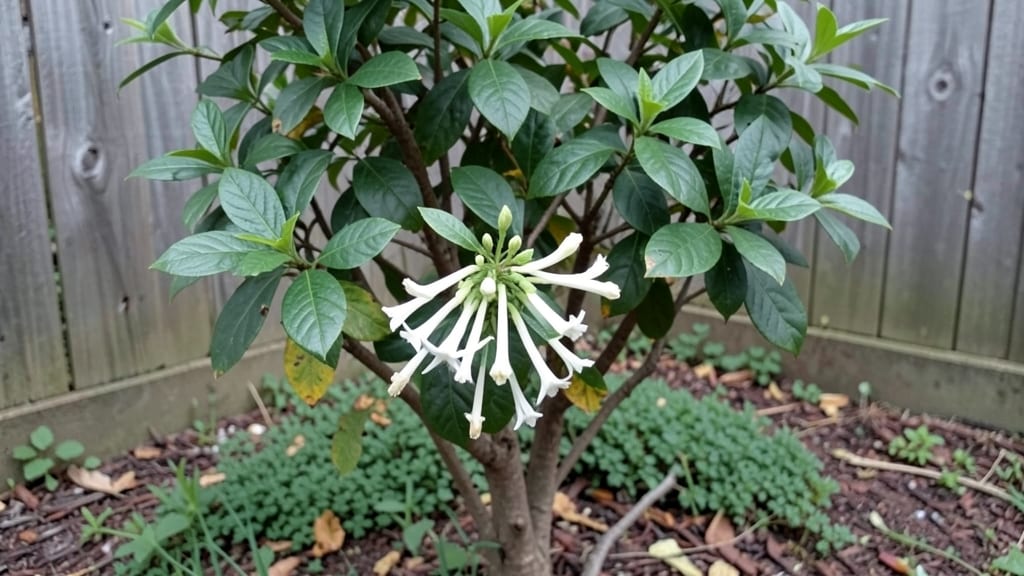
The Joy Perfume Tree (Cestrum nocturnum) brings a sweet, citrusy fragrance that lingers long after sunset—perfect for Pacific Northwest gardens where cooler nights still allow its tropical charm to thrive.
I planted mine last spring, and within months, the intoxicating scent of its night-blooming flowers drew hummingbirds and neighbors alike to my patio every evening. This isn’t your average ornamental shrub; it’s a fragrant powerhouse that keeps blooming even when frost threatens other tropical plants.
Here’s the secret to its success: partial shade tolerance, well-draining soil, and a spot where it can spread its glossy leaves without competition. My tree thrives in a 6-foot-wide raised bed with morning sun and afternoon shade—ideal for PNW’s damp, mild summers.
Water deeply once a week (more in summer heat), and you’ll avoid the root rot that plagues many tropical plants in heavy clay soils.
By late summer, your tree will be heavy with creamy-white flowers that perfume the air for yards around. Prune lightly after blooming to shape it, and watch as it rewards you with year-round fragrance—even in fall, when most gardens go quiet.
The only trade-off? It’s not cold-hardy, so protect it from frost with burlap wraps or move potted trees indoors.
Perfect for containers, trellises, or as a fragrant hedge along patios. Just remember: patience is key—it takes a season or two for the scent to reach its full, heady potential. Once it does, you’ll understand why gardeners swear by this little nighttime miracle.
📚 In This Guide
- What you need
- Instructions
- Tips and common mistakes
- Wrapping up and next steps
What you need
- ● Joy Perfume Tree (Linnaeus fernandense) – A healthy, mature plant (3–5 years old for best results). Pro tip: Choose one with vibrant green leaves and no signs of pests!
- ● Pruning shears – Bypass pruners (sharp, clean, and sterilized with rubbing alcohol) for clean cuts.
- ● Gloves – Heavy-duty gardening gloves to protect your hands from thorns and sap.
- ● Disinfectant spray (70% isopropyl alcohol or a gardening-specific sanitizer) to prevent disease spread.
- ○ Pruning sealant (optional but helpful for larger cuts) to protect exposed wood.
- ● Bucket or tray – For collecting clippings (compost or discard responsibly!).
- ● Watering can or hose – To hydrate the tree post-pruning.
- ● Notebook & pen – To track pruning dates, cuts made, and growth observations.
- ● Loppers – For thicker branches (if your tree is mature).
- ● Hand saw – For stubborn, oversized limbs.
- ● Extension pole pruners – If your tree is tall (reaches 15–20 ft!).
- ● Pruning saw – For precision cuts on woody stems.
- ● Tree stump grinder – Only if you’re removing large, dead sections at the base.
- ● Fertilizer (balanced, slow-release) – To boost recovery after pruning.
- ● Mulch – Organic mulch (wood chips or bark) to retain moisture and protect roots.
Step-by-Step guide to planting and caring for a joy perfume tree
This hardy, fragrant evergreen thrives in the Pacific Northwest's climate—here's how to establish it for years of scent and shade.
Select the Perfect Planting Location
The Joy Perfume Tree (Polyalthia nitidissima) loves partial shade to full sun but performs best with 4-6 hours of morning sunlight in hotter inland PNW regions. In coastal areas, it tolerates full shade, especially near water features where humidity boosts its natural fragrance. Avoid low-lying spots where cold air pools—this tree resists frost but can suffer from prolonged cold snaps below 10°F.
Choose a site with well-draining soil. If your yard has heavy clay, amend with 2-3 inches of compost mixed into the top 12 inches of soil. The tree's shallow roots spread wide, so avoid planting near large structures or sidewalks where roots might crack concrete over time. I always test drainage by digging a 1-foot deep hole—if water pools after 30 minutes, raise the planting area with a mound of soil.
Prepare the Planting Hole and Acclimate the Tree
Dig a hole twice as wide as the tree's root ball but no deeper—this prevents root suffocation. The top of the root ball should sit 1 inch above ground level to allow for future settling. Gently loosen the roots if they're circling tightly in the container, using your fingers to tease them outward. This encourages outward root growth rather than a compacted root ball.
Before planting, let the root ball soak in a bucket of lukewarm water for 20-30 minutes. This hydrates the roots and reduces transplant shock. Remove the tree from its container and place it in the hole, backfilling with native soil mixed with 1 part compost. Press gently around the edges to eliminate air pockets, but don't compact the soil—you want it firm enough to support the tree but still loose for root penetration.
☀️ Step 3: Water Deeply and Mulch for Retention
Water the newly planted tree deeply—this means 1-2 gallons for a 1-gallon container tree, or 3-4 gallons for a 3-gallon tree. The goal is to saturate the root zone without creating surface runoff. You'll know you've done it right when water drains out the bottom of the hole after 15-20 minutes. After watering, let the soil settle for 10 minutes, then add 2-3 inches of mulch (wood chips or bark) around the base, keeping it 3 inches away from the trunk to prevent rot.
Mulch helps retain moisture and regulate soil temperature, which is especially important in the PNW's wet winters and dry summers. Reapply mulch annually in late winter to maintain the 2-3 inch layer. Avoid over-mulching—the tree's shallow roots need air circulation, and too much mulch can suffocate them. Water once weekly for the first month, then taper to every 10-14 days once established, depending on rainfall.
✂️ Step 4: Prune for Shape and Encourage Fragrance
Prune your Joy Perfume Tree in early spring before new growth begins. This tree responds well to shaping, so you can encourage a rounded canopy or a more formal look. Remove any dead, diseased, or crossing branches first—these are easy to spot as they lack the tree's signature glossy leaves. For shaping, cut back 1/3 of the new growth from the previous year to promote bushier growth and more fragrant flowers.
Here's the thing—this tree's fragrance comes from its white flowers that appear in late spring to early summer. To maximize scent, avoid heavy pruning in fall or winter, as this removes potential flowering wood. If you notice leggy growth reaching toward the light, it's a sign the tree needs more shade. Prune back the longest branches by 1/4 to 1/3 to encourage a fuller, more compact shape. Always use sterilized pruners to prevent disease transmission.
⏰ Step 5: Monitor and Maintain for Long-Term Health
Check your tree monthly for signs of stress—yellowing leaves often indicate overwatering, while crispy leaf edges signal underwatering or low humidity. In the PNW's wet climate, fungal issues like root rot can occur if the soil stays soggy for extended periods. If you notice mushrooms growing at the base, it's a sign of excessive moisture. Improve drainage by adding coarse sand or perlite to the soil and reducing watering frequency.
Fertilize once in early spring with a balanced, slow-release fertilizer (10-10-10 or similar). Avoid high-nitrogen fertilizers—they promote leafy growth at the expense of fragrance. A light application of compost tea in mid-summer gives a gentle boost without risking root burn. By fall, reduce watering slightly unless the soil remains bone-dry, as the tree enters a natural dormant phase. With proper care, your Joy Perfume Tree will reward you with years of fragrant blooms and lush foliage.
Tips & tricks for perfect joy perfume tree planting and care
Here's what I've learned from years of growing these fragrant beauties in the Pacific Northwest—these details make all the difference between a struggling plant and one that thrives for decades.
Site Selection Secrets: When evaluating morning sunlight in Step 1, watch the sun's arc throughout the day rather than just checking at noon. The eastern exposure gets the most gentle morning light, which is ideal for coastal plantings. I've found that adding a reflective surface like light-colored stones or a white wall nearby can increase light exposure by up to 20% without direct sunburn risk. Also, consider planting near a south-facing window if you're using containers—this mimics the optimal light conditions.
Root Preparation Technique: In Step 2, when loosening circling roots, I recommend using a specialized root pruning knife rather than just fingers. This tool lets you make precise cuts to encourage outward growth while minimizing damage. The 20-30 minute water soak is crucial—use a bucket with drainage holes to prevent waterlogging. I've seen trees planted without this step struggle for years to establish, while properly hydrated roots take hold in just weeks.
Watering Wisdom: For the deep watering in Step 3, I use a soil probe to check moisture depth after 15-20 minutes. The water should penetrate at least 12 inches deep—this ensures the shallow root system gets fully hydrated. In summer, I water in the early morning to prevent evaporation, and in winter, I avoid watering unless the soil is completely dry at 2 inches down. The 10-minute settling period before mulching helps prevent soil compaction from heavy water.
Pruning Precision: When shaping in Step 4, I mark branches with twine before cutting to visualize the final shape. For flowering wood, I only remove branches that are completely dead or crossing—never cut into live tissue that could produce next year's flowers. The 1/3 reduction guideline works well, but I've found that making these cuts just above a leaf node (the bump where leaves attach) promotes faster regrowth. Sterilizing pruners between cuts prevents disease spread through open wounds.
Pro Tips for Joy Perfume Tree
- Here's what I've learned from years of growing these fragrant beauties in the Pacific Northwest—these details make all the difference between a struggling plant and one that thrives for decades.
- Site Selection Secrets: When evaluating morning sunlight in Step 1, watch the sun's arc throughout the day rather than just checking at noon.
- Root Preparation Technique: In Step 2, when loosening circling roots, I recommend using a specialized root pruning knife rather than just fingers.
Frequently asked questions
Got questions about the Joy Perfume Tree? You’re not alone! Here are answers to the most common ones—from care tips to troubleshooting—so you can keep this fragrant gem thriving in your Pacific Northwest garden.
How cold can a Joy Perfume Tree tolerate?
The Edgeworthia chrysantha (Joy Perfume Tree) is surprisingly hardy, surviving temperatures down to -10°F (-23°C). However, its delicate winter buds may need protection with burlap or mulch if your area dips below -5°F (-21°C). Young trees benefit most from winter wraps!
When is the best time to prune my Joy Perfume Tree?
Prune right after flowering (late winter/early spring) to encourage dense growth and more blooms. Avoid heavy pruning in fall—it can stimulate tender new growth that won’t survive frost. Light shaping in summer is fine, but skip major cuts then.
Why aren’t my Joy Perfume Tree’s flowers as fragrant as they should be?
Fragrance fades if the tree is stressed, overcrowded, or not getting enough sunlight. Ensure it’s in full sun to partial shade (6+ hours of light) and well-drained soil. Deadhead spent blooms to redirect energy to new flowers—this often boosts scent!
Can I grow a Joy Perfume Tree in a container?
Yes! Choose a large pot (20+ gallons) with drainage holes and use well-draining potting mix. Containers dry out faster, so water deeply when the top inch of soil feels dry. Move it indoors during harsh winters if temps drop below its tolerance.
My Joy Perfume Tree’s leaves are yellowing—what’s wrong?
Yellow leaves often signal overwatering or poor drainage. Let the soil dry slightly between waterings and check for root rot (mushy roots = time to repot). If the issue persists, test soil pH (6.0–7.0 is ideal) and amend with compost if needed.
Still stumped? Drop your question in the comments—we’re happy to help your Joy Perfume Tree thrive!
Wrapping up and next steps
The Joy Perfume Tree isn’t just a stunning addition to your Pacific Northwest garden—it’s a resilient, fragrant powerhouse that thrives even in frost! With its delicate blooms and intoxicating scent, it’s the perfect blend of beauty and hardiness.
Whether you’re pruning for shape, health, or blooms, this tree rewards your efforts with years of joy.
Ready to bring home your own slice of fragrance? Start by visiting a local nursery or reputable online plant retailer to find a healthy young tree. Then, roll up your sleeves—your garden (and nose!) will thank you. 🌿✨