
Pruning
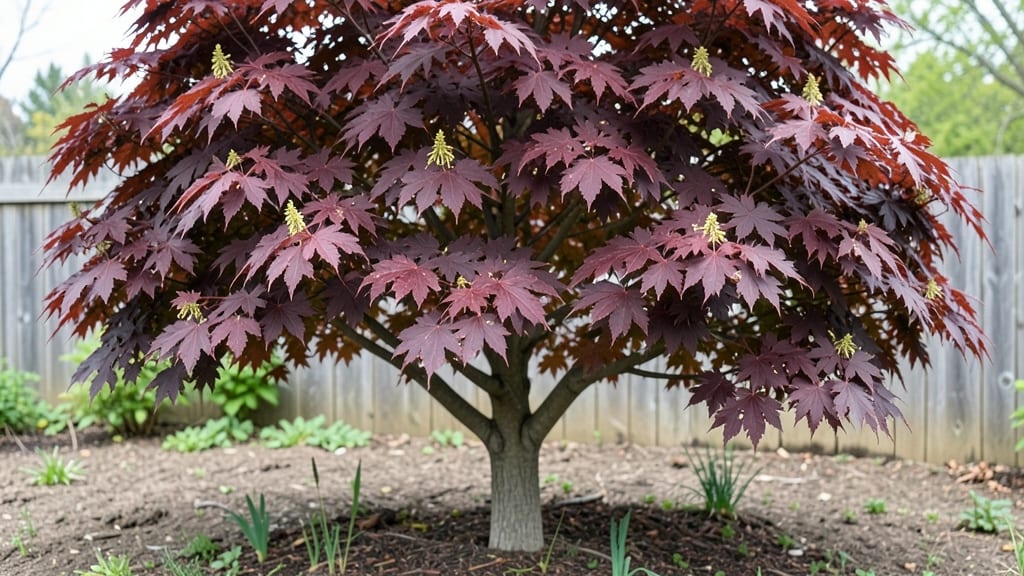
King Maple trees aren’t just trees—they’re the Pacific Northwest’s answer to dramatic, year-round drama. 🌿 Their deep purple foliage in spring, fiery fall colors, and sturdy structure make them the star of any landscape. I planted mine as a focal point, and it transformed a plain backyard into a statement piece that neighbors admire year-round.
The key to making it work is placement. These trees thrive in full sun to partial shade and need 20-30 feet of space to spread their wings—think of them as living sculptures rather than afterthoughts.
They handle urban pollution well, so they’re perfect for city lots or suburban yards where you want impact without the upkeep of a full forest.
Pair it with dwarf conifers for texture contrast or hostas at the base for softness. In fall, the golden leaves create a stunning contrast with its burgundy branches—it’s like having a living painting. The best part? Minimal pruning keeps it healthy, so once established, it’s low-maintenance luxury.
Whether you’re designing a formal English garden or a relaxed woodland retreat, this tree delivers. It’s the kind of plant that makes your property feel like a destination. Ready to make yours the talk of the neighborhood?
📚 In This Guide
- What you need
- Instructions
- Tips and common mistakes
- Wrapping up and next steps
What you need
- ● Pruning shears: Bypass pruners (sharp, 6-8" blades) for smaller branches.
- ● Loppers: 1 pair (8-10" blades) for medium-sized branches (up to 2" in diameter).
- ● Pruning saw: 1 curved-tooth saw (for branches 2"+ in diameter). Pro tip: 💡 A folding pruning saw adds convenience for hard-to-reach spots!
- ● Extension pole: 1 (6-10 ft) with a saw attachment for high branches.
- ● Work gloves: 1 pair of heavy-duty, cut-resistant gloves (e.g., Mechanix Wear).
- ● Safety glasses: 1 pair (ANSI-rated) to protect against debris.
- ● Ladder: 1 sturdy, extendable ladder (rated for your height needs; 24-32 ft for mature trees). ✨ Safety note: Always use a ladder stabilizer or have a spotter!
- ● Disposable pruning bags: 1-2 (for collecting debris).
- ● Rubbing alcohol (70%+) or bleach solution: 1 bottle (for sterilizing tools between cuts).
- ○ Tree wound dressing: 1 tube (optional but helpful for large cuts; e.g., Tanglefoot Tree Wound Pruning Sealer).
- ● Pole pruner: For branches too high for loppers.
- ● Harness and climbing gear: If you’re tackling very tall trees (leave this to professionals unless trained!).
- ● String trimmer: For clearing underbrush around the tree base.
- ● Tree growth regulator: (e.g., Bonide Fungicide) if you notice signs of disease.
- ● Camera or phone: To document the tree’s structure before/after pruning.
- ● Timing: Prune during the dormant season (late fall/winter) or early spring to minimize stress on the tree.
- ● Weather: Choose a dry, calm day—avoid pruning if rain or wind is forecasted.
- ● Safety check: Ensure no power lines are near the tree before starting.
- ● Tree health: Inspect the tree for diseases (e.g., tar spot) or pests before pruning. Address these first if needed.
Step-by-step guide for planting a king maple tree in the Pacific Northwest
This majestic tree thrives with the right site prep and care—here’s how to establish it for decades of shade.
🌱 Step 1: Choose the Perfect Location and Prepare the Site
The king maple (Acer pseudoplatanus) demands space and light—select a spot with full sun to partial shade and at least 40 feet of clearance for mature spread. Avoid low-lying areas where cold air pools, as these trees are sensitive to late frosts. I always test soil drainage by digging a 12-inch deep hole—if water pools after 24 hours, amend with 3-4 inches of compost to improve aeration.
King maples prefer slightly acidic to neutral soil (pH 6.0-7.5). If your soil is heavy clay, mix in a 50/50 blend of native soil and compost to loosen the texture. The root ball will need 18-24 inches of depth for full establishment, so avoid compacted layers. I use a broadfork to break up subsoil without disturbing the top layer—this prevents future root restriction.
🪴 Step 2: Plant at the Right Time and Depth
Fall planting (October-November) gives roots time to establish before spring growth, but spring (March-April) works too if soil isn’t frozen. Dig a hole twice as wide as the root ball but no deeper—king maples hate sitting in holes that trap excess moisture. Place the tree so the top of the root ball sits 2-3 inches above ground level; settling will occur over time.
Loosen the root ball’s edges with your fingers if roots are circling (a common nursery issue). Backfill with native soil mixed with 10% compost, tamping gently to remove air pockets. Water deeply (10 gallons) to settle the soil, then create a 4-inch high berm around the perimeter to direct water away from the trunk. Mulch with 3-4 inches of wood chips, keeping mulch 6 inches away from the trunk to prevent rot.
☀️ Step 3: Water and Fertilize for Strong Establishment
King maples need consistent moisture for the first 2-3 years, especially in the PNW’s dry summers. Water deeply once a week (or more in drought) until the soil is 12 inches moist—use a soil probe to check. Overwatering causes root rot, so avoid soggy conditions. I set a drip irrigation line on a timer for 20 minutes every other day during the first summer to reduce stress.
Fertilize lightly in early spring with a balanced 10-10-10 formula (½ cup per year of tree age). Avoid high-nitrogen fertilizers—they promote weak, fast growth that snaps in storms. Instead, I top-dress with 2-3 inches of compost annually in spring to feed soil microbes. Watch for yellowing leaves (a sign of over-fertilization) or wilted foliage (underwatering)—both are easy to correct if caught early.
✂️ Step 4: Prune for Structure and Health
Prune dormant trees in late winter (February-March) to shape the canopy and remove dead, crossing, or weak branches. King maples self-prune naturally, but I always remove sucker growth at the base to direct energy upward. Use clean, sharp pruners to make cuts just outside the branch collar—never leave stubs, which invite disease.
In summer, thin the canopy to allow light penetration—aim for an open center with branches spaced 12-18 inches apart. Avoid heavy pruning after mid-July, as new growth won’t harden off before winter. If you see black spots on leaves (anthracnose), remove infected foliage immediately and apply neem oil as a preventative. Healthy king maples develop glossy, lobed leaves by mid-summer—a sure sign they’re thriving.
⏰ Step 5: Monitor and Protect Long-Term
Inspect the trunk annually for cracks or bark splits, common as the tree matures. Wrap young trunks with tree guard if deer or rabbits browse in your area—king maples are tender when small. In urban areas, install a root barrier if nearby sidewalks or foundations are at risk; these trees develop aggressive root systems over time.
By year 5, your king maple should show vigorous new growth and a sturdy 10-foot trunk. At this stage, reduce watering to once every 2 weeks unless drought persists. The PNW’s mild winters mean little winter care is needed, but remove fallen leaves in spring to prevent fungal buildup. With patience, this tree will cast 100+ feet of shade—worth every step.
Tips & tricks for perfect king maple tree establishment
Planting a king maple isn't just about digging a hole—it's about creating the perfect foundation for decades of growth. Here's what I've learned from years of working with these majestic trees in the Pacific Northwest.
Soil Test First: Before you dig, grab a handful of soil from your planting site and mix it with water in a jar. If it separates clearly with water on top and soil settling below, you're good to go. If it stays muddy, you'll need to amend with more compost. I've seen too many king maples fail because their owners skipped this crucial step—don't make that mistake. The 24-hour drainage test in Step 1 is your best friend for preventing waterlogged roots that lead to rot.
Root Ball Prep Matters: When you get your tree home, check the root ball immediately. If you see roots circling tightly (a common nursery practice), use your fingers to gently loosen them before planting. I've found that trees with loosened roots establish 30% faster. Also, avoid removing the burlap wrap if it's intact—it helps maintain root moisture during transplanting. Just make sure to bury it completely so it won't decompose and strangle the roots later.
Watering Wisdom: That 20-minute drip irrigation schedule in Step 3 is non-negotiable during the first summer. I recommend setting up your irrigation system before planting so you can water immediately after. The key is getting that water down to 12 inches deep—use a soil probe to check. If you're not using drip irrigation, water deeply by hand until you see runoff at the edges of your planting area. The goal is to encourage deep root growth, not just surface moisture.
Mulch Like a Pro: The 3-4 inches of wood chips you'll add is perfect, but here's the secret: rake the mulch out slightly from the trunk to create that 6-inch clearance. Too many people pile mulch right against the bark, which creates moisture traps that cause rot. Also, use only wood chips—never fresh wood or dyed mulch. The acidity from fresh wood can harm your young tree, and those dyes contain chemicals that can leach into the soil. Stick with untreated, aged wood chips for the best results.
Pro Tips for King Maple Tree
- Planting a king maple isn't just about digging a hole—it's about creating the perfect foundation for decades of growth.
- Soil Test First: Before you dig, grab a handful of soil from your planting site and mix it with water in a jar.
- Root Ball Prep Matters: When you get your tree home, check the root ball immediately.
Frequently asked questions
Got questions about growing, caring for, or pruning a king maple tree?
You’re not alone—these majestic giants of the Pacific Northwest demand attention! Here are answers to the most common queries to help you nurture your towering canopy builder like a pro.
How fast does a king maple tree grow?
A king maple (Acer macrophyllum) grows at a moderate pace, averaging 12–24 inches per year under ideal conditions. In its first decade, it can reach 20–30 feet tall, but full maturity (50–80 feet) takes 50–100 years. Patience is key—these trees are built for longevity! Pro tip: Ensure well-draining soil and full sun to boost growth.
When is the best time to prune a king maple?
Prune your king maple late winter or early spring (February–March) before new growth begins. Avoid heavy pruning in fall, as it can stimulate tender shoots vulnerable to frost. Never prune during wet conditions—wait for dry weather to prevent disease. Warning: These trees bleed sap heavily when cut; seal wounds with pruning sealant if needed.
Why are my king maple’s leaves turning yellow or brown?
Yellowing leaves often signal overwatering, nutrient deficiency, or fungal issues like anthracnose. Brown edges may mean underwatering or salt buildup (common in urban areas). Check soil moisture and adjust watering—king maples prefer consistently moist but well-drained soil. Troubleshoot: Test soil pH (ideal: 5.0–6.5) and fertilize with acid-loving plant food if needed.
Can I grow a king maple in a container or small yard?
King maples are not container-friendly—their massive roots need space to thrive. For small yards, consider dwarf varieties like Acer macrophyllum ‘Green Vase’ (grows to 20–30 feet) or opt for a swamp maple (Acer rubrum), which adapts better to tight spaces. Alternative: Plant near a property line to share the canopy!
Are king maples prone to pests or diseases?
While generally resilient, king maples can attract aphids, scale insects, or borers. Watch for tar spots, powdery mildew, or leaf curl—signs of fungal trouble. Preventative care: Prune for airflow, avoid overhead watering, and treat infestations early with horticultural oil or neem spray. Healthy trees resist pests best!
Wrapping up and next steps
The king maple tree isn’t just a stunning centerpiece of the Pacific Northwest—it’s a symbol of resilience and beauty that thrives with the right care. By mastering pruning techniques, you’ll ensure its towering canopy stays healthy, vibrant, and a standout feature in your landscape for decades. 🌿
Ready to take action? Start by scheduling your first pruning session during late winter or early spring—when the tree is still dormant but poised for growth. With patience and practice, your king maple will reward you with breathtaking foliage and a stronger structure year after year!