Pruning
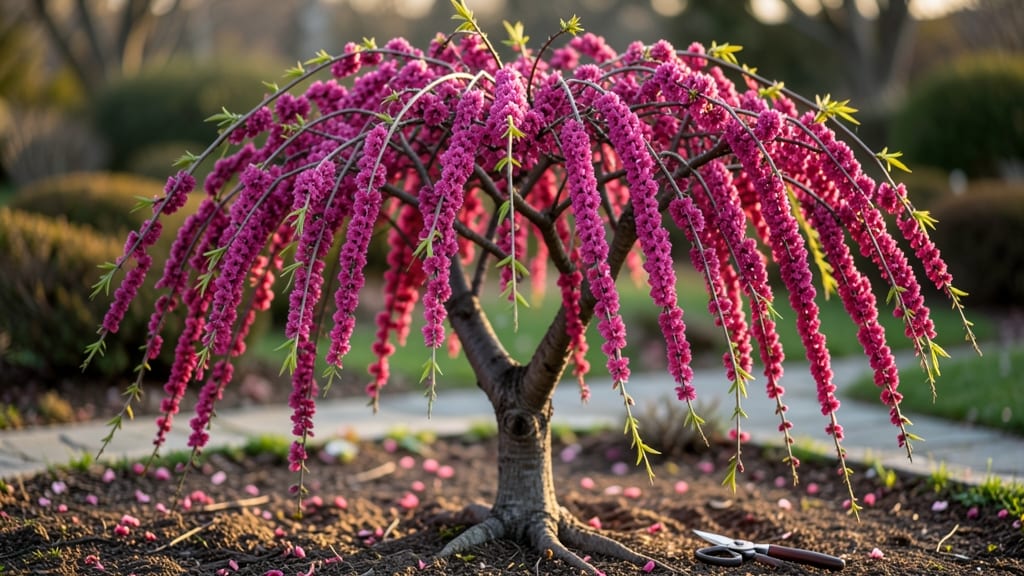
Watch your Japanese weeping cherry tree become a living waterfall of pink and white blooms every spring. 🌸 I learned the hard way that pruning isn’t just about keeping branches in check—it’s about sculpting that graceful weeping habit while ensuring those delicate blossoms return year after year.
The key is timing: late winter, when the tree is still dormant but before buds swell, gives you the perfect window to shape without stressing the tree.
You’ll need sharp pruning shears, a ladder (for those high branches), and a clear day to see what you’re doing. The goal is to maintain that cascading silhouette while thinning out crowded areas—never cutting more than a third of the branches at once.
I’ve seen these trees go from scraggly to showstopping in just one season with the right approach. The result? A tree that looks like it belongs in a Kyoto garden, not just your backyard.
What you’ll end up with is a tree that blooms prolifically, stays healthy, and develops that signature weeping form without looking overpruned. The flowers arrive earlier and last longer, and the branches hold their shape even in windy conditions.
It’s the kind of transformation that makes neighbors stop and ask how you did it—then you can smile and say it’s all in the cuts.
Works for both mature trees and young saplings, though the techniques adjust slightly for size. Whether you’re dealing with a 10-foot specimen or a newly planted 3-foot tree, the principles stay the same. Let’s get those shears ready—your tree’s graceful future starts now.
📚 In This Guide
- What you need
- Instructions
- Tips and common mistakes
- Wrapping up and next steps
What you need
- ● Pruning shears – Bypass pruners (sharp, clean, and 10-12 inches long) for small branches.
- ● Loppers – Long-handled (18-24 inches) for thicker branches (½–1½ inches in diameter).
- ● Pruning saw – Curved-tooth for branches 1½+ inches thick.
- ● Disposable gloves – Garden-grade (nitrile or leather) to protect from thorns and sap.
- ● Rubbing alcohol (70%+) – 1 small bottle for sterilizing tools between cuts.
- ○ Pruning sealant – Optional but helpful for large cuts (>¾ inch) to prevent disease.
- ● Heavy-duty trash bags – 2–3 bags for debris (cherry pits are toxic to pets!).
- ● Ladder – Extension or step ladder (rated for 250+ lbs) if your tree is 8+ feet tall.
- ● Safety glasses – To shield eyes from sap or debris.
- ● Work boots – Slip-resistant for stability on uneven ground.
- ● Notebook & pen – To sketch a pruning map of cuts before you start!
- ○ Water spray bottle – Optional to mist tools and cuts for cleaner cuts.
Step-by-step guide to pruning your Japanese weeping cherry tree
Here's how I shape mine for lush branches and spectacular spring blooms—without stressing the tree.
🌿 Step 1: Prune at the Right Time for Maximum Blooms
Timing matters most with weeping cherries. I always prune right after the tree finishes blooming in spring but before new growth hardens. This gives the tree time to heal before winter. Never prune in fall or winter—you'll risk frost damage to fresh cuts.
Look for the first flush of new leaves after your tree stops flowering. That's your cue to grab the pruners. If you wait too long, the tree will put energy into leaf growth instead of next year's blossoms. I mark my calendar for late April or early May—just as the petals fall.
✂️ Step 2: Remove Dead, Diseased, or Crossing Branches First
Start by scanning the tree for any branches that are dead, diseased, or rubbing against others. These are your priority cuts—they'll improve air circulation and prevent future problems. Use sharp bypass pruners to make clean cuts at a 45-degree angle, about ¼ inch above a bud or lateral branch.
I always work from the bottom up, removing the worst offenders first. If a branch is larger than ½ inch in diameter, I use loppers instead. Never leave stubs—this invites decay. When in doubt, cut smaller—the tree will thank you with healthier growth.
☀️ Step 3: Thin Out Overcrowded Branches for Light Penetration
Weeping cherries need light to reach all branches for even blooming. I focus on thinning out the center of the tree first, removing branches that grow inward or cross others. Aim to let light filter through to the lowest branches—this encourages blooms all the way down.
Step back frequently to visualize the tree's shape. You're not just pruning branches; you're sculpting the silhouette. Remove no more than 25% of the tree's foliage in one season. If you see leggy growth reaching upward, those branches need to go—they'll never produce flowers.
🌱 Step 4: Shape the Tree's Natural Weeping Form
This is where the magic happens. Japanese weeping cherries grow best when their natural weeping habit is encouraged. I gently guide branches downward by selectively pruning upward-growing shoots. Cut these back to a lateral bud to redirect growth in the desired direction.
For a fuller look, I might shorten some of the longer branches by ⅓ to encourage bushier growth at the tips. Never prune more than 10% of a branch's length in one cut—this prevents shock. Watch how the branches naturally cascade, and let that guide your cuts.
💧 Step 5: Clean Up and Protect Your Tree
After pruning, remove all fallen branches and debris from the base of the tree. This prevents disease and pests from taking up residence. I sterilize my pruners with rubbing alcohol between cuts to avoid spreading pathogens.
Apply a thin layer of mulch (like the 3-4 inches you'd use around the base) to retain moisture and protect roots. Water deeply right after pruning to help the tree recover. Avoid heavy fertilizing right after pruning—let the tree focus on healing first.
Tips & tricks for perfect Japanese weeping cherry tree pruning
Pruning your Japanese weeping cherry tree can feel intimidating, but these simple tricks will help you achieve stunning results without stressing the tree.
Timing is Everything: The window for pruning is narrow—late April to early May is critical. I always check for the first flush of new leaves after blooms fall. If you miss this timing, you risk reducing next year's blossoms. Mark your calendar now so you don't forget this crucial step! Between us, I've pruned at the wrong time twice and regretted it when my tree had sparse blooms the following spring.
Tool Prep Matters: Always sterilize your pruners with rubbing alcohol between cuts to prevent spreading disease. I keep a small bottle of alcohol in my gardening toolkit for this exact purpose. Sharp tools make clean cuts at the 45-degree angle mentioned in Step 2, which helps wounds heal faster. Don't make my mistake: using dull tools creates jagged cuts that invite infection.
Visualize Your Tree's Silhouette: Step back frequently during Step 3 to visualize the tree's shape. Imagine light filtering through all branches—this is your goal. I like to sketch a rough outline of what I want before I start cutting. The 25% foliage removal limit is your safety net, so don't exceed it. Remember, you're sculpting, not hacking.
Watering Strategy: After pruning, give your tree a deep watering to help it recover. I use a soaker hose for 20-30 minutes to ensure water reaches deep roots. The 3-4 inches of mulch mentioned in Step 5 will help retain moisture, but don't pile mulch against the trunk—keep it 2-3 inches away to prevent rot. This simple step makes all the difference in helping your tree bounce back.
Pro Tips for Japanese Weeping Cherry Tree
- Pruning your Japanese weeping cherry tree can feel intimidating, but these simple tricks will help you achieve stunning results without stressing the tree.
- Timing is Everything: The window for pruning is narrow—late April to early May is critical.
- Tool Prep Matters: Always sterilize your pruners with rubbing alcohol between cuts to prevent spreading disease.
Frequently asked questions
Got questions about keeping your Japanese weeping cherry tree (Prunus serrulata 'Pendula') thriving? Here are answers to the most common ones—so you can enjoy its elegant blooms year after year!
When is the best time to prune a weeping cherry tree?
The ideal time is late winter or early spring, before new growth begins—but never prune during bloom season (late winter/early spring). Avoid heavy pruning in fall, as it can stimulate tender new growth vulnerable to winter damage. Light shaping in summer is fine, but keep cuts minimal to avoid stressing the tree.
How much can I trim without harming the tree?
For healthy growth, limit pruning to no more than 25% of the tree’s canopy per year. Over-pruning weakens the tree and reduces next year’s blooms. Focus on removing dead, crossing, or crowded branches first. Weeping cherries are delicate—patience and precision pay off with stunning, graceful form!
Why aren’t my weeping cherry branches blooming as much as they used to?
Bloom reduction often stems from over-pruning, nutrient deficiencies, or stress (like drought or poor soil). Ensure your tree gets well-draining soil, regular watering, and a balanced fertilizer in early spring. Avoid heavy pruning near flowering buds—these form on last year’s wood!
Can I grow a weeping cherry tree in a container?
Yes! Choose a large, sturdy container (at least 20+ gallons) with drainage holes and use a light, airy potting mix. Container-grown weeping cherries need frequent watering and winter protection (move to a sheltered spot or wrap the pot in burlap). Just know they’ll need more pruning to control size and shape.
What pests should I watch for on my weeping cherry tree?
Common pests include aphids, scale insects, and borers. Inspect leaves and bark regularly—look for sticky residue (aphids), bumps on branches (scale), or sawdust-like frass (borers). Treat early with neem oil or insecticidal soap. Healthy trees are less vulnerable, so prioritize proper pruning and care!
Wrapping up and next steps
The Japanese weeping cherry tree is a breathtaking symbol of elegance and resilience, and with the right pruning techniques, you can nurture its beauty for years to come. 🌸 From shaping its graceful branches to encouraging vibrant blooms, every snip is an investment in its long-term health and charm.
Whether you're a seasoned gardener or just starting out, the key is patience, precision, and a deep appreciation for nature’s artistry.
Ready to transform your garden? Grab your tools, roll up your sleeves, and give your weeping cherry tree the care it deserves—your future blooms will thank you! For more inspiration, explore seasonal pruning guides or connect with local gardening communities to share your progress. Happy pruning! ✂️🌿