
Watering
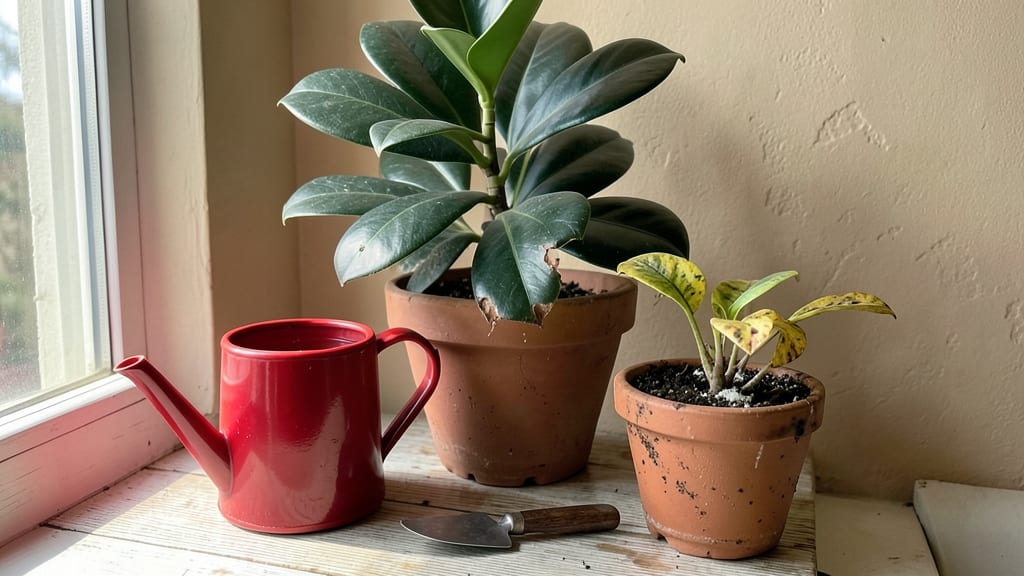
Learn how to tell if a tree is overwatered or underwatered—those wilting or yellowing leaves might be screaming for your attention before it’s too late.
I've diagnosed more watering woes than I can count, and the first step is always checking the leaves for yellowing, browning, or wilting patterns that reveal the truth.
Overwatered trees often show up with yellow leaves that stay attached, while underwatered trees develop crispy brown edges and may wilt by midday. The soil tells the rest: overwatered roots sit in soggy, anaerobic conditions, while thirsty roots pull away from dry soil.
My trick? Stick your finger 2-3 inches deep—if it's damp, hold off on watering; if it's bone dry, it's time to hydrate.
You'll quickly spot the difference once you know what to look for: overwatered trees may have mushrooms sprouting at their base, while underwatered ones show new growth only at the tips of branches.
The fix is simple—adjust your watering schedule to match your tree's needs, and you'll see healthier leaves and firmer soil within weeks.
This works for both deciduous and coniferous trees, though evergreens often show stress more slowly. Keep a journal of your watering dates and leaf conditions—it's the best way to catch problems early. Your tree's survival might depend on it.
📚 In This Guide
- What you need
- Instructions
- Tips and common mistakes
- Wrapping up and next steps
What you need
- ● Garden trowel or small shovel – For digging a shallow hole (6–12 inches deep) near the tree’s drip line.
- ● Moisture meter (digital or analog) – A soil moisture sensor (e.g., blank">Xiaomi Smart Soil Moisture Meter or blank">Blumax Soil Moisture Tester) for precise readings.
- ● Gloves (gardening or nitrile) – To protect your hands from dirt, thorns, or sharp tools.
- ● Notebook & pen – To record observations like leaf color, soil texture, and moisture levels.
- ● Watering can or hose with adjustable nozzle – If you’re testing adjustments (e.g., deep watering vs. surface watering).
- ○ Magnifying glass (optional but helpful) – For closely inspecting leaf edges, discoloration, or fungal spots.
- ● pH test kit – To check if soil pH (too acidic/alkaline) might be affecting water absorption.
- ● Camera or smartphone – To document symptoms before/after watering changes.
- ● Tree identification guide or app (e.g., PictureThis) – If you’re unsure of your tree species (water needs vary!).
- ● Mulch (organic, like wood chips) – For improving soil retention if underwatering is confirmed.
How to diagnose tree water stress: leaf and soil checkpoints
Trees rarely scream for help, but their leaves and soil tell all—here’s how to read the signs.
Examine Leaf Color for Early Warning Signs
Start by inspecting the upper canopy first, where stress shows up earliest. Healthy leaves are a deep, vibrant green—dull yellowing signals overwatering, while dry, crispy brown edges scream thirst. I always check the newest growth first; if those leaves are wilting or curling, your tree is begging for moisture.
Yellowing between leaf veins (a condition called chlorosis) often points to overwatering or poor drainage. If the entire leaf turns yellow and drops, that’s usually underwatering. Pro tip: Look at the underside of leaves—mold or fungal growth means excess moisture is causing rot.
Test Soil Moisture with a Simple Touch Check
Stick your finger 2-3 inches deep into the soil around the tree’s drip line (that’s the edge of the canopy’s shadow). If the soil feels soggy or slimy, your tree is drowning. Overwatered roots suffocate, turning brown and mushy when exposed. On the flip side, if the soil is bone-dry or crumbles like dust, your tree’s roots are desperate for water.
I like to use a wooden skewer for deeper testing—push it 6 inches down near the roots. If it comes out clean, water immediately. If it’s damp but not wet, hold off for another day. Remember: clay soil stays wet longer than sandy soil, so adjust your expectations.
Check Leaf Texture for Hidden Stress Signals
Grab a handful of leaves and give them a gentle squeeze. Plump, flexible leaves mean your tree’s hydrated. Leathery or brittle leaves? That’s underwatering. Overwatered leaves often feel soft and spongy, almost like they’re bruising under pressure. If leaves crunch when folded, they’re dehydrated.
Pay attention to leaf drop patterns. A few leaves falling in summer is normal, but sudden, widespread shedding—especially if paired with yellowing—means water stress. I’ve seen trees drop entire branches overnight after a heavy watering binge, so don’t ignore these clues.
Inspect the Trunk and Root Zone for Damage
Kneel down and peer at the base of the trunk. Overwatered trees often develop mushy, discolored bark near the soil line, a sign of fungal rot. If the bark feels soft or peels away easily, roots are rotting. For underwatered trees, the bark might crack or pull away from the trunk as the wood shrinks.
Gently lift a small section of mulch (if present) and check the root color. Healthy roots are white or tan, while black, slimy roots mean overwatering. If roots look dry and brittle, your tree isn’t getting enough to drink. Never water again until the soil around those roots feels moist to the touch.
Adjust Watering Based on Season and Tree Type
Young trees or shallow-rooted species (like maples or willows) need frequent, deep watering—think 1-2 inches per week during dry spells. Mature trees with deep roots (oaks, pines) can handle longer dry spells but need slow, deep soakings every 2-3 weeks. I always water early in the morning to reduce evaporation and fungal risks.
Real talk: most people overwater. Trees in containers or compacted soil dry out faster, so check those daily in summer. If your tree’s leaves are cupping upward (like a bowl), it’s thirsty. If they’re drooping but still plump, it’s probably just heat stress—water deeply and watch for recovery in a few hours.
Tips & tricks for diagnosing tree water stress
Here's what nobody tells you about reading your tree's silent water distress signals—these tricks will help you become a plant whisperer.
Leaf Underside Inspection: The undersides of leaves often show the first signs of trouble. In Step 1, when checking for yellowing, flip the leaf over—mold or white fungal spots on the underside mean you're overwatering. I've seen this on maples and birches where owners thought they were being careful with watering. The underside is like a secret message board from your tree.
Seasonal Adjustments Matter: In Step 5, when adjusting watering schedules, remember that summer heat and winter dormancy change everything. During summer, check soil moisture daily for container trees, but in winter, most trees need far less water. I learned this the hard way after losing a young oak to root rot during a rainy winter—it was already dormant and couldn't handle the excess moisture.
Root Zone Depth Check: For deeper testing in Step 2, use a clean screwdriver instead of a wooden skewer—it gives you more precise depth control. Push it 6 inches down near the drip line (not the trunk) and observe the soil color. Healthy soil should show some moisture but not be soggy. I've found that clay soils often appear damp when they're actually fine—tap the sides of the hole to see if it crumbles easily.
Bark Texture Tells All: When inspecting the trunk in Step 4, pay special attention to the bark's texture near the soil line. Healthy bark should feel firm and slightly rough. If it's soft, spongy, or peels away easily, that's a clear sign of overwatering. I've seen this on willows and poplars where owners thought they were being gentle with their watering routine.
Pro Tips for Tell If A Tree Is Overwatered Or Underwatered
- Here's what nobody tells you about reading your tree's silent water distress signals—these tricks will help you become a plant whisperer.
- Leaf Underside Inspection: The undersides of leaves often show the first signs of trouble.
- Seasonal Adjustments Matter: In Step 5, when adjusting watering schedules, remember that summer heat and winter dormancy change everything.
Frequently asked questions
How often should I water my tree to avoid overwatering or underwatering?
Watering frequency depends on your tree type, soil, and climate. As a general rule, deep watering once or twice a week (1-2 inches of water per session) is better than frequent shallow watering. Check soil moisture 2-3 inches below the surface—if it’s dry, water again. Adjust for extreme heat, drought, or heavy rainfall.
My tree’s leaves are yellowing—could it be from overwatering or underwatering?
Yellow leaves can signal both issues! Overwatered trees often have soggy soil, yellowing leaves with brown edges, and a foul smell. Underwatered trees show dry, crispy edges, wilting, or leaves curling inward. Dig near the roots to check soil moisture—if it’s damp but leaves are yellow, overwatering’s likely. If dry, it’s thirsty!
How long does it take to fix an overwatered or underwatered tree?
Recovery time varies. For overwatered trees, stop watering immediately, improve drainage (add compost or sand), and prune affected leaves. Underwatered trees may bounce back in 1-2 weeks with consistent deep watering. Severe cases (root rot or extreme drought stress) could take months or even years—prevention is key!
Are there alternatives to traditional watering methods for trees?
Try mulching (2-4 inches of organic mulch) to retain moisture, drip irrigation for slow, targeted watering, or soaker hoses to deliver water directly to roots. For large trees, deep watering with a hose or irrigation tube encourages deeper root growth. Avoid sprinklers—they waste water and promote fungal growth.
What should I do if my tree’s bark is soft or peeling due to overwatering?
Soft, mushy bark or peeling is a red flag for root rot, often caused by overwatering. Act fast:
- Stop watering immediately.
- Improve drainage by amending soil with perlite or compost.
- Prune dead or diseased branches to prevent spread.
- If rot is severe, consult an arborist—some trees may need removal to save nearby plants.
Wrapping up and next steps
Mastering the art of tree care is all about paying attention—whether it’s to the color, texture, or health of leaves or the condition of the soil.
By now, you’ve got the tools to spot the signs of overwatering or underwatering like a pro! 🌱💧 Remember, every tree is unique, so stay patient and observant as you fine-tune your watering routine.
Ready to take the next step? Adjust your watering schedule based on what you’ve learned, and don’t forget to check soil moisture regularly to keep your tree thriving. Happy gardening!