
Pruning
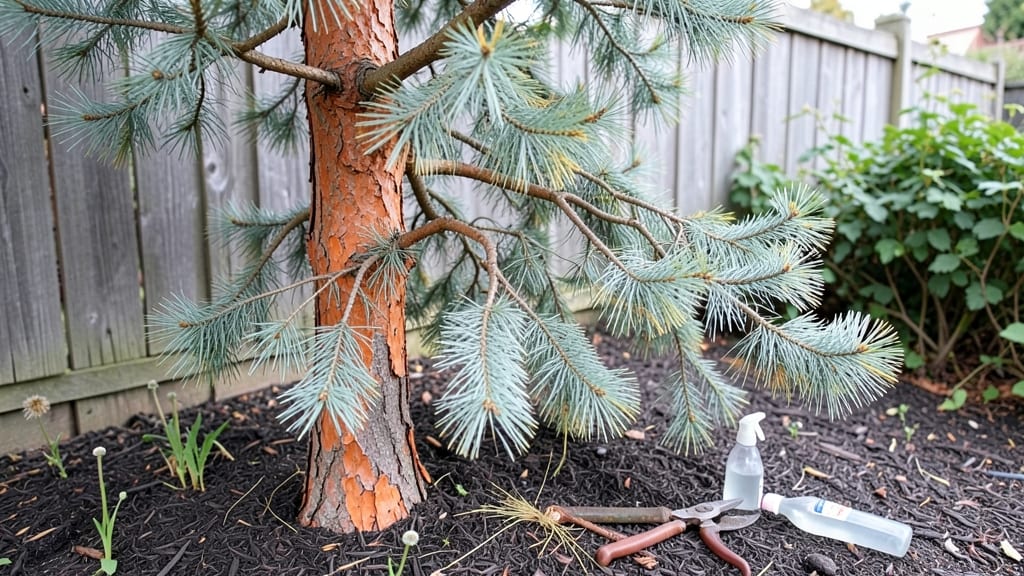
Pruning a pine tree isn’t just about shaping—it’s about healthy growth and preventing disease. I’ve learned the hard way that cutting at the wrong time or in the wrong way can stress these evergreens for years.
The key is timing: late winter or early spring, when new growth starts but before the heat sets in.
You’ll need sharp bypass pruners, a clean saw for thicker branches, and a ladder if your tree’s over 6 feet tall. Safety first: wear gloves and eye protection—pine needles and sap aren’t just prickly, they’re stubborn.
Start by removing dead branches first; they’re the easiest to spot and the most important to cut.
What you’ll end up with is a tree that looks fuller from the ground up, with fewer brown patches and more vibrant green needles. Proper pruning encourages stronger branches and keeps the tree’s natural shape intact. The best part? You’ll spot fewer pests and diseases creeping in when you’re consistent.
This works for all pine varieties—from dwarf pines in your yard to towering evergreens in the landscape. Just remember: never cut more than 25% of the tree’s branches in one season, or you’ll shock it. Now grab your tools and let’s get started!
📚 In This Guide
- What you need
- Instructions
- Tips and common mistakes
- Wrapping up and next steps
What you need
- ● Pruning shears or loppers – Choose bypass pruners (for small branches, ¼”–¾” thick) or loppers (for branches ¾”–2” thick). Look for sharp, stainless-steel blades to avoid crushing.
- ● Pole saw or pruning saw – For higher branches (3”–6” thick). A folding saw with a fine-tooth blade works best for pine needles.
- ○ Hand saw or chainsaw (optional) – Only for large, thick branches (3”+). If using a chainsaw, wear protective gear (see below).
- ● Gloves – Heavy-duty work gloves with cut-resistant palms to protect from sap and splinters.
- ● Ladder or extension pole – A stable, non-slip ladder (rated for your weight + tools) or a 16–24 ft. telescoping pole for overhead branches.
- ○ Disposable pruning sealant (optional but helpful) – A wound dressing (like Tanglefoot Tree Wound Pruning Sealer) to coat cuts and reduce pest entry.
- ● Safety glasses – Protects eyes from pine sap, debris, and sawdust.
- ● Long sleeves & pants – Thick, synthetic fabric (avoid cotton—it holds sap!).
- ● Ear protection (if using a chainsaw) – Earmuffs or plugs to guard against noise.
- ● First-aid kit – For sap burns, cuts, or allergic reactions (pine sap can irritate skin!).
- ● Heavy-duty trash bags – For collecting clippings and needles (pines produce lots of debris!).
- ● Rake or leaf blower – To clear fallen needles before and after pruning.
- ● Hose or bucket of water – For rinsing tools and cleaning up sap.
- ○ Marking spray or flags (optional) – To tag branches to remove if working with a team.
Step-by-step instructions for pruning a pine tree
Here's how I keep pine trees thriving with precise cuts that encourage strong growth.
Choose the Right Time for Pruning
Pine trees respond best to pruning in late winter or early spring, just as new growth begins. This timing allows the tree to heal before summer heat stress. Avoid pruning in fall—it leaves wounds vulnerable to disease over winter. I always check for fresh, green needles in early spring as my signal that it's safe to prune.
Never prune during drought or extreme heat. Pine trees are sensitive to stress, and summer cuts can scorch the branches. If you must prune in summer, do it on a cloudy day to reduce sun exposure. Wait until the tree has established strong root growth before making any cuts.
Gather the Right Tools
Use sharp, clean pruning shears for small branches under ¼ inch in diameter. For thicker branches, a pruning saw with a fine-tooth blade prevents tearing. I disinfect my tools with rubbing alcohol between cuts to prevent spreading disease. Dull tools crush branches instead of making clean cuts, which invites rot.
Wear gloves—pine needles can be sharp, and sap may irritate skin. A ladder or pole pruner is essential for higher branches. Never stand on the tree itself; it can damage limbs and put you at risk of falling. I always test my ladder's stability before climbing, especially on uneven ground.
Identify and Remove Dead or Diseased Branches
Start by removing dead, broken, or diseased branches—these are the easiest cuts and prevent further damage. Dead branches are dry, brittle, and often brown or gray. Diseased branches may have discolored needles, oozing sap, or fungal growth. Cut these back to the main trunk or a healthy lateral branch using a 45-degree angle to encourage water runoff.
If a branch is less than 3 feet from the trunk, remove it entirely to reduce wind resistance and improve airflow. For larger branches, make the cut just outside the branch collar—the swollen area where the branch meets the trunk. Never leave stubs; they trap moisture and invite decay.
Thin the Canopy for Better Airflow
Pine trees need good airflow to prevent fungal diseases. Focus on removing branches that cross or rub against others. Start at the outer edges of the tree and work inward. Remove no more than 25% of the foliage in one season—this prevents shock. I look for branches growing inward at a sharp angle; these are prime candidates for removal.
Use the "one-third rule" for thinning: If a branch is one-third the diameter of the trunk, it’s too large to remove without professional help. For smaller branches, cut back to a lateral branch or bud facing outward. This encourages upward growth and a fuller shape. Avoid "topping" the tree—cutting the top flat—it creates weak, unsightly regrowth.
Shape and Maintain the Tree’s Natural Form
Pine trees grow best when pruned to maintain their natural pyramidal shape. Avoid over-pruning the top, which can cause the tree to grow unevenly. Instead, focus on light shaping—removing only the most problematic branches. I never remove more than 10% of the tree’s height in a single pruning session.
After pruning, inspect the tree for sunburned or exposed wood. If large cuts leave raw wood, apply pruning sealant to protect against pests and disease. Water the tree deeply afterward, especially if pruning during dry weather. Mulch around the base with 2-3 inches of organic mulch to retain moisture and regulate soil temperature.
Tips & tricks for pruning a pine tree
Pruning a pine tree properly can transform its health and appearance—here's what I've learned over years of keeping my trees thriving.
Timing is Everything: The late winter/early spring window is critical because it gives your pine tree time to heal before summer's heat stress. I've seen trees stressed by summer pruning develop sunburned patches that took years to recover from. If you must prune in summer, do it on cloudy days when temperatures are cooler to minimize stress on the tree.
Tool Preparation Matters: Sharp tools are non-negotiable—I've ruined several cuts trying to use dull pruning shears that crushed branches instead of making clean cuts. Always disinfect your tools between cuts with rubbing alcohol to prevent spreading disease from one branch to another. For branches over ¼ inch thick, use a fine-tooth pruning saw to avoid tearing the bark.
Cutting Technique for Health: When removing branches, always cut just outside the branch collar—the swollen area where the branch meets the trunk. This ensures proper healing and prevents unsightly stubs that trap moisture. For branches less than 3 feet from the trunk, remove them entirely to improve airflow and reduce wind resistance. I've found that making 45-degree angled cuts helps water runoff, which prevents rot.
Thinning Strategy: The one-third rule is my go-to for thinning—if a branch is one-third the diameter of the trunk, it's too large to remove safely without professional help. For smaller branches, cut back to a lateral branch or outward-facing bud to encourage upward growth. Remember, never remove more than 25% of the foliage in one season to avoid shocking the tree.
Pro Tips for Prune A Pine Tree
- Pruning a pine tree properly can transform its health and appearance—here's what I've learned over years of keeping my trees thriving.
- Timing is Everything: The late winter/early spring window is critical because it gives your pine tree time to heal before summer's heat stress.
- Tool Preparation Matters: Sharp tools are non-negotiable—I've ruined several cuts trying to use dull pruning shears that crushed branches instead of making clean cuts.
Frequently asked questions
Got questions about pruning pine trees? You’re not alone! Here are some of the most common concerns—and their answers—to help you prune with confidence.
Can I prune a pine tree at any time of year?
Pruning is best done in late winter or early spring (before new growth starts) to avoid stressing the tree. Avoid heavy pruning in summer or fall, as it can increase susceptibility to pests and disease. Light shaping (like removing dead branches) can be done year-round, but major cuts should wait for the dormant season.
Will pruning my pine tree hurt it?
When done correctly, pruning helps pine trees by removing dead, diseased, or overcrowded branches. However, over-pruning (cutting more than 20-25% of the foliage at once) can stress the tree. Pines are slow to recover, so take it slow and focus on selective cuts.
How do I know if I’m pruning too much?
Signs of over-pruning include yellowing needles, stunted growth, or excessive sap production. Pines rely on their foliage for photosynthesis, so avoid aggressive thinning. A good rule: Never remove more than 1/3 of the tree’s branches in a single session. If in doubt, err on the side of caution!
Can I prune a young pine tree the same way as a mature one?
Young pines (under 5 years old) need minimal pruning—focus on removing only dead or damaged branches. Mature trees can handle more shaping, but avoid heavy cuts near the trunk. For young trees, prioritize air circulation and sunlight access to prevent disease.
What if my pine tree starts bleeding sap after pruning?
Some sap oozing is normal, but excessive bleeding can weaken the tree. To minimize it, use sharp, clean tools and make cuts just outside the branch collar (the swollen base where the branch meets the trunk). Seal cuts with pruning sealant only if the tree is large or the cut is significant. Most pines recover fine with proper aftercare!
Wrapping up and next steps
Pruning your pine tree doesn’t have to be intimidating—with the right tools, timing, and technique, you can promote healthier growth, improve airflow, and keep your tree looking its best. 🌲✨ Whether you’re tackling dead branches in winter or shaping your tree in early spring, remember: patience and precision go a long way.
Now that you’re armed with knowledge, grab those pruners and give your pine tree the care it deserves—your future self (and your tree!) will thank you.
Ready to take the next step? Check out our guide on maintaining other evergreen trees or explore seasonal tree care tips to keep your landscape thriving year-round!