
Size
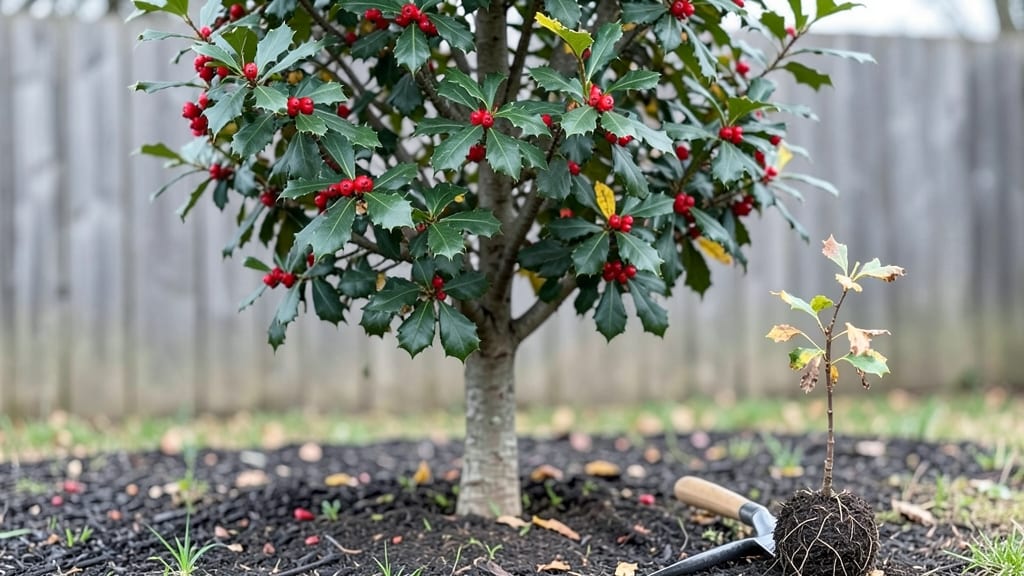
Growing a holly tree means adding year-round structure and color to your yard—those glossy leaves and bright berries are worth every bit of effort. 🌿 I learned the hard way that holly thrives with patience, but once established, it’s one of the most rewarding evergreens you can grow.
The key starts with the right spot: holly loves morning sun and afternoon shade, especially in hotter climates where leaves can scorch.
You’ll need well-draining soil mixed with compost—holly hates soggy roots—and a planting hole twice as wide as the root ball. Most varieties, like Ilex opaca (American holly) or Ilex aquifolium (English holly), grow 6–12 feet tall, so space them accordingly.
Water deeply after planting, then taper off to once a week once established, unless your summer is bone-dry.
Pruning in late winter keeps holly bushy and berry-producing, while fertilizing in early spring gives it the boost it needs. The payoff? Shiny foliage year-round, dramatic winter berries, and a tree that birds adore. Even in winter, your yard will feel alive with holly’s classic charm.
Works for sunny borders, privacy screens, or even large containers—just pick a variety that fits your space. Let’s get those roots settled for a lifetime of beauty.
📚 In This Guide
- What you need
- Instructions
- Tips and common mistakes
- Wrapping up and next steps
What you need
- ● Holly tree: Choose between: Seeds (from fresh berries—requires stratification)
- ● Saplings (1–3 ft tall, from a local nursery)
- ● Mature trees (5–10 ft, for instant curb appeal)
- ● Planting site: Well-draining soil (holly hates soggy roots!)
- ● Sunlight: 6+ hours/day (partial shade for southern climates)
- ● Space: 15–25 ft apart (depending on variety)
- ● Soil amendments (if needed): Compost (2–3 gallons) for nutrient-rich soil
- ● Peat moss or pine bark (1–2 bags) for acidity (pH 4.5–6.0)
- ● Mulch: 3–4 inches of pine straw or shredded bark (keeps roots cool and moist)
- ● Watering can or hose: 5-gallon capacity (for deep watering)
- ● Trowel or spade (for digging)
- ● Garden gloves (to protect your hands)
- ● Pruning shears (for shaping)
- ● Soil pH tester (to check acidity)
- ● Tree stake & ties (for young saplings in windy areas)
- ● Fertilizer (balanced 10-10-10 or acidic holly-specific formula)
- ● Drip irrigation system (for consistent watering)
Step-by-step guide to planting and cultivating a holly tree
Holly trees thrive with the right conditions—here’s how to establish them for lush, year-round greenery.
🌱 Step 1: Choose the Right Location and Soil Conditions
Holly trees prefer full sun to partial shade, ideally 6+ hours of direct sunlight daily. I always pick a spot with well-draining soil—holly hates soggy roots. Test your soil by digging a 6-inch hole and checking for water retention; if it stays wet for more than a few hours, amend with compost or sand to improve drainage.
Acidic soil (pH 5.0-6.0) is ideal, so if your yard’s soil is alkaline, mix in peat moss or sulfur before planting. Holly trees grow best in USDA Hardiness Zones 5-9, so verify your climate matches their cold tolerance—some varieties handle frost better than others.
🪴 Step 2: Plant Your Holly Tree at the Right Depth and Spacing
Dig a hole twice as wide as the root ball but only as deep—holly roots spread horizontally, not downward. Gently remove the tree from its container and loosen any circling roots with your fingers. Place the tree in the hole so the top of the root ball sits level with the surrounding soil—burying too deep suffocates the trunk.
Space 4-6 feet apart for single-stemmed holly or 6-8 feet if planting a multi-stemmed variety. Backfill with native soil mixed with compost to encourage root establishment. Water deeply to settle the soil and eliminate air pockets, then add a 2-3 inch layer of mulch (avoid touching the trunk) to retain moisture and regulate temperature.
☀️ Step 3: Water Consistently and Fertilize for Strong Growth
Water deeply once a week during the first growing season, ensuring the soil stays moist but not waterlogged. Holly trees develop deep roots, so 1 inch of water per week (including rainfall) is ideal. You’ll know it’s right when the top 2 inches of soil feel damp—probe with your finger to check.
Fertilize in early spring with a balanced, slow-release fertilizer (10-10-10 or similar). Avoid high-nitrogen blends—holly prioritizes foliage over fruit, and too much nitrogen weakens wood structure. Apply fertilizer 6 inches away from the trunk and water thoroughly to distribute nutrients into the soil.
✂️ Step 4: Prune for Shape and Health Year-Round
Prune holly in late winter or early spring before new growth appears. Remove dead, diseased, or crossing branches first—holly responds well to shaping but dislikes aggressive cuts. Thin out crowded branches to improve airflow, which prevents fungal issues like anthracnose (common in humid climates).
For ornamental holly, trim back overgrown branches by ⅓ to encourage bushier growth. Never prune in fall—new growth won’t harden off before winter, leaving tender shoots vulnerable to frost. Wear gloves; holly leaves and berries can irritate skin.
🌿 Step 5: Monitor for Pests and Seasonal Care
Holly trees are generally pest-resistant, but scale insects and spider mites occasionally appear. Spray with neem oil or insecticidal soap if you spot sticky residue (honeydew) or webbing. I check leaves monthly in summer—early intervention prevents infestations from spreading.
In fall, apply a thin layer of mulch (2-3 inches) to insulate roots from freezing temperatures. Water sparingly in winter unless there’s a prolonged dry spell—holly trees enter dormancy and need less moisture. Watch for browning leaves, a sign of winter burn, and protect young trees with burlap wraps if your winters are harsh.
Tips & tricks for perfect holly tree cultivation
These tried-and-true insights will help you avoid common pitfalls and nurture a thriving holly tree that stays lush year-round.
Soil Preparation: Before planting, I always dig a 6-inch hole to test drainage—if water pools for more than an hour, mix in equal parts compost and coarse sand to create ideal well-draining conditions. For alkaline soils, blend in 2-3 inches of peat moss per cubic foot of soil to gradually lower the pH toward that 5.0-6.0 sweet spot holly craves.
Root Ball Handling: When removing your holly from its container, gently tease apart any circling roots with your fingers—this prevents girdling as the tree matures. I also soak the root ball for 10-15 minutes before planting to hydrate the roots, which gives them a head start in their new home. The key is to handle roots like you would delicate glassware: firm but never rough.
Pruning Precision: When trimming back overgrown branches by ⅓ in Step 4, always cut just above a leaf bud or outward-facing branch. This encourages new growth in the right direction. I use clean, sharp pruners and make cuts at a 45-degree angle about ¼ inch above the bud—this prevents water from pooling on the cut and causing rot. Never remove more than ⅓ of the tree's foliage in one season, or you'll shock the plant.
Seasonal Care Calendar: Create a simple checklist: Spring (fertilize + first deep watering), Summer (monthly pest checks + consistent watering), Fall (add mulch + reduce watering), Winter (protect young trees). I mark my calendar with these seasonal milestones to ensure I'm always one step ahead of my holly's needs.
Pro Tips for Grow A Holly Tree
- These tried-and-true insights will help you avoid common pitfalls and nurture a thriving holly tree that stays lush year-round.
- Soil Preparation: Before planting, I always dig a 6-inch hole to test drainage—if water pools for more than an hour, mix in equal parts compost and coarse sand to create ideal well-draining conditions.
- Root Ball Handling: When removing your holly from its container, gently tease apart any circling roots with your fingers—this prevents girdling as the tree matures.
Frequently asked questions
Got questions about growing a holly tree?
Here are some of the most common ones—and their answers—to help you cultivate a thriving evergreen with ease!
How long does it take for a holly tree to grow to full size?
A holly tree’s growth rate depends on the species, but most take 10–15 years to reach maturity (15–25 feet tall). Dwarf varieties like Ilex crenata grow slower (5–10 years for full size). Patience pays off—holly trees are worth the wait for their glossy leaves and berries!
Do holly trees need male and female plants to produce berries?
Yes! Holly trees are dioecious, meaning male and female plants must grow nearby for pollination. Plant at least one male tree for every 5–6 female trees (or 1 male per 100 female trees in large landscapes). Popular male cultivars like ‘Southern Gentleman’ are great pollinators.
Can holly trees survive winter frost and cold climates?
Most holly species are hardy to USDA Zones 5–9, but young trees need winter protection. Mulch the base, water deeply before freeze, and avoid pruning in late fall. Evergreen varieties like Ilex opaca (American holly) tolerate down to -20°F, while tender types (e.g., Ilex aquifolium) may need microclimate shelter.
Why aren’t my holly tree’s leaves turning red or purple?
Color changes (like red/purple foliage) depend on light, soil pH, and variety. Ensure your holly gets full sun to partial shade and amend soil with organic matter for acidity (pH 5.0–6.0). Some holly types (e.g., ‘Sky Pencil’) naturally stay green—check your cultivar’s traits!
Are holly trees prone to pests or diseases, and how do I prevent them?
Holly trees can attract scale insects, spider mites, or holly leaf miner, but prevention is simple:
- Inspect leaves regularly for webbing or discoloration.
- Spray with neem oil or insecticidal soap early in the season.
- Prune affected branches and dispose of them (don’t compost!).
- Keep soil well-draining to avoid root rot.
Can I grow a holly tree in a container or small yard?
Dwarf holly varieties
(e.g., ‘Blue Princess’ or ‘Dwarf Burford’) thrive in 5–15-gallon pots with well-draining soil. Repot every 2–3 years, and place containers in partial shade. Just ensure the pot has drainage holes to prevent root rot.
Wrapping up and next steps
Growing a holly tree is a rewarding journey that brings year-round beauty and festive charm to your landscape! With the right soil, sunlight, watering routine, and patience, you’ll enjoy lush green leaves, striking red berries, and that classic holiday spirit all year long.
Whether you’re a seasoned gardener or just starting out, these steps make it easy to nurture a thriving holly—so roll up your sleeves and get planting!
Ready to take the next step? Start by selecting your favorite holly variety—like American Holly or English Holly—and order your sapling today. Before you know it, your yard will be the talk of the neighborhood! 🌿✨