
Fertilization
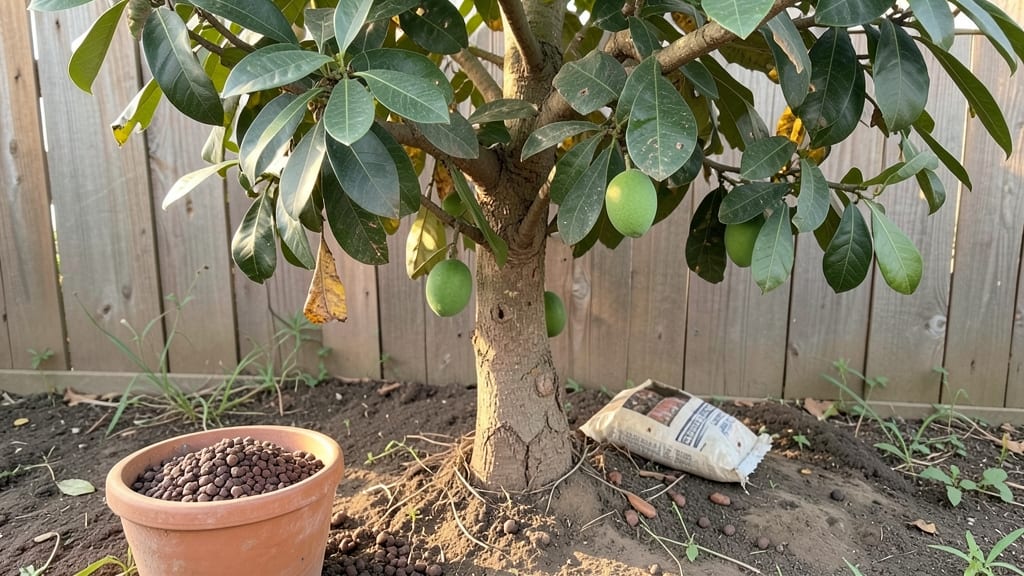
The right fertiliser for mango tree growth starts with understanding what your tree truly needs—it’s not just about feeding the leaves, but nurturing the roots for that sweet, juicy bounty you’re dreaming of. 🌱 I’ve watched my own mango tree go from struggling to producing pound after pound of fruit by adjusting its diet, and the key was timing, balance, and avoiding common pitfalls that burn roots or stunt growth.
Mango trees crave a rich blend of nitrogen, potassium, and micronutrients, but they hate excess salt or synthetic overload. Organic options like composted manure or well-aged cow dung work wonders, while synthetic fertilisers need careful dilution to prevent root shock.
The secret? Seasonal feeding—heavy nitrogen in spring for leaves, potassium-rich boosts before flowering, and micronutrient sprays when fruit sets.
You’ll know you’re doing it right when your tree sports deep green, glossy leaves and branches heavy with fruit. Too little fertiliser? Yellowing leaves or sparse blooms.
Too much? Crispy leaf edges or stunted growth. The goal is steady, consistent feeding that mirrors nature’s rhythm, not a chemical rush that backfires.
Whether you’re dealing with sandy soil or clay, the principles stay the same: test your soil first, feed lightly at first, and watch your tree’s response. This isn’t just about fruit—it’s about building a thriving, resilient tree that outlasts seasons. Let’s get those roots growing strong.
📚 In This Guide
- What you need
- Instructions
- Tips and common mistakes
- Wrapping up and next steps
What you need
- ● Organic Fertiliser: Composted manure (cow, goat, or chicken) – 5-10 lbs per tree
- ● Well-rotted compost – 2-3 gallons per application
- ● Bone meal (for phosphorus) – 1 lb per tree
- ● Synthetic Fertiliser (Balanced NPK): 10-10-10 or 16-4-8 formula – ½ cup per tree (adjust based on tree size)
- ● Potassium sulfate (for fruit development) – ¼ cup per tree
- ● Micronutrients: Epsom salt (magnesium sulfate) – 1 tbsp per gallon of water
- ● Iron chelate (for chlorosis) – as needed
- ● Zinc or manganese sulfate – per package instructions
- ● Garden fork or tiller – for mixing fertiliser into soil
- ● Garden hose with spray nozzle – for liquid applications
- ● Measuring cups/spoons – for precise fertiliser doses
- ● Gloves – to protect your hands from rough materials
- ● Watering can – for targeted soil hydration
- ● Bio-stimulants (humic acid, seaweed extract) – boosts root growth
- ● Slow-release fertiliser pellets – for convenience
- ● pH testing kit – to monitor soil acidity (ideal: 5.5-7.0)
- ● Mulch (straw, wood chips) – retains moisture and nutrients
Step-by-Step fertiliser schedule for a thriving mango tree
Here’s my proven approach to feeding mango trees for year-round vigor—no guesswork, just science-backed timing and nutrients.
🌱 Step 1: Pre-Planting Soil Boost for Strong Roots
Before planting, enrich the soil with 2-3 inches of compost mixed into the top 12 inches of soil. Mango trees thrive in well-draining, slightly acidic soil (pH 5.5–6.5). Work in 1 cup of bone meal per planting hole to kickstart root development. This ensures your tree starts with phosphorus for strong roots—critical for fruit-bearing later.
Test your soil first if possible. If it’s heavy clay, blend in 5 gallons of coarse sand per 10 square feet to improve drainage. Mango roots hate soggy conditions, and poor drainage leads to root rot within months. I always dig a 12-inch deep hole, loosen the native soil, and add amendments before placing the tree.
☀️ Step 2: Spring Flush for New Growth
Once new leaves appear in early spring, apply a balanced 10-10-10 fertilizer (nitrogen, phosphorus, potassium) at ½ pound per year of tree age. For a 3-year-old tree, that’s 1.5 pounds total. Spread evenly under the outer canopy and water deeply to activate nutrients. This jumpstarts foliage growth and sets up energy for flowering.
I use a slow-release granular fertilizer to avoid nitrogen burn. Apply when the soil is moist but not wet—this prevents fertilizer salts from scorching roots. Follow up with 1 inch of mulch (wood chips or straw) to retain moisture and regulate soil temperature. Watch for dark green, glossy leaves as your signal that the tree is absorbing nutrients well.
🌿 Step 3: Summer Potassium Push for Fruit Development
When you spot flower buds in late spring/early summer, switch to a potassium-rich fertilizer (like 0-0-50) to support fruit set. Apply ½ pound per year of tree age again, this time focusing on the drip line (the edge of the tree’s canopy). Potassium strengthens cell walls, helping mangoes resist splitting and improving sweetness.
Pair this with 1 cup of Epsom salt (magnesium sulfate) per 10 square feet to prevent yellowing between leaf veins—a common magnesium deficiency in mango trees. Water the fertilizer in immediately, and avoid overhead watering for 48 hours afterward to let nutrients penetrate the soil. You’ll notice faster fruit swelling within 2 weeks if the tree is healthy.
⏰ Step 4: Fall Maintenance for Winter Resilience
After harvest, apply a low-nitrogen, high-phosphorus fertilizer (like 5-10-10) to rebuild root energy. Use ½ the spring rate—about ¼ pound per year of tree age—and spread it 6 inches from the trunk. This encourages root growth over winter, which translates to bigger blooms next spring. Avoid fertilizing in late fall or winter when the tree is dormant.
I also top-dress with 2 inches of well-aged compost to replenish organic matter. This improves soil structure and microbial activity, which naturally breaks down nutrients into forms the tree can absorb. Mulch again with 3 inches of organic mulch, keeping it 6 inches away from the trunk to prevent rot. Healthy fall care means your tree enters winter stress-free and ready to bloom.
💧 Step 5: Year-Round Micro-Nutrient Care
Twice a year (spring and fall), spray seaweed extract (1 tablespoon per gallon of water) on the foliage to boost calcium, iron, and zinc. Mango trees often develop leaf curl or yellowing from micronutrient deficiencies. I also mix 1 teaspoon of iron sulfate into the soil every 6 months if leaves show interveinal chlorosis (yellowing between veins).
Monitor leaf color and growth rate monthly. If new leaves are small or pale, the tree needs more nitrogen. If they’re dark green but sparse, it’s likely phosphorus or potassium. Adjust your fertilizer ratios accordingly—mango trees are heavy feeders and respond quickly to balanced care. With this schedule, you’ll see larger fruit, thicker canopies, and fewer diseases within a single growing season.
Tips & tricks for perfect mango tree fertilization
These science-backed tricks will help you maximize your mango tree's growth potential while avoiding common pitfalls that waste nutrients.
Soil Testing First: Before amending soil in Step 1, conduct a pH test—mango trees thrive in pH 5.5-6.5. If your soil tests higher than 7.0, mix in elemental sulfur (1 pound per 100 square feet) to lower pH gradually. I've seen trees struggle for years because their soil was too alkaline, and a simple test would have prevented it. The bone meal in Step 1 won't help if the pH is wrong.
Fertilizer Application Technique: In Step 2 and Step 3, use a spreader for even distribution—never pile fertilizer near the trunk. Create a 6-inch wide band around the drip line where most feeder roots exist. For young trees (under 5 years), apply fertilizer in a smaller circle closer to the trunk. I've seen uneven growth when fertilizer was concentrated in one spot, creating a "hot zone" that burns roots.
Seasonal Timing Secrets: The 48-hour watering restriction after Epsom salt application in Step 3 is critical—it prevents nutrient runoff. For best results, apply Epsom salt in the morning so the 48-hour window ends before evening watering. I've noticed fruit swelling occurs most consistently when this timing is followed precisely. Pair this with a light mulch top-up after application to lock in moisture.
Visual Growth Cues: After your spring flush in Step 2, count new leaves monthly. Healthy trees produce 10-15 new leaves per month during active growth. If you see fewer than 5, your tree needs more nitrogen. For potassium deficiency (Step 3), watch for weak stems and small, dark leaves—these are early warning signs before fruit issues appear. I track leaf production like a gardening diary to catch problems early.
Pro Tips for Fertiliser For Mango Tree
- These science-backed tricks will help you maximize your mango tree's growth potential while avoiding common pitfalls that waste nutrients.
- Soil Testing First: Before amending soil in Step 1, conduct a pH test—mango trees thrive in pH 5.5-6.5.
- Fertilizer Application Technique: In Step 2 and Step 3, use a spreader for even distribution—never pile fertilizer near the trunk.
Frequently asked questions
When is the best time to fertilize a mango tree?
The ideal times are early spring (just before flowering) and late summer (after harvest). Young trees (under 3 years) need lighter, more frequent feedings (every 2 months), while mature trees do well with 2-3 applications per year. Avoid fertilizing in winter—your tree’s dormant, and excess nutrients can harm roots.
How often should I fertilize my mango tree?
For young trees (1-3 years): Feed every 6-8 weeks with a balanced fertilizer (like 10-10-10) to support root and leaf growth. Mature trees (4+ years): Switch to 2-3 applications per year, prioritizing nitrogen pre-flowering and potassium post-harvest. Over-fertilizing burns roots—always water well before and after applying.
What’s a good budget-friendly fertilizer alternative?
Skip the fancy blends! Try these affordable, natural options:
- Compost or manure tea: Rich in microbes and nutrients—mix well-rotted cow/camel manure with water (1:5 ratio) and apply as a soil drench.
- Banana peels: Chop and bury near roots (they’re potassium gold!).
- Eggshells: Crush and sprinkle for calcium to prevent fruit drop.
- Wood ash: Sprinkle lightly (1 cup per tree) for potassium—but avoid overuse (it raises soil pH).
Pro tip: Rotate organic and synthetic fertilizers for best results!
My mango leaves are yellow—did I over-fertilize?
Yellow leaves often mean over-fertilizing (especially with nitrogen) or underwatering. Check for:
- Crusty white soil surface = fertilizer burn. Flush the soil with water and reduce feedings.
- Brown leaf edges = too much salt (common with synthetic fertilizers). Use rainwater or distilled water to rinse roots.
- Wilting + yellow = root stress. Stop fertilizing for 2 months and improve drainage.
If leaves are only yellow at the tips, it’s likely a magnesium deficiency—apply Epsom salt (1 tbsp/gallon of water) monthly.
Can I use the same fertilizer for dwarf and standard mango trees?
Yes! The type of fertilizer (organic vs. synthetic) works for both, but dosage and timing differ:
- Dwarf trees: Need half the amount of a standard tree (their roots are shallower). Use a low-nitrogen blend (e.g., 5-10-10) to avoid leggy growth.
- Standard trees: Can handle higher nitrogen for canopy growth, but balance with potassium (e.g., 8-3-9) to boost fruit quality.
Both benefit from micronutrients (like zinc or iron)—sprinkle chelated mixes around the drip line.
Wrapping up and next steps
Choosing the right fertiliser for your mango tree is the secret to unlocking its full potential—think juicy, sweet fruits and a thriving canopy! 🌱 From organic compost to balanced NPK blends, each nutrient plays a key role in nurturing growth, flowering, and fruiting.
Remember, consistency is key: monitor soil health, adjust fertilizers seasonally, and always follow application best practices to avoid overdoing it.
Now that you’re armed with expert tips, roll up your sleeves and get growing! Start by testing your soil this week, then pick the perfect fertilizer for your mango tree’s stage. Happy gardening—and may your harvest be bountiful! 🍈✨