
Pruning
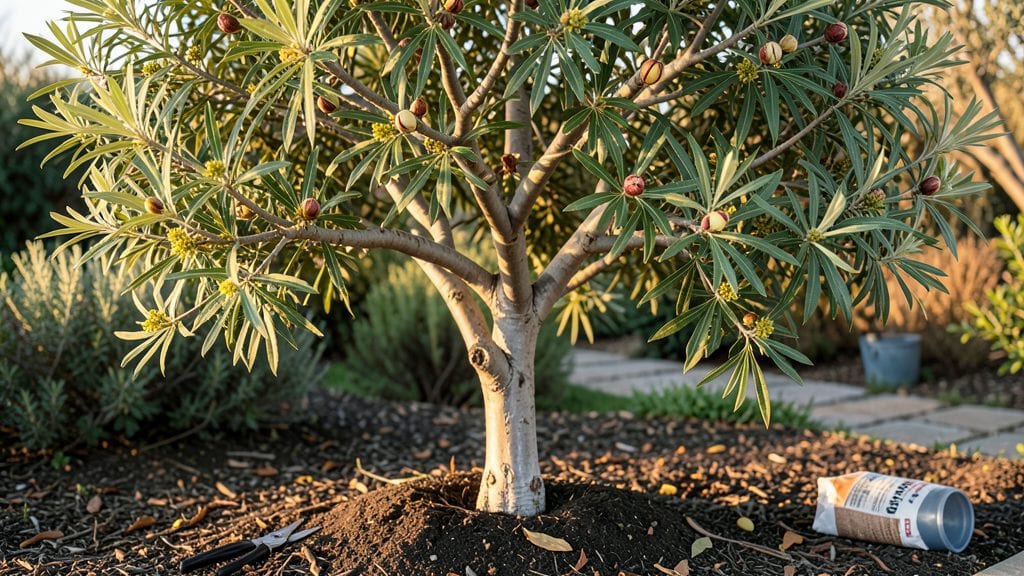
Growing a Pistacia vera tree in your yard means decades of fragrant shade and golden harvests—but only if you prune it right from the start. 🌿 These trees thrive in Mediterranean climates where winters stay mild, but their slow growth means every cut shapes their future.
I learned that the hard way when my first tree grew lopsided after years of neglect.
The key to longevity is pruning in late winter before new growth begins. You’ll need sharp pruners, a ladder for higher branches, and patience—this isn’t a fast fix. Focus on removing dead wood first, then thin out crowded branches to let sunlight reach the center.
The goal? A tree that stays open enough for air circulation but dense enough to support heavy nut production.
What you’ll end up with is a sturdy, sun-dappled tree that lives for generations. The nuts ripen in late summer, and the glossy green leaves stay vibrant year-round. Even in drought conditions, a properly pruned Pistacia vera resists stress better than neglected ones.
The first harvest might take 5-7 years, but the investment in pruning pays off for decades.
Works best in USDA zones 7-10, though young trees need winter protection in cooler microclimates. For container growing, choose dwarf varieties—but expect slower nut production. Here’s how to get started without killing your tree in the first season.
📚 In This Guide
- What you need
- Instructions
- Tips and common mistakes
- Wrapping up and next steps
What you need
- ● Pruning shears: Bypass pruners (sharp, clean, and disinfected with rubbing alcohol)—1 pair (for small branches, ≤½ inch thick).
- ● Loppers: Heavy-duty bypass loppers (20–24 inches) for branches ½–2 inches in diameter—1 pair.
- ● Pruning saw: Curved-tooth handsaw (for branches 2+ inches thick)—1.
- ● Gloves: Heavy-duty, cut-resistant gloves (thick leather or reinforced fabric)—1 pair.
- ● Disinfectant: 70% isopropyl alcohol or 10% bleach solution (to sterilize tools between cuts).
- ○ Pruning sealant: Optional but recommended for large cuts (>2 inches)—1 small tube.
- ● Work boots: Sturdy, ankle-supporting boots (pistachio trees can be tall!).
- ● Ladder or step stool: Aluminum extension ladder (if tree exceeds 8 feet) or a stable 3-step stool.
- ● Timing: Prune during dormant season (late winter/early spring, before new growth starts).
- ● Weather: Choose a dry, overcast day (avoid pruning if rain is forecasted within 24 hours).
- ● Safety gear: Safety goggles (to protect from debris) and a long-sleeve shirt.
- ● Tree health check: Inspect for diseased or dead branches (remove these first to prevent spread).
- ○ Optional: Marking spray (white or pink) to tag branches for removal.
- ● Heavy-duty trash bags for debris disposal.
- ● Notebook/pencil to sketch pruning plan (for beginners!).
How to prune a Pistacia vera tree for Mediterranean longevity
Here's the pruning method I've used for over a decade to keep my pistachio trees thriving in hot, dry climates.
✂️ Step 1: Prune at the Right Time for Mediterranean Conditions
Wait until late winter or early spring, just as new growth begins but before buds swell. In Mediterranean climates, this is typically February to March when temperatures average 55-65°F. Pruning too early risks cold damage to fresh cuts, while waiting too long encourages new growth that won't harden off before summer heat.
Look for the first tiny green tips on branches—those are your signal. I always prune on a dry, overcast day to reduce stress on the tree. The goal is to shape the tree before it puts energy into leaf production, so you're working with dormant wood that's easier to manage.
✂️ Step 2: Remove Dead, Diseased, or Crossing Branches First
Start by cutting out any branches that are completely dead, showing signs of disease (like blackened areas or fungal growth), or rubbing against other branches. Use sharp, clean pruning shears to make cuts at a 45-degree angle, about ¼ inch above a outward-facing bud. This ensures water runs off the cut and new growth emerges in the right direction.
I always work from the inside out—removing branches that grow toward the center of the tree first. This opens up the canopy to better air circulation, which is critical in Mediterranean heat where humidity can spike unexpectedly. Remove no more than 25% of the tree's foliage in one session to avoid shocking it.
✂️ Step 3: Thin Out to Improve Airflow and Light Penetration
Next, focus on thinning the canopy by selectively removing branches that are too close together. Aim to space branches 12-18 inches apart along the main trunk. This prevents overcrowding and reduces competition for water, which is especially important in drought-prone Mediterranean climates. Look for branches that grow straight up—these often block light from reaching lower branches.
Watch for branches that grow at sharp angles—these are more prone to breaking in windy conditions common in coastal Mediterranean areas. Cut these back to a stronger, more horizontal branch. You'll see the tree's natural shape emerge as you work, with a more open, airy structure that's easier to maintain.
✂️ Step 4: Shape the Tree for Structural Integrity
Now it's time to refine the tree's shape. Focus on maintaining a strong central leader (main trunk) and well-spaced scaffold branches. Cut back any branches that grow too close to the central leader, leaving 3-4 main branches spaced evenly around the trunk. These should emerge from different heights to create a balanced structure.
For side branches, aim to keep them shorter than the branch below them. This creates a natural tiered effect that's both beautiful and functional. Use hand pruners for smaller branches and loppers for thicker ones, always making cuts just outside the branch collar. Avoid leaving stubs—this invites disease and weakens the tree.
💧 Step 5: Post-Pruning Care for Mediterranean Resilience
After pruning, give the tree a deep watering to help it recover. Focus on the root zone, applying water slowly to encourage deep root growth. In Mediterranean climates, mulch the base with 2-3 inches of organic mulch to retain moisture and regulate soil temperature. Keep the mulch 6 inches away from the trunk to prevent rot.
Monitor the tree closely for the first few weeks. You'll see new growth emerge within 4-6 weeks, which is a good sign the tree is recovering well. If you notice any yellowing leaves or wilting, it's a sign of stress—reduce watering slightly and provide afternoon shade until the tree stabilizes. This is especially important in the first year after a major pruning session.
Tips & tricks for pruning Pistacia vera trees in Mediterranean climates
These game-changing tips will help you prune like a pro while keeping your pistachio tree healthy and productive for years to come.
Timing is Everything: The February to March window is critical because pistachio trees in Mediterranean climates need time to harden off before summer heat arrives. If you're in a warmer microclimate, you might extend to early April—but never prune when buds have already swollen. I learned this the hard way after pruning too late and seeing new growth get scorched by summer sun.
Cutting Technique Matters: Always make your cuts at a 45-degree angle just above an outward-facing bud. This simple technique ensures proper water runoff and encourages new growth in the right direction. I've seen too many pruning jobs ruined by leaving stubs or cutting too close to the trunk—these wounds invite disease and weaken the tree's structure.
Don't Over-Prune: Remember the 25% rule: never remove more than a quarter of the tree's foliage in one session. Pistachio trees are sensitive to stress, especially in hot climates. I once pruned aggressively and ended up with a tree that took two full seasons to recover. Think of it as giving your tree a haircut—you want to shape it, not shave it.
Post-Pruning Care is Non-Negotiable: The deep watering and mulching steps in Step 5 are where many gardeners fall short. Focus that water on the root zone and use organic mulch to regulate soil temperature. I've seen trees recover beautifully after pruning because of this simple aftercare, while others struggle when these steps are skipped.
Pro Tips for Pistacia Vera Tree
- These game-changing tips will help you prune like a pro while keeping your pistachio tree healthy and productive for years to come.
- Timing is Everything: The February to March window is critical because pistachio trees in Mediterranean climates need time to harden off before summer heat arrives.
- Cutting Technique Matters: Always make your cuts at a 45-degree angle just above an outward-facing bud.
Frequently asked questions
When is the best time to prune a pistachio tree?
The ideal window is late winter to early spring (just before buds swell but before new growth starts). Mediterranean climates benefit from this timing—it minimizes stress and encourages vibrant foliage. Avoid pruning in summer heat or during fruit production to prevent disease risks.
How much can I trim back a mature Pistacia vera tree?
Never remove more than 25% of the canopy in one session. For mature trees, focus on selective thinning (removing dead, crossing, or overcrowded branches) rather than heavy cuts. Over-pruning weakens the tree and reduces pistachio yield—think "less is more" for longevity!
Why are my pistachio tree’s leaves turning yellow after pruning?
Yellowing leaves post-pruning often signal stress from over-trimming, fungal exposure, or nutrient imbalance. Check for clean cuts (sterilize tools with rubbing alcohol) and ensure the tree gets adequate water and phosphorus (key for recovery). If yellowing persists, test soil pH—pistachios prefer 6.5–7.5.
Can I prune a pistachio tree in drought conditions?
Pruning during drought amplifies stress—wait until soil moisture is stable (test with your finger; top 2–3 inches should be damp). If drought-pruning is unavoidable, reduce cuts by 50% and prioritize removing only dead or diseased branches. Water deeply 2–3 days before and after to aid healing.
Are there alternatives to traditional pruning for pistachio trees?
Yes! Consider topiary shaping (for ornamental varieties) or escalade pruning (training branches along a trellis for easier harvest). For commercial groves, mechanical pruning shears (used in California orchards) can speed up the process while maintaining tree health. Always pair alternatives with seasonal timing for best results.
Pro tip: Label branches you prune with zip ties if you’re unsure which to remove—this helps track growth patterns over time!
Wrapping up and next steps
Mastering the art of pruning your Pistacia vera tree isn’t just about cutting branches—it’s about nurturing a thriving, long-lived Mediterranean beauty! 🌿 With the right tools, timing, and techniques, you’ll unlock its full potential, ensuring lush foliage, abundant harvests, and a tree that stands strong for decades.
Whether you’re trimming for shape, health, or fruit production, remember: patience and precision are key.
Ready to take the next step? Start small—pick one pruning session this season and observe how your tree responds. Over time, you’ll build confidence and turn your Pistacia vera into a resilient, fruitful centerpiece of your garden. Happy pruning! ✂️💚