Pruning
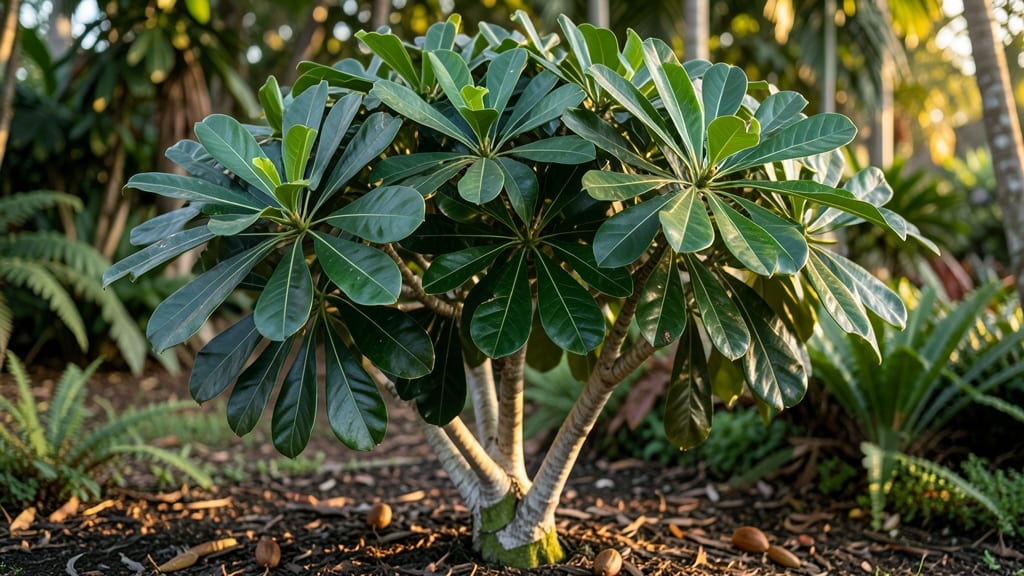
Pruning a false kamani tree (Schleichera oleosa) unlocks its full potential—thicker foliage, stronger branches, and those stunning golden fruits that make neighbors stop and stare. 🌿 I’ve learned the hard way that skipping this step leads to leggy growth and fewer blooms, but once you master it, your tree becomes the star of the Pacific Northwest landscape—even when frost threatens.
The secret lies in timing and technique: prune in late winter or early spring before new growth starts, and always cut just above a leaf node to encourage bushier growth.
This drought-tolerant tree handles neglect, but proper pruning turns it from "just another tree" into a showstopper with glossy, oval leaves and bark that develops a rugged, textured beauty over time. You’ll also boost fruit production—those edible (but bitter) kamani nuts become more abundant when you shape the tree correctly.
What you’ll end up with is a false kamani that looks like it belongs in a tropical paradise, even in cooler climates. The branches fill out, the canopy thickens, and the tree resists storm damage better than unpruned specimens.
Plus, you’ll save yourself future headaches from overgrown limbs blocking walkways or power lines. Ready to transform your tree into a Pacific Northwest masterpiece?
Works for both young saplings and mature trees—just adjust the approach. Whether you’re shaping a new planting or reviving an older tree, these techniques adapt to any size. Let’s get those pruners out and turn your false kamani into the talk of the neighborhood.
📚 In This Guide
- What you need
- Instructions
- Tips and common mistakes
- Wrapping up and next steps
What you need
- ● Pruning shears: Bypass pruners (sharp, clean, and sterilized with rubbing alcohol to prevent disease). Spec: 6–8" blades for medium branches.
- ● Loppers: For thicker branches (1–2" diameter). Spec: 20–24" long handles for leverage.
- ● Hand saw: For stubborn, larger limbs (>2" thick). Spec: Curved-tooth blade to avoid tearing wood.
- ● Gloves: Heavy-duty, cut-resistant (e.g., Mechanix or Tiger Claw) to protect hands from thorns.
- ● Disposable pruning bags: 2–3 large bags (10–15 gallon capacity) for debris collection.
- ● Rubbing alcohol (70% isopropyl) or bleach solution: 1 part bleach to 9 parts water for sterilizing tools.
- ○ Pruning sealant (optional but recommended): Tree wound sealant (e.g., Tanglefoot Tree Wound Pruning Seal) for cuts >½".
- ● Ladder: Extendable or step ladder (12–16 ft) for tall trees.
- ● Safety glasses: To shield eyes from debris.
- ● Work boots: With ankle support for stability on uneven ground.
- ● Marking spray: (e.g., Fiskars) to tag branches for removal.
- ● Compost bin: For repurposing pruned leaves/branches.
How to prune a false kamani tree for healthy growth in the Pacific Northwest
Here's the straightforward approach I use to keep false kamani trees thriving through PNW winters.
✂️ Step 1: Time Your Pruning for Winter Dormancy
Prune your false kamani tree late winter or early spring, just as buds begin to swell but before new growth starts. In the Pacific Northwest, this typically falls between February and March when frost risk has passed but spring warmth hasn't fully arrived. The goal is to shape the tree while it's still dormant but ready to burst into growth.
I always wait until after the last hard frost—check your local frost date calendar to be safe. Pruning too early can expose fresh cuts to winter cold, while waiting too long risks encouraging premature growth that frost will damage. You'll know you're timing is right when you see tight, plump buds along the branches but no new leaves.
🌿 Step 2: Remove Dead or Damaged Wood First
Start by inspecting the entire tree for dead, diseased, or broken branches. These are easy to spot—they'll be bare of leaves, have cracked bark, or show signs of fungal growth like black spots or powdery residue. Use clean, sharp pruning shears to make 45-degree cuts just outside the branch collar where the branch meets the trunk.
I never skip this step—it's the foundation of healthy growth. Removing dead wood prevents disease from spreading and lets the tree focus its energy on new, vigorous branches. If you're unsure whether a branch is dead, scratch the bark with your fingernail. Live wood will be green underneath; dead wood stays brown.
✂️ Step 3: Thin the Canopy for Better Airflow
Next, focus on thinning the tree's canopy to improve airflow and sunlight penetration. Look for branches that cross or rub against each other—these create wounds and invite pests. Also remove any that grow inward toward the center of the tree. Use your pruners to cut these branches back to their point of origin, making sure each cut is clean and smooth.
For a false kamani tree, aim to remove about 20-30% of the total foliage during this process. You'll see the difference immediately as light filters through to the inner branches. This thinning encourages stronger growth on the remaining branches and reduces the risk of fungal diseases that thrive in damp, shaded conditions.
☀️ Step 4: Shape the Tree for Balance and Form
Now it's time to shape the tree according to its natural growth pattern. False kamani trees have a lovely rounded form, so I focus on maintaining that silhouette. Start by identifying the main scaffold branches—the largest, sturdiest branches that form the tree's structure. These should be spaced evenly around the trunk and angled outward at about 45 degrees.
To encourage an open, airy structure, cut back any branches that grow too close together or compete for space. Make your cuts just above an outward-facing bud to promote growth in the direction you want. Step back frequently to visualize the tree's shape—you're aiming for a balanced, symmetrical look that lets sunlight reach all parts of the canopy.
🪴 Step 5: Clean Up and Protect the Tree
After pruning, gather all the clippings and remove them from the area to prevent disease from spreading. I always sterilize my pruning tools with rubbing alcohol between cuts to avoid transferring pathogens. Once the tree is pruned, give it a light watering to help it recover, especially if the weather has been dry.
In the Pacific Northwest, false kamani trees are remarkably frost-resistant, but newly pruned cuts can still benefit from a protective layer. I apply a thin coat of tree wound sealant to larger cuts to prevent moisture loss and infection. Then, I monitor the tree closely for the first few weeks, watching for any signs of stress like wilting leaves or unusual discoloration.
Tips & tricks for perfect false kamani tree pruning
A few simple tricks will help you maintain your false kamani tree like a pro and keep it thriving through PNW winters.
Timing is Everything: If you're unsure about the exact timing between February and March, use the bud test as your guide. Look for tight, plump buds that haven't yet opened—this is your perfect window. I've learned the hard way that pruning too early can expose fresh cuts to late frosts, while waiting too long risks encouraging tender new growth that frost can damage. Trust the buds, not just the calendar!
Tool Prep Matters: Before you even touch your tree, sterilize your pruning shears with rubbing alcohol. I make it a habit to clean my tools between every cut to prevent spreading disease from dead branches to healthy ones. Also, make sure your shears are sharp—dull blades tear wood, creating jagged cuts that heal poorly. A quick test: if your shears don't cut cleanly through a piece of paper, they're too dull.
Visualize the Final Shape: Step back frequently during Step 4 to visualize your tree's silhouette. I like to imagine the tree's natural rounded form and adjust my cuts accordingly. For false kamani trees, aim for an open, airy structure that lets sunlight reach all branches. You can even sketch a rough outline on paper first if you're unsure about the proportions. This prevents over-pruning and helps maintain that beautiful natural shape.
Seasonal Follow-Up: After your initial pruning, keep an eye on your tree for the first few weeks. False kamani trees are frost-resistant, but newly pruned cuts can still benefit from a protective layer. I apply a thin coat of tree wound sealant to larger cuts, which helps prevent moisture loss and infection. Also, give your tree a light watering to help it recover, especially if we've had a dry spell in the PNW.
Pro Tips for False Kamani Tree
- A few simple tricks will help you maintain your false kamani tree like a pro and keep it thriving through PNW winters.
- Timing is Everything: If you're unsure about the exact timing between February and March, use the bud test as your gu...
- Tool Prep Matters: Before you even touch your tree, sterilize your pruning shears with rubbing alcohol. I make it a h...
Frequently asked questions
How do I tell if my false kamani tree is actually frost-resistant?
The false kamani tree is more frost-tolerant than its tropical cousin (the true kamani), but it still needs care in the PNW’s cold snaps. Look for new growth in spring—if leaves emerge and survive temps down to 15–20°F, your tree is likely resilient. Young trees or newly planted ones may need winter wraps or mulch for extra protection.
When’s the best time to prune my false kamani tree?
Prune during late winter or early spring (February–March) before new growth starts. This prevents stress and disease. Avoid pruning in fall—it encourages tender shoots that won’t survive PNW winters. Pro tip: Remove dead or crossing branches anytime, but save major shaping for dormant season!
Can I prune too much? What are the signs?
Yes! Over-pruning weakens the tree, especially in the PNW’s wet climate. Signs include:
- Yellowing leaves (nutrient stress)
- Stunted growth (energy drain)
- Excessive sap oozing (wound stress)
What’s a good alternative if I want a frost-resistant tree with similar shade?
If the false kamani’s high maintenance pruning isn’t your style, consider:
- Japanese maple (Acer palmatum) – Drought-tolerant, stunning fall color, and handles PNW winters well.
- Ginkgo biloba – Disease-resistant, cold-hardy, and produces unique fan-shaped leaves.
- Oregon ash (Fraxinus latifolia) – Native, fast-growing, and thrives in wet soils.
Why are my false kamani tree’s leaves turning brown after pruning?
Brown leaves post-pruning usually mean one of three things:
- Underwatering – False kamani trees need 1–1.5 inches of water weekly (more in summer).
- Fungal stress – Sterilize pruners and avoid pruning when leaves are wet to prevent anthracnose.
- Nutrient deficiency – Amend soil with compost or slow-release fertilizer in early spring.
Wrapping up and next steps
Mastering the art of pruning your false kamani tree in the Pacific Northwest isn’t just about keeping it healthy—it’s about celebrating its resilience and beauty! 🌿 With the right tools, timing, and techniques, you’ll unlock a frost-resistant bloom that thrives year after year.
Whether you’re trimming for shape, health, or aesthetics, confidence comes with practice.
Ready to take the next step? Start small—pick one branch or section to refine your skills, then gradually expand. Before you know it, your false kamani tree will be the standout star of your garden! 🌟 Happy pruning!