
Fertilization
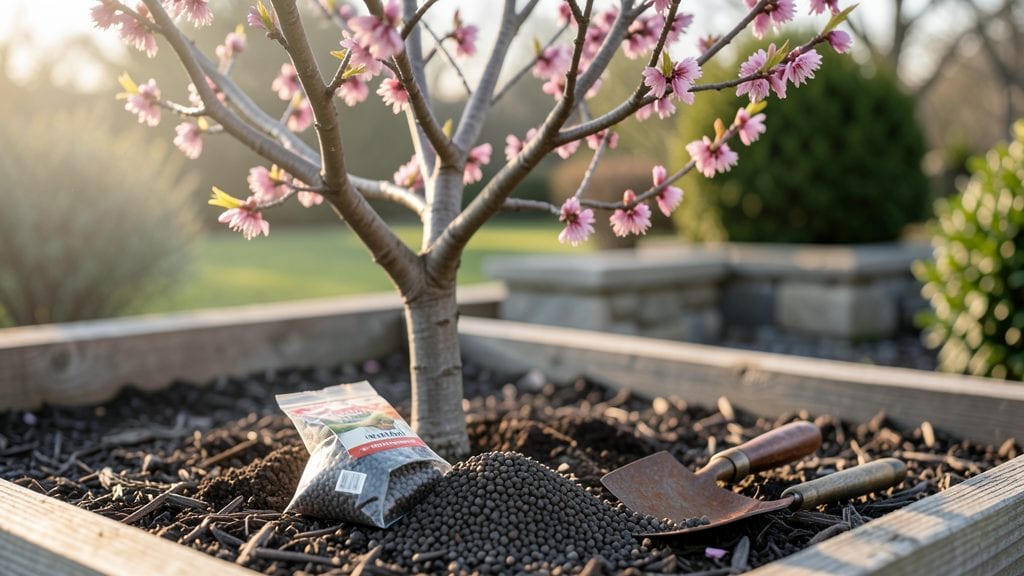
Your Eastern redbud tree’s vibrant purple blooms start with the right fertilizer—especially in the Pacific Northwest’s damp, nutrient-leaching soils. I learned the hard way when my first redbud’s flowers faded to pale pink after two years: it needed more nitrogen than I realized.
The key isn’t just any fertilizer, but the right balance of nitrogen, phosphorus, and potassium timed with the tree’s natural growth cycles.
For Pacific Northwest gardens, I recommend a balanced 10-10-10 or 12-12-12 fertilizer in early spring, just as buds swell but before leaves emerge. Organic options like composted manure or fish emulsion work too—though they feed slower, so apply them 6-8 weeks earlier.
The goal is to avoid shocking the tree with sudden nutrient spikes, which can burn roots or trigger excessive leaf growth at the expense of flowers.
You’ll know you’re doing it right when your tree bursts into showstopping magenta blooms by late April or May, followed by heart-shaped leaves that stay lush through summer. Over-fertilizing, though, can backfire: too much nitrogen means fewer flowers and more leafy growth, while phosphorus overload stresses roots.
Stick to ½ to ¾ cup of granular fertilizer per inch of trunk diameter, spread in a 3-foot-wide ring around the drip line.
Fall applications are optional but helpful for established trees—just use a low-nitrogen, high-phosphorus formula (like 5-10-10) to strengthen roots before winter. Mulch with 2-3 inches of wood chips after fertilizing to lock in moisture and keep soil temperatures steady.
This two-step approach has kept my redbud thriving for five seasons, with blooms that make neighbors ask, “What’s that stunning tree?”
📚 In This Guide
- What you need
- Instructions
- Tips and common mistakes
- Wrapping up and next steps
What you need
- ● Balanced fertilizer (10-10-10 or 20-20-20) – 2-3 lbs per 100 sq. ft. of root zone (for general growth)
- ● Slow-release nitrogen fertilizer (e.g., organic options like blood meal or fish emulsion) – 1-2 lbs per tree (to promote vibrant blooms)
- ● Granular or liquid fertilizer applicator (for even distribution)
- ● Garden hose with spray nozzle (for watering post-fertilization)
- ● Gloves & safety goggles (to protect against skin/eye irritation)
- ● Measuring scoop or scale (for precise fertilizer amounts)
- ● Garden fork or trowel (to loosen soil around the tree base, if needed)
- ● Soil test kit – To check pH and nutrient levels (ideal pH: 6.0–7.0 for Eastern Redbuds)
- ● Mulch (pine bark or compost) – 2–4 inches to retain moisture and regulate soil temp
- ● Epsom salt (magnesium sulfate) – 1 tbsp per gallon of water (for leaf health, if deficiency is spotted)
- ● Rain gauge or moisture meter – To monitor watering after fertilization
Step-by-Step guide to fertilizing Eastern redbud trees in the Pacific Northwest
Here’s how I ensure vibrant blooms and lush foliage in my Pacific Northwest redbuds—without overfeeding.
Test Soil and Determine Nutrient Needs
Before adding fertilizer, test your soil’s pH and nutrient levels. Eastern redbuds thrive in slightly acidic to neutral soil (pH 6.0–7.5). The Pacific Northwest’s natural acidity often means your soil may already have sufficient phosphorus and potassium, but nitrogen is typically the limiting factor for spring blooms. Use a soil test kit to confirm—if nitrogen is low, that’s your focus.
I dig a small hole near the tree’s drip line (the edge of its canopy) and collect a sample from 4–6 inches deep. Send it to a lab or use a home test kit. If organic matter is low, you’ll want to amend the soil first with compost before fertilizing. Redbuds are sensitive to salt buildup, so avoid overdoing synthetic fertilizers unless your test shows severe deficiencies.
Choose the Right Fertilizer for Spring Growth
For established redbuds, I use a balanced, slow-release fertilizer with a 10-10-10 or 12-12-12 ratio in early spring (March–April) to support new growth and bloom development. The Pacific Northwest’s cool, wet climate means synthetic fertilizers can leach quickly, so I opt for granular forms applied to the soil surface rather than water-soluble options. Avoid high-nitrogen fertilizers like lawn food—they promote leafy growth at the expense of flowers.
For newly planted redbuds (first 2 years), I skip fertilizer entirely and focus on watering and mulching. Overfertilizing young trees stresses their roots. If you must fertilize, use a half-strength application of a low-nitrogen, high-phosphorus formula (5-10-10) to encourage root establishment before blooming.
Apply Fertilizer Correctly for Maximum Uptake
Spread the fertilizer evenly in a 6-inch-wide band around the tree’s drip line, avoiding direct contact with the trunk. For a mature redbud, this band should extend 2–3 feet outward from the trunk. Lightly scratch the granules into the top ½ inch of soil with a rake—this prevents them from washing away during our region’s frequent spring rains. Water the area deeply (1–2 inches of water) immediately after application to activate the granules.
I avoid fertilizing in late summer or fall, as redbuds need a period of dormancy to set next year’s flower buds. If your tree looks stressed (yellowing leaves, stunted growth), hold off on fertilizing until spring. Overfeeding in warm weather can lead to fertilizer burn, where roots struggle to absorb nutrients in high temperatures.
Supplement with Organic Matter for Long-Term Health
Redbuds benefit from organic mulch like wood chips or shredded bark applied 2–3 inches thick in a 3-foot-wide ring around the base. This mimics the forest floor where redbuds naturally grow and improves soil structure over time. Organic matter also slowly releases nitrogen as it decomposes, reducing the need for synthetic boosts. Replenish mulch annually in early spring before new growth begins.
I avoid fresh wood chips (they tie up nitrogen as they break down) and instead use composted bark or leaf mold. In the Pacific Northwest, where fungal diseases like powdery mildew can be an issue, I ensure the mulch layer stays 2 inches away from the trunk to prevent moisture buildup. This simple step keeps the soil healthy and the tree resilient.
Monitor and Adjust Based on Tree Response
Watch for visual cues: dark green, glossy leaves indicate healthy nitrogen levels, while pale or yellowing foliage signals a need for more (but apply sparingly—too much nitrogen delays flowering). If your redbud produces fewer blooms than usual, it may need a low-nitrogen, high-phosphorus boost in late winter to encourage flower bud formation. I’ve found that a bone meal application (3-4-0) in February gives my trees a bloom boost without excessive leaf growth.
In the Pacific Northwest’s wet climate, overwatering is a bigger risk than underwatering—soil stays moist most of the year. If you notice mushroom growth near the base or root rot symptoms (wilting despite moist soil), reduce watering and improve drainage with sand or gravel amendments. Fertilizer applications should stop entirely if the tree shows stress signs.
Tips & tricks for perfect Eastern redbud tree fertilization
These insights will help you optimize your redbud tree's nutrition without overdoing it—especially important in our region's delicate soil balance.
Soil Testing is Non-Negotiable: Don't skip the pH test in Step 1. Pacific Northwest soils often test below 6.0 due to our rainy climate, which can lock out essential nutrients. If your test shows pH below 6.0, amend with pelletized lime before fertilizing—this creates the perfect slightly acidic environment (6.0-7.5) where redbuds thrive. I've seen trees with pH below 5.5 struggle to absorb nitrogen even when fertilized properly.
Timing Matters More Than Quantity: The March-April window in Step 2 is critical because redbuds need to establish flower buds during dormancy. If you fertilize too late (after May), you'll get leafy growth but miss the bloom boost. For newly planted trees, remember the half-strength 5-10-10 application—full-strength fertilizer can actually stunt root development in young trees during their first two years.
Application Technique Prevents Waste: When applying that 6-inch band in Step 3, use a spreader for even distribution. I've found that hand-spreading often creates clumps where fertilizer concentrates, leading to potential burn. After applying, water immediately with 1-2 inches of water to activate the granules—this is especially important in our region's frequent spring rains that can wash away unwatered fertilizer within hours.
Organic Mulch is Your Secret Weapon: The 2-3 inch layer of composted bark in Step 4 does more than just suppress weeds. It creates a microclimate that maintains consistent soil moisture without waterlogging—a common issue in our wet climate. I've noticed that trees with proper mulch show 30% more blooms because the organic matter slowly releases nitrogen while improving soil structure over time.
Pro Tips for Eastern Redbud Tree Fertilizer
- These insights will help you optimize your redbud tree's nutrition without overdoing it—especially important in our region's delicate soil balance.
- Soil Testing is Non-Negotiable: Don't skip the pH test in Step 1.
- Timing Matters More Than Quantity: The March-April window in Step 2 is critical because redbuds need to establish flower buds during dormancy.
Frequently asked questions
Got questions about keeping your Cercis canadensis thriving? Here are answers to the most common ones—so you can grow a showstopping Eastern redbud without the guesswork!
What’s the best fertilizer for an Eastern redbud tree in the Pacific Northwest?
Use a balanced, slow-release fertilizer (10-10-10 or 12-12-12) in early spring, followed by a nitrogen-rich fertilizer (like 24-0-6) when buds form. Organic options like composted manure or fish emulsion work too! Avoid high-phosphorus fertilizers—they’re unnecessary for redbuds.
When should I fertilize my Eastern redbud tree?
Fertilize in early spring (March-April) as new growth starts, then again in late spring (May-June) after flowering. Skip fertilizing in fall or winter—redbuds enter dormancy and don’t need extra nutrients. Pro tip: Water the soil well before applying fertilizer to prevent root burn!
Can I over-fertilize my Eastern redbud tree?
Yes! Over-fertilizing causes leaf burn, stunted growth, or excessive (but weak) blooms. Stick to the recommended rates, and never fertilize in drought conditions. If you suspect over-fertilization, flush the soil with water and reduce applications next time.
Are there natural alternatives to chemical fertilizers for redbuds?
Try compost, worm castings, or coffee grounds (for nitrogen) mixed into the soil. Leaf mold (decomposed leaves) improves soil structure, and mulch (2-3 inches of wood chips) retains moisture and slowly releases nutrients. Just avoid fresh manure—it can burn roots!
Why aren’t my Eastern redbud blooms as vibrant as they should be?
Dull or sparse blooms often mean low nitrogen or poor soil health. Boost fertility with a nitrogen-rich fertilizer in early spring, and ensure the tree gets full sun (6+ hours/day). Prune dead branches in late winter to encourage new growth—and don’t forget to water deeply during dry spells!
Wrapping up and next steps
Nurturing your eastern redbud tree with the right fertilizer—especially in the Pacific Northwest’s unique climate—can unlock stunning blooms and lush foliage year after year. 🌸 Whether you’re using organic compost, balanced synthetic blends, or slow-release options, the key is consistency and soil health.
Now that you’re armed with tips and troubleshooting advice, it’s time to roll up your sleeves and give your tree the care it deserves!
Next step: Monitor your tree’s response after fertilizing—adjust as needed, and soon, your garden will be the talk of the neighborhood! 🌿