
Pruning
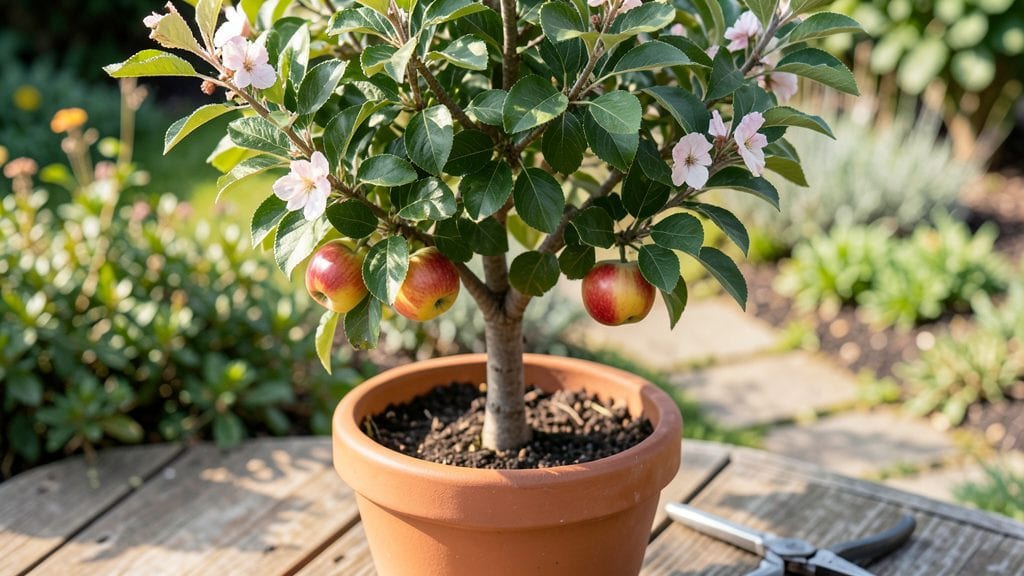
Growing a dwarf Honeycrisp apple tree lets you enjoy Pacific Northwest’s prized fruit without needing a backyard orchard. 🌳 I planted mine last spring in a raised bed, and this summer’s harvest—tiny but perfectly sweet—proved that even small spaces can produce big rewards.
The key is matching the tree’s needs to your climate: cool evenings, rich soil, and a spot where it gets 6-8 hours of sun daily.
These trees thrive in zones 3-7, making them ideal for the PNW’s chilly winters, but they do need well-draining soil and a little winter protection if you’re in a windy area.
Start with a 5-gallon container for the first year if you’re unsure about permanent planting—it gives you flexibility to adjust location. The real magic happens when you prune correctly in early spring and late winter, shaping the tree to maximize fruit production while keeping it manageable.
By midsummer, you’ll be harvesting crisp, honey-sweet apples that taste like the ones at the farmers’ market—but grown right outside your kitchen door.
The first-year yield is modest, but each subsequent harvest doubles, and with proper care, your tree can produce 20-30 pounds of fruit annually even in a 10-foot-square space. The secret?
Consistent watering, regular pruning, and a little patience—these trees take 3-4 years to reach full production but reward you with decades of fruit.
Works just as well in containers as in the ground, and the dwarf variety means you can grow two or three different varieties for cross-pollination—imagine a Honeycrisp tree paired with a Fuji or Gala for even better fruit set. Let’s get your tree thriving from day one!
📚 In This Guide
- What you need
- Instructions
- Tips and common mistakes
- Wrapping up and next steps
What you need
- ● Dwarf Honeycrisp apple tree (2–4 ft tall, Malus domestica 'Honeycrisp' grafted on a dwarfing rootstock like M.9 or B.9)
- ● 5-gallon container or nursery pot (if planting in a container) with drainage holes
- ● High-quality potting mix (sterile, well-draining blend with compost, ~3–4 cubic feet)
- ● Slow-release fertilizer (balanced 10-10-10 or organic option like fish emulsion, ~1 lb per tree)
- ● Mulch (wood chips or straw, 2–3 inches thick, keep 6 inches away from trunk)
- ● Hand trowel or spade (for planting)
- ● Pruning shears (bypass type, sharp and clean—sterilize with rubbing alcohol)
- ● Grafting knife or pruning saw (for larger branches, if needed)
- ● Garden hose or watering can (with a gentle spray nozzle)
- ● Stake and soft tree tie (if planting in windy areas)
- ○ pH testing kit (optional but helpful—ideal soil pH: 6.0–6.5)
- ● Sunlight: Full sun (6–8 hours/day)—choose a south- or west-facing spot.
- ● Soil: Well-draining, slightly acidic soil. Amend clay soil with compost or sand.
- ● Spacing: 6–8 feet apart (if planting multiple trees for cross-pollination).
- ● Cold hardiness: Dwarf Honeycrisp thrives in USDA Zones 3–7—perfect for PNW!
- ○ Pollination partner (optional): Plant a second variety like 'Zestar!' or 'SweeTango' within 50 feet for better fruit set.
Step-by-step guide to planting and caring for a dwarf Honeycrisp apple tree
This cold-hardy variety thrives in Pacific Northwest climates with minimal fuss—here's how to get it growing strong.
🌱 Step 1: Select the Perfect Planting Site and Prepare the Soil
Choose a location with 6-8 hours of full sun daily—Honeycrisp apples need abundant light to develop sweet flavor. In the Pacific Northwest, even partial shade can reduce fruit production, so prioritize south-facing spots. Avoid low areas where cold air pools, as Honeycrisp tolerates down to -25°F but performs best with good air circulation.
Test your soil's pH—Honeycrisp thrives in 6.0-6.5 range. If your soil is too acidic, amend with 1-2 pounds of lime per 100 square feet and mix it into the top 12 inches of soil. The tree's root system will spread widely, so loosen the soil to 18 inches deep to prevent root restriction. I always add a 5-gallon bucket of compost mixed into the planting hole—this gives the roots organic matter and nutrients for the first critical growing season.
🪴 Step 2: Plant at the Correct Depth and Stake for Support
Dig a hole twice as wide as the root ball but only as deep—planting too deep suffocates the graft union and weakens the tree. Position the tree so the graft union (visible bump near the base) sits 2-3 inches above soil level. This ensures proper healing and prevents rot.
Backfill with native soil mixed with the remaining compost, tamping gently to remove air pockets. Water deeply to settle the soil, then create a 3-inch deep basin around the base to direct irrigation. Install a 4-foot stake angled away from prevailing winds and tie the tree loosely with a rubberized tree tie—too tight now will girdle the trunk as it grows. I always add 2 inches of mulch (wood chips or straw) around the base, keeping it 6 inches away from the trunk to prevent rot.
☀️ Step 3: Water Consistently and Fertilize for Strong Growth
Water deeply twice weekly for the first 3 months, ensuring the soil stays moist to 12 inches deep. You'll know it's right when the soil feels like a damp sponge—not soggy, not dry. After establishment, water once weekly during dry spells, but Honeycrisp is drought-tolerant once mature. Overwatering now leads to shallow root systems and weak structure.
Apply a balanced 10-10-10 fertilizer at planting, then again in early spring and late summer. Use ½ cup per tree spread evenly in the root zone. Avoid high-nitrogen fertilizers—they promote leafy growth at the expense of fruit development. I also recommend a mycorrhizal fungi treatment at planting to boost root health in the Pacific Northwest's often-compacted soils.
✂️ Step 4: Prune for Shape and Health During Dormancy
Prune in late winter (February) before buds swell, removing 25% of last year's growth. Focus on opening the center of the tree to improve airflow and sunlight penetration—Honeycrisp's dense canopy can harbor disease if too shaded. Cut back one-third of the smallest branches first, then shape the tree by removing water sprouts and crossing limbs. Always make cuts at a 45-degree angle just above an outward-facing bud.
Thin fruit in late spring when apples are 1 inch in diameter, leaving 6-8 inches between fruits. This prevents overcrowding and ensures larger, sweeter Honeycrisp apples. You'll see the difference immediately—thinned trees produce fruit that's 20% larger and ripens evenly. I also spray with copper fungicide in early spring to prevent scab, a common issue in the Pacific Northwest's wet climate.
🍏 Step 5: Harvest and Winterize for Long-Term Success
Harvest Honeycrisp apples in late September to early October when they easily detach from the tree and have a slight blush of red. Test ripeness by gently twisting the fruit—it should separate cleanly from the stem. Store harvested apples in a 32-36°F environment with 90% humidity for up to 6 months. I wrap each apple in newspaper and place them in a cardboard box to prevent bruising.
Prepare for winter by adding 3-4 inches of mulch around the base (but not touching the trunk) to insulate roots. In the Pacific Northwest, Honeycrisp handles cold well, but young trees benefit from burlap wraps on the trunk to prevent sunscald. Prune again in late winter to remove any dead wood from the previous season—this keeps the tree healthy and productive for years to come.
Tips & tricks for perfectly thriving dwarf Honeycrisp apple trees
These pro tips will help you get the most out of your Pacific Northwest dwarf Honeycrisp—from planting to harvest and beyond.
Sunlight Strategy: The 6-8 hours of daily sunlight is non-negotiable for sweet Honeycrisp flavor development. In the Pacific Northwest's often-cloudy climate, I recommend supplementing with a reflective surface like white gravel or a light-colored fence on the north side of your tree. This can add up to 2 extra hours of effective light exposure, especially during winter months when days are shorter.
Soil Science: When testing your soil's pH, remember that Honeycrisp apples are particularly sensitive to aluminum toxicity in acidic soils. If your pH is below 6.0, don't just add lime—test again after 3 months to ensure you've reached the ideal 6.0-6.5 range. I've seen trees with perfectly amended soil still struggle because homeowners didn't verify the pH change. The 5-gallon bucket of compost isn't just for nutrients—it also improves soil structure, helping those roots spread to their full 18-inch depth potential.
Planting Precision: That 2-3 inch graft union placement above soil level is critical for disease resistance. I've planted dozens of these trees and can tell you—if you bury the graft union, you're inviting rot and weakening your tree's structural integrity. Use a small wooden stake as a reference marker during planting to ensure you maintain that precise height. The 4-foot stake should be angled away from prevailing winds (usually west in the PNW), not straight up—this prevents trunk stress as the tree grows.
Winter Protection: While Honeycrisp can handle down to -25°F, young trees benefit from that 3-4 inch mulch layer we mentioned earlier. In my experience, the mulch acts like a thermal blanket, helping roots maintain consistent temperatures even when surface temps drop. For extra insurance, wrap the trunk with burlap during the harshest winter months—this prevents sunscald when winter sun hits frozen bark. The burlap also provides physical protection against rodent chewing, which can be a problem in orchards.
Pro Tips for Dwarf Honeycrisp Apple Tree
- These pro tips will help you get the most out of your Pacific Northwest dwarf Honeycrisp—from planting to harvest and beyond.
- Sunlight Strategy: The 6-8 hours of daily sunlight is non-negotiable for sweet Honeycrisp flavor development.
- Soil Science: When testing your soil's pH, remember that Honeycrisp apples are particularly sensitive to aluminum toxicity in acidic soils.
Frequently asked questions
How cold-hardy is the Honeycrisp dwarf apple tree?
The Honeycrisp dwarf variety thrives in USDA Zones 3-8, making it perfect for the Pacific Northwest’s chilly winters. It can tolerate temperatures as low as -30°F to -40°F once established. Young trees may need winter protection (like burlap wraps) in their first few years.
How long does it take for a Honeycrisp dwarf tree to bear fruit?
With proper care, a dwarf Honeycrisp apple tree typically produces its first fruit in 3-5 years. Patience pays off—these trees reward growers with sweet, crisp apples for decades! Pruning in early spring encourages faster fruiting.
Can I grow a Honeycrisp apple tree in a container?
Yes! Dwarf varieties like Honeycrisp are ideal for containers (15-20 gallon pots). Use well-draining soil, place in full sun, and ensure the pot has drainage holes. Move containers indoors or to a garage during winter if temps drop below 20°F.
What pests or diseases should I watch for in Honeycrisp trees?
Common issues include apple scab, codling moths, and aphids. Prevent scab with copper fungicide sprays, and control moths with pheromone traps. Aphids? Blast them off with water! Regular pruning improves airflow, reducing disease risk.
Are Honeycrisp apples self-pollinating?
Honeycrisp trees are not fully self-pollinating. For best results, plant a second variety like ‘Zestar!’ or ‘Enterprise’ nearby (within 50 feet) to ensure cross-pollination and heavier fruit sets. Bees love the job!
Wrapping up and next steps
Growing a dwarf Honeycrisp apple tree in the Pacific Northwest is a rewarding adventure—packed with crisp, sweet fruit and year-round beauty! 🍏 With the right pruning techniques, you’ll ensure strong growth, abundant harvests, and a tree that thrives in your climate.
Whether you’re a seasoned gardener or just starting, every snip brings you closer to that first juicy bite.
Ready to take the next step? Start small:
- 📅 Mark your calendar for seasonal pruning—spring and winter are your best friends!
- 🛠️ Gather your tools (sharp pruners, gloves, and a ladder if needed) and dive in.
- 🌱 Observe and adjust—your tree will thank you with vibrant blooms and bountiful apples!