
Trees
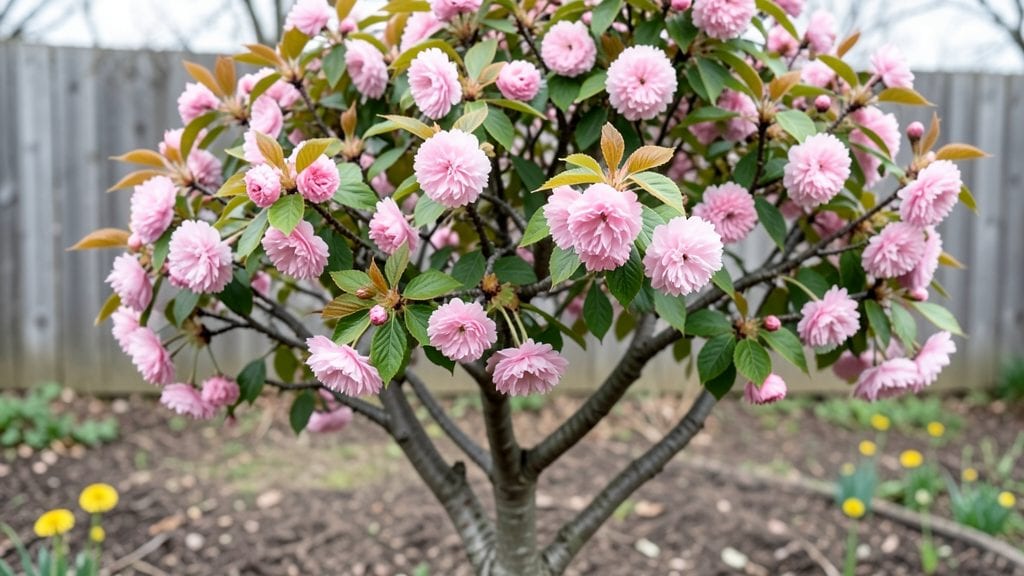
The dwarf cherry blossom tree transforms Pacific Northwest gardens into a fragrant, pink-hued paradise where hummingbirds dart through delicate spring showers. 🌸 I’ve watched these trees become the unexpected stars of small urban yards, their branches heavy with blossoms that last weeks longer than their full-sized cousins.
The key isn’t just planting—it’s positioning them where their early spring drama contrasts with evergreens or dark foliage, creating a visual story that unfolds with the seasons.
Perfect for patios, courtyard edges, or as a focal point near seating areas, these trees thrive in containers or planted beds—even in tight spaces where full-size trees would overwhelm.
Pair them with salmon-colored heuchera or silver-blue artemisia to enhance their soft pink hues, and you’ll create a layered effect that hummingbirds can’t resist. The real magic happens when you time their placement to frame existing structures or pathways, turning a simple corner into a seasonal highlight.
You’ll end up with a garden that feels like a living watercolor painting—pale pink clouds against deep green backdrops, all while attracting pollinators before most other plants even wake up.
The blooms arrive just as winter fades, offering a burst of color that lifts the mood and invites neighbors to pause and admire. With the right companions, this tree becomes the heart of your outdoor space, not just another plant in the landscape.
Whether you’re working with a balcony, a narrow yard, or a larger garden, these trees adapt beautifully. The secret lies in their placement: near windows for indoor views, under deck overhangs for shade, or as a standalone specimen where their branches can arch gracefully.
Think of them as nature’s way of bringing spring indoors—just in miniature form.
📚 In This Guide
- What you need
- Instructions
- Tips and common mistakes
- Wrapping up and next steps
What you need
- ● Dwarf cherry blossom tree: 1 tree (choose a variety like Prunus serrulata 'Kanzan' or 'Shirotae' for compact growth, typically 10–15 ft tall at maturity).
- ○ Optional: Pre-balled-and-burlapped (B&B) or container-grown tree for easier transplanting.
- ● Planting site: Full sun (6+ hours of direct sunlight daily).
- ● Well-draining, slightly acidic soil (pH 5.5–6.5). Test your soil with a kit if unsure!
- ● Space: At least 8–10 ft from structures/walls (accounting for mature spread).
- ● Soil amendments (if needed): 1–2 bags (50 lb each) of compost or peat moss to improve drainage.
- ● 1 lb of slow-release fertilizer (10-10-10 NPK ratio) for initial planting.
- ● Digging: 1 shovel (round-point for digging, flat for amending soil).
- ● 1 garden trowel (for delicate root adjustments).
- ○ Support: 1 tree stake (2–3 ft tall, optional but helpful for young trees in windy areas).
- ● 1 roll of tree tie (wide, fabric-based to avoid girdling).
- ● Watering: 1 hose with adjustable nozzle or watering can (5+ gallon capacity).
- ○ Optional: Drip irrigation kit for consistent moisture.
- ● Mulching: 2–3 bags (2–3 cubic feet each) of organic mulch (cedar chips or bark).
- ● Safety: 1 pair of gloves (gardening or work gloves).
- ● 1 knee pad (for comfort during planting).
- ● ✅ Timing: Plant in early spring or fall (avoid extreme heat or frost).
- ● ✅ Weather check: Ensure no rain is forecasted for 24–48 hours after planting.
- ● ✅ Local regulations: Verify if your area requires permits for planting trees near sidewalks or streets.
Step-by-Step guide to planting and caring for a dwarf cherry blossom tree
Here's how to create your own Pacific Northwest hummingbird haven with this delicate beauty.
🌱 Step 1: Select and Prepare the Perfect Planting Site
Choose a location with full sun exposure (6-8 hours daily)—this is non-negotiable for vibrant blooms. The tree thrives in well-draining soil with a slightly acidic to neutral pH (6.0-7.0). If your soil is heavy clay, amend it with 3-4 inches of compost mixed into the top 12 inches of soil before planting.
Dig a hole twice as wide as the tree's root ball but only as deep. This encourages roots to spread horizontally rather than settling too low, which can suffocate them. Gently loosen the roots if they appear tightly bound—this prevents transplant shock and gives them room to establish quickly.
🪴 Step 2: Plant Your Dwarf Cherry Blossom Tree
Position the tree in the hole so the top of the root ball sits 1-2 inches above ground level. This prevents water from pooling around the trunk, which can cause rot. Fill the hole with native soil, pressing gently to remove air pockets but avoiding compaction that restricts roots.
Water deeply right after planting to settle the soil and eliminate air gaps. You'll know it's right when water drains evenly through the hole without pooling. Mulch the base with 2-3 inches of organic mulch, keeping it 3 inches away from the trunk to prevent moisture buildup that invites disease.
☀️ Step 3: Establish a Watering and Fertilizing Routine
Water your tree deeply twice weekly for the first month to encourage deep root growth. After that, water once weekly unless you experience dry spells longer than 3 days. Check moisture by sticking your finger 2 inches into the soil
Apply a balanced, slow-release fertilizer (10-10-10) in early spring and again in late summer. Avoid high-nitrogen fertilizers—they promote leafy growth at the expense of flowers. You'll see the difference in 3-4 weeks when new growth emerges with a vibrant green hue. Prune in late winter or early spring before new growth begins. Remove any dead, diseased, or crossing branches first—they compete for resources and weaken the tree. Cut back any suckers (shoots growing from the base) immediately to direct energy upward. Shape the tree lightly by thinning out crowded branches to improve airflow. This prevents fungal diseases and ensures each remaining branch gets enough sunlight to produce abundant blooms. Avoid heavy pruning—dwarf varieties bloom on old wood, so aggressive cuts reduce next year's flowers. Plant companion flowers like bee balm, columbine, or penstemon nearby to extend the blooming season and attract hummingbirds year-round. These pollinators love the nectar-rich blossoms and will visit your tree repeatedly, creating a lively spring display. Add a shallow birdbath or small pond within 10 feet of the tree for drinking and bathing. Hummingbirds prefer moving water, so a solar-powered fountain will make your garden even more inviting. Watch as they flit between branches, their iridescent feathers catching the light like living jewels.✂️ Step 4: Prune for Health and Blooms
🐦 Step 5: Create a Hummingbird-Friendly Habitat
Tips & tricks for perfect dwarf cherry blossom planting
Here's what nobody tells you about giving your cherry blossom its best start in life.
Sunlight Savvy: That 6-8 hours of full sun isn't just ideal—it's absolutely critical. I learned this the hard way after planting one in partial shade where it produced only sparse blooms. If your yard has afternoon shade, consider planting it where it gets morning sun instead. The Pacific Northwest's cloud cover can fool you—measure the actual sunlight hours with a sun calculator app to be sure.
Root Ball Rescue: When you're loosening those tightly bound roots in Step 1, don't just pull them apart—score the root ball with your fingers first. This creates channels that help roots establish more quickly. Between us, I've seen people skip this step and end up with trees that struggle for years to catch up. Those few extra minutes make all the difference.
Watering Wisdom: The twice-weekly watering routine in Step 3 works wonders, but here's the trick: water deeply enough that it reaches down to those 12 inches where the roots are establishing. Use a moisture meter or dig down 2 inches after watering—if it's still damp, you're good. If it's dry, give it another drink. Overwatering is just as bad as underwatering for these delicate trees.
Fertilizer Timing: That 3-4 week window after fertilizing in Step 3 is when you'll notice the magic happen. Watch for new growth that's a vibrant green—if it's more yellowish, you're overdoing it. I've seen people fertilize too early in spring when the tree is still dormant, which can actually stress it. Wait until you see those first buds forming before applying that second dose in late summer.
Pro Tips for Dwarf Cherry Blossom Tree
- Here's what nobody tells you about giving your cherry blossom its best start in life.
- Sunlight Savvy: That 6-8 hours of full sun isn't just ideal—it's absolutely critical.
- Root Ball Rescue: When you're loosening those tightly bound roots in Step 1, don't just pull them apart—score the root ball with your fingers first.
Frequently asked questions
Got questions about your dwarf cherry blossom tree? You’re not alone! Here are answers to the most common queries to help you nurture your tiny, blossom-filled beauty with confidence.
How fast does a dwarf cherry blossom tree grow?
A dwarf cherry blossom typically grows 6 to 12 inches per year, reaching maturity (10–15 feet tall) in about 5–10 years. Patience pays off—these trees thrive slowly but reward you with stunning blooms for decades! Prune lightly in late winter to maintain shape and encourage bushier growth.
When is the best time to plant a dwarf cherry blossom tree?
Plant your tree in early spring or fall (3–4 weeks before frost) for optimal root establishment. Avoid summer heat or winter freezes, which can stress young roots. Amend the soil with compost and water deeply after planting to reduce transplant shock.
Will a dwarf cherry blossom attract hummingbirds?
Absolutely!
These trees produce tiny, nectar-rich flowers that hummingbirds adore—especially in the Pacific Northwest’s spring. For extra appeal, pair it with native perennials like salvia or bee balm. Just ensure the tree gets full sun (6+ hours/day) to maximize blooms.
How cold-hardy are dwarf cherry blossom trees?
Most varieties tolerate USDA Zones 5–8, handling temps down to -15°F (-26°C). Young trees may need winter protection (burlap wraps or mulch) until established. Avoid planting in frost pockets—sheltered, south-facing spots work best for consistent blooms.
What should I do if my dwarf cherry blossom isn’t blooming?
Lack of blooms often stems from over-fertilizing (too much nitrogen), poor sunlight, or stress. Try this:
- Prune in late winter to remove dead wood and open the canopy.
- Reduce fertilizer—use a low-nitrogen, high-phosphorus blend in early spring.
- Check sunlight—move to a sunnier spot if possible.
- Water deeply during droughts (1–1.5 inches/week).
Are there dwarf cherry blossom alternatives for smaller spaces?
Yes! Consider these compact options:
Tree
Height
Bloom Time
Kwanzan Cherry (Prunus serrulata 'Kwanzan')
15–25 ft (dwarf grafts stay <10 ft)
Late spring
Yoshino Cherry (Prunus × yedoensis)
20–30 ft (dwarf: 8–12 ft)
Early spring
Okame Cherry (Prunus × incam 'Okame')
15–20 ft (dwarf: 6–10 ft)
Late winter/early spring
Wrapping up and next steps
Incorporating a dwarf cherry blossom tree into your Pacific Northwest garden isn’t just about beauty—it’s about creating a thriving ecosystem that hummingbirds, pollinators, and even your soul will adore. 🌸 With its compact size, vibrant blooms, and low-maintenance care, this tree is the perfect way to bring spring’s magic to your outdoor space year after year.
Whether you’re a seasoned gardener or just starting, now’s the time to plant the seeds (literally!) for a future filled with delicate blossoms and cheerful visitors.
Ready to transform your yard into a hummingbird haven? Start by researching local nurseries for the best dwarf cherry blossom varieties suited to your climate, then mark your calendar for early spring planting. Your future self—and the tiny, winged guests—will thank you! 🐦⬛✨