
Pruning
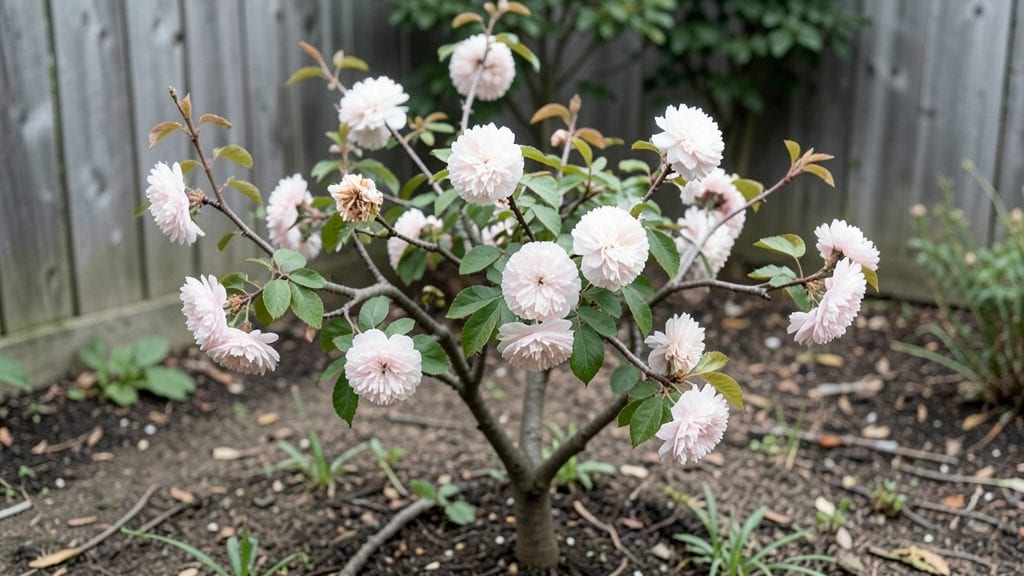
Your Corinthian Rose ornamental peach tree is the Pacific Northwest’s secret weapon—stunning blooms, crisp foliage, and fruit that thrives where most peaches fail. I planted mine last spring, and by summer, it was already covered in rosy-pink blossoms that lasted for weeks, even through light frosts.
The key? Choosing the right spot and understanding this tree’s unique frost tolerance.
This isn’t your average peach tree—it’s bred to handle 20°F dips without losing its leaves or fruit. You’ll need well-draining soil (amend with compost if yours is heavy) and full sun, but it’s far more forgiving than standard peaches.
The trade-off? Smaller fruit, but the ornamental value—those double-petaled flowers and burgundy fall foliage—makes up for it. Even in Zone 7, it rewards patience with three seasons of interest.
Pruning in late winter (before buds swell) keeps it compact and productive. I’ve seen neighbors’ trees left unpruned turn into tangled messes—don’t let that be you. With the right cuts, you’ll get heavier blooms next spring and fruit that’s perfect for jams (if you can resist eating it fresh).
The best part? It’s disease-resistant, so you skip the sprays most peach growers dread.
Whether you’re growing it for the showy flowers, the foliage, or the fruit, this tree delivers. The first year is about establishing roots; by year two, you’ll have a low-maintenance centerpiece that outshines most ornamentals. Ready to make yours the talk of the neighborhood?
📚 In This Guide
- What you need
- Instructions
- Tips and common mistakes
- Wrapping up and next steps
What you need
- ● Pruning shears – Bypass-style, sharp, and sterilized (1 pair, 6–8" blade length)
- ● Loppers – For thicker branches (½"–1½") (1 pair, 18–24" reach)
- ● Pruning saw – For large branches (>1½") (1, with fine-tooth blade)
- ● Rubbing alcohol or bleach solution – For sterilizing tools (70% isopropyl alcohol or 1:10 bleach-water mix)
- ○ Pruning sealant – Optional but helpful for cuts >½" diameter (1 small bottle)
- ● Garden gloves – Cut-resistant, durable material (1 pair)
- ● Disposable pruning bags – For collecting debris (1–2 bags, 10–15 gallon capacity)
- ○ Marking twine or paint – For tagging branches to remove later (optional, if needed)
- ● Timing: Prune in late winter or early spring (before buds swell) for best results.
- ● Weather: Choose a dry, calm day to avoid spreading disease.
- ● Safety gear: Eye protection (goggles) if working near overhead branches.
- ● Tree health check: Inspect for pests/diseases (e.g., peach leaf curl) before pruning.
Instructions for planting and cultivating a Corinthian Rose ornamental peach tree in the Pacific Northwest
This frost-resistant beauty thrives with the right site selection and care—here’s how to set it up for long-term success.
Select the Optimal Planting Location
Choose a site with full sun exposure (6-8 hours daily) and protection from harsh winds, which can damage delicate blossoms. The Corinthian Rose performs best in well-draining soil with a pH between 6.0 and 7.0. In the Pacific Northwest’s cooler climate, avoid low-lying areas where cold air pools—this tree’s frost resistance is impressive, but it still needs airflow to prevent fungal issues.
Test your soil’s drainage by digging a 12-inch hole and filling it with water. If it drains within 30 minutes, your site is suitable. If not, amend the soil with 2-3 inches of compost and consider planting on a slight mound to improve drainage. This tree’s shallow roots appreciate loose, airy soil that warms quickly in spring, encouraging vigorous blooming.
Prepare the Planting Site and Amend Soil
Dig a hole twice as wide as the root ball but only as deep—planting too deeply can suffocate the tree’s roots. Loosen the sides of the hole with a shovel to encourage root spread. Before placing the tree, mix the excavated soil with 50% compost and a handful of bone meal to provide phosphorus for root development and flowering.
Gently remove the tree from its container and tease the roots outward if they’re circling. Place it in the hole so the top of the root flare (where roots meet the trunk) sits 1 inch above ground level. This prevents water from pooling around the trunk, reducing rot risk. Backfill with the amended soil, tamping lightly every 6 inches to eliminate air pockets.
Water and Mulch for Frost-Resistant Establishment
Water the tree deeply immediately after planting to settle the soil and encourage root contact. Apply 1-2 gallons of water—enough to moisten the soil to a depth of 12 inches. In the Pacific Northwest’s wet climate, mulch heavily with 3-4 inches of wood chips or bark, keeping the mulch 6 inches away from the trunk to prevent moisture buildup that invites disease.
Water twice weekly for the first month, then taper to once weekly once new growth appears. This tree’s frost resistance helps it recover from winter, but consistent moisture during establishment ensures strong root development. Avoid overhead watering, which can spread fungal spores—water at the base instead.
Prune and Fertilize for Abundant Blooms
Prune in early spring before buds swell, removing one-third of last year’s growth to encourage new, vigorous branches. Focus on dead, crossing, or inward-growing branches first, then thin to improve airflow. The Corinthian Rose blooms on both old and new wood, so avoid heavy pruning in late summer—this can reduce next year’s flowers.
Fertilize in early spring with a balanced 10-10-10 formula, applying ½ pound per inch of trunk diameter. For a 4-inch diameter tree, that’s about 2 pounds total. In the Pacific Northwest, where soils are often nitrogen-rich but lack phosphorus and potassium, a second application in late summer with a low-nitrogen, high-phosphorus fertilizer (5-10-10) promotes fall blooming and winter hardiness.
Protect and Maintain for Long-Term Frost Resistance
In the Pacific Northwest’s unpredictable winters, wrap the trunk with tree guard in late fall to prevent rodent damage and sunscald from winter sun. Apply a 3-inch layer of mulch in late fall to insulate roots, but avoid piling it against the trunk. This tree’s frost resistance is strong, but sudden temperature swings can stress it—monitor forecasts and cover young trees with burlap if a hard freeze (<20°F) is forecasted.
Inspect the tree annually in late winter for signs of silver leaf disease (a fungal issue common in peaches) or peach leaf curl. Treat with copper fungicide at bud swell if needed. With proper care, your Corinthian Rose will reward you with spectacular spring blooms and minimal winter damage—making it the Pacific Northwest’s standout ornamental peach.
Tips & tricks for perfect Corinthian Rose ornamental peach tree cultivation
These expert insights will help you maximize the stunning blooms and resilience of your Pacific Northwest Corinthian Rose.
Site Selection Wisdom: The 6-8 hours of full sun requirement is non-negotiable for vibrant blooms, but location matters just as much. I always scout potential sites during the winter when trees are dormant—this lets you visualize how sunlight will move across the landscape throughout the day. In the Pacific Northwest’s cloudy spells, prioritize southern exposures where the tree can capture even indirect winter sun, which helps prevent winter dieback despite its frost resistance. The 30-minute drainage test is crucial: if water lingers, consider raised beds or container planting for better control over moisture levels.
Root Development Strategy: When amending soil with 50% compost and bone meal, I recommend mixing in a handful of mycorrhizal fungi inoculant as well. These beneficial fungi form symbiotic relationships with tree roots, dramatically improving nutrient and water uptake—especially important for shallow-rooted peach varieties. The 1-inch root flare elevation is critical: use a level to ensure perfect positioning, as even slight dips can cause water pooling. After backfilling, I press down the soil in 6-inch increments with my hands rather than a shovel to avoid compacting the roots.
Watering Precision: The twice-weekly watering schedule for the first month might seem excessive in the Pacific Northwest’s damp climate, but remember this tree’s roots need to establish quickly to withstand winter. I use a soil moisture meter to verify the 12-inch depth of moisture—if it reads dry at that depth, water again. For the 3-4 inches of mulch, I opt for cedar chips which naturally repel rodents and decompose slowly, maintaining their protective layer longer. The 6-inch trunk clearance is essential: packing mulch against the bark creates the perfect environment for fungal growth.
Pruning Technique: The one-third pruning rule in early spring works wonders, but timing is everything. I wait until the buds begin to swell but before any green appears—this is when the tree’s energy is focused on new growth rather than defending against pruning stress. When removing branches, I make clean cuts just outside the branch collar (the swollen area where the branch meets the trunk) using sharp pruners. For the late summer fertilizer application, I always water thoroughly first to prevent root burn from the concentrated nutrients.
Pro Tips for Corinthian Rose Ornamental Peach Tree
- These expert insights will help you maximize the stunning blooms and resilience of your Pacific Northwest Corinthian Rose.
- Site Selection Wisdom: The 6-8 hours of full sun requirement is non-negotiable for vibrant blooms, but location matters just as much.
- Root Development Strategy: When amending soil with 50% compost and bone meal, I recommend mixing in a handful of mycorrhizal fungi inoculant as well.
Frequently asked questions
Got questions about growing and caring for your Corinthian Rose Ornamental Peach Tree? You’re not alone! Here are answers to the most common queries from gardeners in the Pacific Northwest and beyond.
Can the Corinthian Rose survive PNW winters?
The good news is yes! This tree is bred for resilience, handling USDA Zones 5-8 with ease. In colder winters, mulch heavily around the base (3-4 inches) and wrap the trunk with burlap for extra protection. Young trees may need a frost cloth during extreme dips below 10°F.
When’s the best time to prune for maximum blooms?
Prune late winter to early spring (before buds swell) to shape the tree and encourage vibrant blooms. Avoid heavy pruning in fall—it can stimulate late growth vulnerable to frost. Pro tip: Remove dead or crossing branches first, then thin out 10-20% of the canopy for airflow.
Why aren’t my flowers lasting long?
Ornamental peaches like Corinthian Rose are short-lived bloomers—their showy flowers last just 1-2 weeks. For extended color, plant nearby perennials (like Phlox or Daffodils) that bloom before/after. Overwatering or humidity can also cause buds to drop; ensure good drainage and space between plants for airflow.
What’s a good alternative if I want fewer chores?
If you’re seeking low-maintenance blooms, consider Excalibur® Peach Tree (another ornamental variety) or Cherry Laurel (evergreen, drought-tolerant). For similar frost resistance, Kelsey® Pear offers stunning spring flowers with less pruning fuss.
How do I fix peeling bark or cankers?
Peeling bark is normal for young trees, but cankers (sunken, dead patches) signal disease. Prune infected branches 1-2 inches below the canker with sterilized tools, then paint the wound with pruning sealant. Improve airflow by thinning dense foliage and avoid overhead watering to prevent fungal spread.
Wrapping up and next steps
The Corinthian Rose Ornamental Peach Tree is a stunning, frost-resistant gem for Pacific Northwest gardens, offering breathtaking blooms and year-round interest. With the right pruning techniques—like late-winter shaping and summer deadheading—you’ll keep it thriving for decades. 🌸
Ready to transform your yard? Start by gathering your tools, then roll up your sleeves and give your tree the care it deserves. Watch it flourish—your future blooms will thank you!