
Pruning
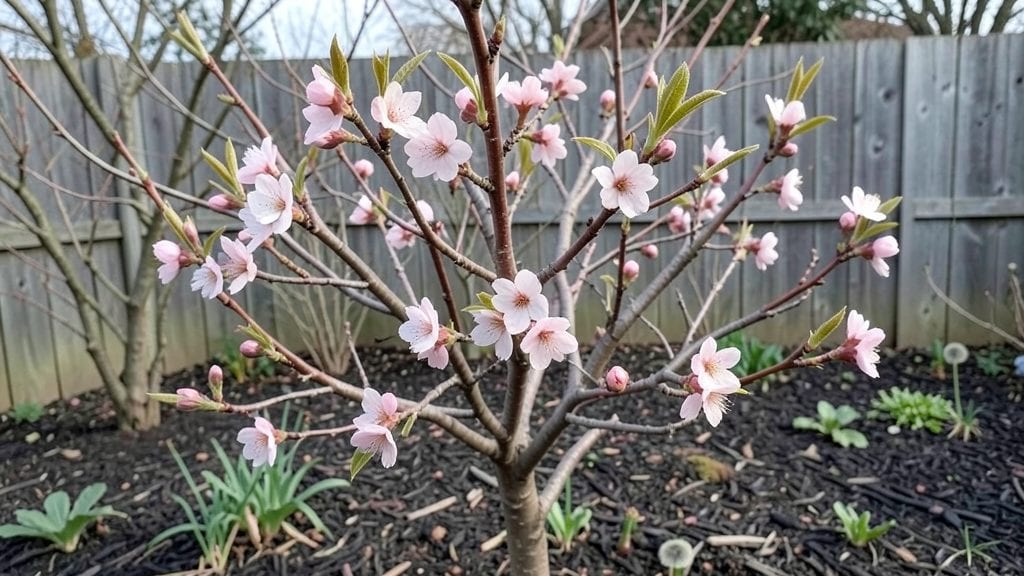
The Corinthian flowering peach tree thrives where others fail—its late-blooming beauty makes it the Pacific Northwest’s secret weapon against spring frosts. 🌸 I’ve watched mine burst into pink blossoms in May, long after neighboring trees still huddle under frost warnings.
The key isn’t luck; it’s timing, soil prep, and a few pruning tricks that keep this tree flourishing when others give up.
This tree demands full sun and well-draining soil—think sandy loam with a touch of compost—and handles our region’s wet winters better than most. Planting in late fall gives roots time to establish before the first frost, while spring pruning (just after blooms fade) keeps the shape open and airy.
The real magic happens in Zone 7-9, where it outlasts early freezes that devastate other peaches.
You’ll end up with a tree that rewards patience: fragrant pink blooms in late spring, glossy green foliage all summer, and even the occasional tiny peach if pollinated.
The trade-off? It needs regular watering the first two years and annual pruning to prevent overcrowding. But once established, it’s nearly maintenance-free—just sit back and enjoy the show.
Common issues like peach leaf curl or aphids are easy to manage with copper sprays and neem oil, and the tree’s resistance to late frosts means fewer disappointments. Whether you’re a first-time gardener or a PNW veteran, this tree delivers reliable beauty with minimal fuss. Let’s get yours planted right.
📚 In This Guide
- What you need
- Instructions
- Tips and common mistakes
- Wrapping up and next steps
What you need
- ● Pruning shears: Sharp, bypass-style shears (avoid anvil shears to prevent crushing branches). Size: 6–8 inches for medium branches.
- ● Loppers: For thicker branches (up to 2 inches in diameter). Look for: Ratcheting or bypass action for precision.
- ● Pruning saw: Folding or curved blade for branches >2 inches. Tip: Oil the blade to prevent rust.
- ● Disinfectant (70% isopropyl alcohol or bleach solution): Clean tools between cuts to avoid disease spread.
- ○ Pruning sealant (optional but helpful): Pruning wax to coat larger cuts (>½ inch) and prevent moisture loss.
- ● Gloves: Heavy-duty, cut-resistant gloves to protect hands from thorns.
- ● Ladder or step stool: If your tree is taller than 6 feet. Safety first: Use a stable, non-slip model.
- ● Know your tree’s age: Corinthian peach trees are late-blooming—prune in late winter or early spring (after frost risk passes).
- ● Weather check: Prune on a dry, overcast day (humidity slows healing). Avoid pruning if rain is forecasted within 24 hours.
- ● Safety gear: Safety glasses (to shield from debris) and long sleeves/pants (for thorn protection).
- ● Tree health assessment: Inspect for dead, diseased, or crossing branches before starting. Mark them with flagging tape if needed.
- ● Layer up: Late frosts are tricky—consider burlap wraps or frost cloths for young trees if frost is predicted post-pruning.
- ● Local soil test: Check your soil’s pH (ideal: 6.0–7.0) and amend with compost if needed before planting or post-pruning.
- ● Tool sharpening: Dull shears tear bark—hone blades with a file or sharpening stone before the season.
Instructions for planting and caring for Corinthian flowering peach trees in the Pacific Northwest
Here's the proven method to establish resilient Corinthian flowering peach trees that thrive despite late frosts.
🌱 Step 1: Select the Perfect Planting Site and Timing
The Corinthian flowering peach thrives in full sun—choose a location with at least 6-8 hours of direct sunlight daily. In the Pacific Northwest, where late frosts linger, select a site with south-facing exposure to maximize warmth absorption. Avoid low spots where cold air settles, as these trees are particularly frost-sensitive during early spring blooming.
Plant in early fall (September-October) or late winter (February-March), when soil temperatures are cool but not frozen. This timing allows roots to establish before summer heat arrives. If planting in spring, wait until after the last frost date—typically late May in most PNW regions. The tree's shallow root system needs time to anchor before dormancy breaks.
🪴 Step 2: Prepare the Soil and Plant with Proper Spacing
Amend the soil with 2-3 inches of well-composted organic matter mixed into the top 12 inches of soil. Corinthian flowering peaches prefer slightly acidic to neutral soil (pH 6.0-7.0). Test your soil and adjust with sulfur or lime if needed. The planting hole should be twice as wide as the root ball but no deeper, as these trees dislike being buried too deeply.
Space trees 15-20 feet apart to allow for their mature size and airflow, which reduces disease risk. Place the tree so the graft union (visible bump near the base) sits 2-3 inches above soil level—this prevents root rot and ensures proper growth. Backfill with native soil, tamping gently to remove air pockets, then water deeply to settle everything.
💧 Step 3: Water Deeply and Mulch for Frost Protection
Water the newly planted tree to a depth of 12-18 inches, ensuring the root zone is thoroughly moist. In the Pacific Northwest, where summers can be dry, deep watering once a week (or more during heatwaves) is ideal. Avoid shallow watering, which encourages weak root growth. You’ll know you’ve watered deeply when the soil feels damp 12 inches down—use a screwdriver to check.
Apply 3-4 inches of organic mulch (like wood chips or straw) around the base, keeping it 6 inches away from the trunk to prevent rot. This mulch layer acts as insulation, protecting roots from late spring frosts (which can devastate blooms) and summer heat. Replenish mulch annually to maintain its protective barrier.
☀️ Step 4: Prune for Structure and Frost Hardiness
Prune in late winter (February) before buds swell, removing dead, crossing, or weak branches to open the canopy for better airflow. Focus on thinning out rather than topping—this encourages strong, upright growth. The Corinthian’s natural vase shape should be preserved, but any branches growing inward or rubbing should go. Use clean, sharp pruners to make cuts just outside the branch collar.
After pruning, apply a dormant oil spray to protect against overwintering pests. In early spring, as buds begin to swell, monitor for late frost warnings. If frost is forecasted, cover young blooms with frost cloth or a lightweight blanket to protect them. These trees are stunning when in bloom, but frost can turn petals into mush overnight—don’t skip this step!
✂️ Step 5: Maintain Through Seasons for Long-Term Health
Fertilize in early spring with a balanced, slow-release fertilizer (10-10-10) applied around the drip line (the edge of the tree’s canopy). Avoid high-nitrogen fertilizers, which promote leafy growth at the expense of flowers. Water deeply after fertilizing to help nutrients reach the roots. In summer, apply a layer of compost around the base to replenish organic matter.
Watch for peach leaf curl, a common fungal disease in the PNW. If you notice curled, puckered leaves in spring, treat with copper fungicide as soon as symptoms appear. Resistant varieties like Corinthian are less prone, but prevention is still key. Thin out fruit if necessary—while these trees are ornamental, overloaded branches can snap under the weight of blooms.
Tips & tricks for perfect Corinthian flowering peach tree planting
These practical insights will help you navigate the nuances of establishing a resilient Corinthian flowering peach tree in the Pacific Northwest's challenging climate.
Sunlight Strategy: While the instructions specify 6-8 hours of direct sunlight, I recommend positioning your tree to capture morning sun first—this gradual warmth helps prevent frost damage during those critical spring blooming periods. In the PNW, where sunlight can be diffused, consider supplementing with a south-facing wall or fence to reflect additional light onto the tree's canopy.
Soil Preparation Insight: The 2-3 inches of compost recommendation is perfect, but here's the thing: Corinthian trees particularly appreciate a slightly looser soil texture. After amending with compost, I like to gently aerate the planting area with a garden fork to create small air pockets—this improves root penetration and drainage, which is crucial for frost resistance. The 12-inch depth for soil amendment isn't just about nutrients; it's about creating a thermal buffer zone that protects shallow roots.
Frost Protection Layering: That 3-4 inches of mulch is your first line of defense against late frosts, but don't stop there. For extra insurance during critical bloom periods, I create a second protective layer by loosely piling additional mulch around the base of the tree—think of it as building a thermal blanket. This technique has saved my blooms multiple times when temperatures dip unexpectedly. The key is to keep this extra mulch at least 6 inches away from the trunk to prevent moisture buildup that could lead to rot.
Pruning Precision: When pruning in late winter as instructed, pay special attention to the tree's natural vase shape—this isn't just about aesthetics. The open center created by proper pruning allows warm air to circulate upward, creating a microclimate that can protect blossoms from radiant frost. I like to make my cuts just outside the branch collar, but here's my secret: I always sterilize my pruners with rubbing alcohol between cuts to prevent spreading any potential diseases that could weaken the tree during its vulnerable early spring growth phase.
Pro Tips for Corinthian Flowering Peach Tree
- These practical insights will help you navigate the nuances of establishing a resilient Corinthian flowering peach tree in the Pacific Northwest's challenging climate.
- In the PNW, where sunlight can be diffused, consider supplementing with a south-facing wall or fence to reflect additional light onto the tree's canopy.
- Soil Preparation Insight: The 2-3 inches of compost recommendation is perfect, but here's the thing: Corinthian trees particularly appreciate a slightly looser soil texture.
Frequently asked questions
about the Corinthian flowering peach tree—especially for Pacific Northwest gardeners—can make all the difference in success. Here are answers to the most common queries:When is the best time to plant a Corinthian flowering peach tree in my region?
The ideal window is late spring to early summer (May–June) when soil is warm but late frosts have passed. This gives roots time to establish before winter. If planting in fall, do so at least 6 weeks before the first frost—this tree hates wet, cold soil.
How does the Corinthian handle late frosts compared to other flowering peach varieties?
This variety is notoriously frost-tolerant—its blooms can survive brief dips to 20°F (-7°C), thanks to its late-blooming habit. Unlike traditional peaches (which bloom early and risk damage), Corinthian’s flowers often open after the last frost in the PNW. Still, avoid pruning until after blooming to protect next year’s buds!
Should I prune my Corinthian flowering peach tree in winter, or wait until spring?
For the PNW, wait until late winter or early spring (February–March) to prune. This timing prevents frost damage to fresh cuts and allows you to assess winter dieback. Never prune after summer—new growth won’t harden before cold snaps. Use sterilized tools to avoid bacterial canker!
What’s the best alternative if my Corinthian tree isn’t thriving in my yard?
Try these frost-hardy, late-blooming peach hybrids:
- ‘Springtime’ peach – Blooms slightly earlier but handles 18°F (-8°C).
- ‘Bonanza’ peach – Dwarf variety with cold tolerance (zone 5).
- Nectarine hybrids (e.g., ‘Fantasia’) – Often more resilient than peaches.
For ornamental appeal without fruit, consider Prunus ‘Kanzan’ cherry—it’s equally stunning and frost-proof!
Why are my Corinthian’s leaves curling, and how do I fix it?
Curling leaves usually signal peach leaf curl (a fungal disease) or aphid infestations. Treat with:
- Dormant oil spray (apply in late winter before buds swell).
- Neem oil (for aphids—spray undersides of leaves).
- Remove infected leaves and sterilize pruners between cuts.
Prevention tip: Avoid overhead watering and plant in full sun (6+ hours/day) to improve airflow.
Wrapping up and next steps
The Corinthian flowering peach tree is your Pacific Northwest ally against late frosts, blending stunning blooms with resilient fruit-bearing potential. By mastering its pruning—especially open-center shaping and late-winter cuts—you’ll safeguard its health and maximize yields, even in chilly climates. 🌸✂️
Ready to transform your orchard? Start small: prune one tree this season and track its progress. Soon, you’ll be sharing tips with fellow gardeners—and maybe even gifting those prized peaches! 🍑🌿