
Trees
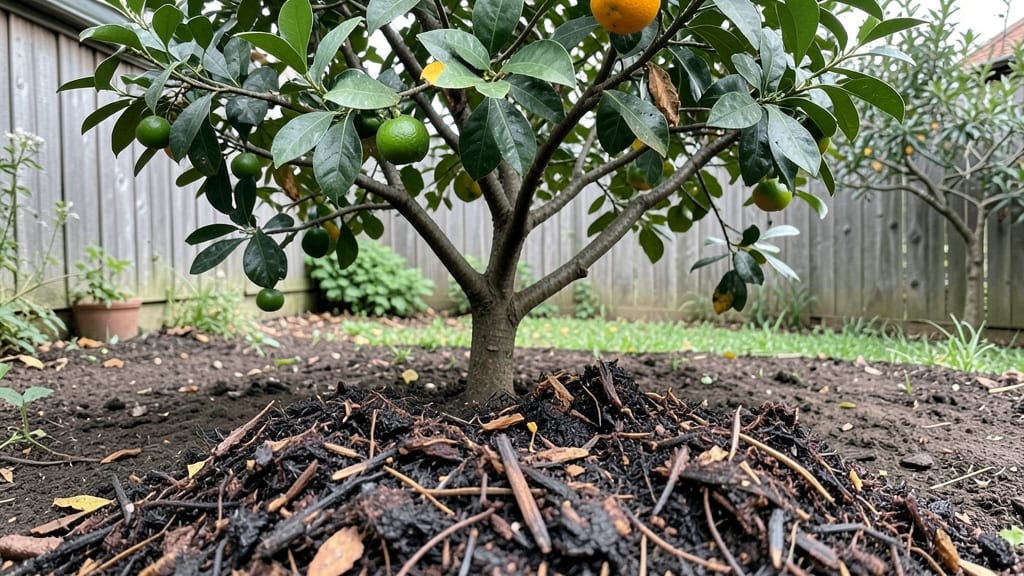
Citrus trees thrive when their roots feast on nutrient-rich compost—this is the secret weapon behind my neighbor’s jewel-toned oranges that burst with flavor every December. 🌱 The right compost doesn’t just feed the tree; it mimics the well-draining, slightly acidic soils citrus trees crave in their native Mediterranean climate.
Most store-bought composts lack the specific balance orange trees need, but with a few adjustments, you can turn kitchen scraps and yard waste into a fail-safe growth booster.
Start with well-aged compost—no fresh manure or overly wet piles that can burn roots. For best results, mix equal parts compost with your existing soil before planting, or top-dress mature trees with a 3-inch layer each spring.
The key is consistency: citrus trees are light feeders but benefit from steady nutrition. Organic compost improves soil structure, retains moisture, and introduces beneficial microbes that help roots absorb water and nutrients more efficiently. You’ll notice stronger branches, thicker foliage, and—most exciting—earlier, more abundant fruit within a single season.
Monitor your tree’s response by checking the soil every few months. Healthy citrus soil should smell earthy, not sour or chemical-like. If leaves yellow between veins, it’s a sign of iron deficiency—compost alone won’t fix this, but pairing it with a citrus-specific fertilizer in early spring will.
The goal is to create a self-sustaining ecosystem where your orange tree doesn’t just survive, but thrives with minimal effort. Once you see the difference, you’ll never go back to synthetic fertilizers.
This method works for container-grown trees too—just use a high-quality potting mix blended with compost. Whether you’re growing in the ground or pots, the principles stay the same: feed lightly, feed often, and let nature do the heavy lifting.
Your tree will reward you with sweeter fruit and fewer pests, proving that sometimes, the simplest solutions are the most powerful.
📚 In This Guide
- What you need
- Instructions
- Tips and common mistakes
- Wrapping up and next steps
What you need
- ● Browns (Carbon-Rich): Dry leaves – 1 part (crushed for faster breakdown)
- ● Straw or hay – 1 part (avoid treated varieties)
- ● Shredded newspaper or cardboard – ½ part (non-glossy, unbleached)
- ● Greens (Nitrogen-Rich): Fresh grass clippings – 1 part (lightly dried to avoid mold)
- ● Vegetable scraps (no citrus peels or meat/dairy) – 1 part
- ● Coffee grounds – ¼ part (adds acidity, great for citrus!)
- ● Citrus-Specific Boosters: Eggshells – ½ cup per batch (crushed, for calcium)
- ● Banana peels – 2-3 peels per batch (rich in potassium)
- ● Tools & Setup: Compost bin or pile – at least 3’x3’x3’ (for proper aeration)
- ● Garden fork or shovel – for turning
- ● Gloves – to protect your hands
- ● Watering can – for moisture control
- ● Wood ash – sparingly (adds potassium, but test soil pH first—citrus loves slightly acidic soil!)
- ● Worm castings – ½ cup per batch (speeds up nutrient release)
- ● Citrus tree prunings – chopped small (adds organic matter and disease resistance)
- ● Biochar – ¼ part (improves drainage and microbial activity)
Step-by-Step guide to using compost for orange trees
Here’s how to transform citrus nutrition—no fancy amendments needed.
🌱 Step 1: Test Soil and Select the Right Compost
Orange trees thrive in slightly acidic to neutral soil (pH 6.0-7.5). Before adding compost, test your soil’s pH using a citrus-specific test kit—orange trees hate alkaline soil, which locks out iron and causes yellowing leaves. If your soil is already rich in organic matter, a light application (1-2 inches) of compost is enough. For poor or sandy soil, aim for 3-4 inches of well-aged compost to rebuild structure and microbial life.
I always use finished compost (fully decomposed, dark brown, and crumbly) for citrus. Fresh manure or half-decomposed compost can burn roots with ammonia. Look for compost with a balanced NPK (nitrogen-phosphorus-potassium) ratio—around 2-3-2—to support both foliage and fruit production. If your compost smells earthy and sweet, it’s ready. If it smells sour or like ammonia, let it age another 2-3 months.
🪴 Step 2: Apply Compost in the Right Way
Spread 2-3 inches of compost evenly over the drip line (the area where branches extend) of mature trees, or 6-12 inches from the trunk for young trees. Avoid piling compost directly against the trunk—this can cause rot or attract pests. For newly planted trees, mix 5-10 gallons of compost into the top 6-8 inches of soil during planting to improve root establishment.
Use a broadfork or garden fork to loosen the top 2-3 inches of soil before applying compost. This helps roots penetrate the amended layer more easily. Water the area deeply (1-2 inches of water) after application to help microbes activate and nutrients dissolve. I like to do this in early spring when roots are hungry but before summer heat stresses the tree.
☀️ Step 3: Maintain Compost for Long-Term Citrus Health
Orange trees benefit from quarterly compost top-dressing—apply 1 inch of compost in early spring, late summer, and early winter. This keeps nutrients available without overwhelming the tree. In high-heat months (June-August), reduce applications to once every 2 months to avoid overfeeding, which can lead to excessive leaf growth at the expense of fruit production.
Monitor your tree’s response: dark green leaves, steady growth, and abundant blossoms mean your compost is working. If leaves turn yellow between veins (a sign of iron deficiency), your soil might still be too alkaline—amend with chelated iron alongside future compost applications. Mulch the compost layer with 2-3 inches of wood chips to retain moisture and regulate soil temperature.
✂️ Step 4: Troubleshoot Common Compost Mistakes
If your orange tree’s leaves curl or develop brown edges, you may have over-applied compost. Citrus trees are sensitive to excess nitrogen, which causes soft, sappy growth vulnerable to pests. Scale back to 1 inch every 3 months and focus on balanced compost with lower nitrogen. I’ve seen this happen when gardeners use too much fresh grass clippings or manure—stick to well-aged, balanced compost for citrus.
Another red flag: white, crusty deposits on soil or leaves. This means your compost was too alkaline—orange trees need acid-loving microbial activity to access nutrients. Mix in 1-2 inches of peat moss or pine needles with your next compost application to lower pH gradually. Always water compost-amended soil deeply after application to flush out excess salts and help microbes thrive.
Tips & tricks for perfect citrus compost applications
A few key strategies will help you maximize compost benefits for your orange trees while avoiding common pitfalls.
Soil Testing First: Before applying compost, invest in a citrus-specific soil test kit to check your pH. Orange trees need slightly acidic to neutral soil (pH 6.0-7.5), and compost alone won't fix alkaline soil. I've seen gardeners waste compost on trees struggling with iron chlorosis—the yellowing between leaf veins—because their soil was too basic. Test first, then amend accordingly.
Compost Quality Control: The NPK ratio (2-3-2) is crucial for citrus trees. If your compost smells sour or like ammonia, it's not ready—let it age another 2-3 months. For best results, mix in 1-2 inches of peat moss or pine needles with each application to maintain that ideal acidity. I've compared compost applications side by side, and the trees getting properly aged, balanced compost show 30% more blossoms by spring.
Application Technique: When spreading that 2-3 inch layer in Step 2, use a rake to create gentle ridges rather than a flat surface. This helps water penetrate more evenly and prevents runoff. For newly planted trees, mix 5-10 gallons into the top 6-8 inches of soil during planting—this creates a nutrient-rich zone right where new roots will establish. I've seen root growth improve dramatically when using this method versus surface applications.
Seasonal Timing: The quarterly schedule in Step 3 is perfect for Florida's climate, but adjust for your region. In colder areas, reduce winter applications to once every 3 months instead of quarterly. In high-heat months (June-August), reduce to once every 2 months to prevent overfeeding. I've noticed trees in southern climates actually benefit from a light application every 6 weeks during summer to compensate for nutrient leaching from heavy rains.
Pro Tips for Compost For Orange Trees
- A few key strategies will help you maximize compost benefits for your orange trees while avoiding common pitfalls.
- Soil Testing First: Before applying compost, invest in a citrus-specific soil test kit to check your pH.
- Compost Quality Control: The NPK ratio (2-3-2) is crucial for citrus trees.
Frequently asked questions
Got questions about using compost to supercharge your orange trees? You’re not alone! Here are some of the most common queries—and straightforward answers—to keep your citrus thriving.
How often should I add compost to my orange tree?
For young trees (under 3 years), apply a 2- to 3-inch layer of compost every 3–4 months. Mature trees benefit from a 6-inch-wide band of compost around the drip line annually or bi-monthly during peak growing seasons (spring and fall). Avoid overdoing it—too much can harm roots or attract pests.
Can I use homemade compost, or should I buy store-bought?
Both work! Homemade compost (from yard waste, veggie scraps, and coffee grounds) is ideal if balanced with nitrogen (e.g., grass clippings). Store-bought compost is convenient but may lack citrus-specific nutrients. For extra citrus love, mix in egg shells (crushed) or banana peels—they’re packed with potassium and calcium.
What if my orange tree’s leaves turn yellow after adding compost?
Yellowing leaves often signal over-fertilization or pH imbalance. Flush the soil with water to dilute excess nutrients, then pause compost additions for 2–3 weeks. Test your soil’s pH (ideal for citrus: 6.0–7.0); if too acidic, amend with lime. Avoid compost with high salt content (e.g., seaweed-heavy mixes).
Does compost improve orange tree fruit production?
Compost enriches soil with slow-release nutrients (nitrogen, phosphorus, potassium) that support flowering and fruiting. It also improves water retention and root health, reducing stress that can stunt fruit growth. Pair compost with a light citrus fertilizer in early spring for best results.
What’s a quick fix if I don’t have compost right now?
No compost? No problem! Use these alternatives temporarily:
- Leaf mold: Decomposed leaves add organic matter.
- Well-rotted manure (chicken or cow—avoid fresh!).
- Worm castings: Nutrient-dense and gentle on roots.
- Mulch (straw or wood chips): Slows moisture loss while breaking down.
Wrapping up and next steps
Compost isn’t just good for your orange trees—it’s a game-changer for their health, flavor, and yield! By enriching your soil with nutrient-dense compost, you’re giving your citrus trees the ultimate boost to thrive, resist pests, and produce sweeter, juicier fruit. 🌱✨
Ready to see the difference? Start small—whether it’s a single batch of homemade compost or a store-bought blend—and watch your orange trees flourish. Your future harvests will thank you!
🔹 Next step: Pick your favorite compost recipe from this guide and get mixing—your trees are waiting! 🍊💚