
Blooming
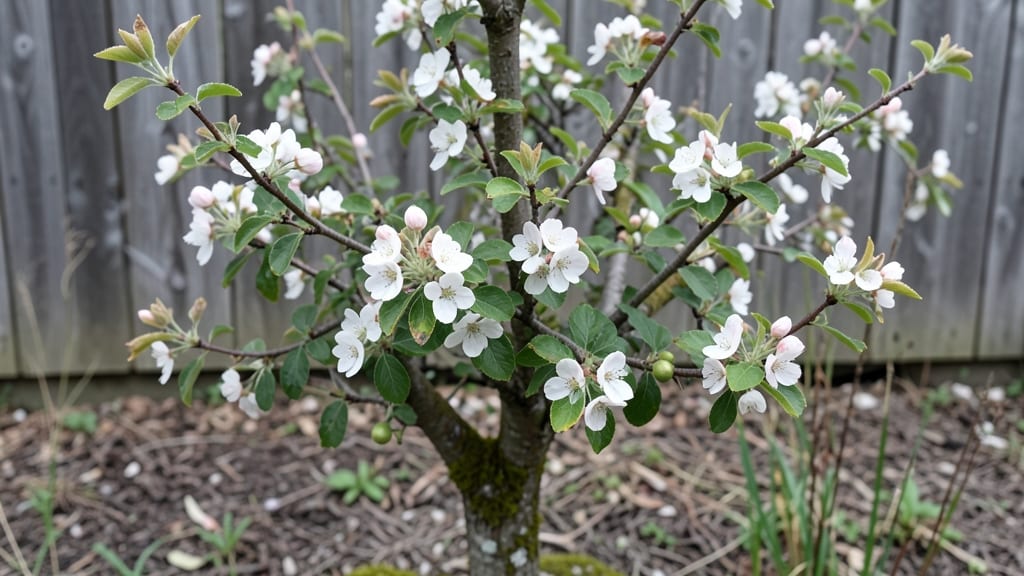
A blooming crabapple tree transforms your Pacific Northwest garden into a living masterpiece, offering four seasons of showstopping color. 🌸 I planted mine near the front walkway, and now it’s the first thing visitors notice—spring blossoms, summer shade, fiery fall foliage, and winter structure all in one.
The scent alone draws hummingbirds and bees from February through April, creating a lively, fragrant focal point.
This isn’t just a pretty face—it’s a design workhorse. Pair it with evergreen shrubs like boxwood or rhododendron for year-round contrast, or tuck spring bulbs (daffodils, hyacinths) at its base for early bursts of color.
In shadier spots, hostas or ferns soften the base, while perennials like peonies or columbines add midseason texture. The tree’s dwarf varieties work beautifully in small yards, while standard sizes anchor large landscapes.
What you’ll love most is how it elevates your garden’s mood—brightening dreary winter days with bare branches dusted in snow, then exploding into pink, white, or red blossoms that outshine any spring flower bed. The glossy leaves provide summer shade, while fall’s fiery hues rival maples.
Even in winter, its ornamental bark and persistent fruit (for birds) keep it interesting. It’s the kind of tree that makes neighbors pause and ask, “What’s that?”
Here’s the secret to maximizing its impact: plant it where it gets full sun to partial shade (PNW’s mild summers mean it thrives without scorching), prune lightly in late winter to shape its natural form, and mulch well to protect roots in wet winters.
With minimal fuss, it becomes the heart of your garden’s story—one that unfolds with every season.
📚 In This Guide
- What you need
- Instructions
- Tips and common mistakes
- Wrapping up and next steps
What you need
- ● Crabapple Tree: Choose a Malus variety suited for PNW climates (e.g., Malus 'Radiant', 'Pink Spires', or 'Dolgo'). Buy a 3-5 gallon container-grown tree (1-2 years old) from a local nursery.
- ● Planting Hole: Dig a hole twice as wide and just as deep as the root ball. Loosen soil at the bottom with a shovel.
- ● Amendments: Compost: 5-10 gallons (for nutrient-rich soil).
- ● Slow-release fertilizer: 1 lb (e.g., 10-10-10 or organic options like fish emulsion).
- ● Mulch: 3-4 inches of wood chips or pine bark (keep 6 inches away from the trunk).
- ● Hand trowel or spade (for breaking up soil).
- ● Garden gloves (to protect hands).
- ● Watering can or hose with nozzle (for gentle watering).
- ● Pruners (sterilized, for shaping or removing dead branches).
- ● Measuring tape (to ensure proper spacing from structures).
- ○ Stake & ties (optional): Only if planting in windy areas (1-2 stakes, 4-6 ft long).
- ● Sunlight: Select a spot with full sun (6+ hours/day) or partial shade (4-6 hours).
- ● Well-draining soil: Crabapples hate soggy roots! Test soil pH (ideal: 5.5-7.0).
- ● Spacing: Plant 15-25 feet from buildings, fences, or other trees (varies by variety).
- ● Water source: Ensure easy access for the first 2-3 months post-planting.
- ● Tree guard: Protect young trees from critters (e.g., deer or rabbits).
- ● Soil moisture meter (to monitor watering needs).
- ● Seasonal fertilizer: Granular or liquid feed (e.g., Espoma Tree-Tone) in early spring.
- ● Bird deterrent: Netting (if fruit attracts pests like cedar apple rust).
Step-by-step guide to planting and caring for a blooming crabapple tree
Here's how to establish a stunning, low-maintenance crabapple that thrives in the Pacific Northwest's climate.
🪴 Step 1: Select and Prepare the Planting Site
Choose a location with full sun exposure (6-8 hours daily) and well-draining soil—crabapples hate soggy roots. The Pacific Northwest's acidic soils often need amendment: mix in 2-3 inches of compost into the top 12 inches of soil. Dig a hole twice as wide as the root ball but no deeper—this encourages outward root growth for stability.
I always test drainage first by digging a 12-inch deep test hole and filling it with water. If it drains in under an hour, the site's ready. If not, raise the planting area by adding a mound of native soil and compost. Crabapples planted in winter or early spring establish roots before summer heat arrives, giving them a head start.
🌱 Step 2: Plant with Proper Spacing and Support
Position the tree so the top of the root ball sits 1-2 inches above ground level—this prevents soil from settling and suffocating the trunk. Spread roots gently outward (don't fold them) and backfill with native soil mixed with 50% compost to improve fertility. Water thoroughly as you fill, tamping down lightly to eliminate air pockets.
Stake only if needed—young crabapples often don't require support unless in windy sites. If staking, use 2-3 stakes positioned 6-8 inches from the trunk at a 45-degree angle. The tree should sway slightly in wind but not bend. Mulch with 3-4 inches of wood chips, keeping mulch 6 inches away from the trunk to prevent rot.
☀️ Step 3: Establish Watering and Fertilizing Routines
Water deeply 2-3 times per week for the first 2 months, providing 1-2 gallons per week depending on rainfall. The Pacific Northwest's damp winters mean you can reduce watering to once every 2-3 weeks once established, but summer droughts require weekly deep watering—look for dry soil 3-4 inches down as your cue.
Fertilize lightly in early spring with ½ cup of 10-10-10 fertilizer spread around the drip line. Over-fertilizing leads to excessive leaf growth at the expense of flowers and fruit. I always water again after fertilizing to prevent root burn. Crabapples are naturally low-maintenance—once established, they rarely need additional fertilizer unless leaves show yellowing between veins.
✂️ Step 4: Prune for Health and Flower Display
Prune in late winter or early spring before buds swell, removing 10-15% of last year's growth. Focus on dead, crossing, or inward-growing branches first—these compete for energy and reduce air circulation. Thin the canopy by cutting branches back to the nearest outward-facing bud to maintain an open center that lets sunlight reach all parts of the tree.
Never remove more than 25% of the canopy in one year. Crabapples bloom on old wood, so avoid heavy pruning after flowering. I always sterilize pruning tools with 70% isopropyl alcohol between cuts to prevent disease spread. After pruning, apply a 1-inch layer of mulch around the base to retain moisture and suppress weeds.
🌿 Step 5: Maintain Year-Round Health and Beauty
Monitor for common pests like aphids or scale insects—these rarely cause serious damage but can be controlled with a strong spray of water if noticed early. The Pacific Northwest's mild winters often mean no winter protection is needed, but young trees benefit from a 4-6 inch layer of mulch in harsh winters to insulate roots.
Enjoy the tree's multi-season interest: spring blooms, summer fruit, and fiery autumn foliage. I always photograph the first flowers in spring and the fall color change—they're worth celebrating! With proper care, a crabapple can live for 50+ years, becoming a cherished landscape anchor that outshines any seasonal plant.
Tips & tricks for perfect blooming crabapple tree planting
These proven strategies will help your crabapple thrive for decades in Pacific Northwest conditions.
Site Selection Secret: The 6-8 hours of daily sun requirement is non-negotiable—crabapples need full sun to produce their spectacular blooms. I've planted mine near the southern edge of my property where afternoon sun reaches without afternoon shade from neighboring trees. Test your site's sun exposure for at least a week before planting to avoid disappointment.
Drainage Test That Saves Trees: That 12-inch deep drainage test is more important than most gardeners realize. I've seen crabapples fail within months when planted in areas that drain poorly. If your soil drains slowly, consider planting on a slight mound or amending with additional compost to improve drainage. The goal is to mimic the well-drained conditions these trees prefer in their native habitats.
Root Ball Positioning: The 1-2 inches above ground level positioning isn't just about aesthetics—it's a critical survival technique. When roots settle below ground level, they suffocate and rot. After planting, I always check this level again after watering, as settling can occur. Use a small stake to mark the original level if needed for reference.
Pruning Precision: Those 10-15% pruning guidelines might seem vague, but they're based on decades of arborist research. For a young tree, that's about 3-4 branches per year. I always prune just outside the branch collar (the swollen area where the branch meets the trunk) to promote faster healing. This technique prevents unsightly scars that can become entry points for disease.
Pro Tips for Blooming Crabapple Tree
- These proven strategies will help your crabapple thrive for decades in Pacific Northwest conditions.
- Site Selection Secret: The 6-8 hours of daily sun requirement is non-negotiable—crabapples need full sun to produce their spectacular blooms.
- Drainage Test That Saves Trees: That 12-inch deep drainage test is more important than most gardeners realize.
Frequently asked questions
Got questions about your blooming crabapple tree? You’re not alone!
Here are some of the most common concerns—plus quick, practical answers to keep your tree thriving in the Pacific Northwest’s climate.
When is the best time to plant a blooming crabapple tree in the PNW?
Plant your crabapple tree in early spring (March–April) or fall (September–October) for ideal root establishment. Avoid extreme heat or frost—PNW’s mild winters make fall a great option, but spring lets roots settle before summer droughts. Pro tip: Water deeply after planting and mulch to retain moisture!
How do I encourage more flowers and fewer fruits?
Crabapple trees produce flowers for show, but too many fruits can drain energy. To minimize fruit, thin out blossoms in early spring (remove 50% of clusters) or prune after flowering to redirect growth. For more blooms, fertilize lightly in early spring with balanced 10-10-10 and prune to open the canopy for sunlight.
Why are my crabapple leaves yellowing or curling?
Yellowing leaves often signal nutrient deficiency (iron/chlorosis) or pests (aphids, mites). Test soil pH—crabapples prefer 6.0–7.0. For iron deficiency, apply chelated iron or compost. Check undersides of leaves for pests; spray with neem oil if needed. PNW tip: Overwatering can also cause yellowing—ensure well-draining soil!
Are there dwarf or columnar crabapple varieties for small spaces?
Yes! Try ‘Adirondack’ (dwarf, 12–15 ft) or ‘Centennial’ (columnar, 15–20 ft tall). These fit tight spots while still delivering stunning blooms and minimal maintenance. Bonus: They’re disease-resistant, perfect for urban PNW gardens. Check local nurseries for cold-hardy varieties!
Can crabapple trees handle PNW’s wet winters?
Crabapples are highly adaptable to PNW’s rain and mild winters. Ensure proper drainage to avoid root rot—amend heavy clay soil with compost. Mulch 3–4 inches around the base (but not touching the trunk) to protect roots. Fun fact: Their glossy leaves handle moisture better than many ornamentals!
Wrapping up and next steps
The blooming crabapple tree is more than just a stunning addition to your Pacific Northwest landscape—it’s a year-round showstopper that brings joy, color, and even wildlife to your yard.
From delicate spring blossoms to vibrant fall foliage and winter interest, this tree is a low-maintenance champion that rewards patience with beauty. 🌸
Ready to transform your outdoor space? Start by choosing the right variety for your climate and soil, then give it the care it deserves. Whether you’re a seasoned gardener or a beginner, this tree makes it easy to grow big on a small scale.
Plant yours today and enjoy the natural splendor it brings for decades!