
Blooming
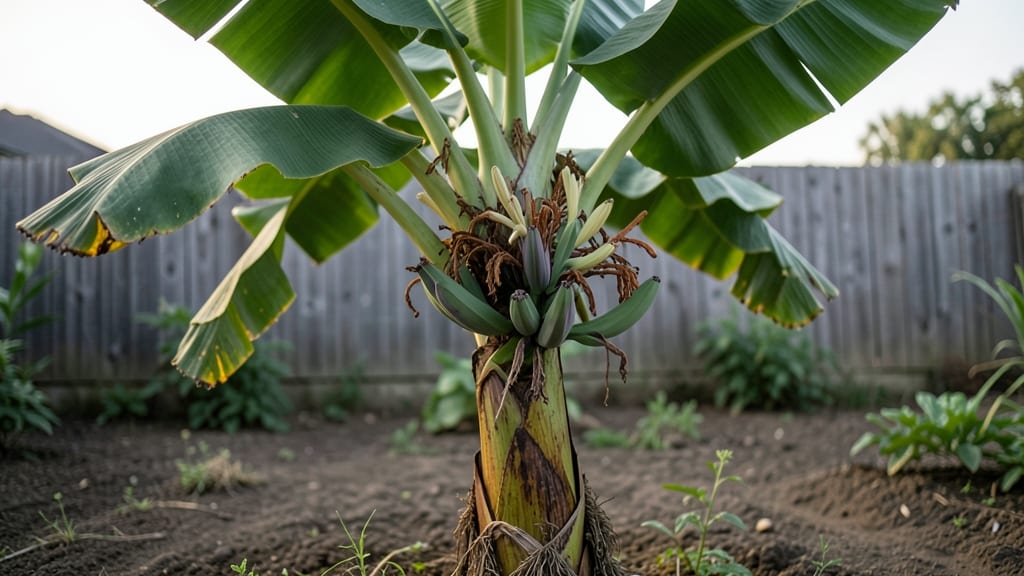
Banana tree flowering stages reveal the plant’s secret life cycle—where a single flower spike transforms into a cluster of fruit over just a few weeks. 🌱 The process starts with a tight bud nestled inside the pseudostem, swelling as the tree prepares for its one-time reproductive show.
What makes this fascinating isn’t just the dramatic growth but how environmental cues like temperature and daylight trigger each phase.
The first sign is a hard, woody spike emerging from the center of the plant, followed by a purple or red flower cluster that unfolds like a blooming umbrella. This stage lasts about 2 weeks, during which the tree’s energy shifts entirely from leaf production to fruit development.
The challenge? Maintaining consistent moisture and avoiding sudden temperature swings that can stress the delicate blooms.
By the time the flowers turn into tiny green fingers, you’re 6-8 weeks from harvest—assuming no pests or diseases interfere. The fruit starts as hard, inedible clusters but softens into the bananas we know within 3-4 months.
The real magic happens when you see the first yellowing tips on the bunch, signaling ripeness within days.
Whether you’re growing in Zone 10-12 or a container indoors, the key is patience and observation. Each stage demands slightly different care, from protecting the emerging spike to monitoring for fruit fly infestations. Let’s break down what to watch for at every turn.
📚 In This Guide
- What you need
- Instructions
- Tips and common mistakes
- Wrapping up and next steps
What you need
- ● Banana tree (Musa spp.) – Choose a healthy, mature plant (3+ years old) for optimal flowering.
- ● Camera or smartphone – For capturing high-resolution images of each flowering stage (12MP+ recommended).
- ● Notebook or digital journal – To record observations (dates, weather, growth notes).
- ● Measuring tape (10–20 ft) – To track pseudostem height and flower spike length.
- ○ Pruning shears or sharp knife – For optional trimming of dead leaves or excess suckers.
- ● Garden gloves – To protect hands while handling thorns or sap.
- ○ Magnifying glass (optional) – For close-up inspection of flower buds and bracts.
- ● Balanced fertilizer (10-10-10 or organic compost) – 1–2 tbsp per application, every 4–6 weeks during flowering.
- ● Drip irrigation system or watering can – Banana trees need 1.5–2 inches of water weekly (adjust for climate).
- ○ Stakes or bamboo supports (optional) – To prop up heavy flower spikes if needed.
- ● Weather-resistant labels – For marking stages on multiple trees.
- ○ Humidity tray (optional) – If growing indoors or in dry climates.
How to identify and support each stage of banana flowering
Here's how I track the six distinct phases of banana flowering—each with unique care needs.
🌱 Step 1: Pseudostem Elongation – The Pre-Flowering Signal
The first clue appears when your banana's pseudostem (the false trunk) starts growing taller and splitting vertically. This happens 3-6 months after planting, depending on variety. Watch for longitudinal cracks forming along the stem—this indicates the plant is redirecting energy toward flowering rather than leaf production.
During this phase, increase potassium-rich fertilizer (like 5-10-10) to support the heavy energy demands. I use half-strength solution weekly until you see the first flower bud emerge. The pseudostem may also develop a slight yellowing at the base—this is normal and signals the plant is preparing to flower.
☀️ Step 2: Bract Emergence – The First Visible Flower Sign
Look for a purple or red sheath (the bract) unfurling from the pseudostem's center. This happens 2-4 weeks after the first cracks appear. The bract will initially look like a tight, pointed hood—do not force it open. Instead, monitor for moisture condensation inside, which confirms active growth.
Reduce watering slightly at this stage to prevent rot in the developing flower cluster. I water every 4-5 days instead of daily, ensuring the soil stays moist but not soggy. The bract will eventually split open to reveal the inflorescence—a dramatic sight with layered flower clusters.
🌿 Step 3: Inflorescence Unfolding – The Rapid Growth Phase
Once the bract opens, the inflorescence (the flower spike) will emerge like a fist-sized, waxy bud. This phase lasts 7-10 days and requires high humidity to prevent the delicate flowers from drying. I mist the inflorescence twice daily with room-temperature water, avoiding direct contact with the flowers.
The inflorescence will grow 1-2 inches daily, unfurling like a hand opening. Watch for the first male flowers (small, yellow, and fragrant) to appear at the top. These flowers won’t produce fruit but signal the female flowers (the actual fruit clusters) are forming below. Prune any yellowing leaves at the base to redirect energy upward.
🍌 Step 4: Hand Development – When Fruit Clusters Form
About 3 weeks after the inflorescence unfurls, you’ll see small, green "hands" (fruit clusters) forming along the spike. Each hand contains 10-20 individual fruit buds, which will develop into bananas. The male flowers at the top will wilt and drop, leaving only the female clusters.
Increase phosphorus fertilizer (like 10-20-10) to support fruit development. I apply a weak solution every 10 days and ensure the plant gets full sun (6+ hours daily). The hands will grow rapidly—within 2 weeks, they’ll reach 3-4 inches long. This is when you’ll notice the first signs of curvature in the fruit buds.
⏰ Step 5: Fruit Bud Elongation – The Critical Growth Window
Now, the individual fruit buds (still green) will elongate and develop visible tips. This phase lasts 4-6 weeks and is the most sensitive to temperature fluctuations. Keep soil temperatures above 70°F—cold soil slows growth and can cause bud drop. I use mulch around the base to retain heat and protect roots.
The fruit will transition from pointed buds to rounded shapes as they fill with starch. You’ll see horizontal stripes forming on the skin—this is a good sign! Avoid heavy watering now; overwatering causes splitting. Instead, water deeply every 5-7 days, ensuring the soil drains well.
🍌 Step 6: Ripening – From Green to Edible
The final stage begins when the fruit turns yellow-green with black spots (a natural ripening process). This happens 3-5 months after flowering, depending on the variety. The hands will droop slightly as the bananas fill with sugar. I harvest when 50% of the fruit shows yellow, as they ripen even after picking.
To speed ripening indoors, place the harvested hands in a paper bag with an apple (ethylene gas accelerates ripening). Check daily—they’ll soften and develop bright yellow skin with brown freckles within 3-5 days. Once fully ripe, the bananas will peel easily and have a sweet, creamy texture.
Tips & tricks for perfect banana tree flowering support
These insights will help you navigate each flowering phase with confidence—because banana trees don't follow a one-size-fits-all timeline.
Visual Cues Matter: In Step 1, those vertical cracks along the pseudostem are your first clear signal—don't wait for yellowing at the base. I've seen growers miss this subtle crack pattern and wonder why their banana tree wasn't flowering. Use a magnifying glass if needed to spot the early cracks that appear 3-6 months after planting. The key is catching these longitudinal splits before they become too pronounced.
Humidity is Non-Negotiable: During Step 3's inflorescence unfolding, I've learned the hard way that skipping the twice-daily misting leads to dried-out flower tips. Use a humidity tray under the plant if your air is dry—this creates a microclimate that protects the delicate flower structure. The goal is to maintain 70-80% humidity around the emerging spike without creating soggy conditions that invite fungal issues.
Soil Temperature Protection: Step 5's fruit bud elongation phase demands special attention to soil warmth. I've had bud drop occur when soil temps dipped below 70°F—even for just a few days. Use black plastic mulch around the base to absorb and retain heat, especially in cooler climates. This simple technique can make the difference between healthy fruit development and wasted energy.
Pruning Strategy: When you see those first yellowing leaves in Step 3, don't hesitate to prune them completely. I've found that leaving even slightly yellowed leaves diverts energy away from the developing fruit clusters. Use clean, sharp pruners to make clean cuts at the base of each leaf stalk. This redirection of energy helps those female flower clusters develop more robustly.
Pro Tips for Banana Tree Flowering Stages
- These insights will help you navigate each flowering phase with confidence—because banana trees don't follow a one-size-fits-all timeline.
- Visual Cues Matter: In Step 1, those vertical cracks along the pseudostem are your first clear signal—don't wait for yellowing at the base.
- Humidity is Non-Negotiable: During Step 3's inflorescence unfolding, I've learned the hard way that skipping the twice-daily misting leads to dried-out flower tips.
Frequently asked questions
Got questions about banana tree flowering?
You’re not alone! Here are some of the most common ones—plus quick, practical answers to help you navigate each stage with confidence.
How long does it take for a banana tree to flower after planting?
A banana tree typically takes 9–18 months to flower after planting, depending on the variety and growing conditions. Dwarf varieties may flower faster (as early as 6–9 months), while larger types like Cavendish can take up to 2 years. Patience is key—focus on providing consistent care (water, sunlight, and nutrients) to encourage healthy growth.
Why did my banana tree flower but no fruit formed?
This is often due to hand pollination (bananas are self-pollinating but sometimes need a little help). Gently shake the flower stalk or use a small brush to transfer pollen. Other causes include:
- Improper care: Lack of water, nutrients (like potassium), or sunlight can stunt fruit development.
- Pest/disease stress: Check for signs of aphids, borers, or fungal issues.
- Young tree: First flowers may not produce fruit—wait for the next cycle.
How do I know if my banana tree is ready to flower?
Watch for these signs:
- A pseudostem (the "trunk") will start to split or swell at the top.
- A long, arching flower stalk (called an inflorescence) emerges from the center.
- The leaves may yellow slightly or grow more slowly as energy shifts to flowering.
Can I force a banana tree to flower faster?
While you can’t force flowering, you can optimize conditions to encourage it:
- Temperature: Bananas thrive in 75–85°F (24–29°C). Cooler temps can delay flowering.
- Watering: Keep soil consistently moist but not waterlogged.
- Fertilizer: Use a balanced fertilizer (10-10-10 or 6-6-6) with extra phosphorus to promote blooming.
- Avoid pruning: Cutting leaves stresses the tree and may delay flowering.
What happens after a banana tree flowers?
Once the flower stalk appears, here’s what to expect:
- The female flowers (at the base of the stalk) will develop into bunches of bananas over 3–6 months.
- The male flowers (near the tip) will wither and dry up.
- The pseudostem will die back after fruiting—this is normal! New shoots will emerge from the base.
Wrapping up and next steps
Understanding the banana tree flowering stages transforms your gardening journey from guesswork to confidence! 🌱 From the boot to the bunch, each phase reveals nature’s intricate timing—patience and care will reward you with lush, fruitful harvests.
Whether you’re a curious beginner or a seasoned grower, these insights empower you to nurture your banana tree with precision.
Ready to take the next step? Track your tree’s progress with a simple journal or app, and share your blooming milestones with fellow gardeners. Your banana tree’s journey is just beginning—and so is yours! 🌟