Pruning
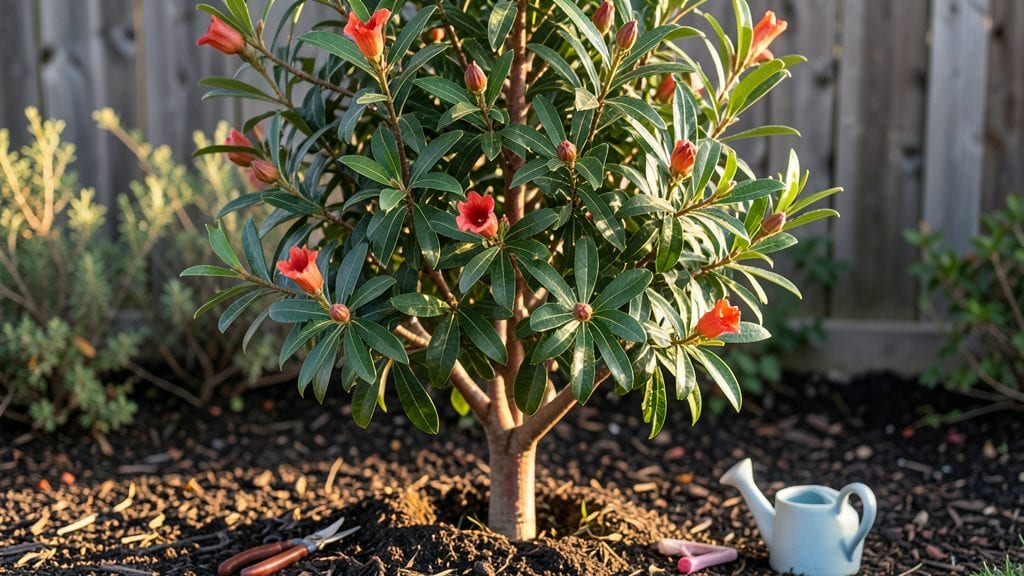
Growing a young pomegranate tree in the Pacific Northwest means beating frost—something I learned the hard way after my first plant’s branches blackened in a late spring freeze.
The key isn’t just choosing the right variety (like ‘Wonderful’ or ‘Eversweet’), but creating the perfect microclimate where roots stay insulated and new growth stays protected.
Start with well-draining soil mixed with compost—pomegranates hate soggy roots—and plant in a spot where it gets at least 6 hours of sunlight daily. Mulch heavily in winter to lock in warmth, and avoid pruning until after the last frost.
My tree now produces dozens of fruit each fall, thanks to these early-season adjustments.
Water deeply once a week (more in summer heat), but never let the soil stay soggy—root rot is the silent killer of young trees. Prune only to shape the tree in early spring, removing any dead or crossing branches.
The result? A sturdy, frost-hardy tree that rewards patience with jewel-toned blooms and sweet, ruby-red fruit.
For the PNW’s unpredictable climate, timing is everything: plant in early spring, protect with frost cloth if needed, and watch for aphids early in the season. With these steps, even beginners can grow a thriving pomegranate tree that outlasts the cold.
📚 In This Guide
- What you need
- Instructions
- Tips and common mistakes
- Wrapping up and next steps
What you need
- ● 1 healthy young pomegranate tree (choose a Punica granatum variety like ‘Wonderful’ or ‘Eversweet’—hardy enough for zones 7-11 with winter protection).
- ● Well-draining soil mix (50% native soil, 30% compost, 20% perlite or sand).
- ● Organic mulch (4-6 inches of straw, wood chips, or shredded leaves).
- ● Slow-release fertilizer (10-10-10 or citrus-specific blend, 1 lb per tree).
- ● Drip irrigation system or soaker hose (for consistent moisture).
- ● Pruning shears (sharp, bypass-style, for clean cuts).
- ● Loppers (for thicker branches, 8-10 inch blades).
- ● Garden gloves (heavy-duty, to protect from thorns).
- ● Trowel or spade (for planting and soil prep).
- ● Measuring tape (to track growth and pruning height).
- ● Frost cloth or bubble wrap (for winter protection in zones 7-8).
- ● Tree collar spray (to prevent fungal diseases).
- ● Support stakes (if planting in windy areas).
- ● Pomegranate-specific pruning saw (for stubborn branches).
Step-by-Step instructions for cultivating a frost-resistant young pomegranate tree
Here's how I've successfully grown hardy pomegranate saplings in cooler climates—no fancy tricks, just reliable techniques.
Select the Right Variety for Your Climate
Not all pomegranates tolerate cold snaps. Look for cold-hardy varieties like 'Wonderful' or 'Eversweet,' which can handle brief dips to 20°F once established. I always check the USDA zone range on the nursery tag—Zone 7 or higher is your sweet spot for young trees. Avoid tropical varieties like 'Mollar de Elche,' which won't survive our Pacific Northwest winters.
Buy bare-root saplings in early spring when they're dormant. You'll know a healthy one by its thick, plump roots and 3-4 foot tall stem with multiple buds. Handle roots carefully—they dry out fast. If you can't plant immediately, store them in a cool, dark place and keep roots moist with damp burlap.
Prepare the Planting Site with Special Care
Pomegranates need full sun (6+ hours daily) and well-draining soil to prevent root rot. I test my soil first—ideal pH is 6.0-7.0. If your soil is heavy clay, amend it with 2-3 inches of compost and a 1-inch layer of coarse sand mixed into the top 12 inches of soil. This improves drainage without compacting.
Dig a hole twice as wide as the root ball but only as deep as it was in the container. The top of the root ball should sit 1-2 inches above ground level—this prevents water from pooling around the trunk. Gently loosen any circling roots with your fingers before placing the tree in the hole.
Plant and Water for Immediate Stability
Backfill the hole with native soil, tamping lightly every 2 inches to remove air pockets. Water deeply right away to settle the soil and eliminate gaps. I use a 5-gallon bucket of water for each young tree—pour slowly until it drains from the bottom. This first watering helps roots establish contact with the surrounding soil.
Mulch around the base with 2-3 inches of wood chips, keeping mulch 6 inches away from the trunk. This protects roots from temperature swings and retains moisture. Avoid organic mulches like straw, which can harbor pests. After planting, avoid fertilizing—young trees need to focus on root growth, not foliage.
Protect Against Early Frost with Strategic Shelter
Young pomegranates are vulnerable to frost damage in their first two years. I use frost cloth or burlap wraps to shield the trunk and branches during cold snaps below 28°F. Secure the covering loosely—tight fabric can trap moisture and cause rot. Remove it during the day if temperatures rise above freezing to prevent heat buildup.
Water deeply before the first frost to ensure roots have moisture reserves. In our Pacific Northwest, I've found that drip irrigation set to run for 30 minutes daily during dry spells keeps roots consistently moist without oversaturating. Avoid overhead watering—wet foliage freezes faster and can damage branches.
Prune and Train for Strong Structure
Prune in late winter or early spring before new growth begins. Remove any dead, crossing, or weak branches using clean, sharp pruners. I cut just above a bud that faces outward—this encourages an open, airy canopy that reduces disease risk. Never remove more than one-third of the foliage in a single season.
Train the main trunk to stand upright by staking if needed. Use soft tree ties (never wire) to secure the trunk to a 4-foot stake at a 45-degree angle for stability. Remove stakes after 12-18 months when the tree can support itself. This early training prevents weak, leaning growth that struggles in windy conditions.
Tips & tricks for cultivating a frost-resistant young pomegranate tree
Here's what I've learned from years of growing pomegranates in our chilly Pacific Northwest climate—these tricks make all the difference between a struggling sapling and a thriving tree.
Variety Matters: In Step 1, when selecting your cold-hardy variety, pay special attention to the nursery tag. The 'Wonderful' and 'Eversweet' varieties I mentioned can handle brief dips to 20°F once established, but their tolerance improves with age. For the first year, keep an eye on your local forecast and be ready to protect your tree if temperatures threaten to drop below 28°F for more than a few hours. Between us, I've lost saplings this way—don't make my mistake!
Root Care During Planting: When you're handling those bare-root saplings in Step 3, here's a pro tip: Soak the roots in a bucket of water for 10-15 minutes before planting. This hydrates them and helps prevent transplant shock. After planting, I like to add a handful of mycorrhizal fungi powder to the backfill soil—it helps establish a beneficial root network that improves cold hardiness over time.
Watering Wisdom: The 30-minute daily drip irrigation I mentioned during dry spells works wonders, but there's more to it. Water in the morning so the foliage has time to dry before evening—this prevents fungal issues. And here's what nobody tells you: In winter, reduce watering by half. Overwatering in cold weather can lead to root rot, which is especially dangerous for young trees still establishing themselves.
Pruning Precision: When you're pruning in Step 5, focus on creating an open vase shape rather than a dense canopy. This allows sunlight to penetrate to the center of the tree, which is crucial for fruit development. I cut back any branches that grow toward the center—these are the ones that often freeze first in cold snaps. And remember, never remove more than one-third of the foliage in a single season, especially in your tree's first few years.
Pro Tips for Young Pomegranate Tree
- Here's what I've learned from years of growing pomegranates in our chilly Pacific Northwest climate—these tricks make all the difference between a struggling sapling and a thriving tree.
- Variety Matters: In Step 1, when selecting your cold-hardy variety, pay special attention to the nursery tag.
- Root Care During Planting: When you're handling those bare-root saplings in Step 3, here's a pro tip: Soak the roots in a bucket of water for 10-15 minutes before planting.
Frequently asked questions
Got questions about nurturing your young pomegranate tree in the Pacific Northwest? You’re not alone! Here are answers to the most common concerns—from frost prep to pruning pitfalls—so you can grow a thriving, fruit-bearing beauty.
How cold can a young pomegranate tree handle in the PNW?
A young pomegranate tree (especially frost-resistant varieties like ‘Wonderful’ or ‘Eversweet’) can tolerate brief dips to 15–20°F once established (3+ years old). However, newly planted trees (under 1 year) need protection below 25°F—use frost cloth, mulch heavily, or move potted trees to a sheltered spot. Young roots are the weak link!
When should I prune a young pomegranate tree in the PNW?
Prune late winter to early spring (February–March) before new growth starts. This is critical for PNW growers—avoid pruning in fall (risk of frost damage) or summer (stresses the tree). Focus on removing dead/diseased wood, shaping for airflow, and thinning crowded branches to prevent fungal issues common in damp PNW winters.
Can I prune too much? What’s the ‘rule of thumb’?
Yes! Never remove more than 25% of the tree’s foliage in one year. For young trees (1–3 years), aim for light pruning—just enough to open the canopy and remove suckers. Over-pruning stresses the tree, reducing its ability to harden off for PNW winters. Think of it like a haircut: shape, don’t shear!
Will my young pomegranate tree produce fruit in the first year?
Probably not! Pomegranate trees typically take 3–5 years to bear fruit, especially in cooler PNW climates. Focus on establishing strong roots and structure first. If you’re impatient, choose dwarf varieties (like ‘Nana’)—they fruit faster but may need winter protection. Patience pays off with sweet, jewel-like fruit in years to come!
What’s the best alternative if pomegranates struggle in my PNW microclimate?
If frost or humidity proves too challenging, consider these low-maintenance, cold-tolerant alternatives:
- Fig trees (e.g., ‘Desert King’—hardy to 15°F)
- Apples (e.g., ‘Freedom’ or ‘Enterprise’—disease-resistant)
- Persimmons (e.g., ‘Fuyu’—sweet, frost-tolerant)
- Gooseberries (thrive in cool, wet PNW climates)
Each offers fruit with less fuss—just check your zone!
Wrapping up and next steps
Growing a young pomegranate tree in the Pacific Northwest is absolutely doable—even with frost! 🌱 With the right pruning techniques, frost-resistant varieties, and a little patience, you’ll be well on your way to a thriving tree that rewards you with juicy, vibrant fruit.
Remember, consistency is key: regular pruning in late winter or early spring keeps your tree healthy and productive.
Now that you’re armed with the know-how, it’s time to roll up your sleeves and get growing! Start by selecting your frost-hardy variety, gather your tools, and begin pruning with confidence. Happy gardening—your future pomegranate harvest awaits! 🍇✨