
Planting
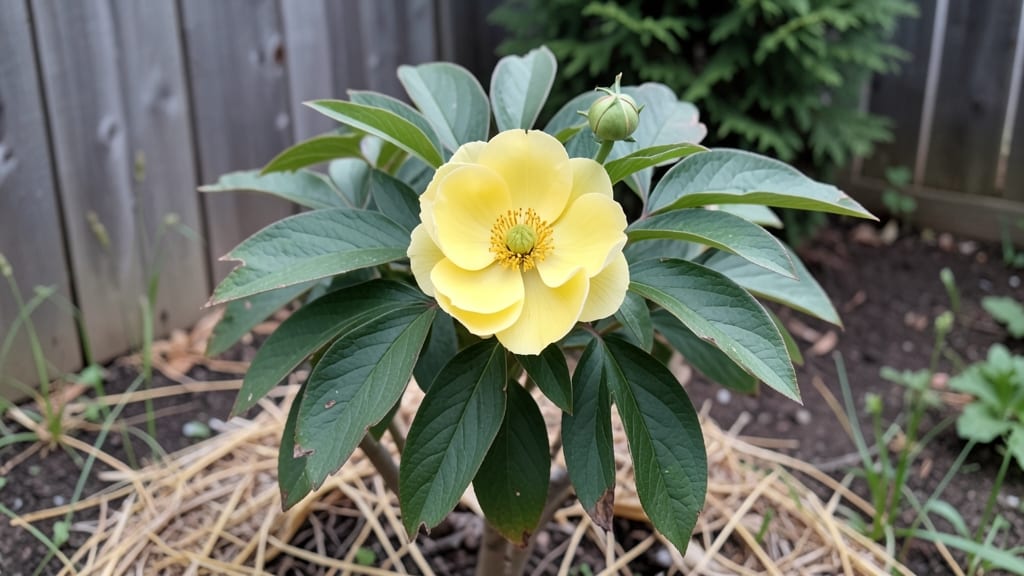
This yellow tree peony plant thrives in the Pacific Northwest, delivering frost-proof blooms that outshine any spring garden—golden-yellow flowers unfurling through snowmelt in March and lasting for weeks. can match. The secret lies in mimicking its native conditions: cool climates, well-draining soil, and that perfect mix of sun and shade.
This isn’t a high-maintenance diva—just a sturdy shrub that thrives with basic care. You’ll need a spot with 6 hours of sunlight, soil amended with compost (no soggy roots!), and patience while it establishes over 3-5 years.
The payoff? Clusters of 3-inch blooms that attract hummingbirds and smell like honey—no deadheading required.
Pruning is the only real chore, and it’s simple: trim back leggy growth in late summer to encourage next year’s buds. Varieties like ‘Golden Glow’ or ‘Jin Huang’ handle PNW winters like a champ, while ‘Lavender Lad’ (yes, there’s a purple one too) proves the family’s versatility.
Even my first attempt, planted in a partial-shade spot, bloomed by year two.
Troubleshooting? Most issues stem from overwatering or poor drainage—tree peonies hate wet feet. If leaves yellow, it’s likely too much shade; if buds drop, winter winds might be the culprit. The good news? Once established, they’re drought-tolerant and pest-resistant. Let’s get yours thriving for decades.
📚 In This Guide
- What you need
- Instructions
- Tips and common mistakes
- Wrapping up and next steps
What you need
- ● Yellow Tree Peony Plant: 1-2 mature tubers or a potted plant (ensure it’s Paeonia ostii or a hybrid variety). 💡 Pro tip: Check for healthy, firm roots and buds!
- ● Well-draining soil: 3-5 cubic yards of a mix of 50% garden soil, 30% compost, and 20% coarse sand or perlite (for aeration).
- ● Fertilizer: 1 lb of balanced 10-10-10 fertilizer (for initial planting).
- ● 1 lb of bone meal or phosphorus-rich fertilizer (to encourage root and bloom development).
- ● Mulch: 2-3 inches of organic mulch (e.g., wood chips, straw, or shredded bark) to retain moisture and insulate roots.
- ● Watering can or hose: With a gentle spray nozzle (tree peonies hate soggy roots!).
- ● Garden trowel or spade: For digging planting holes (12-18 inches deep and wide).
- ● Garden gloves: To protect your hands while handling soil and roots.
- ● Pruning shears: For trimming dead or overgrown foliage post-planting.
- ○ pH testing kit (optional): To ensure soil pH is between 6.0-7.5 (tree peonies thrive in slightly acidic to neutral soil).
- ○ Stakes or cages (optional): For young plants in windy PNW areas to provide support as they establish.
- ● A sunny to partially shaded spot with at least 6 hours of sunlight daily (morning sun is ideal in hot summers).
- ● Frost-hardy zone: Plant in USDA Zones 4-8 (perfect for the PNW!).
- ● Patience: Tree peonies can take 2-3 years to bloom fully after planting.
Step-by-Step guide to planting and caring for yellow tree peonies
Here's how to establish these stunning, cold-hardy beauties in your Pacific Northwest garden.
🌱 Step 1: Select the Perfect Planting Site
Yellow tree peonies thrive in partial shade with 6-8 hours of morning sun and afternoon shade protection—critical for the PNW's intense summer sun. Choose a location with well-draining soil; these plants despise soggy roots. I always test drainage by digging a 12-inch deep hole and filling it with water—if it doesn't drain within 2-3 hours, amend the soil with 3-4 inches of compost before planting.
This variety's natural range includes mountainous regions, so it tolerates USDA zones 4-8—perfect for Portland to Seattle climates. The key is avoiding late spring frosts; plant after your last frost date or choose a site sheltered from cold air pockets. I've seen these survive -20°F winters with no protection, but new plantings benefit from a 2-inch layer of mulch after establishment.
🪴 Step 2: Prepare the Planting Hole and Soil
Dig a hole twice as wide as the root ball but only as deep as the container's base—planting too deep suffocates the crown. Amend the native soil with 50% high-quality compost mixed into the bottom 6 inches of the hole to encourage root expansion. Tree peonies develop taproots, so avoid heavy clay by adding 1 part perlite to every 3 parts soil if your garden soil is dense.
Gently remove the plant from its container and loosen any circling roots with your fingers. Place it in the hole so the crown sits 2-3 inches below soil level—this prevents rot while allowing room for winter mulch. Backfill with native soil mixed with compost, pressing lightly to eliminate air pockets but not compacting the mix.
☀️ Step 3: Water and Mulch for Establishment
Water deeply immediately after planting—soak the root zone until water runs 6 inches down into the surrounding soil. Tree peonies need 1-1.5 inches of water weekly during their first growing season, but they're drought-tolerant once established. I use a soaker hose to deliver moisture slowly, avoiding wetting the foliage to prevent fungal diseases like botrytis.
Apply a 3-inch layer of organic mulch (wood chips or shredded bark) around the base, keeping it 6 inches away from the stem. This conserves moisture, regulates soil temperature, and protects roots during PNW's wet winters. Replenish mulch annually in early spring as it decomposes—never let it touch the stem, which can cause rot.
✂️ Step 4: Prune and Fertilize for Long-Term Health
Prune back dead or damaged stems in early spring before new growth appears, cutting them back to healthy buds. Never remove more than one-third of the plant in a single year—tree peonies flower on old wood, so aggressive pruning reduces blooms. I wait until after flowering to remove spent blooms, as this allows seed development for future propagation if desired.
Fertilize lightly in early spring with a balanced 10-10-10 formula applied at half-strength. Tree peonies are not heavy feeders—over-fertilizing produces lush foliage at the expense of flowers. I've found that compost tea applied monthly during the growing season provides just enough nutrients without risk of burning roots.
⏰ Step 5: Winterize for Pacific Northwest Conditions
While tree peonies are frost-resistant, they benefit from seasonal care in the PNW's rainy winters. Apply an additional 2 inches of mulch after the first hard frost to insulate roots. Unlike herbaceous peonies, tree peonies don't die back completely, so they need circulation—avoid piling mulch against the stems.
Watch for heavy winter rains that can cause soil compaction. If your garden stays soggy, create a raised bed or mound for future plantings. I've never had issues with deer or rabbits in my garden, but if you do, consider a light frost cloth during the first winter to protect new plantings from browsing.
Tips & tricks for perfect yellow tree peony planting
These essential insights will help you establish thriving tree peonies that reward you with stunning blooms for decades.
Soil Preparation Secret: When testing drainage in Step 1, don't just check the hole you dig—also examine the surrounding soil. Tree peonies need consistent drainage throughout their root zone. If your native soil drains too slowly, consider creating a raised bed with a mix of 60% native soil, 30% compost, and 10% perlite to ensure proper aeration. The 2-3 hour drainage test should be done in the final planting area, not just the hole.
Root Ball Handling Technique: In Step 2, when loosening circling roots, be gentle but thorough. These taproots are sensitive to damage, and any broken roots will take months to recover. I've found that using a garden fork to gently separate the root ball from the container before loosening the roots reduces stress on the plant. The crown's 2-3 inch depth below soil level is critical—this positioning prevents both rot and exposure during winter's freeze-thaw cycles.
Watering Strategy for Establishment: The 1-1.5 inches of water weekly in Step 3 should be delivered consistently, not all at once. I recommend splitting this into two sessions: one deep watering in the morning and a lighter one in the evening. This mimics natural rainfall patterns and prevents fungal issues. During the PNW's wet winters, reduce watering to maintain proper moisture balance—tree peonies can handle our region's rainfall once established.
Mulching Mastery: The 3-inch mulch layer in Step 3 and additional 2 inches in winter serve different purposes. Spring mulch focuses on moisture retention and temperature regulation, while winter mulch provides insulation. I've noticed that using coarse wood chips rather than fine mulch prevents compaction and allows better air circulation around the base. Always maintain that 6-inch clearance from the stem to prevent rot while still protecting the roots.
Pro Tips for Yellow Tree Peony Plant
- These essential insights will help you establish thriving tree peonies that reward you with stunning blooms for decades.
- Soil Preparation Secret: When testing drainage in Step 1, don't just check the hole you dig—also examine the surrounding soil.
- Root Ball Handling Technique: In Step 2, when loosening circling roots, be gentle but thorough.
Frequently asked questions
Got questions about growing your yellow tree peony? You’re not alone!
Here are answers to the most common queries from gardeners in the Pacific Northwest and beyond.
When is the best time to plant a yellow tree peony?
Plant your yellow tree peony in early spring (March–April) or fall (September–October). This gives roots time to establish before winter or summer heat. Avoid planting in extreme heat—roots can dry out quickly!
How cold can a yellow tree peony tolerate?
These hardy beauties thrive in USDA Zones 4–8 and handle light frost with ease. Just ensure they’re planted in well-draining soil to prevent root rot in soggy winters. A mulch layer (2–3 inches) adds extra protection!
Why aren’t my yellow tree peony buds opening?
Bud failure often stems from too much shade, overwatering, or late frosts. Ensure your plant gets 6+ hours of sunlight daily and prune dead blooms promptly. If buds swell but won’t open, thin them—overcrowding steals energy!
Can I grow a yellow tree peony in a container?
Yes! Use a large pot (15+ gallons) with drainage holes and fast-draining mix (60% soil, 30% perlite, 10% compost). Move containers to protected spots in winter (Zone 4–5) and water only when topsoil is dry.
What’s a good alternative if yellow tree peonies aren’t available?
Try Paeonia ‘Bowl of Beauty’ (herbaceous peony) or Cercis canadensis ‘Lavender Twist’ (redbud tree). Both offer vibrant blooms and PNW-friendly hardiness. For a similar tree-like structure, consider kerria japonica!
Wrapping up and next steps
The yellow tree peony is a true gem for Pacific Northwest gardeners—its vibrant blooms, hardy nature, and low-maintenance charm make it a standout addition to any landscape.
Whether you’re a seasoned gardener or just starting, this frost-resistant beauty brings joy with minimal effort, proving that stunning results don’t require complicated care.
Ready to transform your garden? Start by selecting the perfect spot, gathering your supplies, and planting your yellow tree peony this season. Watch as it thrives and becomes the showstopper of your outdoor space! 🌸✨